Afterlife Cover Image

Afterlife: Concert Band Conductor Score & Parts

$80.00 USD
Sale price  $80.00 USD Regular price 
Skip to product information
Afterlife Cover Image

Afterlife: Concert Band Conductor Score & Parts

By Rossano Galante

Grade: 4 (Medium Difficult)

Item: 00-44198

makemusic Cloud badge

Need it now?

Buy Digital Version
$80.00
Shipped

One moment…

Description
Since the beginning of time man has pondered what happens when our physical body dies. Some believe we go to Heaven. Others doubt its existence entirely. Then there are those who have had near death experiences and live to tell their stories. This composition starts delicately as peacefulness returns to the soul. It intensifies as we approach our new consciousness, constantly modulating between the two as we gain knowledge of our new surroundings. (4:45) This title is available in MakeMusic Cloud.

Don't just read it, hear it, play along with it, and watch your students grow with it. In MakeMusic Cloud, Afterlife: Concert Band Conductor Score & Parts comes alive with professional accompaniment, adjustable tempo, and built-in practice tools that turn solo practice into real progress.

Sample Pages

Sample Audio
0:00
0:00
Sample Video
Additional Details
Series: Alfred Concert Band
Publisher: Alfred Music
Page Count: 208
UPC: 038081498171
SKU: 00-44198

More about this title

About the Composer: Rossano Galante
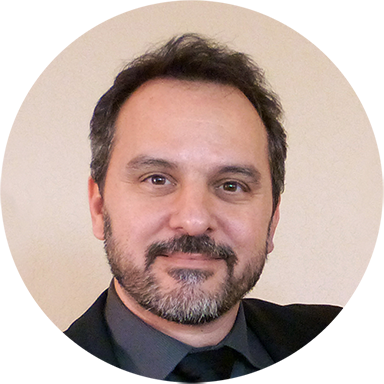
Rossano Galante

Rossano Galante grew up in Buffalo, New York, and earned his Bachelor of Arts in Trumpet Performance from SUNY Buffalo in 1992. That same year, he was selected as one of nineteen students worldwide for USC's Film Scoring Program, where he studied under the late Jerry Goldsmith, the Academy Award-winning composer of The Omen.

Since relocating to California in 1999, Galante has established himself as a composer and orchestrator across the entertainment industry. He has collaborated with Oscar-nominated composers Marco Beltrami, Christophe Beck, and Brian Tyler, and served as orchestrator on more than eighty studio films ranging from major franchises (Avengers: Age of Ultron, Fast X, Venom: Let There Be Carnage) to acclaimed dramas (Prisoners, Logan, A Quiet Place). Beyond film work, Galante maintains an active presence in concert music, with over 68 published compositions for band and orchestra appearing through Alfred, Schirmer, Hafabra, C.L. Barnhouse, and other major publishers.

Why we love this

Galante's background in film orchestration brings cinematic storytelling and sophisticated harmonic language to concert band repertoire. The continuous modulation between states of being and the four-minute-forty-five-second arc give conductors a compelling dramatic trajectory that engages both players and audiences. At Grade 4, it sits at the intersection of technical accessibility and thematic depth, rewarding ensemble commitment without demanding virtuosity.

What to expect

The opening unfolds like soft light breaking through mist, peaceful and introspective. As consciousness awakens, the texture thickens and the harmony shifts, building tension and wonder as your ensemble navigates between worlds. The constant modulation between tranquility and intensity mirrors the uncertainty of transformation itself, leaving listeners suspended between the familiar and the unknowable.

Who it's for

Concert bands at the Grade 4 level seeking repertoire with philosophical depth and cinematic scope. Directors programming contests or concerts will find a piece that balances technical challenges with an emotionally resonant narrative arc that stays with audiences long after the final chord.

How to get the most out of it

  • Balance the opening delicate texture by bringing out the warm, sustained tones in your melodic voices while keeping accompaniment figuration transparent. This sets the spiritual foundation before the piece intensifies.
  • Track the modulation points carefully in rehearsal and mark them in your score. These shifts in tonality represent consciousness changes, so slight adjustments in tempo and dynamic weight help the band hear and feel the transitions.
  • Pay attention to sectional independence during modulation passages. Different instrument groups often carry material in different keys simultaneously, so vertical alignment matters more than perfect rhythmic unison.
  • Reserve gradual dynamic growth for the intensification sections rather than pushing too hard too early. The piece needs room to build toward its fullest moments, and a patient approach in the first two minutes pays dividends later.

How to use it

This works exceptionally well as a concert closer or a thoughtful opening statement for a program themed around emotion, transformation, or contemporary issues. Its substantial length (4:45) and dramatic arc make it a statement piece rather than filler, allowing it to anchor a set of lighter works or stand alone as a showcase for your ensemble's musicality and sophistication.

Skills your students will build

  • Reading and executing rapid modulations between closely related keys
  • Balancing delicate sustained textures with transparent accompaniment figures
  • Maintaining sectional independence during complex harmonic passages
  • Shaping dramatic arcs through subtle dynamic and tempo inflection rather than extreme contrast
  • Listening vertically to align different sections carrying material in different tonalities

You May Also Like
