
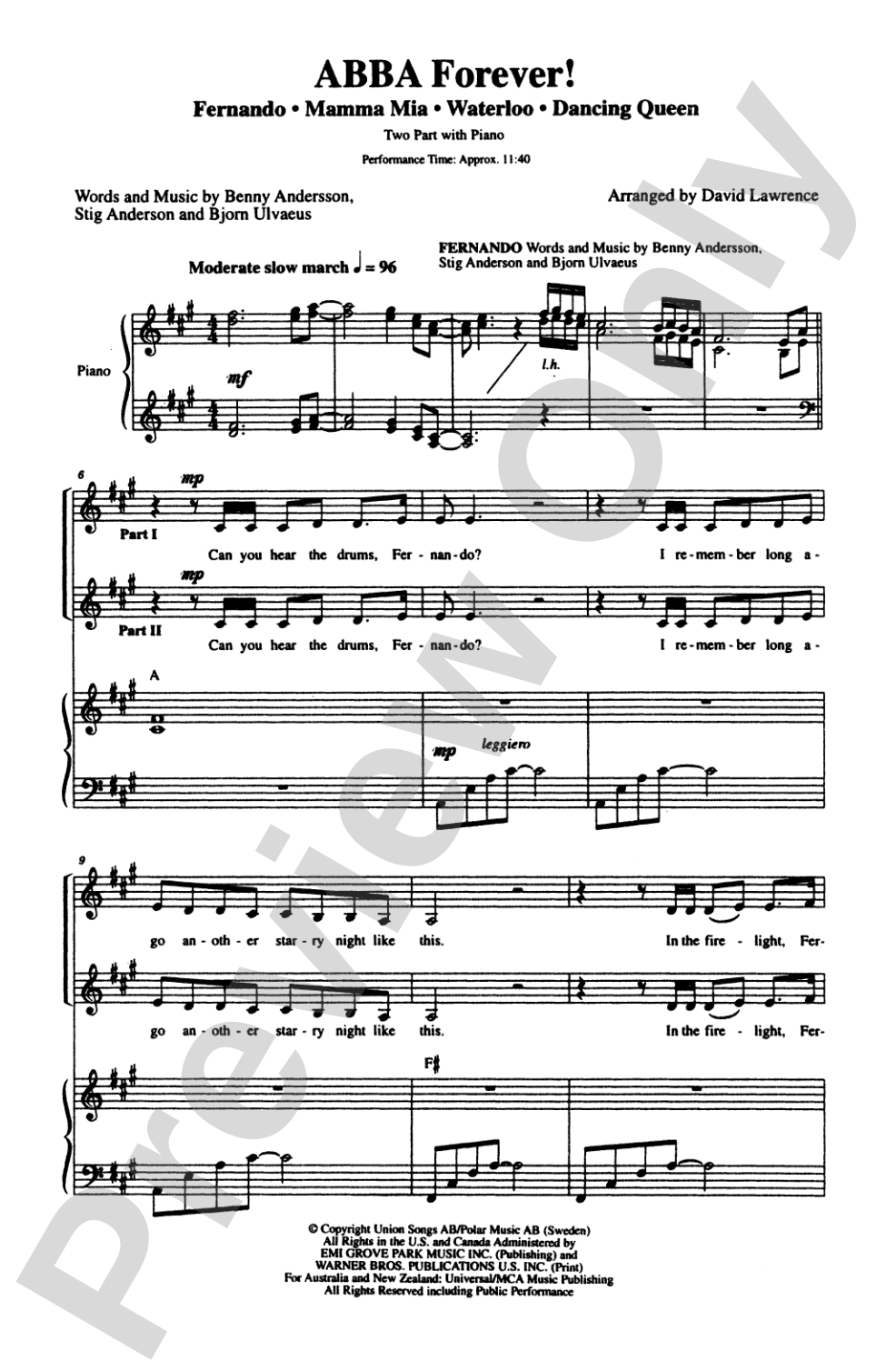
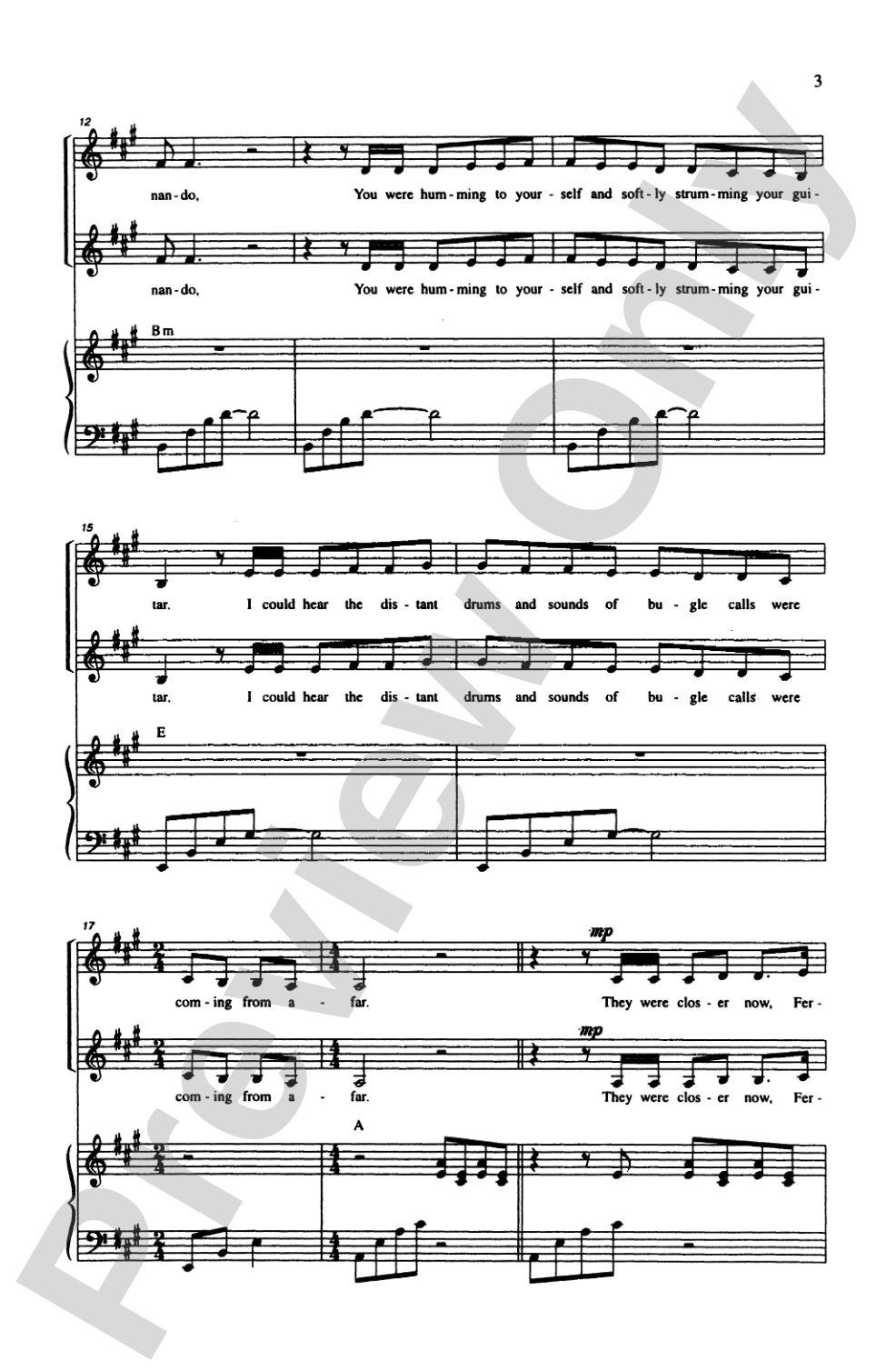
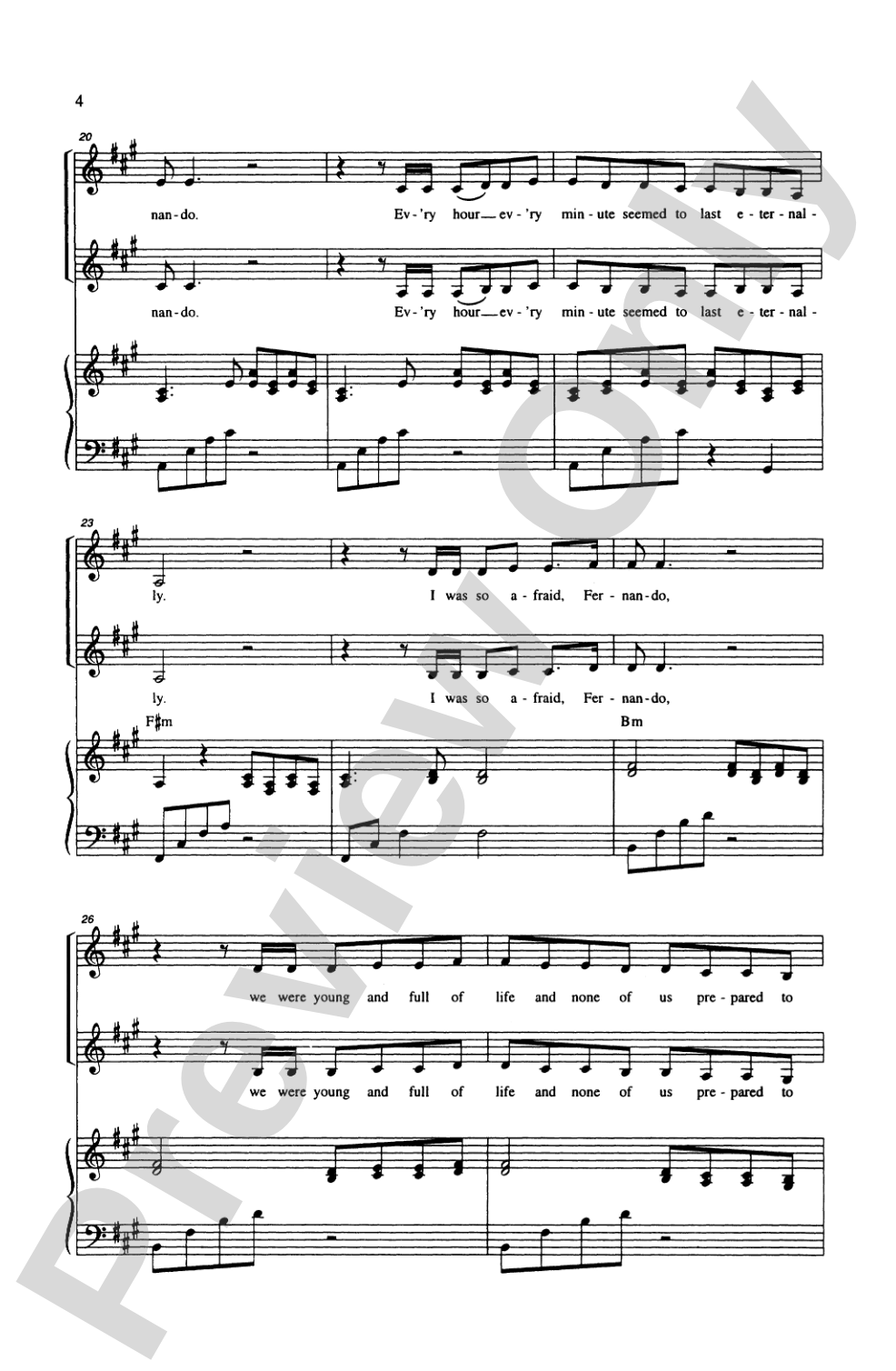
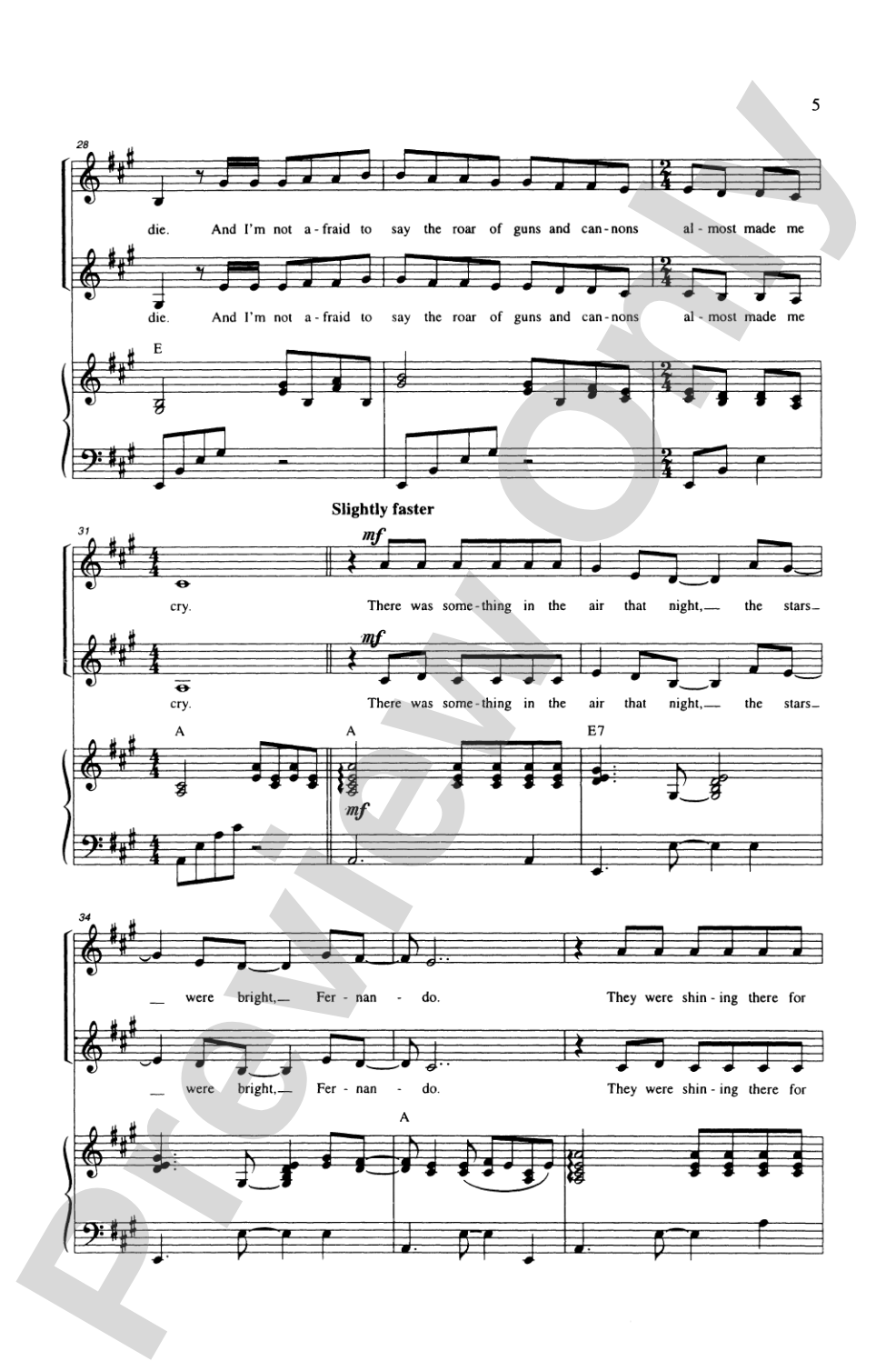
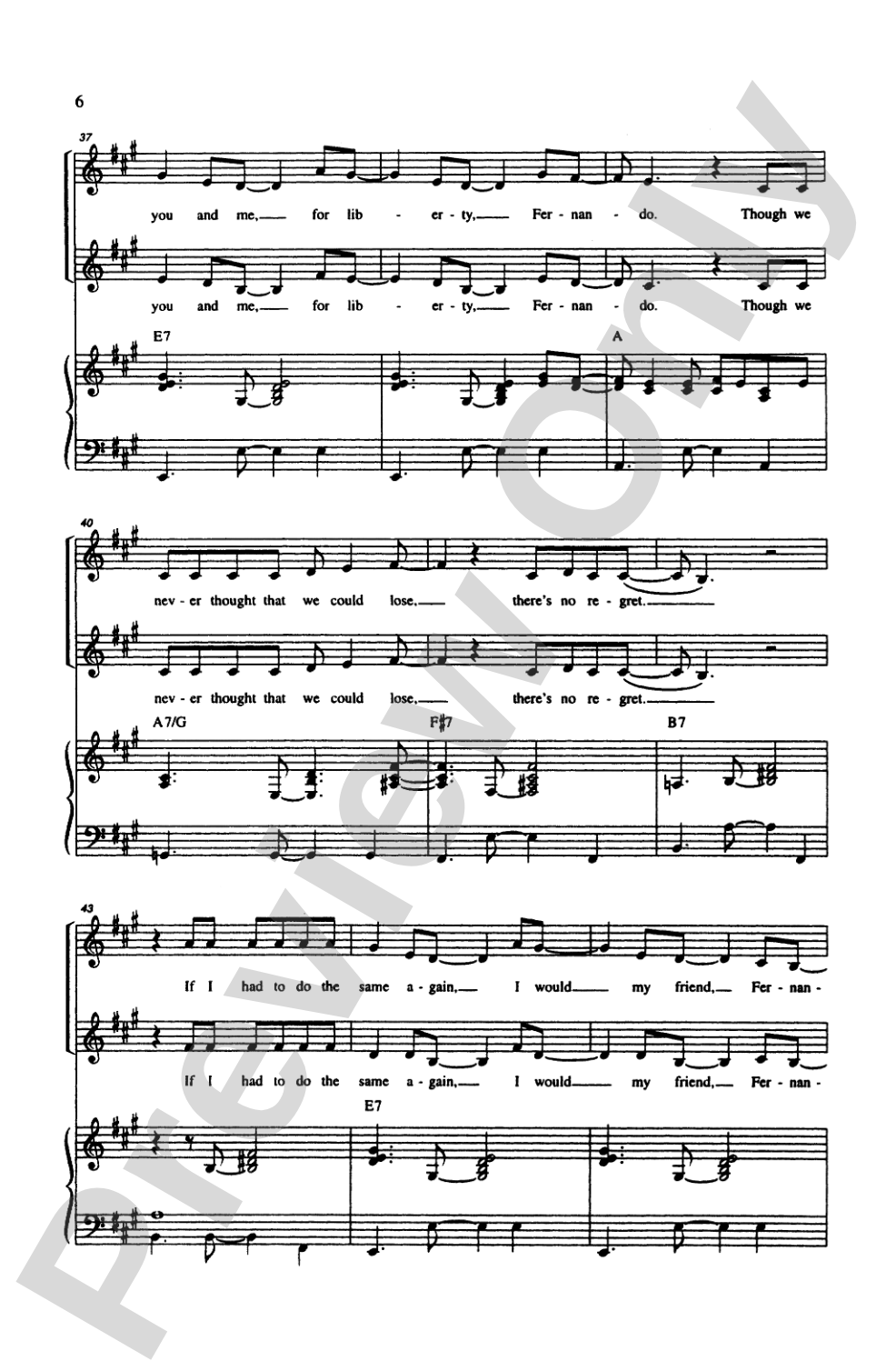
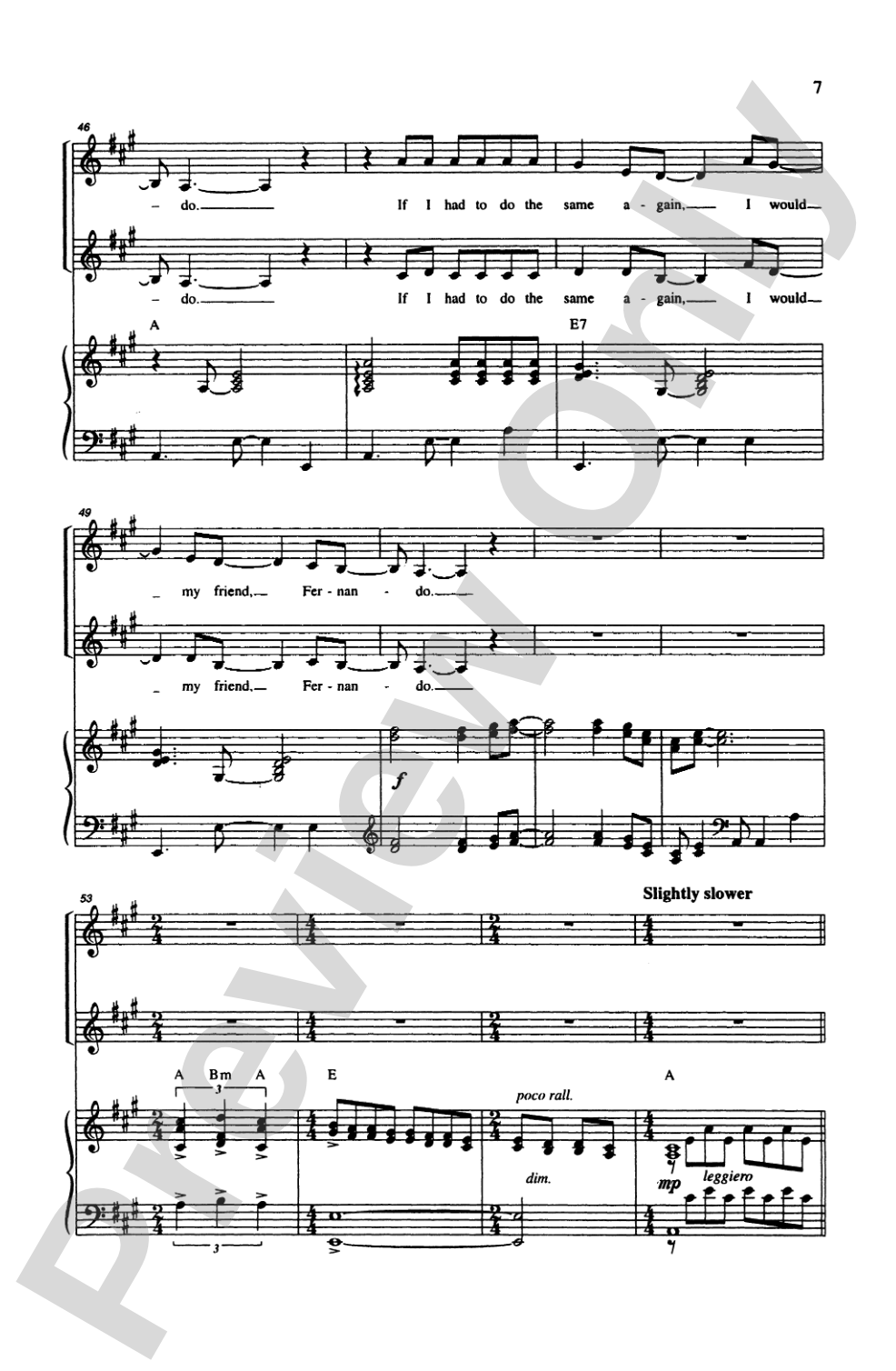

ABBA Forever!: 2-Part Choral Octavo
Featuring: Fernando / Mamma Mia / Waterloo / Dancing Queen
Words and music by Benny Andersson, Stig Anderson, and Björn Ulvaeus / arr. David Lawrence
Item: 00-PO-0002839
$4.95
Minimum order quantity: 20 copies
One moment…
Related Items
ABBA Forever!: SATB Choral Octavo |
$5.50
|
View | |
ABBA Forever!: SAB Choral Octavo |
$5.50
|
View | |
ABBA Forever!: SSA Choral Octavo |
$4.50
|
View | |
ABBA Forever!: SATB Choral Octavo |
$5.50
|
View | |
ABBA Forever!: SAB Choral Octavo |
$5.50
|
View | |
ABBA Forever!: SSA Choral Octavo |
$4.50
|
View | |
ABBA Forever!: 2-Part Choral Octavo |
$4.95
|
View | |
ABBA Forever!: Choral CD |
$27.99
|
View |
Description
This choral medley of ABBA songs from the hit musical Mamma Mia! is sure to make your choir want to get up and dance!


ABBA Forever!: 2-Part Choral Octavo isn't in MakeMusic Cloud just yet...but it could be. Let us know you'd like to see it, and you'll help shape what comes next. In the meantime, start a free trial and dive into thousands of interactive titles your students can play along with today.
Request This Title
Tell us you want it.
Start Your Free Trial
Explore everything that's ready to play right now.
Sample Audio
No sample audio found.
Sample Video
No sample videos found.
Additional Details
Series:
Alfred Archive Edition: Alfred Pop Choral Series
Publisher:
Alfred Music
Page Count:
32
SKU:
00-PO-0002839
More about this title
About the Composer: Benny Andersson
Benny Andersson co-founded ABBA in the early 1970s as the group's keyboardist and one of its primary songwriters. His melodic sensibility and production instincts shaped some of pop music's most enduring hits, from "Dancing Queen" to "The Winner Takes It All." Beyond ABBA's recording legacy, Andersson has composed for film and stage, most notably co-creating the musical Mamma Mia! with lyricist Björn Ulvaeus, which introduced ABBA's catalogue to generations of theatrical audiences.
For music educators, Andersson's work represents accessible, hook-driven songwriting that engages singers and audiences alike. His melodies sit naturally for voices, and his arrangements translate remarkably well to educational settings, making pop music from the 1970s feel contemporary and relevant in the choir room.
Why we love this
This medley captures ABBA's infectious energy in a format that works for developing choirs. The 2-part voicing keeps the arrangement singable while the Mamma Mia! context gives students an instant cultural reference point and motivation to prepare well. Directors will appreciate how naturally David Lawrence's arrangement sustains interest across 32 pages without overcomplicating the harmonic or rhythmic demands.
What to expect
Infectious, joyful, and irresistibly groovy. The medley pulls listeners into the disco and pop sensibility of ABBA's catalog, with melodies that lodge immediately in the ear and chord progressions that feel both modern and timelessly warm. Performing it creates an almost inevitable impulse to move.
Who it's for
This arrangement suits intermediate choirs (high school level and up, community choirs, and select middle school groups with strong sight-reading) ready to perform pop material with style and confidence. Singers benefit from a clear melodic foundation and straightforward harmonic language that lets them focus on rhythm, articulation, and the character each song demands.
How to get the most out of it
- Lock in the rhythm section early in rehearsal by having singers tap the beat while singing through the melodic lines; ABBA's grooves depend on rhythmic precision even more than harmonic accuracy.
- Use the recorded accompaniment strategically during early rehearsals to establish tempo and style, then pull it back so singers build confidence singing without it.
- Shape each song's melodic contour distinctly rather than treating all sections with the same dynamic approach; contrast helps the medley feel like separate moments rather than one long block.
- Encourage singers to feel the danceability of the material; when choirs embrace the groove physically, the performance energy lifts and intonation often improves.
How to use it
Program this for pops concerts, spring shows, or any performance where you want to showcase your choir's versatility and connection to contemporary musical culture. It also works as a show-opening or closing number that builds immediate audience connection and leaves the concert on an upbeat, memorable note.
Skills your students will build
- Rhythmic precision in syncopated pop grooves
- Articulation and phrasing appropriate to pop idiom
- Two-part harmonic listening and blend
- Sustaining ensemble cohesion through a multi-section medley
- Stylistic interpretation of familiar material