

A-Wassailing!: SSA Choral Octavo
Traditional English Carol / arr. Chad Weirick
Item: 00-PO-0006401
$2.30
Minimum order quantity: 20 copies
Pickup currently not available
Description
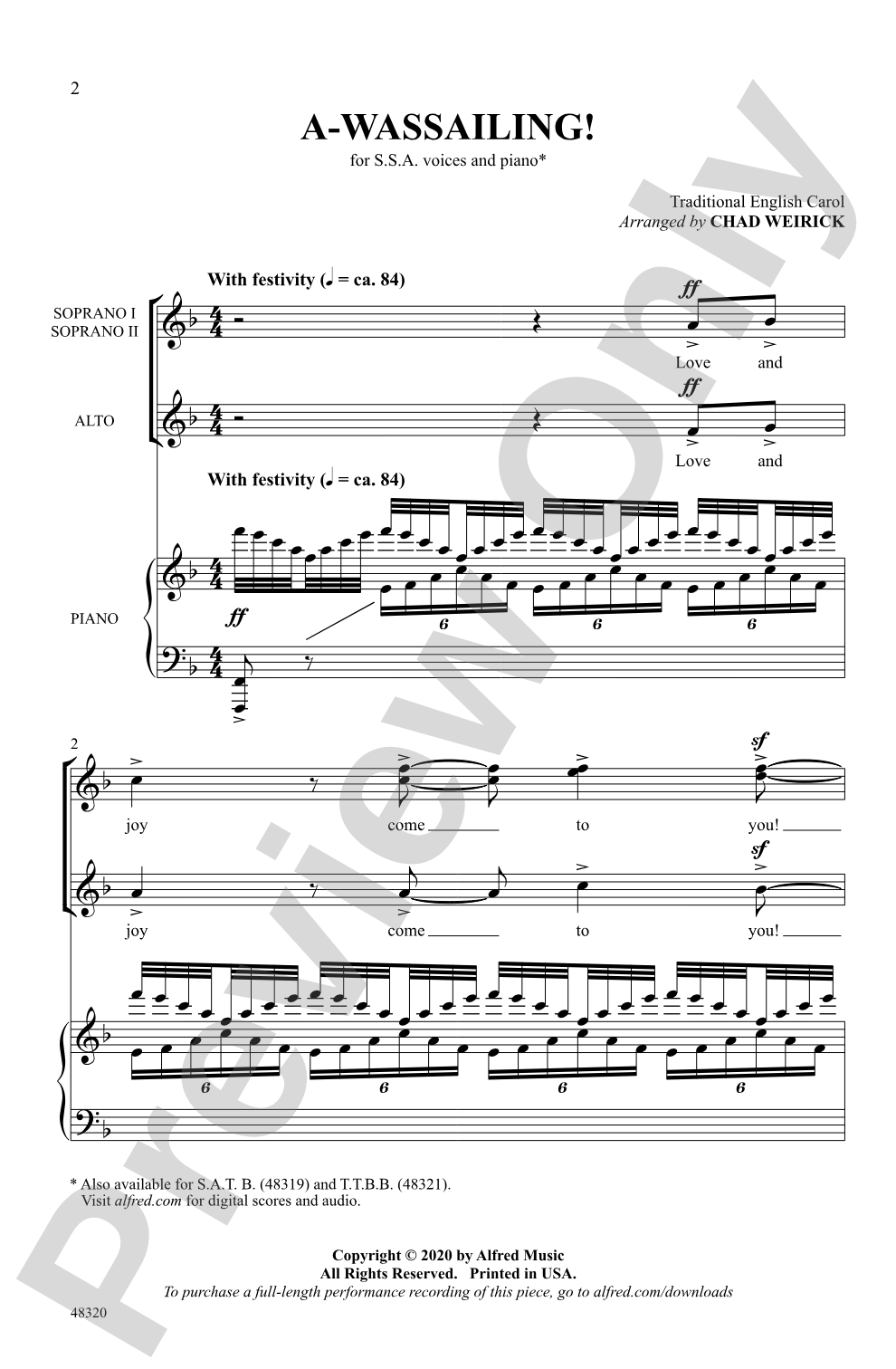
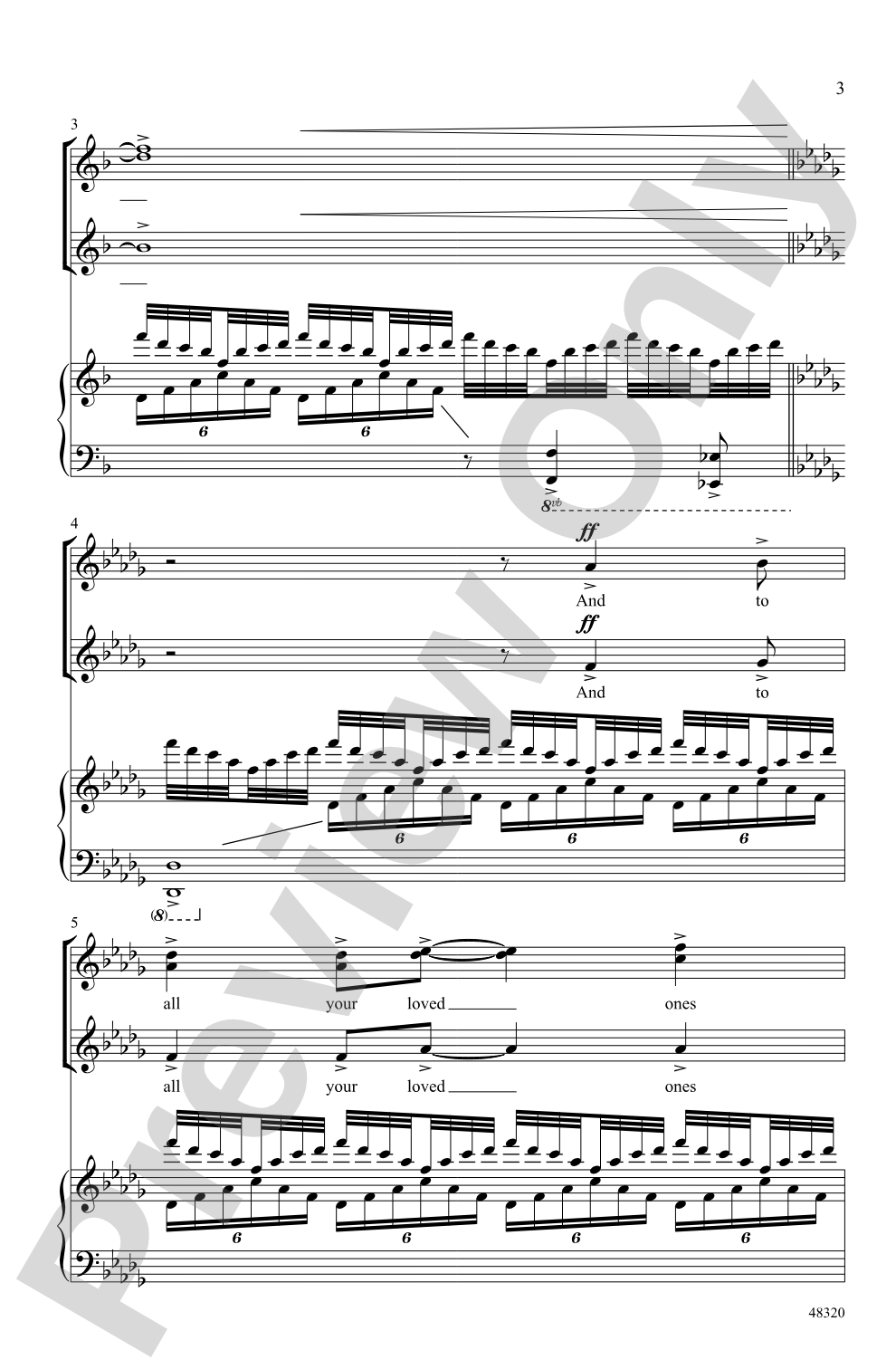
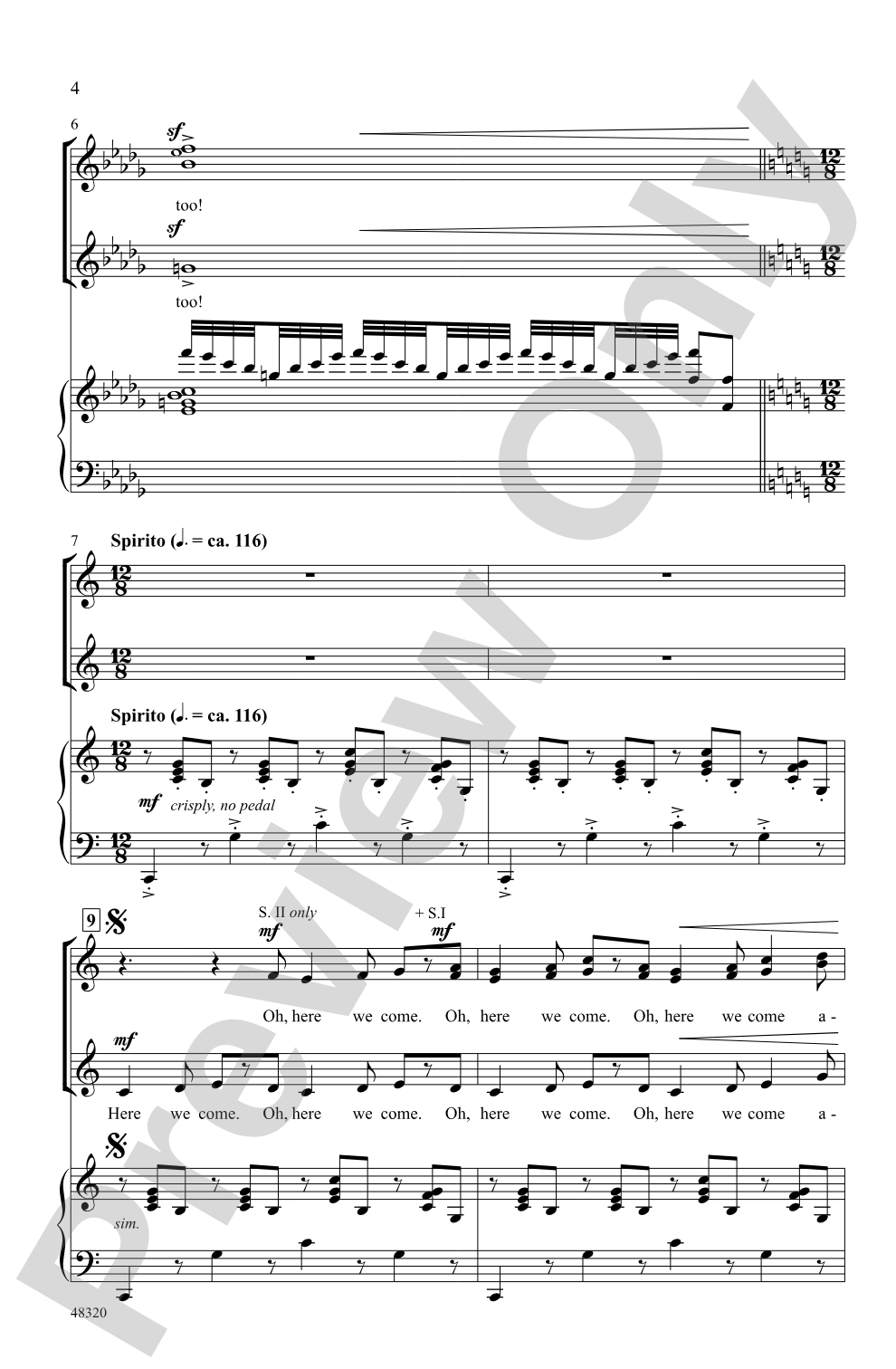
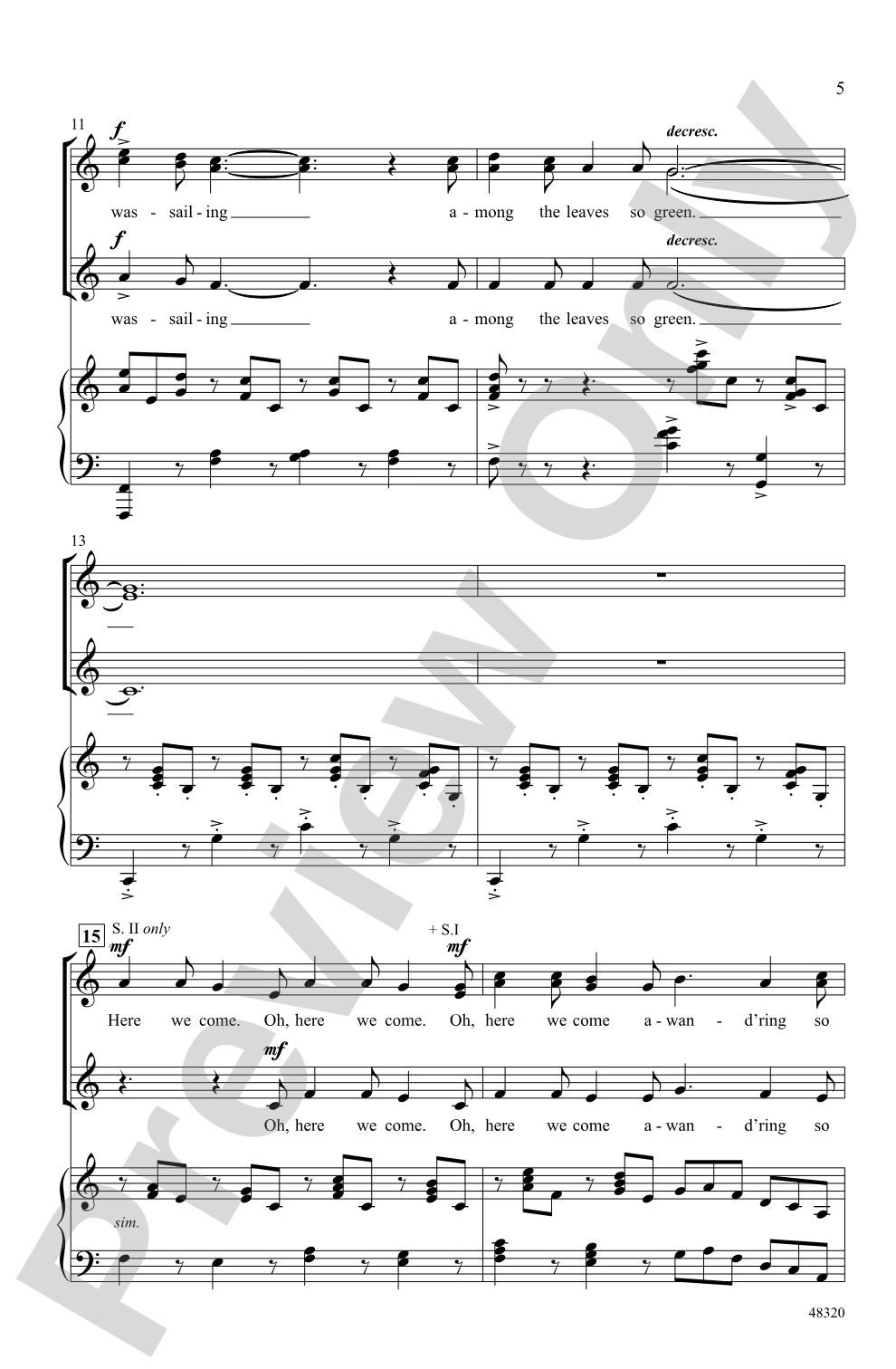
Here's a wildly inventive reimagining of the traditional English carol that will be a highlight on holiday concerts. The dazzling piano introduction ushers in a rush of crystal-clear chords in bright contemporary harmony, while frequent shifts of meter and style conjure an assortment of moods, from celebratory to reflective. A stunning concert setting that is worth the extra rehearsal.


A-Wassailing!: SSA Choral Octavo isn't in MakeMusic Cloud just yet...but it could be. Let us know you'd like to see it, and you'll help shape what comes next. In the meantime, start a free trial and dive into thousands of interactive titles your students can play along with today.
Request This Title
Tell us you want it.
Start Your Free Trial
Explore everything that's ready to play right now.
Sample Audio
1
Audio File
--:--
0:00
0:00
Sample Video
No sample videos found.
Additional Details
Series:
Lawson-Gould
Publisher:
Alfred Music
Page Count:
20
SKU:
00-PO-0006401
More about this title
About the Arranger: Chad Weirick

Chad Weirick's early career in New York's theater world shaped his distinctive approach to arrangement and orchestration. He joined Radio City Music Hall as organist while still in his teens, going on to serve as rehearsal pianist for the Rockettes and perform as pianist for Broadway productions including A Chorus Line, Shenandoah, and The Act. That combination of precision, showmanship, and collaborative experience informed his later studies in composition at New England Conservatory, where he earned his Master's degree under Malcolm Peyton.
Now based in Massachusetts, Weirick has built a career balancing church music leadership, high school choral instruction, and an active schedule as accompanist and associate director for the Boston Gay Men's Chorus. His arrangements have been performed and recorded by choruses across the United States and internationally, earning him recognition for work that honors traditional material while bringing it into contemporary harmonic and structural contexts.
Why we love this
Weirick's arrangement refuses to settle for a straightforward carol setting. The contemporary harmonic language and meter shifts create constant surprise without sacrificing singability, and the dazzling piano writing commands attention from the moment the piece begins. Directors seeking a carol that feels fresh and challenges singers musically will find it rewarding to prepare and thrilling to perform.
What to expect
Bright, restless, and intellectually playful. The crystal-clear contemporary harmony sparkles against the steady pulse, while the shifting meters create a sense of gentle disorientation that mirrors the emotional swings from celebration to reflection. There's a theatrical energy to the whole piece, rooted in the composer's Broadway background.
Who it's for
SSA choirs with strong sight-readers who welcome rhythmic challenge and contemporary harmonic language. This arrangement works best with groups that have rehearsal time to spend on meter work and dynamic shaping, and with singers who can sustain tone through sustained contemporary harmony. It suits holiday programs looking for a carol that stands apart from traditional approaches.
How to get the most out of it
- Balance the brightness of the choral writing against the piano's rhythmic propulsion in the introduction; the choir should sit slightly back and let the accompaniment establish the inventive character before voices enter.
- Mark the meter changes clearly in rehearsal, using a consistent gesture so singers can follow the shifting feel without losing confidence. Frequent shifts between meters are navigable when the underlying pulse stays firm.
- Shape the harmonic turns and modal shifts as events rather than obstacles. These moments are what make the arrangement special; invite the singers to listen to the color changes and respond with dynamic sensitivity.
- Allow time for the reflective passages to settle before moving into celebratory sections. The emotional arc depends on clear contrast between moods, which only lands when pacing accommodates the shift.
How to use it
This works exceptionally well as a concert closer or opening number, where its distinctive voice will make a strong impression. Consider pairing it with carols or holiday selections of more traditional harmonic language to let the Weirick arrangement shine by contrast. The piece has enough personality to carry a second half of a holiday program on its own.
Skills your students will build
- Reading mixed meters (3/4, 4/4, and shifting time signatures within a single phrase)
- Singing contemporary modal and chromatic harmony with accuracy and blend
- Responding to dynamic and textural shifts that create mood changes
- Ensemble listening and balance when meter or rhythm divides voices