
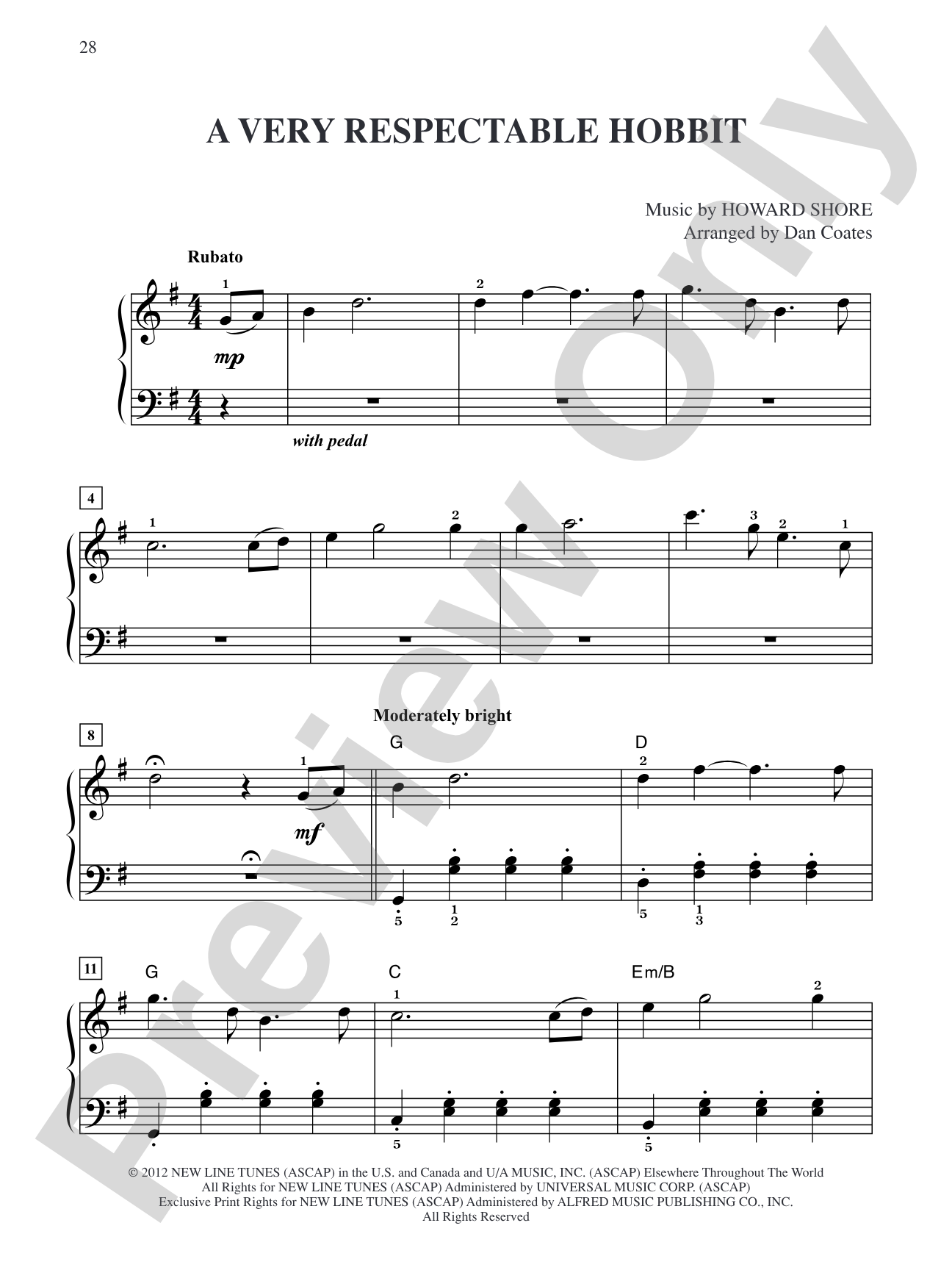
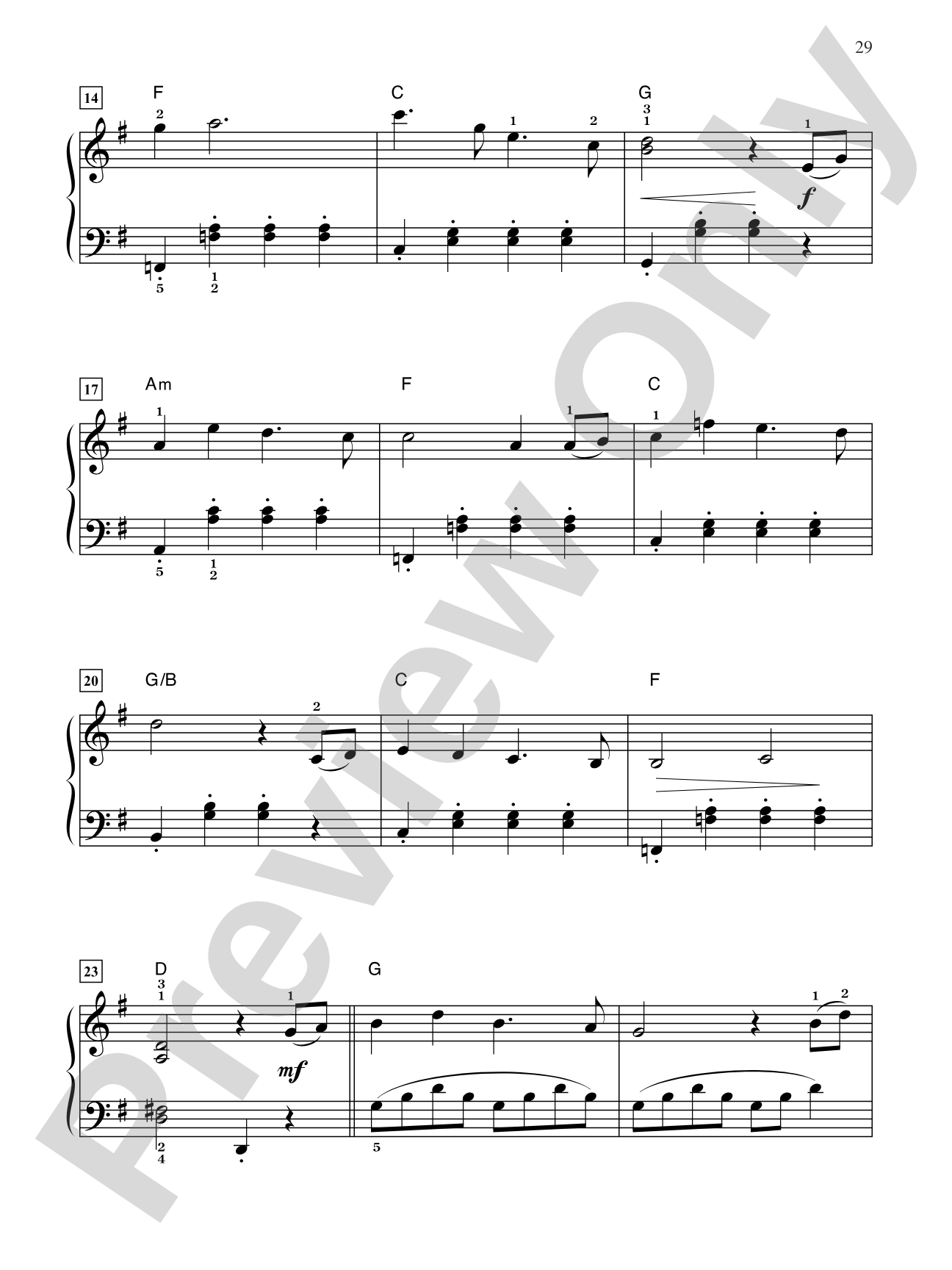

A Very Respectable Hobbit (from The Hobbit: An Unexpected Journey): Easy Piano
Sheet Music Selections from the Motion Picture
Music composed by Howard Shore / arr. Dan Coates
Level: Easy Piano
Item: 00-PS-0015898
$5.99
One moment…
Related Items
An Unexpected Party (from The Hobbit: An Unexpected Journey): Easy Piano |
$5.99
|
View | |
Misty Mountains (from The Hobbit: An Unexpected Journey): Easy Piano |
$4.99
|
View | |
The Adventure Begins (from The Hobbit: An Unexpected Journey): Easy Piano |
$4.99
|
View | |
Dreaming of Bag End (from The Hobbit: An Unexpected Journey): Easy Piano |
$4.99
|
View | |
Song of the Lonely Mountain (from The Hobbit: An Unexpected Journey): Easy Piano |
$4.99
|
View | |
Erebor (from The Hobbit: An Unexpected Journey): Easy Piano |
$4.99
|
View | |
The Dwarf Lords (from The Hobbit: An Unexpected Journey): Easy Piano |
$4.99
|
View | |
The Hobbit: An Unexpected Journey: Piano Book |
$15.99
|
View |
Description
Play selections from Howard Shore's brilliant score to The Hobbit: An Unexpected Journey! The eight arrangements in this collection are notably easier to play than those in the separately published piano/vocal edition. For The Hobbit, Howard Shore masterfully expands upon the musical palette of Middle-earth, blending familiar motifs from the The Lord of the Rings trilogy with an exciting array of memorable new themes. In addition to the piano arrangements, this beautifully produced souvenir folio features an array of colorful photos from the film. Titles: An Unexpected Party * Misty Mountains * The Adventure Begins * Song of the Lonely Mountain * Dreaming of Bag End * A Very Respectable Hobbit * Erebor * The Dwarf Lords.


A Very Respectable Hobbit (from The Hobbit: An Unexpected Journey): Easy Piano isn't in MakeMusic Cloud just yet...but it could be. Let us know you'd like to see it, and you'll help shape what comes next. In the meantime, start a free trial and dive into thousands of interactive titles your students can play along with today.
Request This Title
Tell us you want it.
Start Your Free Trial
Explore everything that's ready to play right now.
Sample Audio
No sample audio found.
Sample Video
No sample videos found.
Additional Details
Publisher:
Alfred Music
Page Count:
36
SKU:
00-PS-0015898
More about this title
About the Composer: Howard Shore
Howard Shore has spent decades crafting film scores that define cinematic worlds. His work on The Lord of the Rings trilogy earned him three Academy Awards and established him as a master of orchestral storytelling, creating musical landscapes as intricate and immersive as the narratives they accompany.
For The Hobbit prequel trilogy, Shore expanded his Middle-earth vocabulary with new themes while honoring the musical language he established in the earlier films. His ability to balance grand orchestral gestures with intimate character moments makes his scores enduringly rewarding for pianists across all levels.
Why we love this
Shore's themes are instantly recognizable and remarkably singable, which means they stay in your fingers once you learn them. Dan Coates's arrangements preserve the emotional core of each piece while keeping the technical demands reasonable, so pianists can focus on bringing out the sweeping melodies and cinematic drama rather than wrestling with the score.
What to expect
These arrangements capture the sweeping, heroic energy of Middle-earth while remaining accessible. You'll find yourself drawn into majestic landscapes and intimate character moments, with Shore's signature orchestral colors translated into voicings that pianists can genuinely play.
Who it's for
Easy piano students who want to play film music that sounds impressive without requiring advanced technique. This collection works equally well for recreational pianists seeking appealing repertoire and for teachers looking to spark enthusiasm through beloved movie themes.
How to get the most out of it
- Let the opening of 'Misty Mountains' breathe. These iconic low notes need space and weight, not rushing; Shore's film orchestration relies on that sense of gravitas.
- Balance your hands carefully in 'The Adventure Begins.' The right hand carries thrilling melodic material, but the left hand's rhythmic patterns deserve clarity to capture the forward momentum.
- Shape 'Song of the Lonely Mountain' with long phrases. This is a song meant to linger; avoid chopping it into mechanical sections.
- Treat 'Dreaming of Bag End' as intimate storytelling. The sparse texture is intentional; every note should sing with purpose, not fill the space.
How to use it
Feature individual selections in recitals to showcase film music alongside classical and contemporary repertoire. A cluster of two or three pieces works beautifully as a thematic program segment, inviting audiences into Tolkien's world without requiring them to know the films.
Skills your students will build
- Playing sustained, singing melodic lines at easy technical levels
- Understanding how film composers use themes to develop character and place
- Interpreting dynamic shaping and rubato in service of storytelling
- Managing the balance between accompaniment and melody across registers