
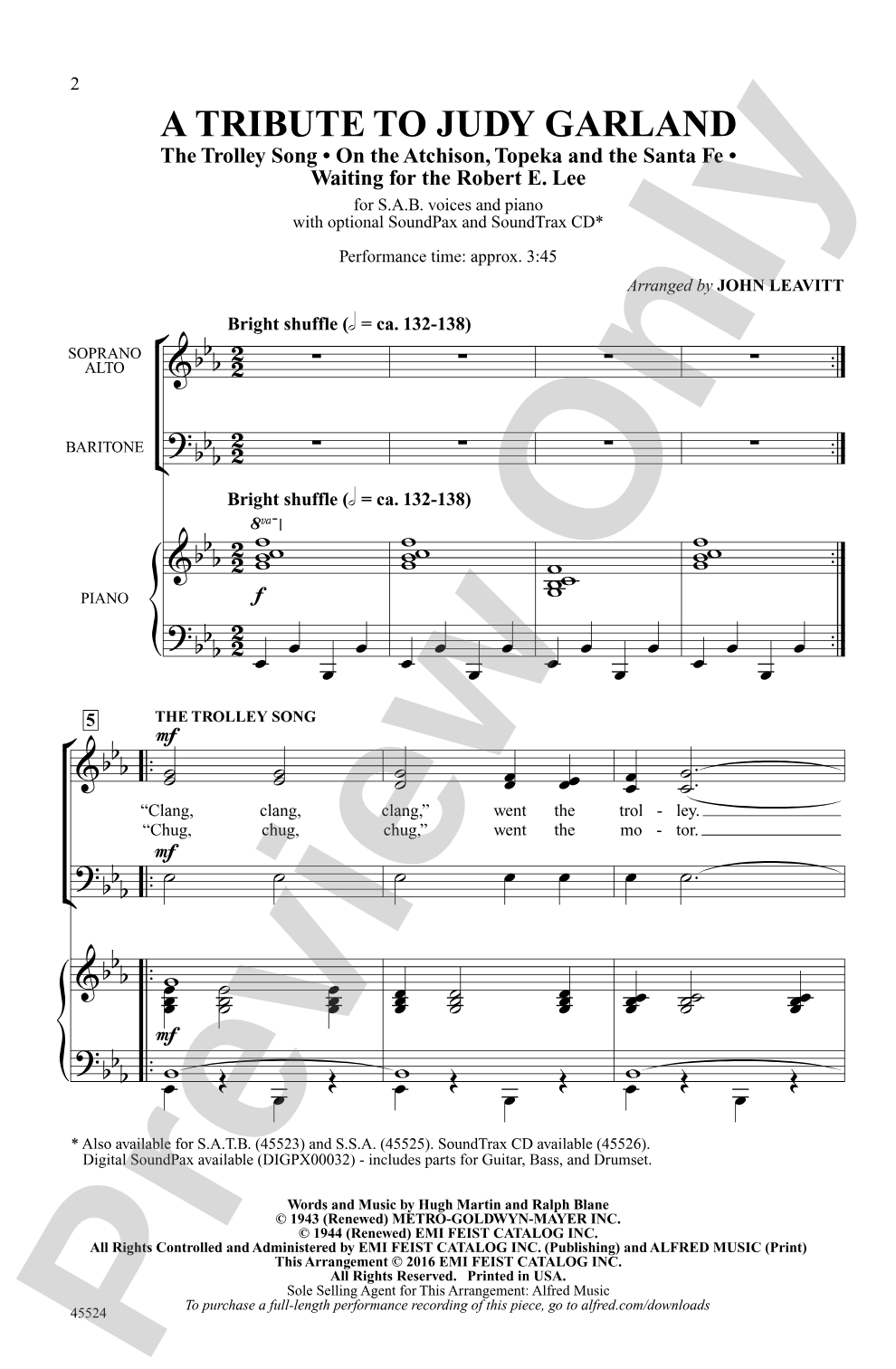
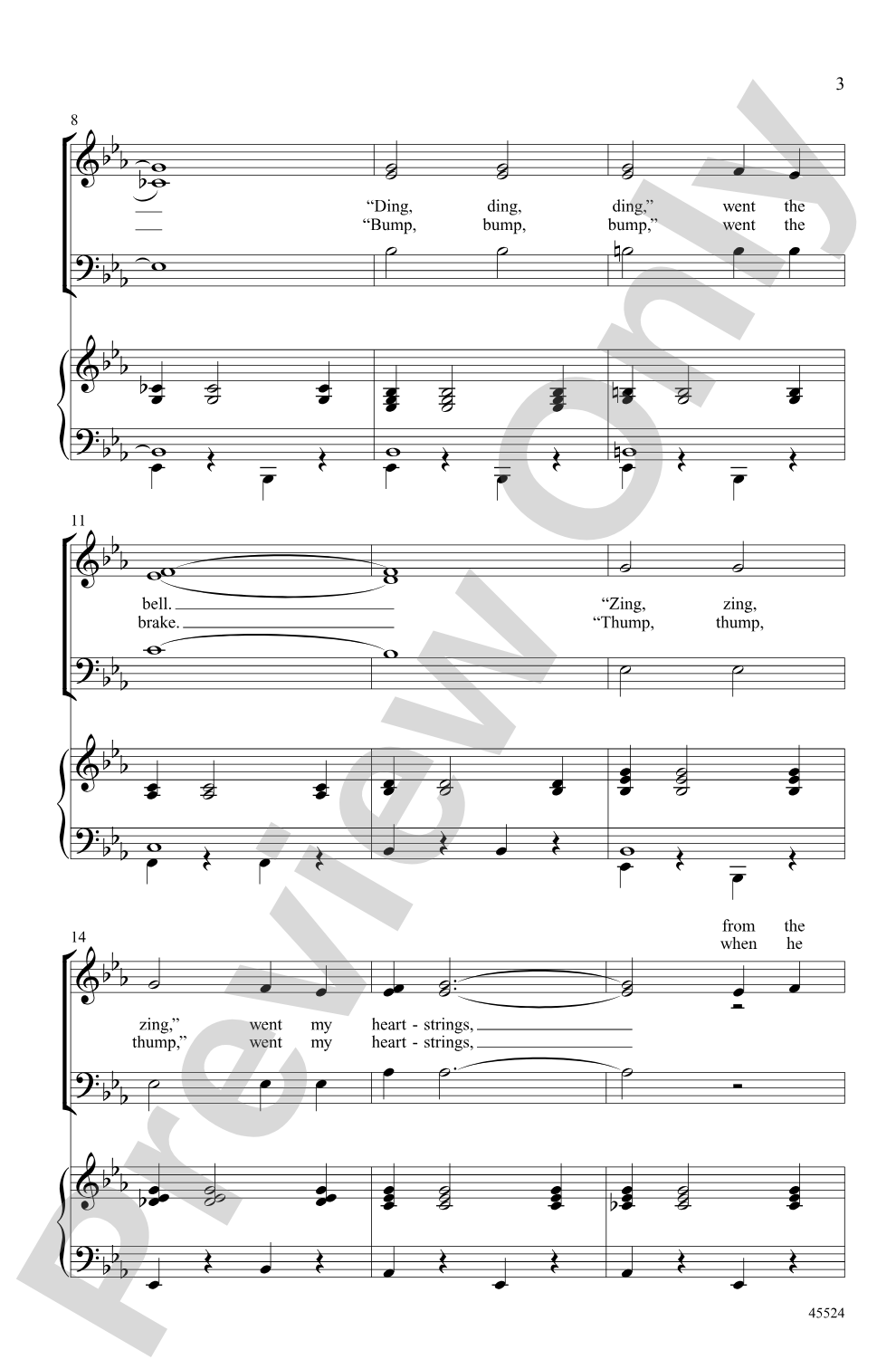
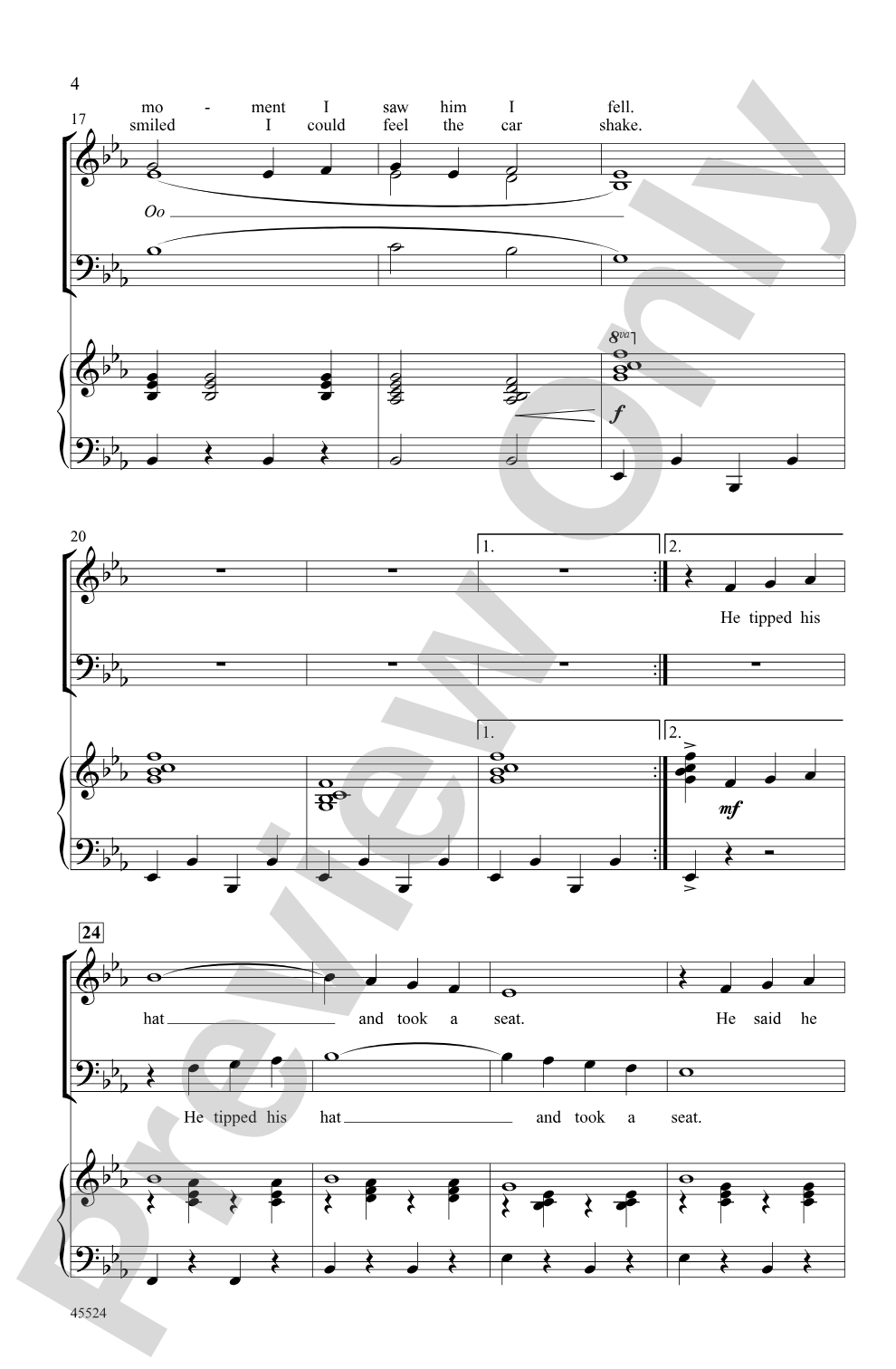

A Tribute to Judy Garland: SAB Choral Octavo
The Trolley Song / On the Atchison, Topeka and the Santa Fe / Waiting for the Robert E. Lee
[Judy Garland] / arr. John Leavitt
Item: 00-PO-0003740
$2.10
Minimum order quantity: 20 copies
Pickup currently not available
Related Items
A Tribute to Judy Garland: SoundTrax Digital Audio Download |
$34.99
|
View | |
A Tribute to Judy Garland: SATB Choral Octavo |
$2.10
|
View | |
A Tribute to Judy Garland: SSA Choral Octavo |
$2.10
|
View | |
A Tribute to Judy Garland: SATB Choral Octavo |
$2.10
|
View | |
A Tribute to Judy Garland: SAB Choral Octavo |
$2.10
|
View | |
A Tribute to Judy Garland: SSA Choral Octavo |
$2.10
|
View | |
A Tribute to Judy Garland: Choral Octavo SoundTrax CD |
$34.99
|
View | |
A Tribute to Judy Garland: Choral SoundPax |
$15.00
|
View |
Description
"Clang, clang, clang went the trolley!" Harkening back to the golden age of the movie musical, this trio of transportation-themed songs, made popular by the legendary star of stage and screen, will delight audiences of all ages. A clever combo!


A Tribute to Judy Garland: SAB Choral Octavo isn't in MakeMusic Cloud just yet...but it could be. Let us know you'd like to see it, and you'll help shape what comes next. In the meantime, start a free trial and dive into thousands of interactive titles your students can play along with today.
Request This Title
Tell us you want it.
Start Your Free Trial
Explore everything that's ready to play right now.
Sample Audio
1
Audio File
--:--
0:00
0:00
Sample Video
No sample videos found.
Additional Details
Series:
Alfred Pop Choral Series
Publisher:
Alfred Music
Page Count:
16
SKU:
00-PO-0003740
More about this title
About the Artist: Judy Garland
Judy Garland (1922-1969) was an iconic performer whose career spanned vaudeville, radio, film, and concert stages. Her distinctive voice and magnetic stage presence made her one of the most influential entertainers of the 20th century, and her interpretations of popular standards became definitive versions that generations of singers continue to study and perform.
Garland's work in Hollywood musicals of the 1930s and 1940s established many of the songs now considered classics of American musical theater. Her ability to convey both technical mastery and emotional authenticity in every performance set a standard for vocal artistry that remains relevant to music education today.
Why we love this
John Leavitt's arrangement captures the charm and theatrical energy of these Golden Age standards while keeping the voicing accessible for developing choirs. The transportation theme creates natural narrative momentum across the set, and the material lands solidly with audiences of all ages, making it an excellent choice for family concerts or spring pops programs.
What to expect
These songs evoke the optimism and theatrical sparkle of 1930s-1940s movie musicals, with bright, uncomplicated harmonies that let the melodies shine. The transportation imagery and nostalgic context invite performers to lean into character and storytelling, making each piece feel like a small scene rather than just a song.
Who it's for
This octavo suits SAB choirs at the high school or community level who want accessible yet engaging repertoire with built-in audience appeal. Directors looking for secular material that bridges generations will find three proven crowd-pleasers arranged in a straightforward, teachable format.
How to get the most out of it
- Balance the homophonic sections carefully so the melody sings through without the accompanimental voices overwhelming it. SAB voicing requires intentional blending across the soprano and alto lines.
- Reference Garland's original recordings to capture the rhythmic lift and diction clarity that made these songs memorable. Pay special attention to the swing and syncopation characteristic of the era.
- Layer in the recorded accompaniment during final rehearsals to build confidence and refine ensemble timing, especially in transitions between the three songs.
How to use it
Program this set as a complete suite on a spring or pops concert to anchor a "Golden Age of Hollywood" segment, or use individual titles as lighter moments in a mixed repertoire program. The short page count and approachable voicing also make it suitable for community and intergenerational choral events where familiarity and joy matter as much as technical challenge.
Skills your students will build
- Singing three-part harmony in SAB voicing
- Performing music from the American popular song tradition
- Maintaining clear diction and rhythmic precision in syncopated material
- Balancing melody and accompanying voices in homophonic textures