A Swingin' Holiday Cover Image

A Swingin' Holiday: Full Orchestra Conductor Score

$8.00 USD
Sale price  $8.00 USD Regular price 
Skip to product information
A Swingin' Holiday Cover Image

A Swingin' Holiday: Full Orchestra Conductor Score

Featuring: We Three Kings / Silent Night / Jolly Old St. Nicholas

Traditional / arr. Ralph Ford

Grade: 3

Item: 00-35942S

$8.00
Shipped

One moment…

Description
Three holiday favorites are staged in an enjoyable easy-swing style. Including "We Three Kings," "Silent Night," and "Jolly Old St. Nicholas," this medley will steal your show. A great concert closer!

A Swingin' Holiday: Full Orchestra Conductor Score isn't in MakeMusic Cloud just yet...but it could be. Let us know you'd like to see it, and you'll help shape what comes next. In the meantime, start a free trial and dive into thousands of interactive titles your students can play along with today.

Sample Pages

Sample Audio
No sample audio found.
Sample Video
Additional Details
Series: Belwin Concert Full Orchestra
Publisher: Alfred Music
Page Count: 12
UPC: 038081420141
SKU: 00-35942S

More about this title

About the Arranger: Ralph Ford
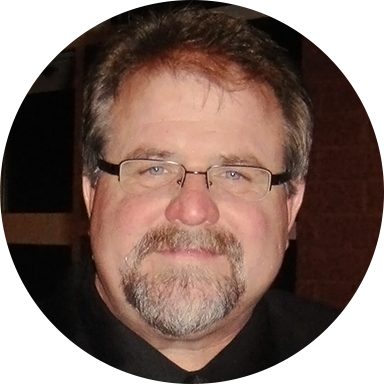
Ralph Ford

Ralph Ford brings three decades of professional experience across composition, arranging, conducting, and education. Beginning his arranging career at fifteen, he earned his degrees from Troy State University while serving as Director of Jazz Ensemble I and staff arranger for the band program. He has taught orchestration, arranging, theory, and applied brass at the university level for many years.

As an exclusive composer and arranger for Alfred Music's Belwin division, Ford has created over 250 titles for orchestra, concert band, jazz ensemble, and marching band, performed by ensembles ranging from school groups to professional orchestras worldwide. His work extends beyond concert music into media production, including broadcast compositions, commercials, and video scoring. He remains a sought-after clinician and commissioned composer whose arrangements and original works are known for their accessibility and musical integrity.

Why we love this

Ford's gift for swing feels natural here, never forced or overwrought. He takes three beloved carols and reimagines them with rhythmic lift and harmonic color that keeps audiences engaged without abandoning the tunes themselves. It's an ideal closer because it lands with both musicality and showmanship.

What to expect

Warm, buoyant, and festive without becoming saccharine. The swing treatment gives these carols a contemporary energy; they feel alive and animated while remaining recognizable and rooted in tradition. There's genuine joy in the writing, the kind that puts audiences in good spirits.

Who it's for

This score serves conductors leading full orchestras at the Grade 3 level who want a polished, engaging finale that balances holiday spirit with musical substance. Student orchestras benefit from the accessible voicing and straightforward swing style, while community and semi-professional ensembles will find it rewarding to perform.

How to get the most out of it

  • Lock the rhythm section (bass, drums, and piano if present) into a comfortable swing feel during sectional rehearsals. The groove supports everything else.
  • Balance the melody across sections. These tunes are familiar; let the audience hear them clearly even as the harmony dances around them.
  • Observe phrase markings carefully. Swing doesn't mean loose; Ford's articulations guide phrasing and style.
  • Let the ensemble breathe between the three tunes. A brief pause between medley sections gives the audience time to recognize each new carol.

How to use it

Close your winter concert with this medley to send the audience out in high spirits. It works equally well as a standalone final number or paired with other seasonal repertoire earlier in the program. The Grade 3 difficulty means most student orchestras can prepare it alongside more substantial concert material without derailing sectional focus.

Skills your students will build

  • Swing rhythm articulation and phrasing
  • Balancing melody and accompanying voices in a jazz idiom
  • Adjusting style and tone between lyrical hymn material and rhythmically driving arrangements
  • Ensemble communication and synchronization in syncopated contexts

You May Also Like