

A Red, Red Rose: SSA Choral Octavo
Words by Robert Burns, music by Greg Gilpin
Item: 00-PO-0006702
$2.05
Minimum order quantity: 20 copies
Pickup currently not available
Related Items
A Red, Red Rose: PianoTrax Digital Audio Download |
$9.99
|
View | |
A Red, Red Rose: SATB Choral Octavo |
$2.05
|
View | |
A Red, Red Rose: SAB Choral Octavo |
$2.05
|
View | |
A Red, Red Rose: SATB Choral Octavo |
$2.05
|
View | |
A Red, Red Rose: SAB Choral Octavo |
$2.05
|
View | |
A Red, Red Rose: SSA Choral Octavo |
$2.05
|
View |
Description
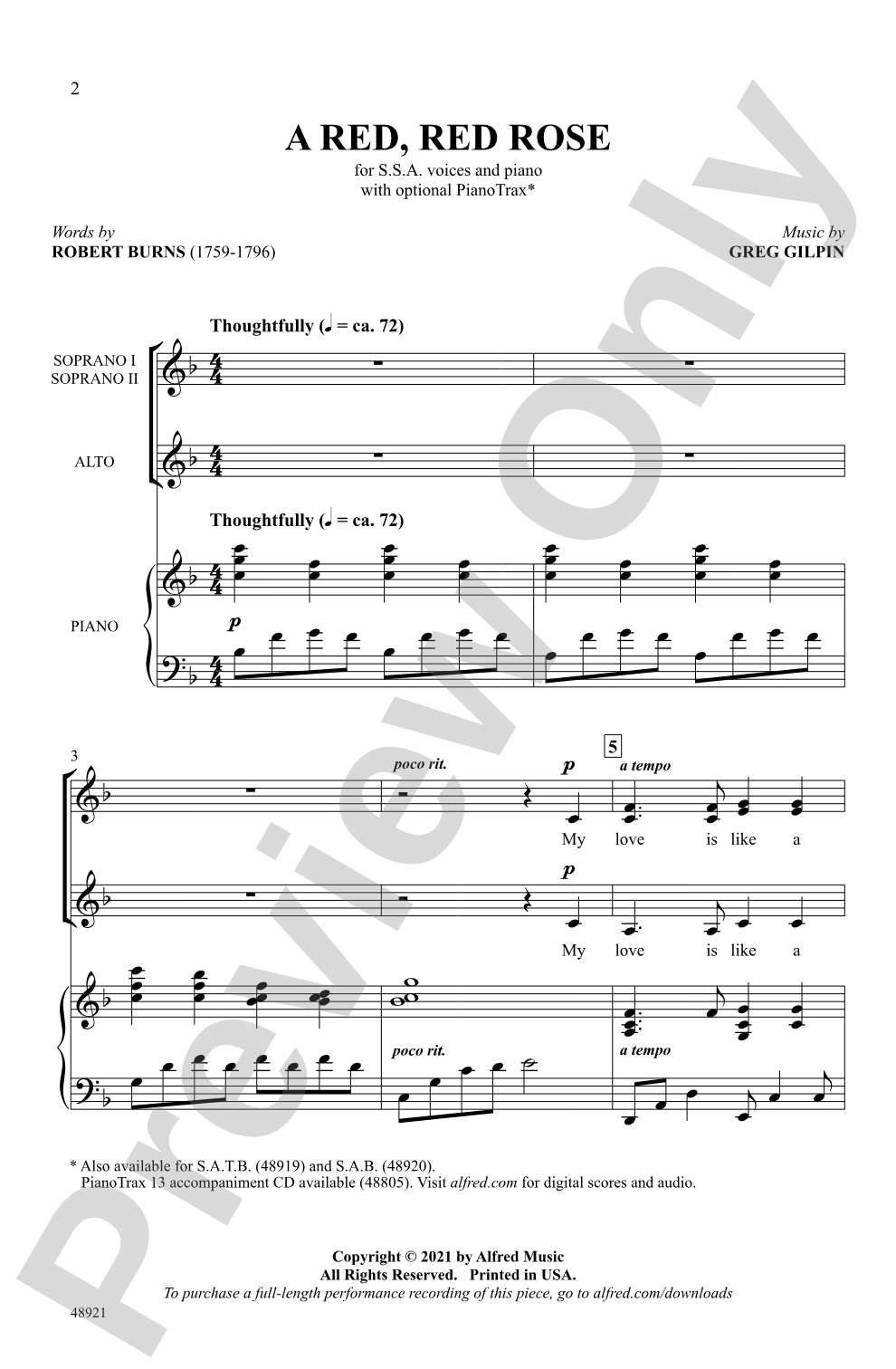
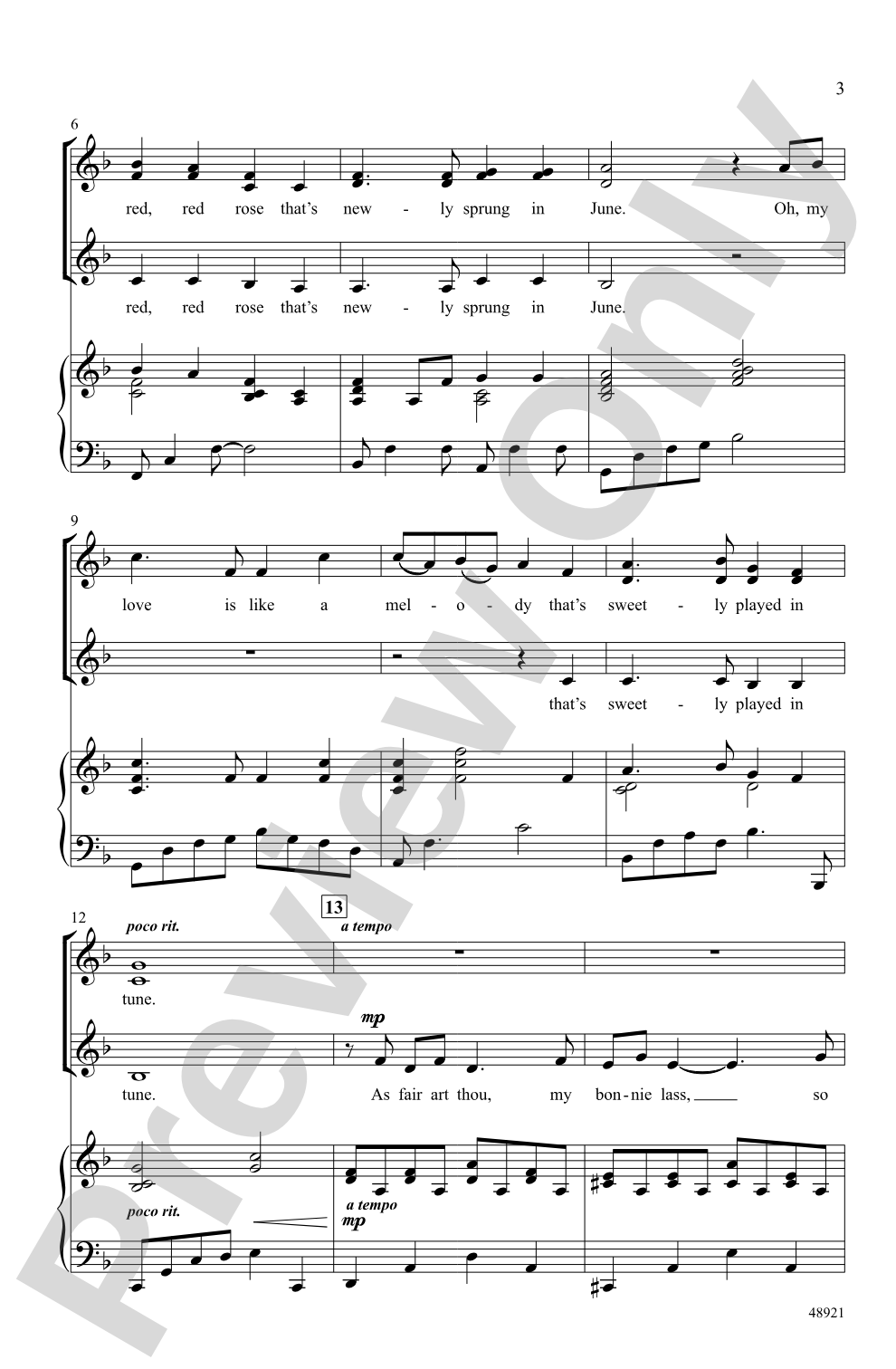
This poem has long been a favorite of singers due to its deep passion and expressive imagery, not to mention the warm vowels at the end of each line. In this artistic setting, Greg Gilpin incorporates a contemporary harmonic palette, expressive tempo nuances, and elegant dynamic shading to form a colorful garden of sound. The final chord suggests the rose/thorn quality of love, as singers sustain sweet dissonance. Give special consideration to the S.S.A. voicing---the romantic text may have great appeal to your ladies.


A Red, Red Rose: SSA Choral Octavo isn't in MakeMusic Cloud just yet...but it could be. Let us know you'd like to see it, and you'll help shape what comes next. In the meantime, start a free trial and dive into thousands of interactive titles your students can play along with today.
Request This Title
Tell us you want it.
Start Your Free Trial
Explore everything that's ready to play right now.
Sample Audio
1
Audio File
--:--
0:00
0:00
Sample Video
Additional Details
Series:
Alfred Choral Designs
Publisher:
Alfred Music
Page Count:
8
SKU:
00-PO-0006702
More about this title
About the Composer: Greg Gilpin

Greg Gilpin is a prolific choral composer and arranger whose work has been performed at major concert halls across North America, Europe, and Australia, including Carnegie Hall, Lincoln Center, the Sydney Opera House, and Royal Festival Hall. An ASCAP award-winning musician, he serves as Director of Educational Choral Publications for Shawnee Press and maintains an active career as a conductor, recording industry producer, and composer.
Beyond the concert hall, Gilpin has expanded his professional reach into film scoring and organizational consulting. He composed the score for the award-winning short film "Rosie's Rescue" in 2021 and has collaborated with distinguished vocalists on new arrangements of classical repertoire. A dedicated member of ACDA, NAfME, and Phi Mu Alpha Sinfonia, Gilpin continues to balance composing, conducting, and teaching with equal passion.
Why we love this
Gilpin's setting transforms Burns's poem into something that feels both intimate and contemporary, using harmonic color and dissonance as compositional tools rather than obstacles. The SSA voicing places the text front and center with natural, singable lines that let the romantic language breathe, while that final sustaining chord delivers an unforgettable emotional punch. This is the kind of piece that makes singers want to dig deeper into every word.
What to expect
There's a garden-like quality to this piece, lush and sensory, with warm vowels blooming at the end of each line just as the text promises. The contemporary harmonies create gentle tension without ever feeling harsh; instead they suggest the complexity Burns captured in those final words about love's dual nature of beauty and pain.
Who it's for
Treble choirs of intermediate to advanced ability who are ready to engage with contemporary harmonic language and emotional depth. Singers who understand that expression isn't about volume but about commitment to vowel quality, phrase shape, and textual meaning will find real satisfaction here.
How to get the most out of it
- Shape the phrase contours with the dynamic markings; Gilpin's elegant shading creates the expressive arc that makes each line feel necessary rather than decorative.
- Attend carefully to the final chord. The sustained dissonance requires precise tuning and unified breath support to land the effect Gilpin intends.
- Balance the text delivery across all three voice parts. The literary imagery is strongest when each voice articulates with equal clarity and commitment.
- If using the recorded accompaniment, allow yourself rehearsal time to lock the harmonic vocabulary before adding it; the contemporary palette may feel unfamiliar at first listen.
How to use it
This octavo makes a compelling choice for a concert program that explores love, loss, or the intersection of classical poetry and contemporary composition. Pair it with other literary settings or use it as an accessible entry point into modern choral writing for audiences unfamiliar with contemporary harmonic language. The piece's concert and festival credentials mean it works equally well in a recital or competitive context.
Skills your students will build
- Singing with sustained dissonance and resolving tuning challenges in contemporary harmony
- Expressing text through nuanced dynamics and tempo flexibility rather than volume alone
- Balancing three independent lines while maintaining harmonic blend
- Interpreting poetic language through musical phrase shape and vowel color