

A Red, Red Rose: SAB Choral Octavo
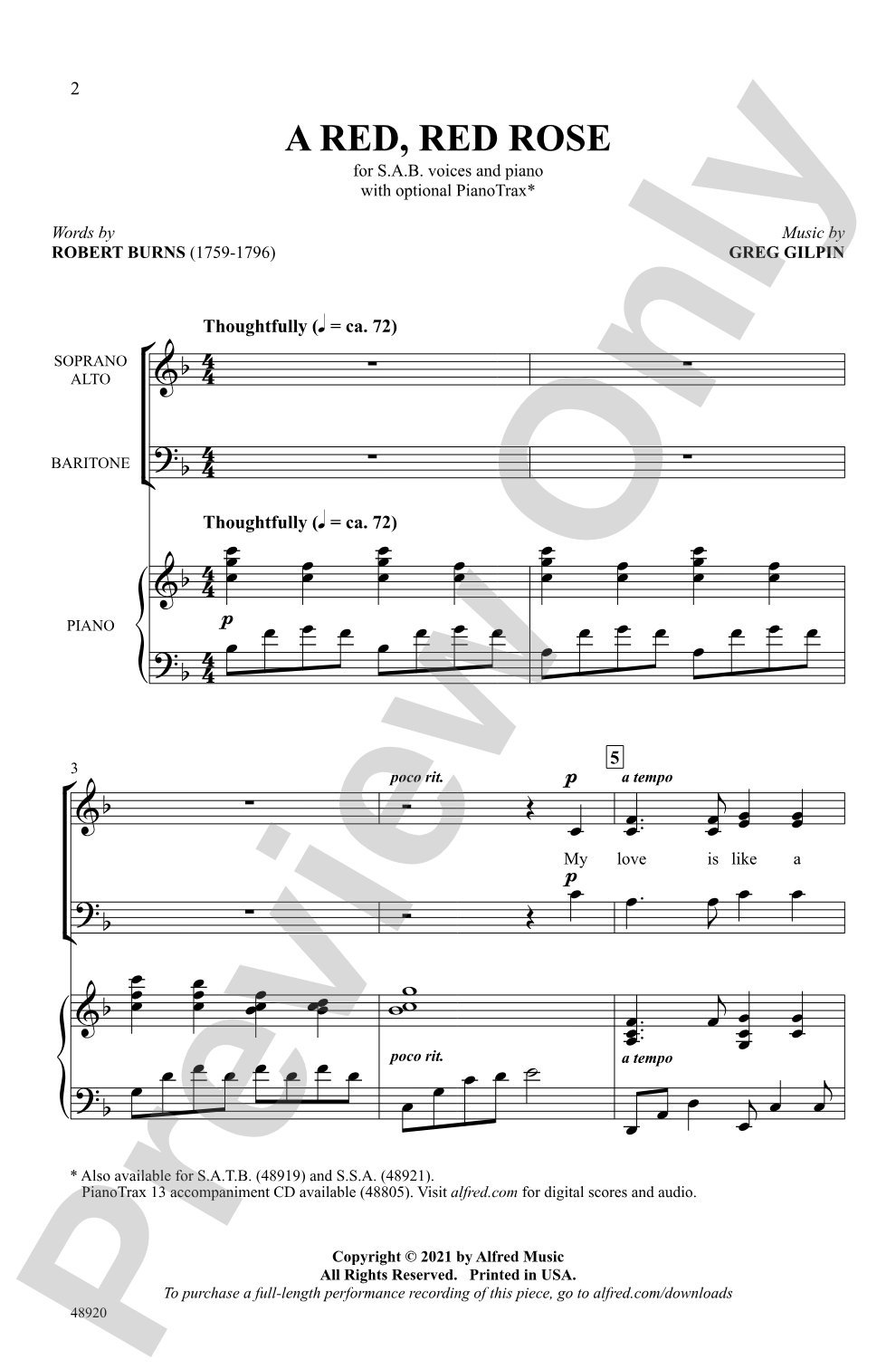
Words by Robert Burns, music by Greg Gilpin
Item: 00-PO-0006701
$2.05
Minimum order quantity: 20 copies
Pickup currently not available
Related Items
A Red, Red Rose: PianoTrax Digital Audio Download |
$9.99
|
View | |
A Red, Red Rose: SATB Choral Octavo |
$2.05
|
View | |
A Red, Red Rose: SSA Choral Octavo |
$2.05
|
View | |
A Red, Red Rose: SATB Choral Octavo |
$2.05
|
View | |
A Red, Red Rose: SAB Choral Octavo |
$2.05
|
View | |
A Red, Red Rose: SSA Choral Octavo |
$2.05
|
View |
Description
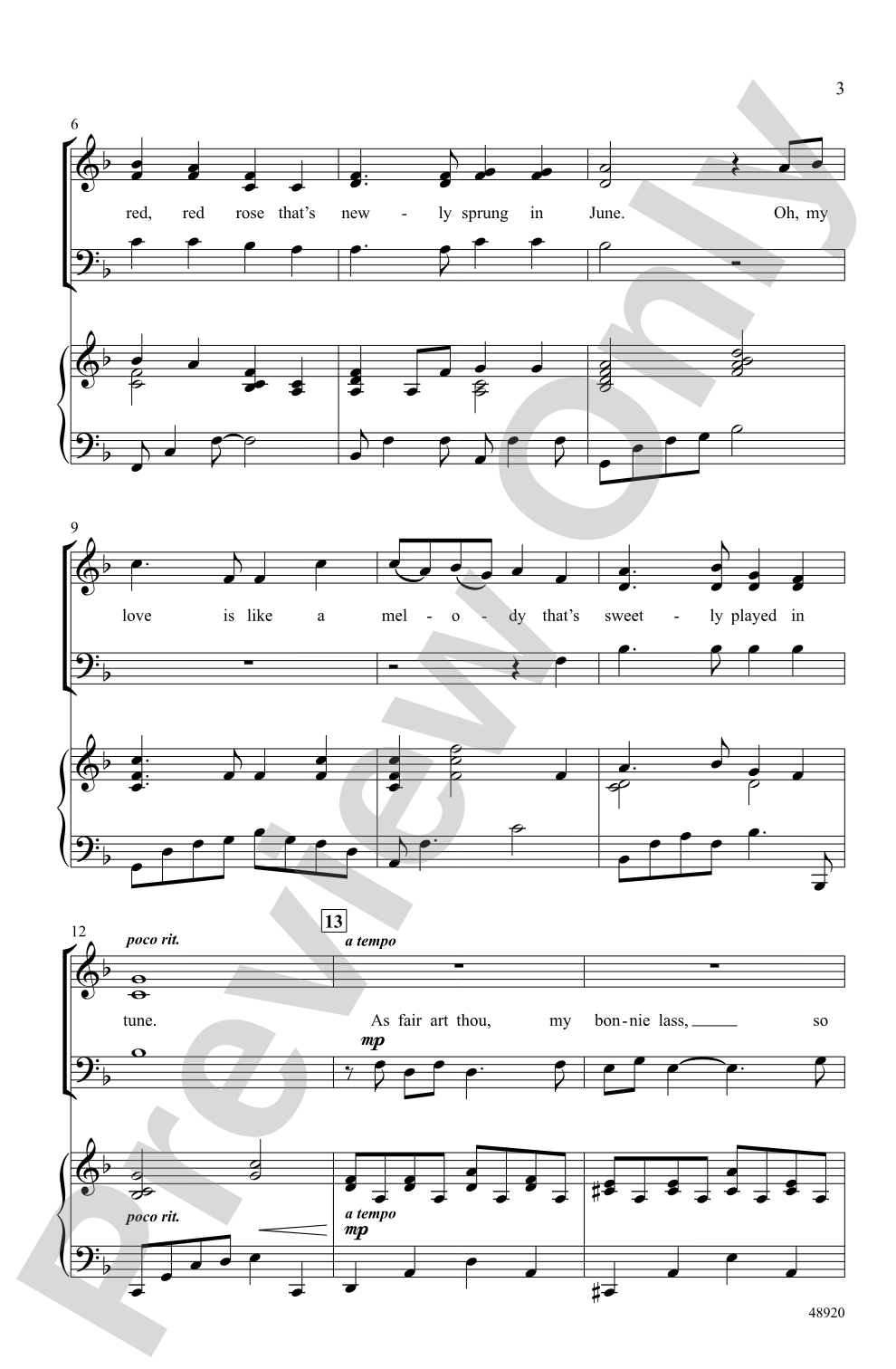
This poem has long been a favorite of singers due to its deep passion and expressive imagery, not to mention the warm vowels at the end of each line. In this artistic setting, Greg Gilpin incorporates a contemporary harmonic palette, expressive tempo nuances, and elegant dynamic shading to form a colorful garden of sound. The final chord suggests the rose/thorn quality of love, as singers sustain sweet dissonance. Give special consideration to the S.S.A. voicing---the romantic text may have great appeal to your ladies.


A Red, Red Rose: SAB Choral Octavo isn't in MakeMusic Cloud just yet...but it could be. Let us know you'd like to see it, and you'll help shape what comes next. In the meantime, start a free trial and dive into thousands of interactive titles your students can play along with today.
Request This Title
Tell us you want it.
Start Your Free Trial
Explore everything that's ready to play right now.
Sample Audio
1
Audio File
--:--
0:00
0:00
Sample Video
Additional Details
Series:
Alfred Choral Designs
Publisher:
Alfred Music
Page Count:
8
SKU:
00-PO-0006701
More about this title
About the Composer: Greg Gilpin

Greg Gilpin is an ASCAP-awarded composer and conductor whose work spans concert halls from Carnegie Hall and Lincoln Center to the Sydney Opera House and Royal Festival Hall. He serves as Director of Educational Choral Publications for Shawnee Press and has built a reputation for choral writing that balances accessibility with artistic depth. Beyond the music world, Gilpin has pursued parallel careers as a recording producer, film composer (earning Best Score for the short film "Rosie's Rescue"), and certified professional organizer. His engagement with music education, composition, and community leadership reflects a commitment to elevating choral artistry at every level.
Why we love this
Gilpin's setting honors both the text and the performers. The contemporary harmonic language feels fresh without alienating singers accustomed to more traditional arrangements, and the final dissonant chord rewards careful listening and engagement with the poem's emotional arc. The S.S.A. voicing within the SAB framework offers a natural pathway to build energy and intimacy across your ensemble's range.
What to expect
Warm, intimate, and touched with longing. The harmonic color shifts gently throughout, creating a sense of discovery rather than declaration. By the final chord, singers sustain a bittersweet dissonance that captures the tender paradox of love: beautiful and thorny at once.
Who it's for
Mixed choirs seeking repertoire that honors literary merit while offering singers a rewarding emotional journey. The SAB voicing makes it accessible to developing ensembles, while Gilpin's sophisticated harmonic palette and expressive demands will engage singers with more experience. Directors programming a romantic or poetic concert segment will find this piece both singable and substantive.
How to get the most out of it
- Shape the vowels at line endings with intention. Gilpin's choice to feature warm vowel sounds suggests they carry harmonic and emotional weight, not mere afterthoughts.
- Attend to the tempo nuances marked throughout. These shifts in pace aren't decorative; they mirror the poem's shifting intensity and deepen the expressive landscape.
- Balance the sweet dissonance in the final chord as a moment of vulnerability, not tension. Let singers feel the gentle clash rather than rush to resolve it.
- Use dynamic shading to trace the emotional contours of Burns's language. The varied dynamics aren't uniform across parts; follow the score's specific markings to create sculptural depth.
How to use it
This piece shines in a concert devoted to poetry in song or as a centerpiece in a program exploring love and relationships across genres. Its eight pages and moderate length make it ideal for mixed-voice festival entries or as a standalone concert feature. The literary depth and accessible voicing work well alongside contemporary sacred or art song literature, bridging traditional and modern sensibilities.
Skills your students will build
- Sustaining and blending dissonant harmony, particularly in final chords
- Responding to fine dynamic shading and expressive tempo modifications
- Balancing upper voices (S.S.A. sonority within SAB) for blend and clarity
- Connecting text meaning to harmonic color and musical gesture
- Managing breath and phrase length across longer, sustained vocal lines