
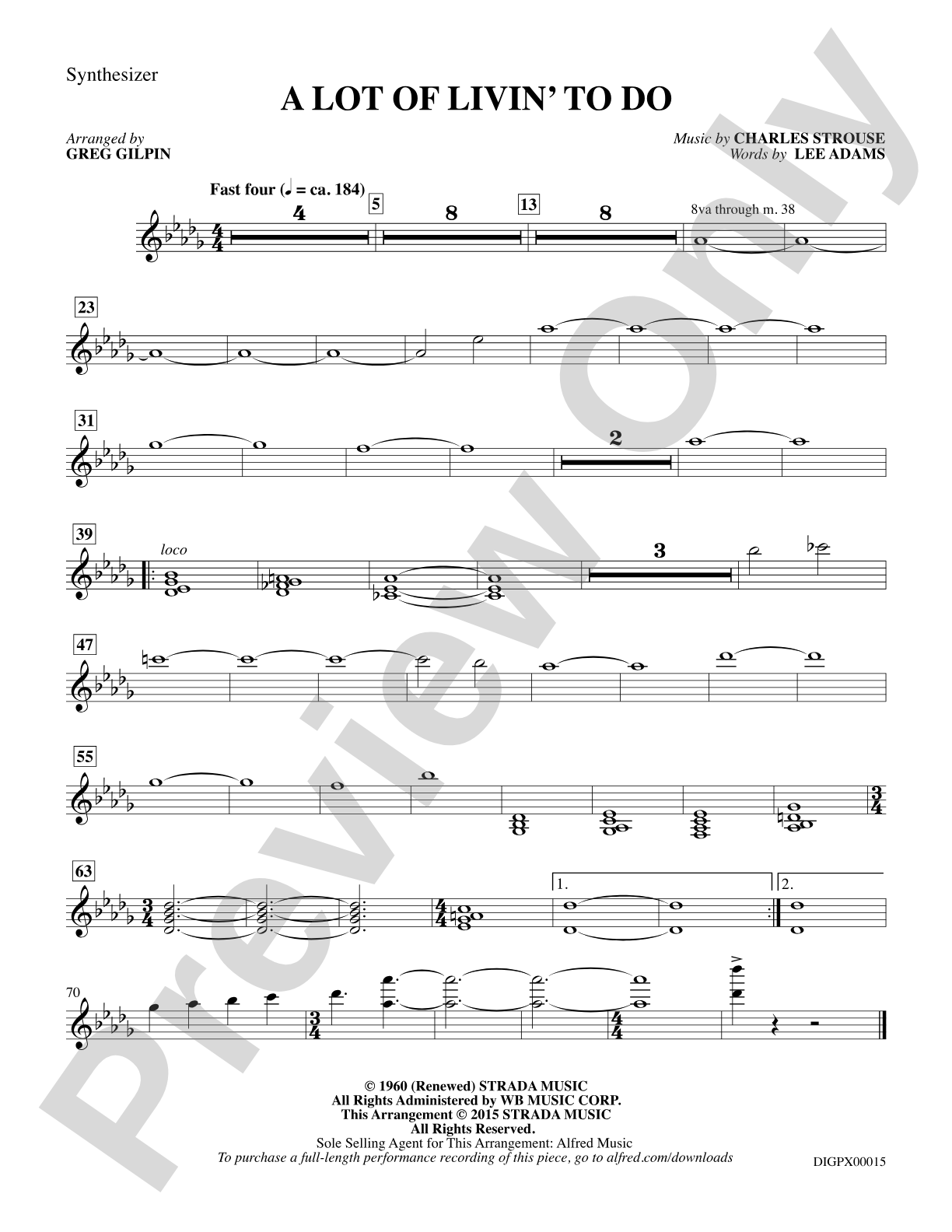

A Lot of Livin' To Do: Choral Octavo Digital SoundPax
From the Musical Bye, Bye, Birdie
Music by Charles Strouse, lyric by Lee Adams / arr. Greg Gilpin
Item: 00-PK-0007037

$15.00
Pickup currently not available
Buy Extra Parts (Digital PDF Download)
Parts Added to Cart!
Related Items
A Lot of Livin' to Do: SoundTrax Digital Audio Download |
$27.99
|
View | |
A Lot of Livin' to Do (from the musical Bye, Bye, Birdie): SATB Choral Octavo |
$2.00
|
View | |
A Lot of Livin' to Do (from the musical Bye, Bye, Birdie): SAB Choral Octavo |
$2.00
|
View | |
A Lot of Livin' to Do (from the musical Bye, Bye, Birdie): SSA Choral Octavo |
$2.00
|
View | |
A Lot of Livin' to Do: SATB Choral Octavo |
$2.00
|
View | |
A Lot of Livin' to Do: Choral Octavo SoundTrax CD |
$27.99
|
View |
Description
Show and concert choirs will both sound great singing this upbeat production number from the musical Bye, Bye, Birdie. Exciting from start to finish!


Don't just read it, hear it, play along with it, and watch your students grow with it. In MakeMusic Cloud, A Lot of Livin' To Do: Choral Octavo Digital SoundPax comes alive with professional accompaniment, adjustable tempo, and built-in practice tools that turn solo practice into real progress.
Open in the Player
Jump straight in and assign it today.
Start Your Free Trial
Open this title and explore the full library in minutes.
Sample Audio
No sample audio found.
Sample Video
No sample videos found.
Additional Details
Series:
Alfred Pop Choral Series
SKU:
00-PK-0007037
Instrumentation:
SoundPax
More about this title
About the Composer: Charles Strouse
Charles Strouse composed music for some of Broadway's most enduring musicals, including Bye, Bye, Birdie (1960), which became a cultural phenomenon and won the Tony Award for Best Musical. His gift for crafting memorable melodies and rhythmically infectious numbers made him a central figure in the Golden Age of musical theater, and his scores continue to energize student performers across the country.
Strouse understood how to write for young voices and ensemble singers. His theatrical music balances accessibility with genuine musical substance, making his work ideal for high school and community choirs seeking numbers that engage audiences while challenging singers to develop performance presence and vocal control.
Why we love this
This arrangement captures the infectious energy and youthful exuberance of Bye, Bye, Birdie without overwhelming your choir. Gilpin's adaptation stays true to Strouse's original charm while making the piece accessible to singers at various levels, and the recorded accompaniment lets you focus rehearsal time on performance and interpretation rather than instrumental support.
What to expect
Infectious optimism and unbridled joy. The piece bubbles with rhythmic vitality and melodic catchiness that immediately captures an audience's attention and makes singers feel the thrill of performing a genuine Broadway moment. From the first note, performers and listeners understand they're hearing something meant to celebrate life itself.
Who it's for
This arrangement serves show choirs and concert choirs looking for a crowd-pleasing number that combines theatrical appeal with genuine musical content. It works equally well as a concert closer, a show highlight, or a standalone production number at school events or competitions.
How to get the most out of it
- Keep the energy consistent from the opening measures through the final phrase. This number thrives on momentum, so resist the temptation to settle or slow as you approach cadences.
- Balance your part writing carefully so that countermelodies and supporting lines don't overshadow the main tune. The arrangement works best when each voice part sounds intentional and clear.
- Layer in dynamics gradually as the piece builds. Starting with relative restraint in early sections allows room for genuine growth and gives the final statements real impact.
- Commit to the character and attitude the text demands. This is a celebration of youth and possibility, and your singers' facial expressions and posture should match that optimism.
How to use it
Place this in the latter half of a concert where energy and momentum serve you best. It pairs well with other upbeat choral selections and provides an excellent opportunity for your ensemble to show range beyond ballads or classical work. The number's theatrical nature also makes it ideal for spring concerts, pops events, or any program celebrating musical theater.
Skills your students will build
- Sustaining rhythmic precision and ensemble cohesion in up-tempo material
- Balancing melodic clarity with harmonic support across multiple voice parts
- Performing with theatrical presence and character commitment
- Phrasing and breath management in longer melodic lines within an energetic tempo
- Interpreting text with intention and conveying emotional narrative through ensemble singing