
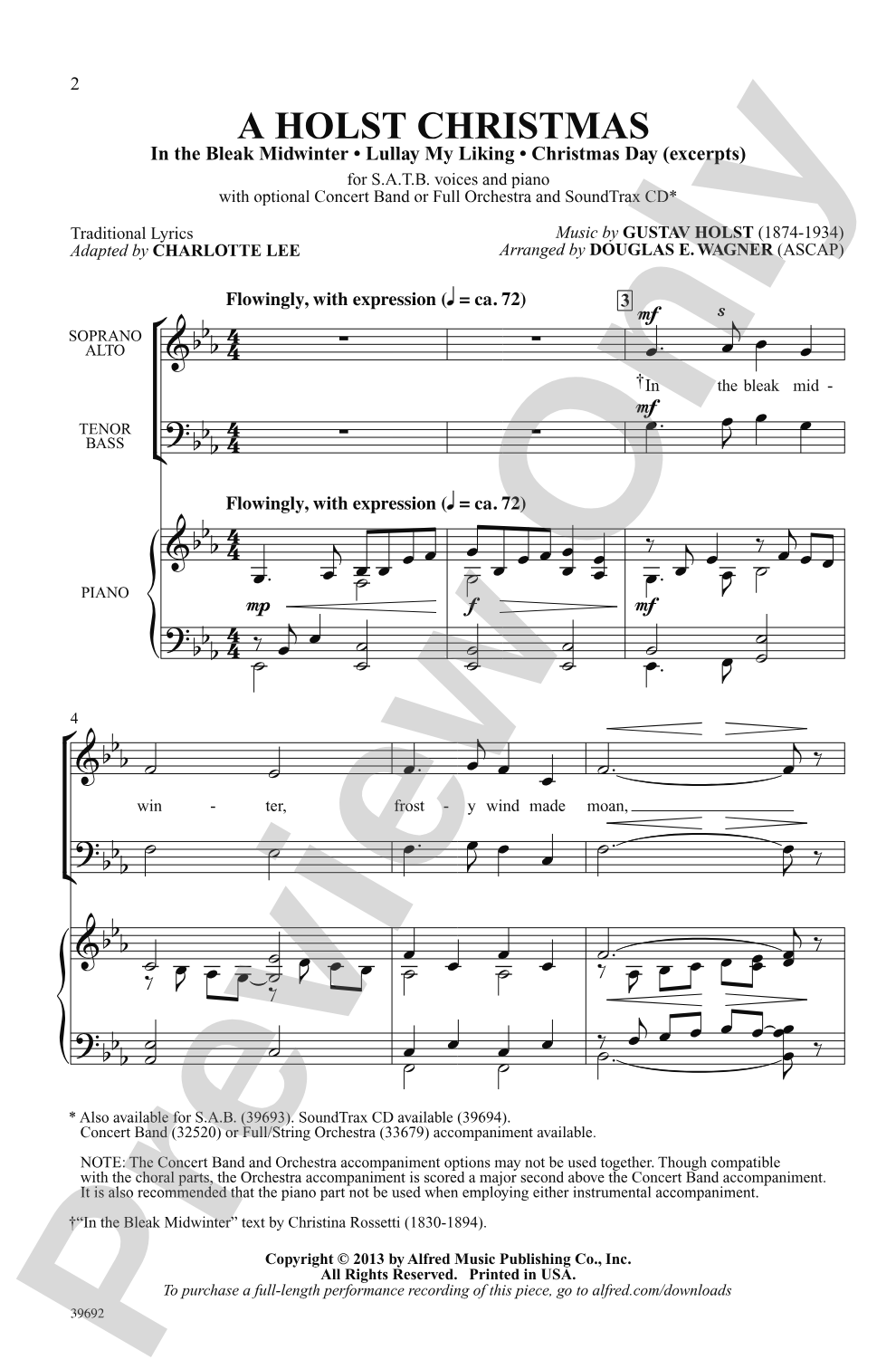
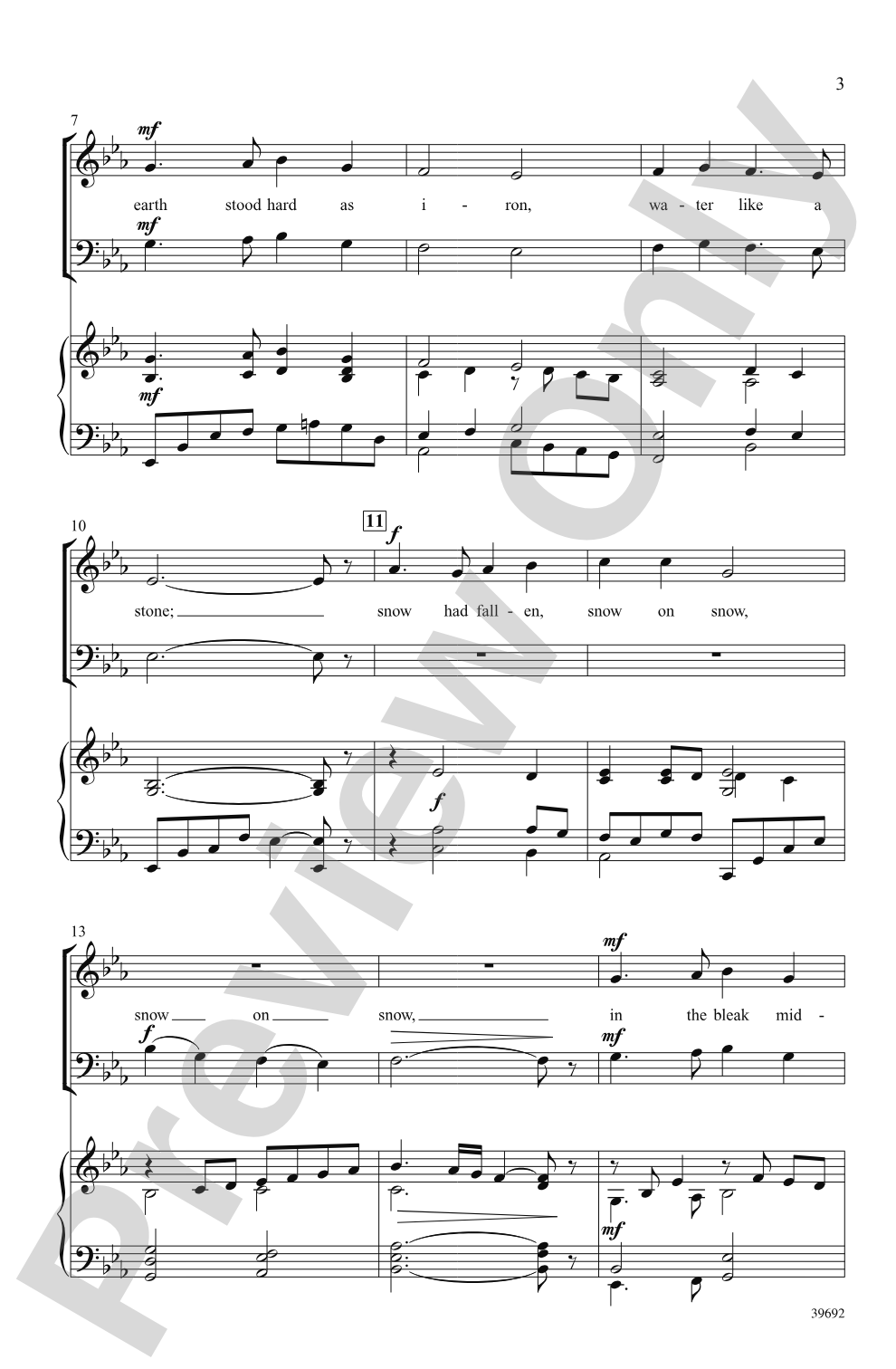
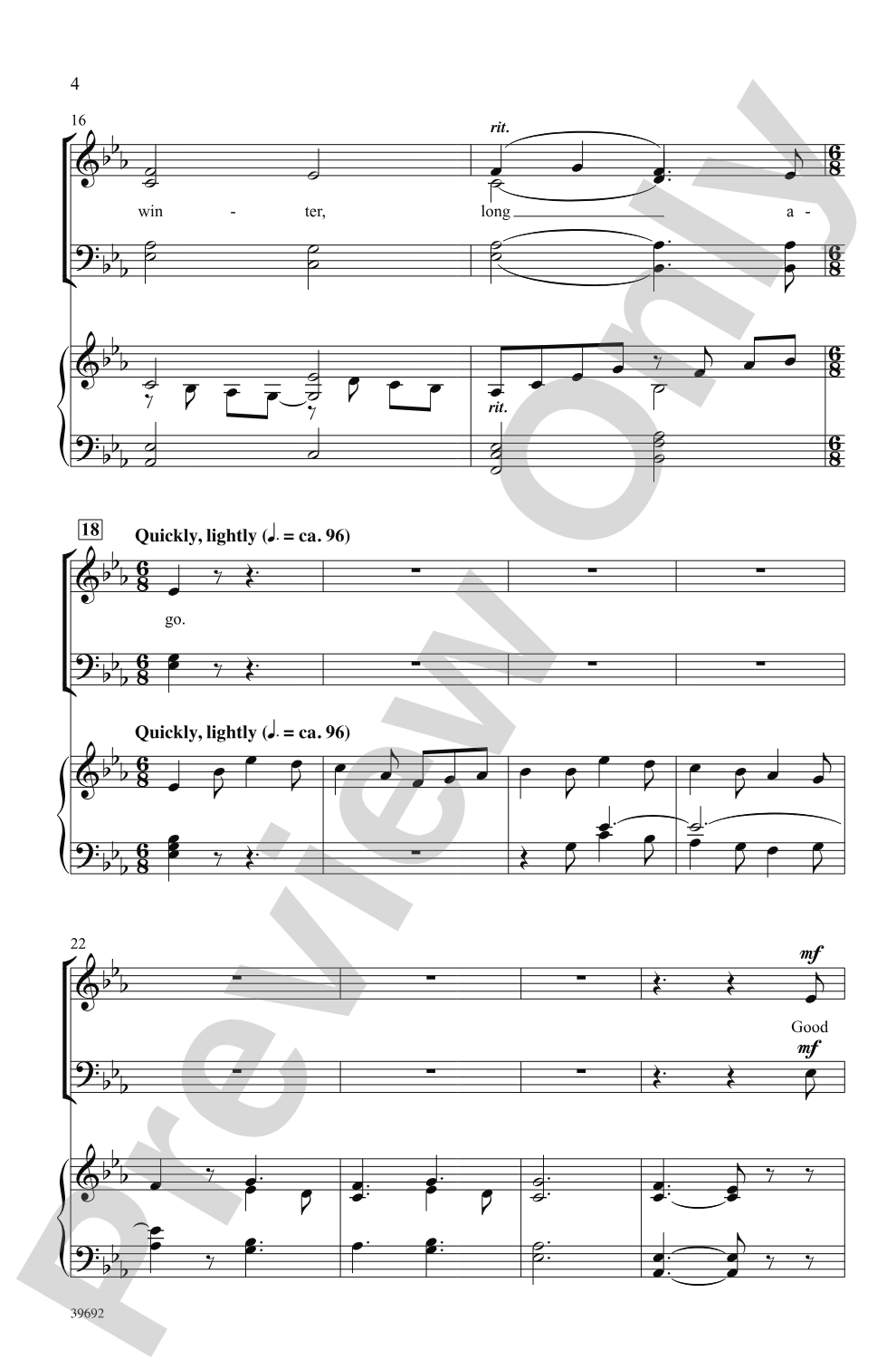

A Holst Christmas: SATB Choral Octavo
Featuring: In the Bleak Midwinter / Lullay My Liking / Excerpts from "Christmas Day"
Traditional lyrics adapted by Charlotte Lee, music by Gustav Holst / arr. Douglas E. Wagner
Item: 00-PO-0001541
$1.95
Minimum order quantity: 20 copies
Pickup currently not available
Related Items
A Holst Christmas: Concert Band Conductor Score & Parts |
$72.00
|
View | |
A Holst Christmas: Full Orchestra Conductor Score & Parts |
$65.00
|
View | |
A Holst Christmas: SAB Choral Octavo |
$1.95
|
View | |
A Holst Christmas: Concert Band Conductor Score & Parts |
$72.00
|
View | |
A Holst Christmas: Concert Band Conductor Score |
$10.00
|
View | |
A Holst Christmas: Full Orchestra Conductor Score & Parts |
$65.00
|
View | |
A Holst Christmas: Full Orchestra Conductor Score |
$7.00
|
View | |
A Holst Christmas: SATB Choral Octavo |
$1.95
|
View | |
A Holst Christmas: SAB Choral Octavo |
$1.95
|
View | |
A Holst Christmas: Choral Octavo SoundTrax CD |
$29.99
|
View |
Description
This artfully-crafted medley brings together several of Holst's best known and loved Christmas titles in just under four minutes. Sing with the provided piano part, the richly scored concert band accompaniment, or a step higher with a full or string orchestra.


A Holst Christmas: SATB Choral Octavo isn't in MakeMusic Cloud just yet...but it could be. Let us know you'd like to see it, and you'll help shape what comes next. In the meantime, start a free trial and dive into thousands of interactive titles your students can play along with today.
Request This Title
Tell us you want it.
Start Your Free Trial
Explore everything that's ready to play right now.
Sample Audio
1
Audio File
--:--
0:00
0:00
Sample Video
No sample videos found.
Additional Details
Series:
Alfred Choral Designs
Publisher:
Alfred Music
Page Count:
16
SKU:
00-PO-0001541
More about this title
About the Composer: Gustav Holst
Gustav Holst (1874-1934) shaped modern British music through bold orchestrations and fearless harmonic experimentation. His compositional voice ranges from the astronomical grandeur of The Planets to intimate sacred works, always marked by structural clarity and emotional directness. Holst's Christmas music carries the same architectural precision and melodic gift that define his larger works, making these pieces as rewarding for ensembles as they are for audiences.
Why we love this
Wagner's medley honors Holst's melodic gift while solving a real programming need: you get substantive Christmas music with sophisticated harmonic language in under four minutes. The flexibility to perform with piano, concert band, or orchestra means this works whether your resources are modest or expansive, and the writing sits naturally for SATB voices without requiring soloists or elaborate staging.
What to expect
Holst's Christmas medley radiates warmth without sentimentality, grounding familiar holiday material in rich harmonic language that feels both timeless and distinctly modern. The piece moves with purposeful elegance, combining reverent moments with passages of genuine joy, all delivered in just under four minutes of focused musical storytelling.
Who it's for
This octavo suits intermediate to advanced choirs seeking Christmas repertoire with real musical substance. It works equally well for liturgical settings, holiday concerts, and community ensembles that want to honor a major 20th-century voice rather than rely on traditional carols alone.
How to get the most out of it
- Balance the blend between parts carefully during tutti passages; Holst's harmonies are striking only when each voice is clearly audible.
- Shape phrases with genuine legato in the slower sections, allowing the choir to breathe as a unified ensemble rather than individual voice parts.
- Choose your accompaniment option based on rehearsal time and available musicians; even the piano part provides full harmonic and textural support.
- Pay attention to the transitions between medley sections to ensure they feel organic rather than like distinct songs pasted together.
How to use it
Pair this with unaccompanied carols or simpler folk arrangements to showcase how Holst elevated Christmas traditions. It also works beautifully as a concert opener or closer, giving your holiday program an artistic centerpiece that validates the entire event.
Skills your students will build
- Balancing four-part harmony with clear voice independence
- Singing chromatic and unexpected harmonic progressions characteristic of early 20th-century writing
- Coordinating with different accompaniment options (piano, band, orchestra)
- Maintaining musical line through medley transitions
- Interpreting composer intent across multiple styles within one piece