
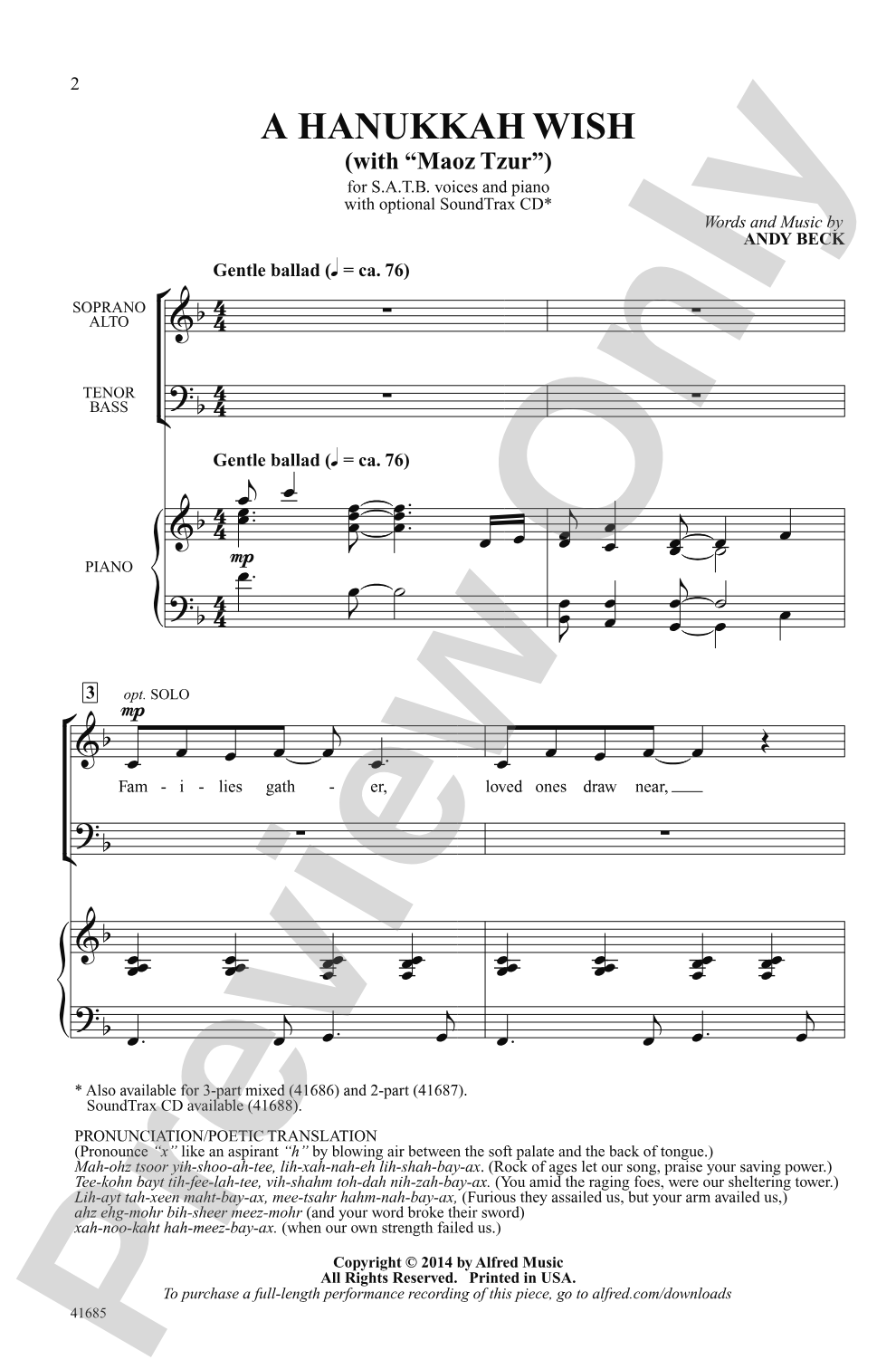

A Hanukkah Wish: SATB Choral Octavo
With "Maoz Tzur"
Words and music by Andy Beck
Item: 00-PO-0001873
$2.05
Minimum order quantity: 20 copies
Pickup currently not available
Related Items
A Hanukkah Wish: 3-Part Mixed Choral Octavo |
$1.85
|
View | |
A Hanukkah Wish: 2-Part Choral Octavo |
$2.05
|
View | |
A Hanukkah Wish: SoundTrax Digital Audio Download |
$27.99
|
View | |
A Hanukkah Wish: SATB Choral Octavo |
$2.05
|
View | |
A Hanukkah Wish: 3-Part Mixed Choral Octavo |
$1.85
|
View | |
A Hanukkah Wish: 2-Part Choral Octavo |
$2.05
|
View |
Description
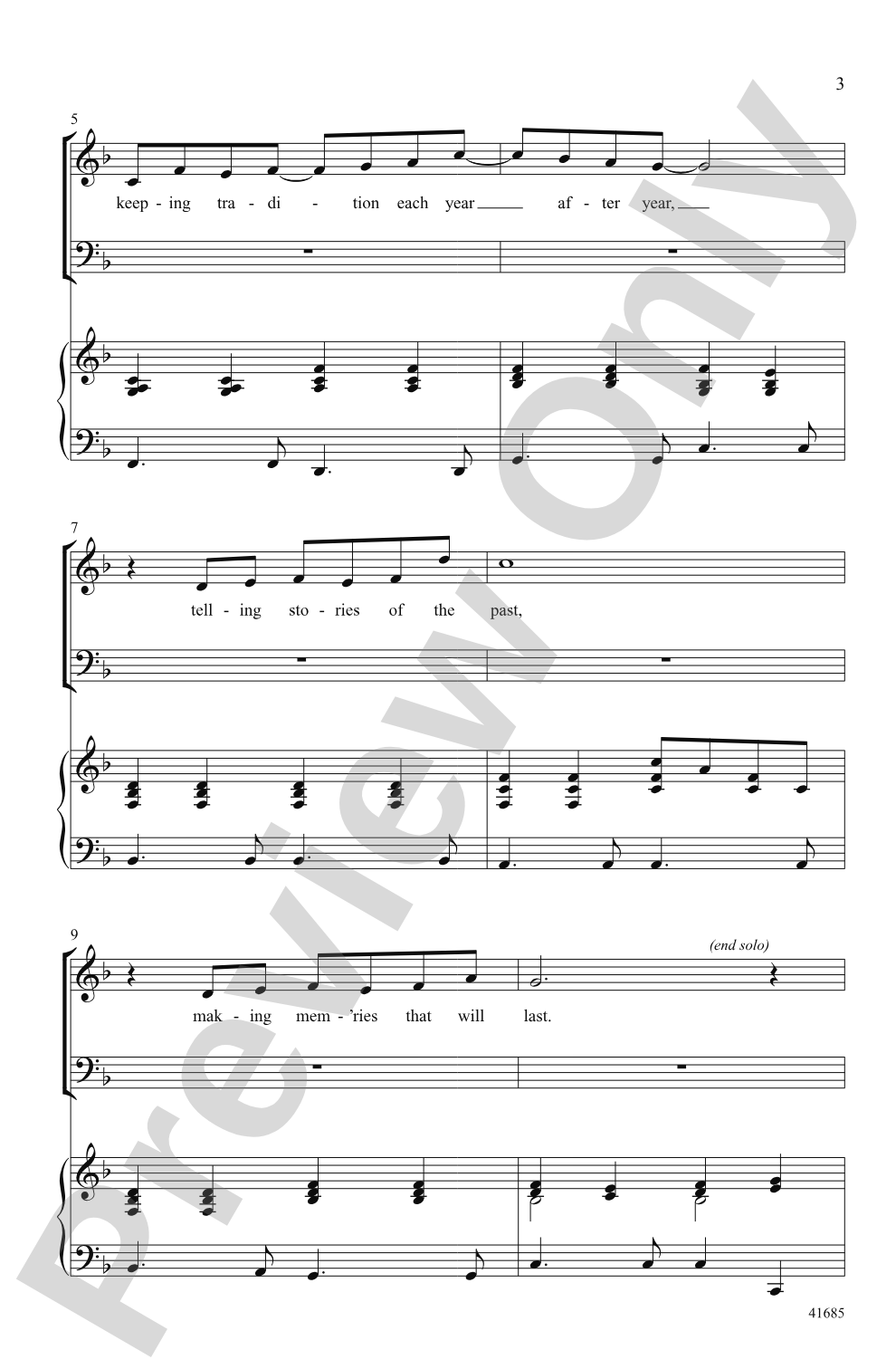
How often do we find a warm ballad written especially for Hanukkah? No boom-chicks here, and no minor key either, just a tender heartfelt message of family and tradition. Incorporates a contemporary setting of the traditional Hebrew "Maoz Tzur" just before a dramatic modulation to the final refrain.


A Hanukkah Wish: SATB Choral Octavo isn't in MakeMusic Cloud just yet...but it could be. Let us know you'd like to see it, and you'll help shape what comes next. In the meantime, start a free trial and dive into thousands of interactive titles your students can play along with today.
Request This Title
Tell us you want it.
Start Your Free Trial
Explore everything that's ready to play right now.
Sample Audio
1
Audio File
--:--
0:00
0:00
Sample Video
No sample videos found.
Additional Details
Series:
Alfred Choral Designs
Publisher:
Alfred Music
Page Count:
12
SKU:
00-PO-0001873
More about this title
About the Composer: Andy Beck

Andy Beck directs choral publications at Alfred Music and has composed and arranged over 450 works for singers of all ages. His compositions span sacred music, musical theatre, and educational resources; his pedagogical writing includes Sing at First Sight, Foundations in Choral Sight Singing, and Vocalize! 45 Vocal Warm-Ups That Teach Technique. A accomplished tenor and music educator, Beck holds degrees from Ithaca College and Northwest Missouri State University.
Beyond his work at Alfred, Beck serves as a guest conductor, clinician, and adjudicator across the United States and internationally. He has been commissioned by honor choirs and all-state groups throughout the Southeast, and maintains an active performing life with the North Carolina Master Chorale Chamber Choir and in musical theatre. His YouTube presence reflects the global reach of his music among school and community choirs.
Why we love this
Hanukkah rarely appears in warm, accessible ballad form at the SATB level. Beck avoids both minor-key melancholy and rhythmic cliché, instead anchoring the piece in genuine emotional territory with a contemporary treatment of the traditional "Maoz Tzur" that builds to a dramatic key change. The result feels both reverential and current, exactly what you need when you want to honor the holiday without retreating into recycled arrangements.
What to expect
A quiet moment of reflection that gradually deepens. The piece opens with intimacy and family warmth, then invites the choir into the reverent space of a traditional hymn, before lifting into something brighter and more hopeful. Throughout, the music feels unhurried and genuine.
Who it's for
Directors seeking substantial yet singable winter choral literature that honors Jewish traditions with musical integrity. This piece works for intermediate to advanced SATB choirs who can sustain legit tone and navigate modest harmonic complexity.
How to get the most out of it
- Shape the opening phrases with sustained breath support; the tenderness of this piece lives in legit tone production rather than exaggerated dynamics.
- Treat the "Maoz Tzur" section as a distinct musical moment. The contrast between the contemporary setting and the traditional melody will land only if the choir commits fully to the texture change.
- Lean into the drama of the modulation before the final refrain. Secure intonation in the modulation itself, then allow the new key area to feel lifted and renewed.
- Use the recorded accompaniment to anchor ensemble rhythm during early rehearsals, especially if your singers are unfamiliar with the harmonic language.
How to use it
Program this as a standalone winter concert feature or alongside other faith-based repertoire in a concert exploring different traditions. Its 12-page length and moderate difficulty make it suitable for late fall or early winter rehearsals without consuming disproportionate rehearsal time. It also pairs naturally with other Alfred seasonal selections if you're building a concert around multiple holiday traditions.
Skills your students will build
- Sustaining legit vocal tone across extended phrases
- Reading and interpreting harmonic progressions with contemporary treatment of traditional material
- Navigating key modulation and secure intonation in new tonal areas
- Bringing emotional depth to ballad-style choral writing