

A Distant Shore (The Water Is Wide): 2-Part Choral Octavo
A Partner Song with "The Water Is Wide"
Music by Mary Donnelly / arr. George L. O. Strid
Item: 00-PO-0003119

$2.05
Minimum order quantity: 20 copies
Pickup currently not available
Description
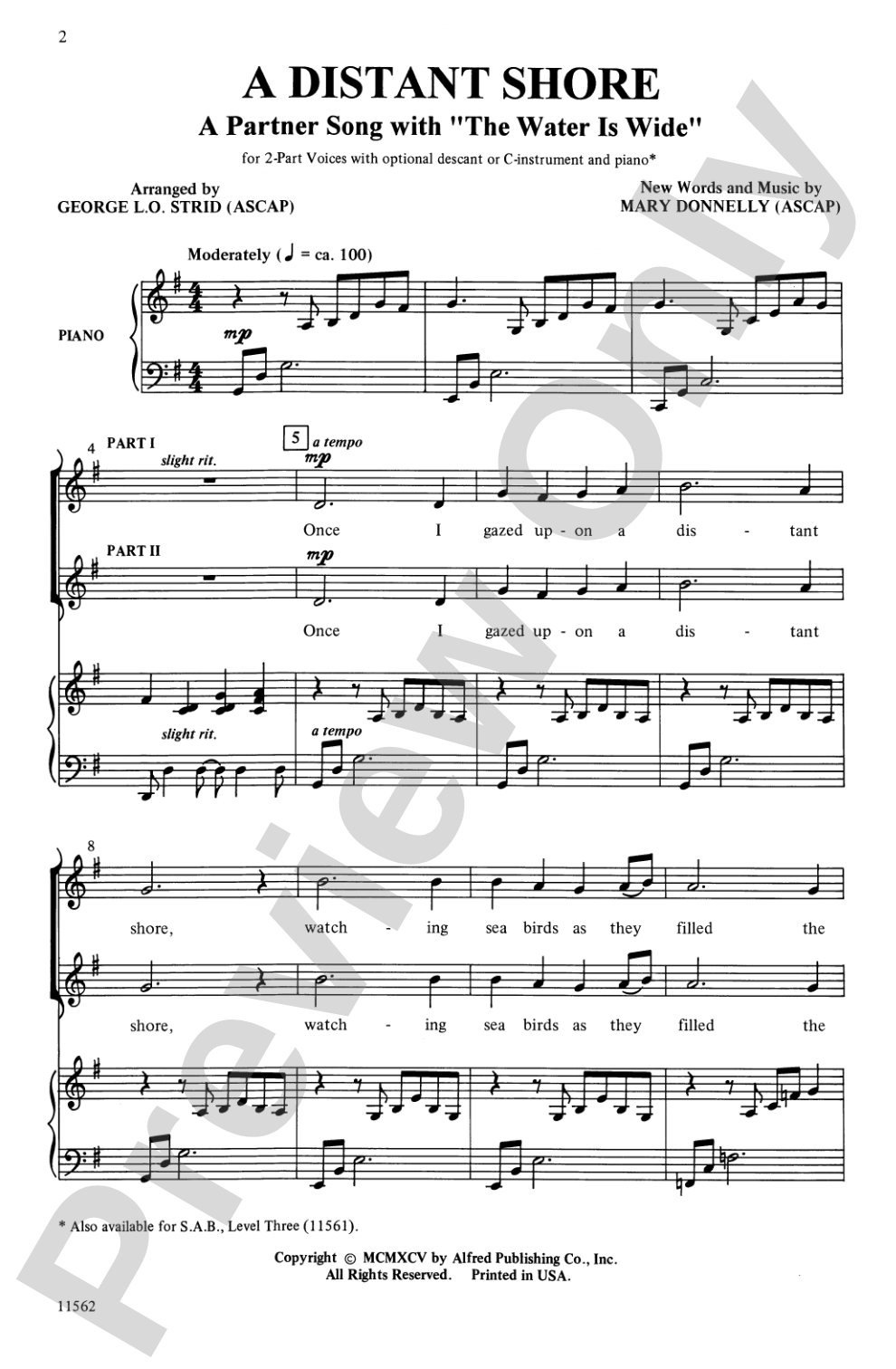
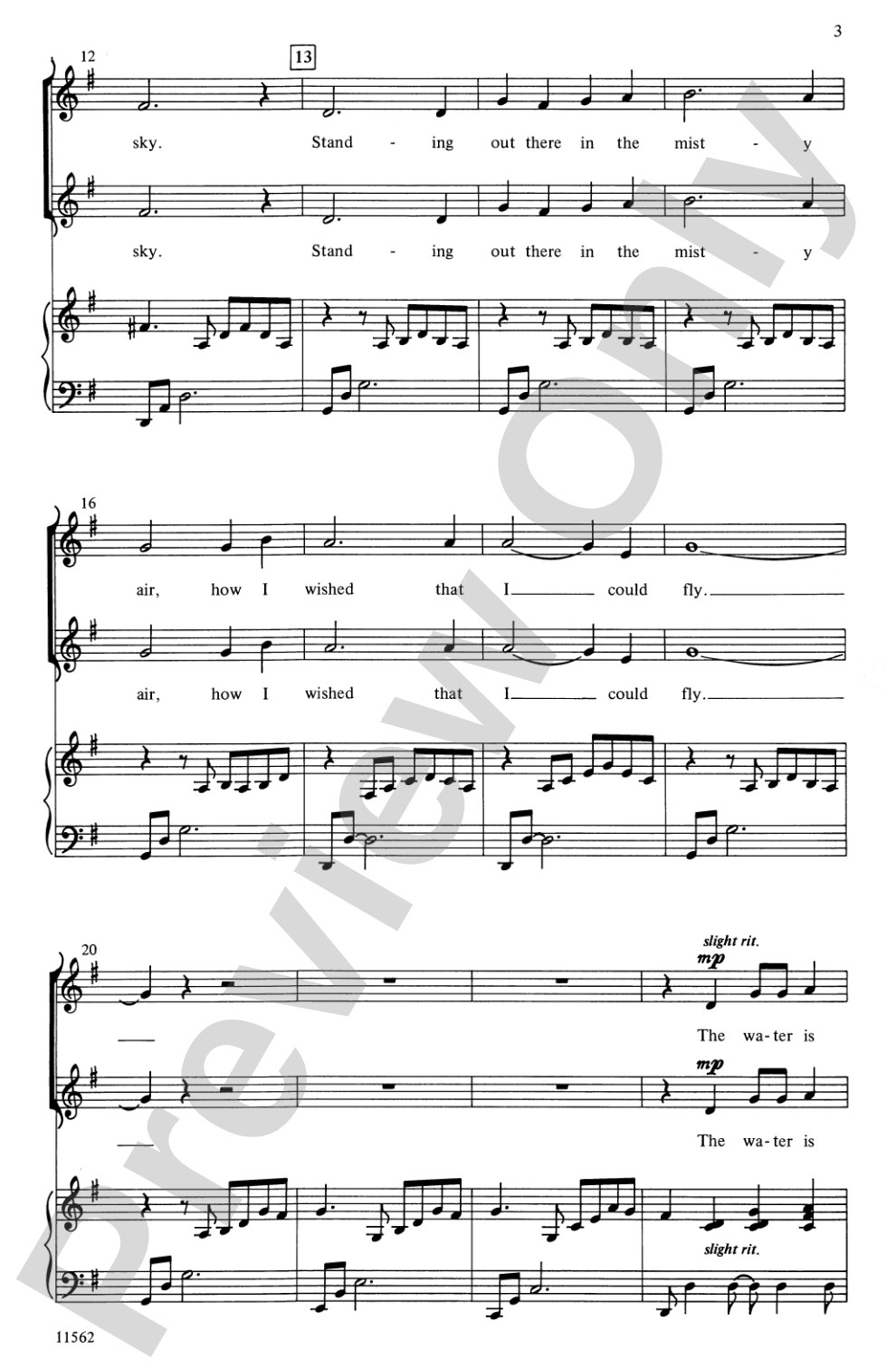
This partner song arrangement of the best-loved American folk song "The Water Is Wide" features a new, folk-like, counter-melody. Moderate vocal ranges. The extended "echo" section is perfect for developing ages of any age. Flowing piano accompaniment. The 2-part voicing includes a descant which may be performed by a C instrument such as flute or bells. Destined to become a choral classic!


Don't just read it, hear it, play along with it, and watch your students grow with it. In MakeMusic Cloud, A Distant Shore (The Water Is Wide): 2-Part Choral Octavo comes alive with professional accompaniment, adjustable tempo, and built-in practice tools that turn solo practice into real progress.
Open in the Player
Jump straight in and assign it today.
Start Your Free Trial
Open this title and explore the full library in minutes.
Sample Audio
1
Audio File
--:--
0:00
0:00
Sample Video
No sample videos found.
Additional Details
Series:
Alfred Choral Designs
Publisher:
Alfred Music
Page Count:
8
SKU:
00-PO-0003119
More about this title
About the Composer: Mary Donnelly

Mary Donnelly grew up in Reno, Nevada and studied English and French at the University of Nevada, Reno. While an undergraduate, she discovered her passion for music education by organizing children's choruses, a experience that led her back to graduate school for music certification. She earned her Master's Degree in Education from Lesley College in Cambridge, Massachusetts, where she focused on integrating arts across the curriculum.
Donnelly spent thirty years teaching general music and choir in elementary and middle schools throughout Washoe County, Nevada. In 1985, she began a prolific songwriting partnership with George Strid during a sixth-grade team-teaching assignment. Together they have created over two hundred songs and twenty-five musicals. An active member of ACDA, NEA, and ASCAP, she is now retired and living in Reno with her husband.
Why we love this
Donnelly and Strid have a gift for taking folk material and reimagining it in ways that feel natural to young singers. The counter-melody here respects the original tune while adding harmonic interest, and the echo section gives every voice part something meaningful to do. Directors will appreciate how the moderate ranges keep the focus on phrasing and blend rather than strain.
What to expect
The arrangement unfolds with the gentle inevitability of a folk song passed down through generations. The flowing piano accompaniment supports without overwhelming, while the echo section creates moments of playful interplay between the parts. It carries a reflective quality that feels both intimate and inviting.
Who it's for
This octavo works beautifully with upper elementary and middle school choirs that are developing two-part independence and need material that combines accessibility with genuine musical substance. It's also suitable for younger singers with limited vocal range who benefit from moderate part writing that doesn't demand vocal maturity.
How to get the most out of it
- Shape the counter-melody as a distinct musical voice in rehearsal. Rather than treating it as accompaniment, give it equal weight so singers understand how it conversates with the main tune.
- Use the echo section to practice call-and-response clarity. The original phrase and its echo create a natural opportunity to discuss articulation, dynamics, and breath placement.
- Consider the C instrument descant as an optional enhancement once the choir is secure. Adding flute or bells in performance deepens the folk character without requiring it as essential to success.
How to use it
This piece works exceptionally well as a choral concert opener or closer, setting a contemplative tone that audiences expect from American folk repertoire. It can also anchor a thematic program around water, nature, or traditional music across cultures, pairing naturally with other folk arrangements at a similar difficulty level.
Skills your students will build
- Singing in two independent parts with secure intonation
- Performing partner songs with clear phrase relationships
- Sustaining ensemble blend while maintaining individual vocal line clarity
- Responding to dynamic and articulation cues in call-and-response phrasing
- Coordinating with optional instrumental countermelody