

A Distant Shore (The Water Is Wide): SAB Choral Octavo
A Partner Song with "The Water Is Wide"
Music by Mary Donnelly / arr. George L. O. Strid
Item: 00-PO-0003118

$2.05
Minimum order quantity: 20 copies
Pickup currently not available
Description
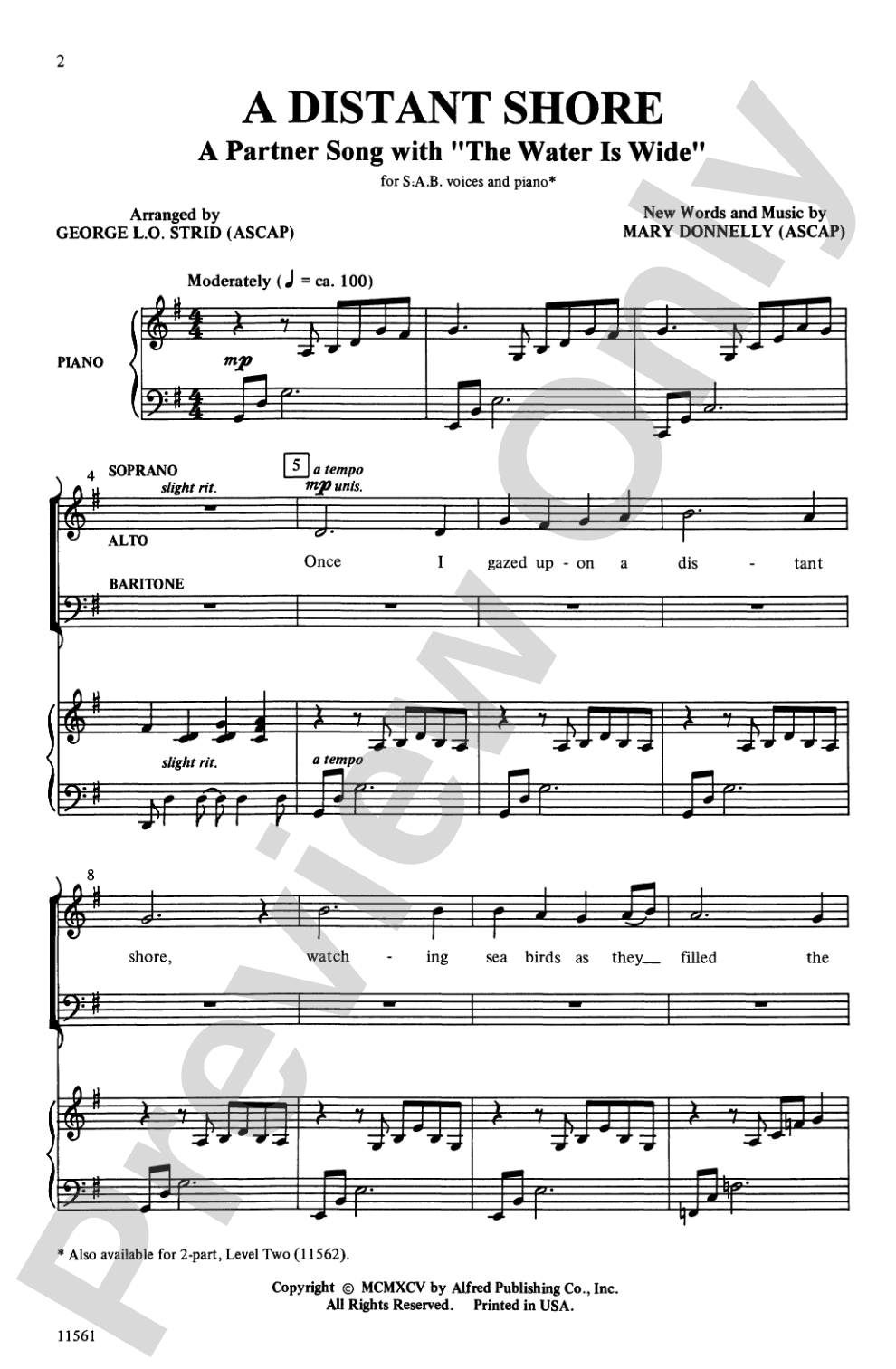
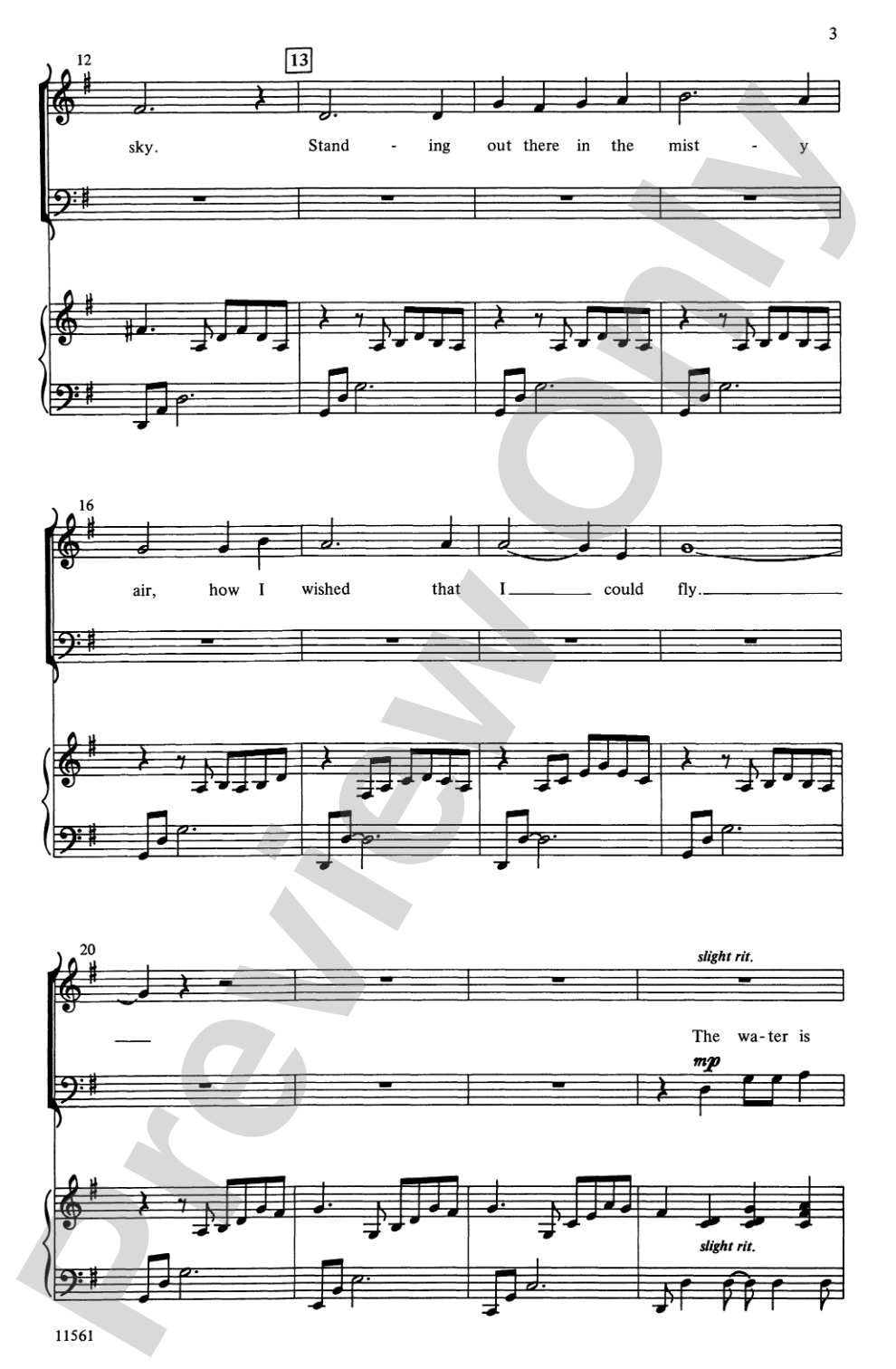
This partner song arrangement of the best-loved American folk song "The Water Is Wide" features a new, folk-like, counter-melody. Moderate vocal ranges. The extended "echo" section is perfect for developing ages of any age. Flowing piano accompaniment. The 2-part voicing includes a descant which may be performed by a C instrument such as flute or bells. Destined to become a choral classic! This title is available in Music Prodigy.


Don't just read it, hear it, play along with it, and watch your students grow with it. In MakeMusic Cloud, A Distant Shore (The Water Is Wide): SAB Choral Octavo comes alive with professional accompaniment, adjustable tempo, and built-in practice tools that turn solo practice into real progress.
Open in the Player
Jump straight in and assign it today.
Start Your Free Trial
Open this title and explore the full library in minutes.
Sample Audio
1
Audio File
--:--
0:00
0:00
Sample Video
No sample videos found.
Additional Details
Series:
Alfred Choral Designs
Publisher:
Alfred Music
Page Count:
8
SKU:
00-PO-0003118
More about this title
About the Composer: Mary Donnelly

Mary Donnelly grew up in Reno, Nevada, and studied English and French at the University of Nevada before discovering her true calling in music education. While still an undergraduate, she founded two children's choruses, which inspired her to pursue formal music training. She earned a Master's Degree in Education from Lesley College in Cambridge, Massachusetts, where she focused on integrating arts across the curriculum.
Donnelly spent thirty years teaching general music and choir in the Washoe County School District, retiring after a career dedicated to making music accessible to young learners. In 1985, she partnered with George Strid to create a musical for Reading Week, launching a prolific collaboration that has produced over two hundred songs and twenty-five full musicals. She holds memberships in ACDA, NEA, and ASCAP, and continues to live in Reno with her husband.
Why we love this
This arrangement honors a folk song that students already know while introducing them to the craft of partner writing through a genuine new melody rather than a simple descant. The echo section works brilliantly for mixed-age choirs because it builds confidence in younger singers while offering meaningful harmony work for more experienced ones. Donnelly and Strid have created something that feels effortless to sing but reveals new layers each time you rehearse it.
What to expect
Gentle and reflective, with the quality of a folk tune passed down through generations. The counter-melody weaves around the original melody like a conversation between two voices, while the echo section creates an almost meditative space where sound seems to travel across water.
Who it's for
This octavo works for middle school choirs, treble and mixed ensembles at the high school level, and community choruses seeking accessible yet rewarding repertoire. The moderate vocal ranges mean singers of varying experience can participate fully without strain or boredom.
How to get the most out of it
- Shape the echo section dynamically. Begin with full voice, then allow each repetition to soften slightly, creating a sense of distance that justifies the title.
- Balance the counter-melody against the main tune in early rehearsals by isolating each part. Once secure, singers will naturally find the blend without oversinging.
- If adding the optional C instrument descant, have that player double-check entrances during the echo section where rhythms shift. Mark cues in the part.
- Let the flowing piano accompaniment breathe. It should support but never race ahead of the choir's phrasing.
How to use it
This piece fits naturally into a concert exploring American folk heritage or as a closing selection for a program built around themes of longing and memory. Its moderate length and flowing character make it an excellent palate cleanser between more energetic pieces, and its emotional resonance often becomes an audience favorite.
Skills your students will build
- Singing a counter-melody independently while hearing the main tune
- Maintaining accurate intonation across an extended echo section with shifting harmonies
- Balancing ensemble blend when two or three melodic lines occur simultaneously
- Interpreting dynamic shaping to evoke emotional imagery through music