
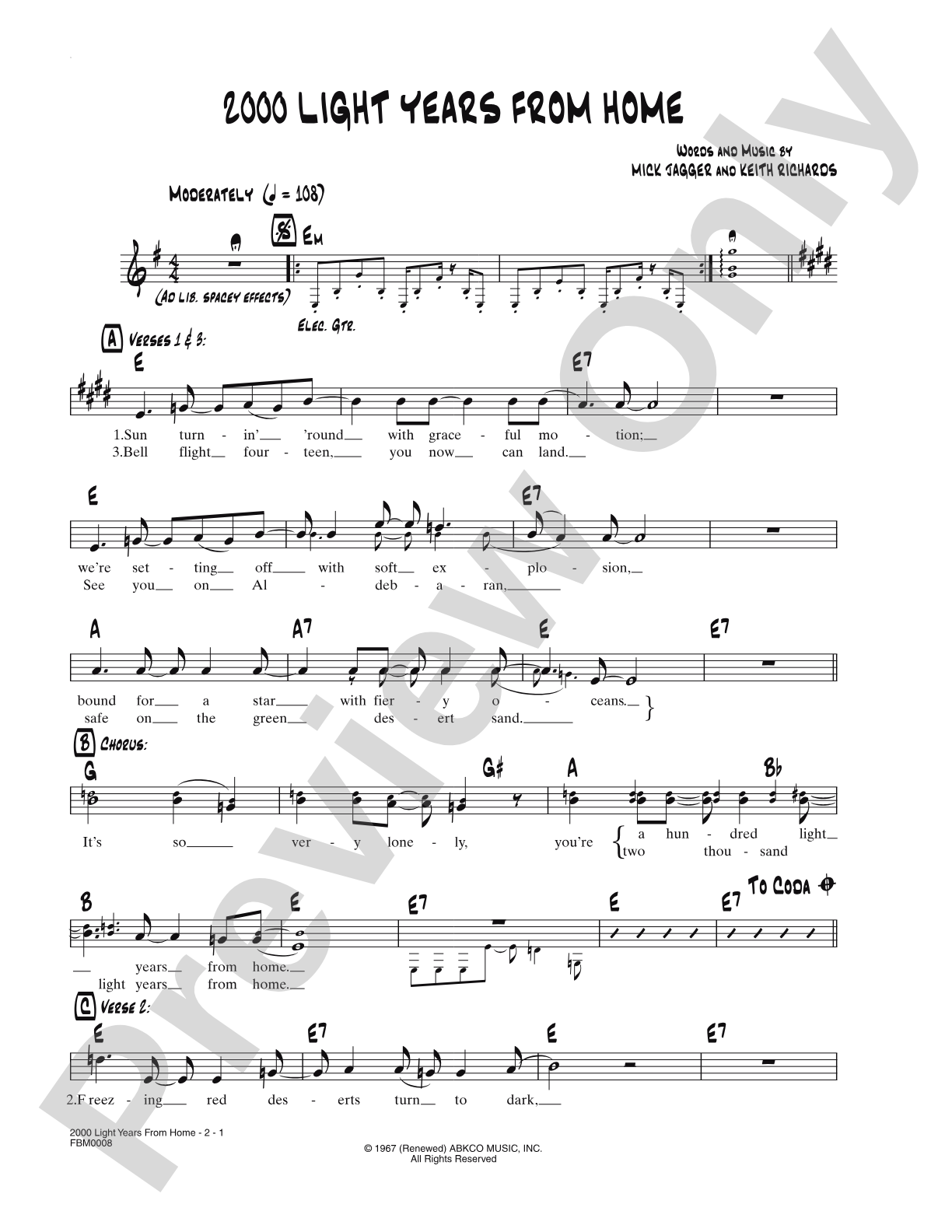

2000 Light Years From Home: Lead Sheet
The Rolling Stones
Item: 00-PS-0012178
$4.99
Pickup currently not available
Related Items
(Get Your Kicks On) Route 66: Lead Sheet |
$4.99
|
View | |
Time is on My Side: Lead Sheet |
$4.99
|
View | |
You Better Move On: Lead Sheet |
$4.99
|
View | |
I'm Movin' On: Lead Sheet |
$4.99
|
View | |
Mercy, Mercy: Lead Sheet |
$4.99
|
View | |
If You Need Me: Lead Sheet |
$4.99
|
View | |
Fortune Teller: Lead Sheet |
$4.99
|
View | |
19th Nervous Breakdown: Lead Sheet |
$4.99
|
View | |
2000 Man: Lead Sheet |
$4.99
|
View | |
2120 South Michigan Avenue: Lead Sheet |
$4.99
|
View | |
All Sold Out: Lead Sheet |
$4.99
|
View | |
All Down the Line: Lead Sheet |
$4.99
|
View | |
As Tears Go By: Lead Sheet |
$4.99
|
View | |
Backstreet Girl: Lead Sheet |
$4.99
|
View | |
Bitch: Lead Sheet |
$4.99
|
View | |
Brown Sugar: Lead Sheet |
$4.99
|
View | |
Blue Turns to Grey: Lead Sheet |
$4.99
|
View | |
Citadel: Lead Sheet |
$4.99
|
View | |
Can't You Hear Me Knocking: Lead Sheet |
$4.99
|
View | |
Child of the Moon: Lead Sheet |
$4.99
|
View | |
Connection: Lead Sheet |
$4.99
|
View | |
Complicated: Lead Sheet |
$4.99
|
View | |
Congratulations: Lead Sheet |
$4.99
|
View | |
Country Honk: Lead Sheet |
$4.99
|
View | |
Dead Flowers: Lead Sheet |
$4.99
|
View | |
Cool, Calm and Collected: Lead Sheet |
$4.99
|
View | |
Dandelion: Lead Sheet |
$4.99
|
View | |
Dear Doctor: Lead Sheet |
$4.99
|
View | |
Don't Lie to Me: Lead Sheet |
$4.99
|
View | |
Doncha Bother Me: Lead Sheet |
$4.99
|
View | |
Downtown Suzie: Lead Sheet |
$4.99
|
View | |
Empty Heart: Lead Sheet |
$4.99
|
View | |
Each and Every Day of the Year: Lead Sheet |
$4.99
|
View | |
Factory Girl: Lead Sheet |
$4.99
|
View | |
Family: Lead Sheet |
$4.99
|
View | |
Gimme Shelter: Lead Sheet |
$4.99
|
View | |
Good Times, Bad Times: Lead Sheet |
$4.99
|
View | |
Flight 505: Lead Sheet |
$4.99
|
View | |
Get Off of My Cloud: Lead Sheet |
$4.99
|
View | |
Goin' Home: Lead Sheet |
$4.99
|
View | |
Gomper: Lead Sheet |
$4.99
|
View | |
Good Times: Lead Sheet |
$4.99
|
View | |
Grown Up Wrong: Lead Sheet |
$4.99
|
View | |
Gotta Get Away: Lead Sheet |
$4.99
|
View | |
Have You Seen Your Mother, Baby, Standing in the Shadow?: Lead Sheet |
$4.99
|
View | |
Heart of Stone: Lead Sheet |
$4.99
|
View | |
Honky Tonk Women: Lead Sheet |
$4.99
|
View | |
High and Dry: Lead Sheet |
$4.99
|
View | |
I Am Waiting: Lead Sheet |
$4.99
|
View | |
I Got the Blues: Lead Sheet |
$4.99
|
View |
Description
The Rolling Stones Fake Book includes 167 classic Stones songs recorded between 1963 and 1971 -- from early blues covers (Chuck Berry and Buddy Holly songs) to the psychedelia of Their Satanic Majesties Request. All songs are in complete, professional-style lead sheets with fundamental instrumental riffs and figures included. There is also a special guitar TAB section, featuring the pivotal guitar riffs and solos from 29 of their most legendary songs, an introductory essay, a full-color ABKCO years discography (with album art), and 40 pages of classic early sheet music covers reproduced in full color. The comb binding creates a lay-flat book that is perfect for study and performance. The ultimate Rolling Stones songbook!


2000 Light Years From Home: Lead Sheet isn't in MakeMusic Cloud just yet...but it could be. Let us know you'd like to see it, and you'll help shape what comes next. In the meantime, start a free trial and dive into thousands of interactive titles your students can play along with today.
Request This Title
Tell us you want it.
Start Your Free Trial
Explore everything that's ready to play right now.
Sample Audio
No sample audio found.
Sample Video
No sample videos found.
Additional Details
Series:
Just Real Books Series
Publisher:
Alfred Music
Page Count:
432
SKU:
00-PS-0012178
More about this title
About the Composer: Mick Jagger
Mick Jagger emerged as one of rock music's most dynamic frontmen and prolific songwriters, co-writing the majority of The Rolling Stones' catalog alongside Keith Richards beginning in the mid-1960s. His gift for crafting memorable melodies and lyrics that ranged from blues-rooted storytelling to psychedelic experimentation shaped the sound of rock music for decades and continues to influence songwriters across genres.
Jagger's compositional voice evolved dramatically across the Stones' early years, moving from straightforward blues covers to sophisticated rock compositions that incorporated elements of folk, psychedelia, and experimental studio work. His work as both lyricist and melodist demonstrates how popular songwriting can achieve artistic depth while maintaining immediate, singable hooks that connect with audiences.
Why we love this
This is a rare chance to study how a legendary rock songwriting partnership actually worked. Every transcription shows the harmonic sophistication and instrumental arrangement choices that made early Stones records so influential; guitarists can see exactly which riffs define each song and study how Richards layered parts for maximum impact.
What to expect
These pages capture the raw energy and calculated craft of early rock and roll; you'll feel the blues influences that anchored the Stones' early work alongside the studio sophistication they developed as the decade progressed. Moving through the lead sheets is like watching a band evolve in real time, from cover-band enthusiasm to fearless artistic experimentation.
Who it's for
Guitarists and bandleaders studying rock composition and arrangement, musicians preparing Stones material for performance, and players interested in analyzing how foundational rock riffs and song structures were built. This resource serves anyone wanting to understand the mechanics behind some of popular music's most enduring songs.
How to get the most out of it
- Study the TAB section alongside the lead sheet to understand how the iconic riffs function as compositional elements, not just ornamental guitar work.
- Use the fundamental instrumental riffs included in each lead sheet as a blueprint for arranging these songs for your own ensemble or band context.
- Reference the full-color discography and sheet music reproductions to hear specific recorded arrangements in your head while reading through the charts.
- Pay attention to the harmonic movement underneath the most famous riffs; this is where the songwriting craft becomes visible.
How to use it
Use individual songs as stand-alone guitar features in concerts, selecting from the transcriptions based on which arrangements best fit your ensemble's instrumentation. The TAB section makes this ideal for teaching signature riffs in a guitar class or ensemble setting, and the historical notes and discography provide context for programming Stones material in thematic concert sets about rock history or evolution.
Skills your students will build
- Reading professional lead sheet notation and understanding harmonic structure
- Transcribing and interpreting guitar riffs from their notation in performance
- Recognizing blues-based harmonic progressions and how they function in rock composition
- Analyzing the relationship between lead sheet melody and iconic instrumental riffs
- Using TAB and standard notation together to understand guitar voicing and arrangement choices