

Your Beauty Is the Song: SATB divisi Choral Octavo
Words by Michael Pope, music by Molly Ijames
Item: 00-PO-0005925
$2.05
Minimum order quantity: 20 copies
Pickup currently not available
Related Items
Your Beauty Is the Song: SATB divisi Choral Octavo |
$2.05
|
View |
Description
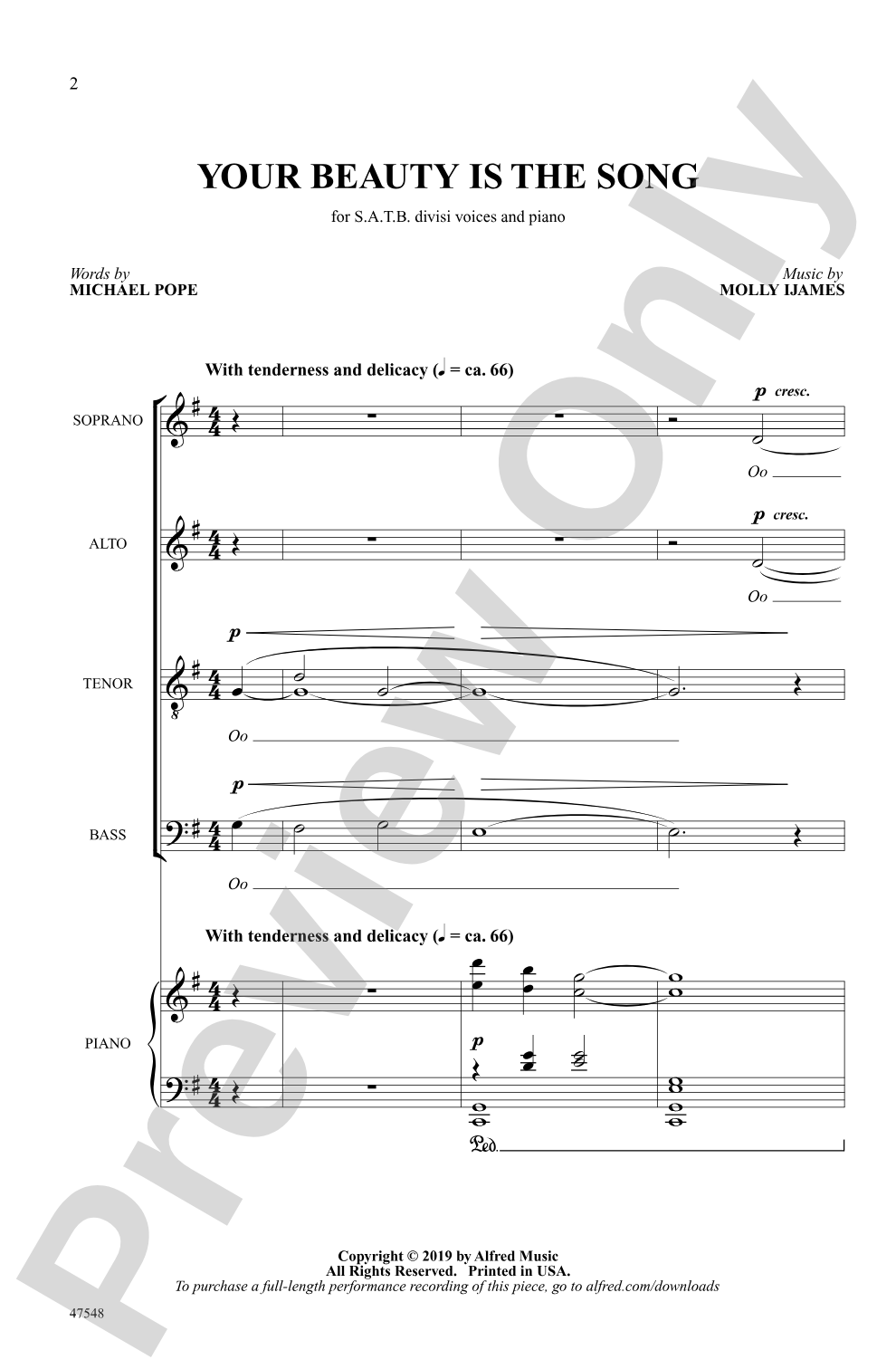
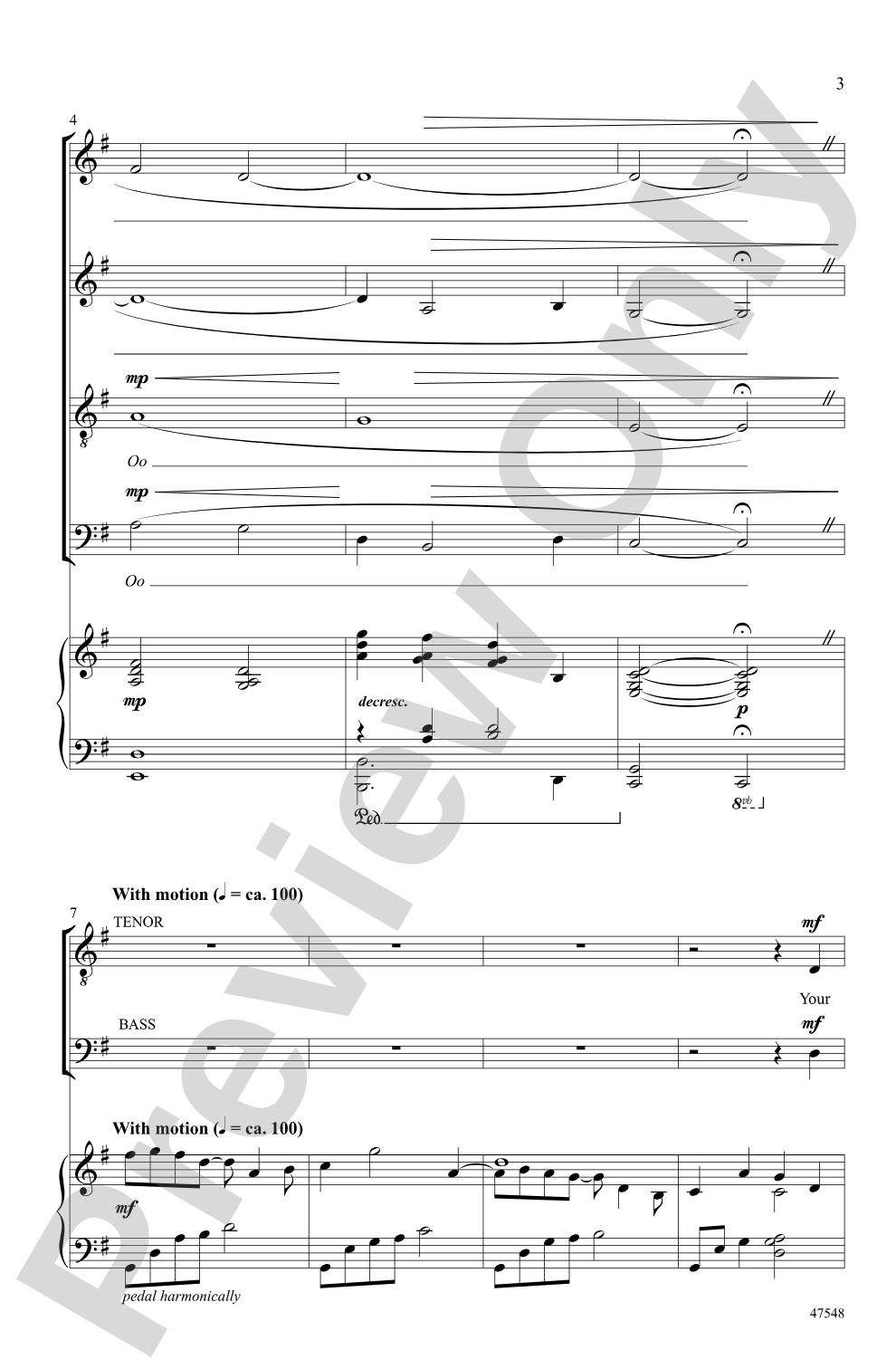
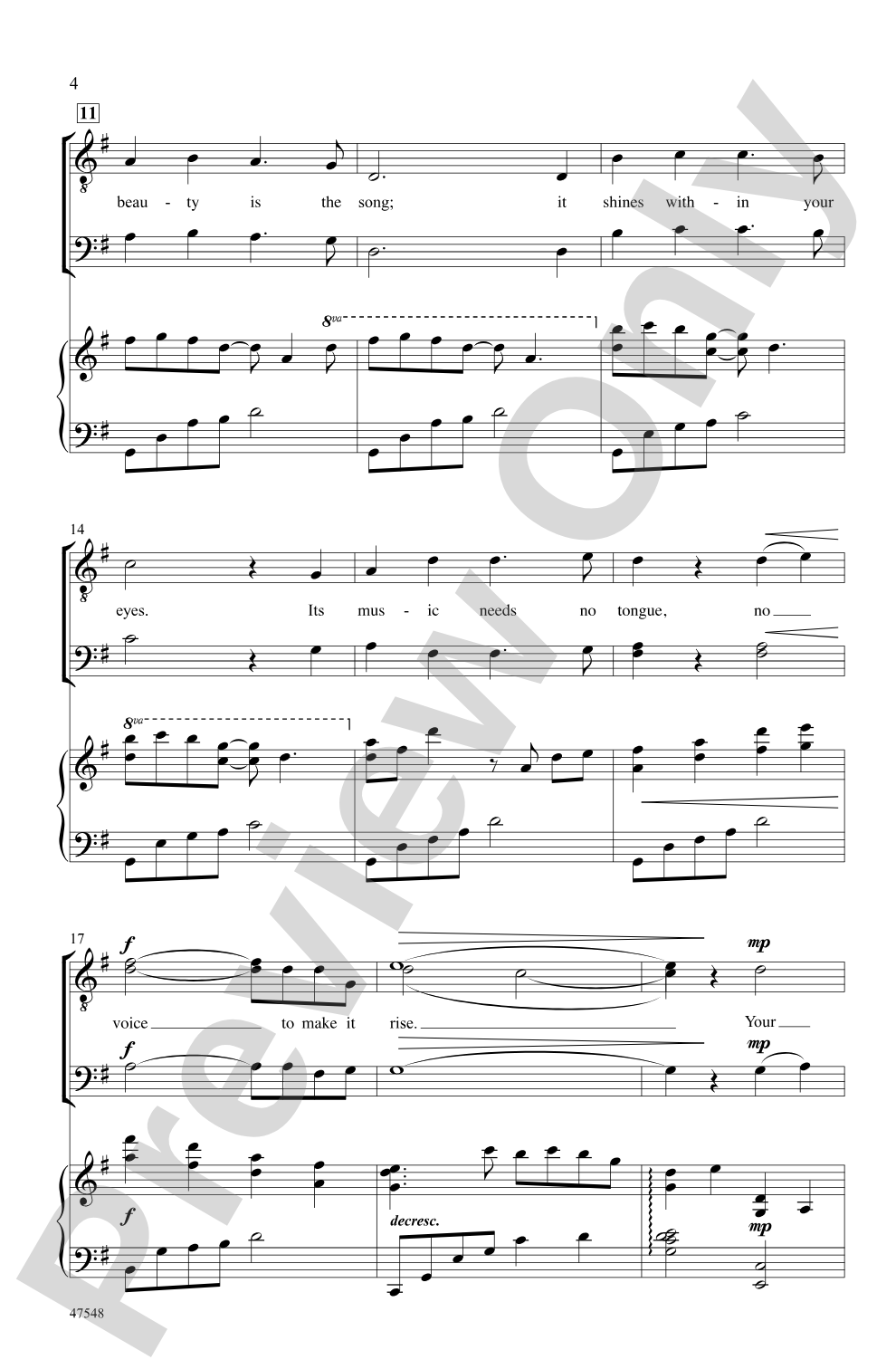
A hushed, exposed choral introduction blossoms into a sublime concert work for choirs who seek artistic literature. The men introduce the main melody in stunning four-part harmony, before the women join at the first chorus. With artful divisi writing and many moments of unbridled emotion, this work is sure to become a choral classic.


Your Beauty Is the Song: SATB divisi Choral Octavo isn't in MakeMusic Cloud just yet...but it could be. Let us know you'd like to see it, and you'll help shape what comes next. In the meantime, start a free trial and dive into thousands of interactive titles your students can play along with today.
Request This Title
Tell us you want it.
Start Your Free Trial
Explore everything that's ready to play right now.
Sample Audio
1
Audio File
--:--
0:00
0:00
Sample Video
Additional Details
Series:
Lawson-Gould
Publisher:
Alfred Music
Page Count:
12
SKU:
00-PO-0005925
More about this title
About the Composer: Molly Ijames

Molly Ijames grew up in Flint, Michigan, where her passion for sacred music took root during her teenage years as a church pianist. She earned a B.S. in Music Education from Bob Jones University and spent seven years at SoundForth Publishing and BJU in Greenville, South Carolina, where her compositional voice developed and gained recognition across multiple publishing catalogs.
Today, Ijames maintains an active career as a commissioned composer and educator, with over 100 choral anthems, seasonal cantatas, piano collections, and instrumental ensemble works to her name. She regularly leads workshops at music conferences, accompanies choirs and congregations, and serves as a church musician and worship planner. Based in Davison, Michigan, she continues to create music that serves both artistic and devotional contexts.
Why we love this
Ijames crafts the divisi writing with genuine purpose rather than complexity for its own sake; each voice layer deepens the emotional arc rather than obscuring it. The decision to introduce the melody through the men's voices before the women enter creates a structural elegance that feels fresh and allows each section to shine, making this an ideal concert piece for choirs ready to showcase both ensemble blend and individual voice quality.
What to expect
The piece begins in hushed reverence, as if the choir is discovering the melody together in real time. When the full ensemble arrives, there's a sense of inevitable bloom, like a single note opening into a chord. Throughout, the artful divisi moments create layers of warmth and longing that build emotional intensity without ever feeling forced.
Who it's for
This work suits choirs with solid sectional balance and singers who can sustain exposed writing without wavering. It rewards groups preparing for concert performances or festival competitions where artistic depth and controlled emotion register more strongly than technical flash.
How to get the most out of it
- Invest time in the exposed introduction. This vulnerable moment sets the emotional foundation for everything that follows, so secure the intonation and phrasing before moving forward with tempo or dynamics.
- Balance the men's four-part harmony carefully when they carry the main melody. Ensure the inner voices support rather than compete, which will allow the tune to soar without sounding thick or muddy.
- Shape the moment when women join at the first chorus as a genuine expansion, not just an addition of voices. This transition deserves a subtle dynamic lift and a breath of space to let the listener absorb the textural shift.
- Mark your divisi sections clearly in rehearsal so singers understand where they're doubling and where they're creating harmonic independence. This clarity prevents the piece from collapsing into unison when it should breathe in parts.
How to use it
Program this as a feature work on a concert devoted to contemporary secular choral literature, or pair it with other pieces that explore restraint and intimacy before releasing into bigger, more extroverted works. Its 12-page length makes it a substantial anchor piece without overwhelming a concert's total rehearsal demand.
Skills your students will build
- Sustaining tone and intonation in exposed, unaccompanied passages
- Balancing divisi harmony when multiple voice parts carry independent material
- Transitioning between unison and multi-part textures
- Shaping phrases with minimal accompaniment support
- Blending sectional voices while maintaining individual voice identity