
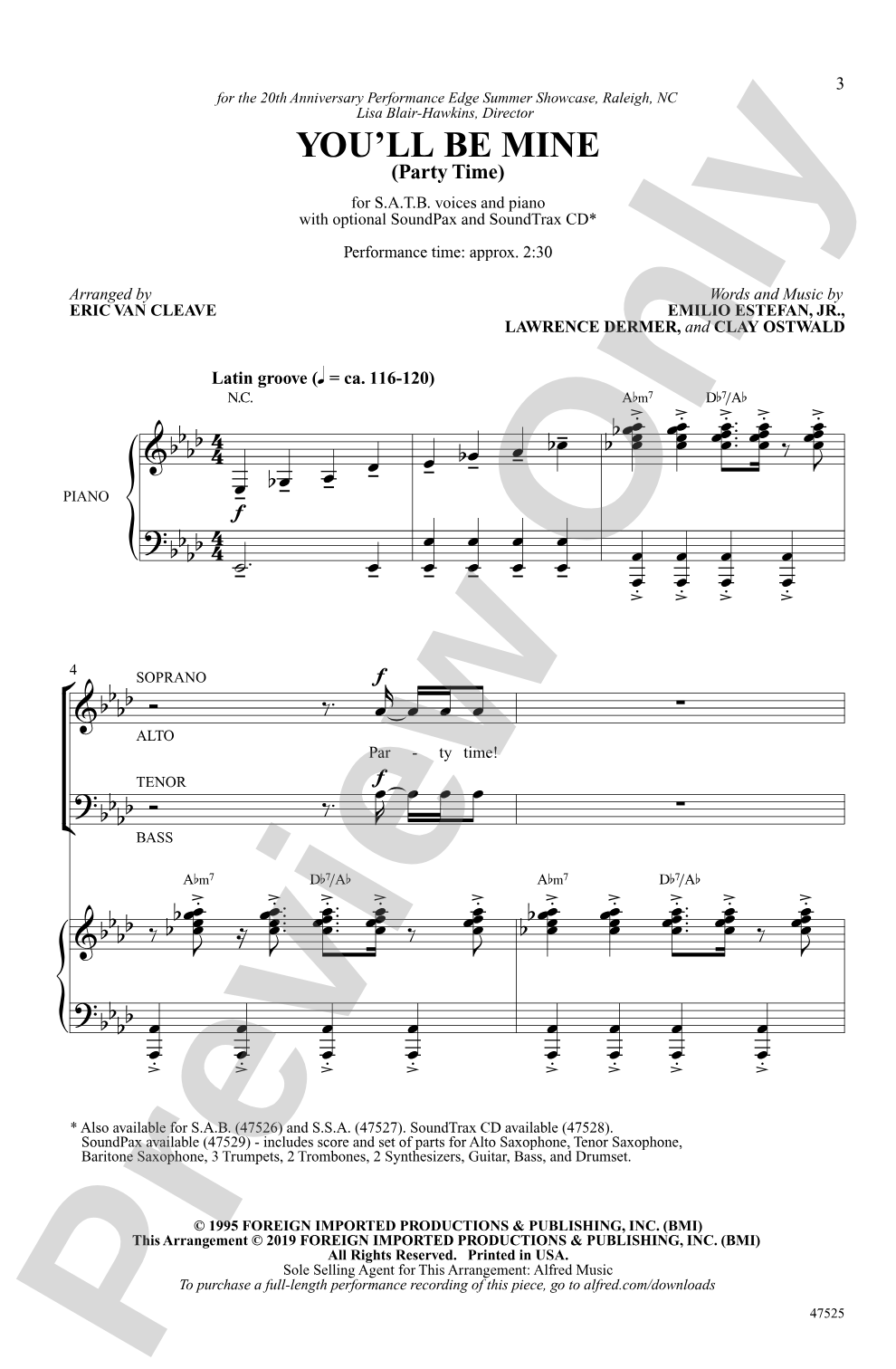

You'll Be Mine: SATB Choral Octavo
(Party Time)
Words and music by Emilio Estefan, Jr., Lawrence Dermer, and Clay Ostwald / arr. Eric Van Cleave
Item: 00-PO-0006014
$2.10
Minimum order quantity: 20 copies
Pickup currently not available
Related Items
You'll Be Mine: SoundTrax Digital Audio Download |
$27.99
|
View | |
You'll Be Mine: SAB Choral Octavo |
$2.10
|
View | |
You'll Be Mine: SSA Choral Octavo |
$2.10
|
View | |
You'll Be Mine: Choral SoundPax |
$50.00
|
View | |
You'll Be Mine: SATB Choral Octavo |
$2.10
|
View | |
You'll Be Mine: SAB Choral Octavo |
$2.10
|
View | |
You'll Be Mine: SSA Choral Octavo |
$2.10
|
View | |
You'll Be Mine: SoundTrax CD |
$29.99
|
View | |
You'll Be Mine: Choral SoundPax |
$50.00
|
View |
Description
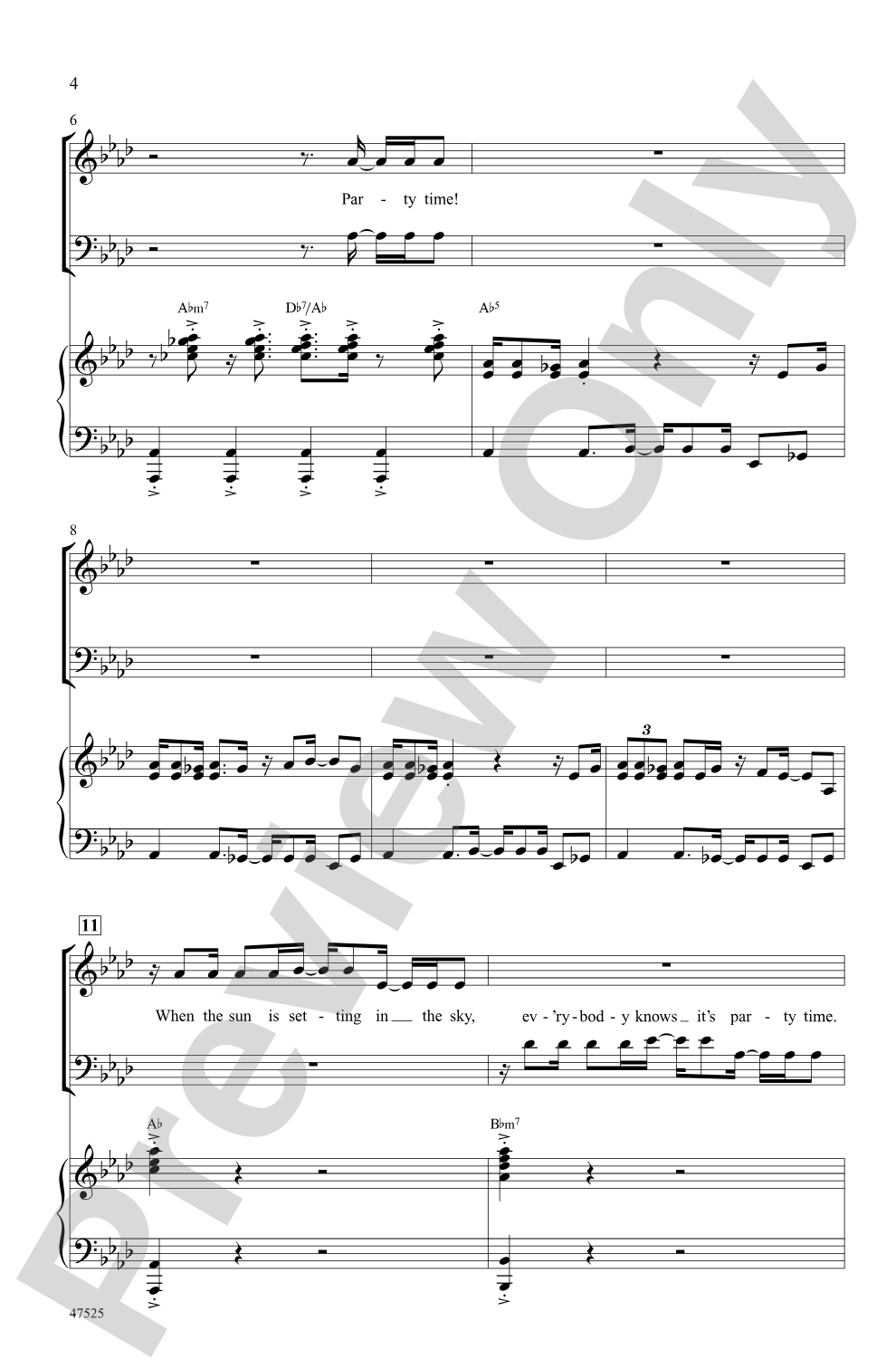
The Latin rhythms of this Gloria Estefan hit are hot, hot, hot. Spend a little time learning the rapid-fire lyrics, and then let the party begin! Optional solos are passed around during verses, but the scintillating harmonized hook is everybody's game. An eight-bar interlude at the coda doubles as a brief dance break just before the final choral riffs. A bonafide crowd-pleaser!


You'll Be Mine: SATB Choral Octavo isn't in MakeMusic Cloud just yet...but it could be. Let us know you'd like to see it, and you'll help shape what comes next. In the meantime, start a free trial and dive into thousands of interactive titles your students can play along with today.
Request This Title
Tell us you want it.
Start Your Free Trial
Explore everything that's ready to play right now.
Sample Audio
1
Audio File
--:--
0:00
0:00
Sample Video
Additional Details
Series:
Alfred Pop Choral Series
Publisher:
Alfred Music
Page Count:
12
SKU:
00-PO-0006014
More about this title
About the Composer: Emilio Estefan
Emilio Estefan is a Cuban-American musician, songwriter, and producer who shaped the sound of Latin pop from the 1980s onward. As a founding member and primary creative force behind Miami Sound Machine, he crafted the infectious rhythmic textures and crossover appeal that brought salsa-influenced pop to mainstream audiences worldwide.
Estefan's work spans songwriting, arranging, and production across multiple genres. His compositions balance accessibility with musical sophistication, making them natural fits for choral adaptation. His influence on popular music education is substantial; his songs appear regularly in contemporary choral repertoire because they engage singers with authentic rhythmic energy while remaining singable for mixed ensembles.
Why we love this
Arrangers often serve up pop hits with all rhythm and no substance, but Eric Van Cleave's treatment of this Gloria Estefan classic respects both the energy of the original and the capabilities of a mixed choir. The passing solos keep singers invested in verses, while the central hook lands hard in four-part harmony, giving every section a moment that matters.
What to expect
Infectious and buoyant, with the kind of groove that makes audiences lean forward in their seats. The Latin rhythms create forward momentum, while the harmonized hook gives singers a satisfying moment of unified power. It's the musical equivalent of a party invitation.
Who it's for
Choirs looking for a secular pop arrangement with real musical substance and immediate audience appeal. This works for groups with confident singers who can handle rhythmic independence and rapid text delivery, but it doesn't require soloists of any particular maturity level.
How to get the most out of it
- Lock the rhythmic precision of the Latin groove early in rehearsal. Clap the clave pattern together before adding any singing; the syncopations will feel more natural once the pulse is internalized.
- Treat the rapid-fire lyrics as a rhythmic element, not just words to articulate. Clarity matters less than locking each syllable into the pocket.
- Balance the optional solos with full ensemble moments so no one tunes out during verses. Rotate solo assignments or layer them in rehearsal if the assignment isn't flexible.
- Use the eight-bar dance break at the coda as a genuine break. Let singers step out of singing posture, shift weight, or move slightly. It resets energy for the final riffs and signals to the audience that something fun is happening.
How to use it
Program this as an audience energizer mid-concert or as a finale when you want to send the crowd out smiling. It pairs well with other pop arrangements in a shorter set, or it can stand alone as a palate cleanser between more serious repertoire.
Skills your students will build
- Maintaining rhythmic precision in syncopated, Latin-inflected meters
- Executing rapid-fire text delivery with clear articulation
- Singing four-part harmony in contemporary pop idioms
- Balancing solo and ensemble textures within a single piece