

You'd Be So Nice to Come Home To: SSA Choral Octavo
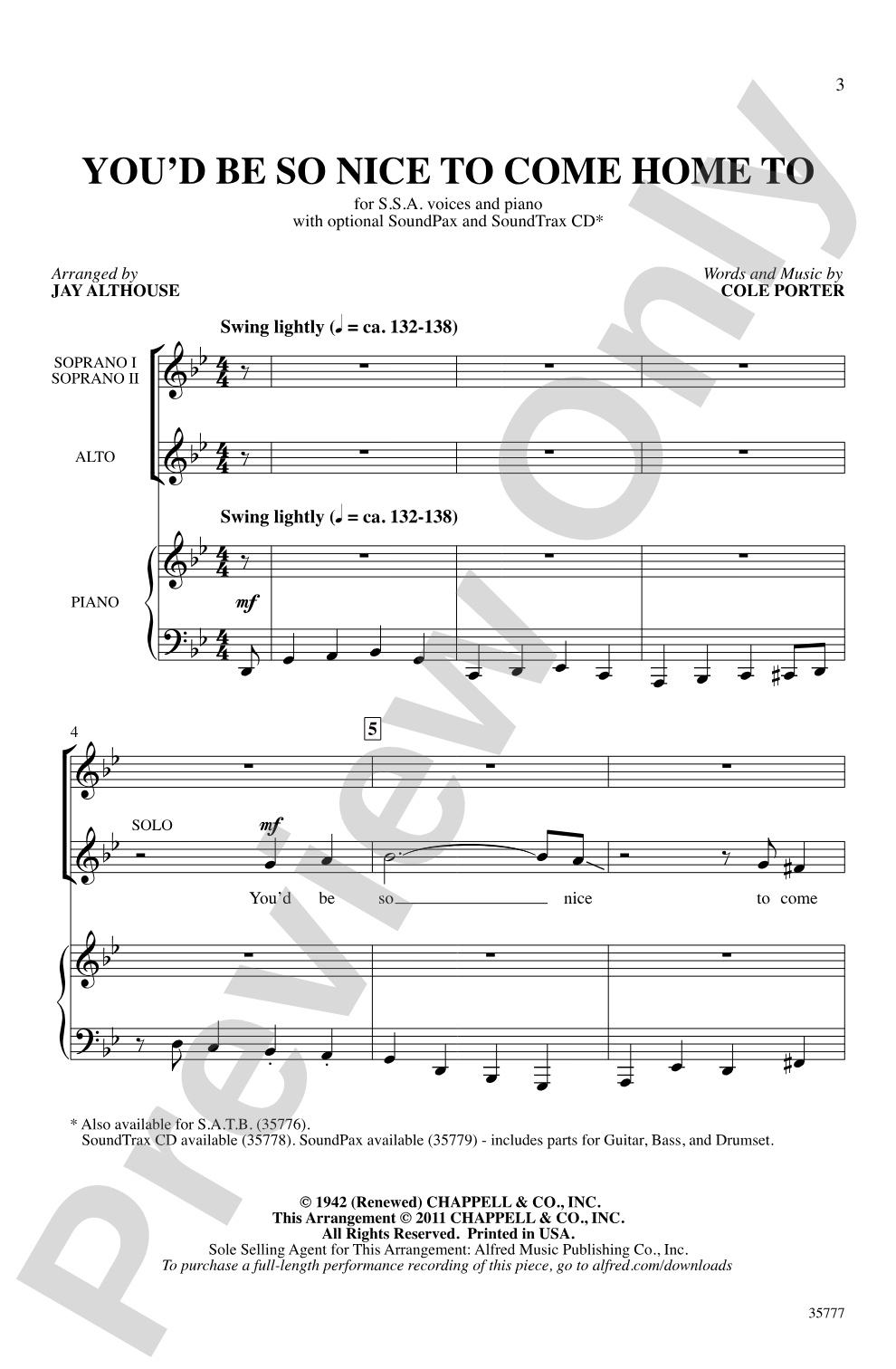
Words and music by Cole Porter / arr. Jay Althouse
Item: 00-PO-0001088
$1.90
Minimum order quantity: 20 copies
One moment…
Related Items
You'd Be So Nice to Come Home To: SoundTrax Digital Audio Download |
$26.99
|
View | |
You'd Be So Nice to Come Home To: SATB Choral Octavo |
$2.10
|
View | |
You'd Be So Nice to Come Home To: Choral SoundPax |
$10.00
|
View | |
You'd Be So Nice to Come Home To: SSA Choral Octavo |
$1.90
|
View | |
You'd Be So Nice to Come Home To: Choral Octavo SoundTrax CD |
$26.99
|
View | |
You'd Be So Nice to Come Home To: Choral SoundPax |
$10.00
|
View |
Description
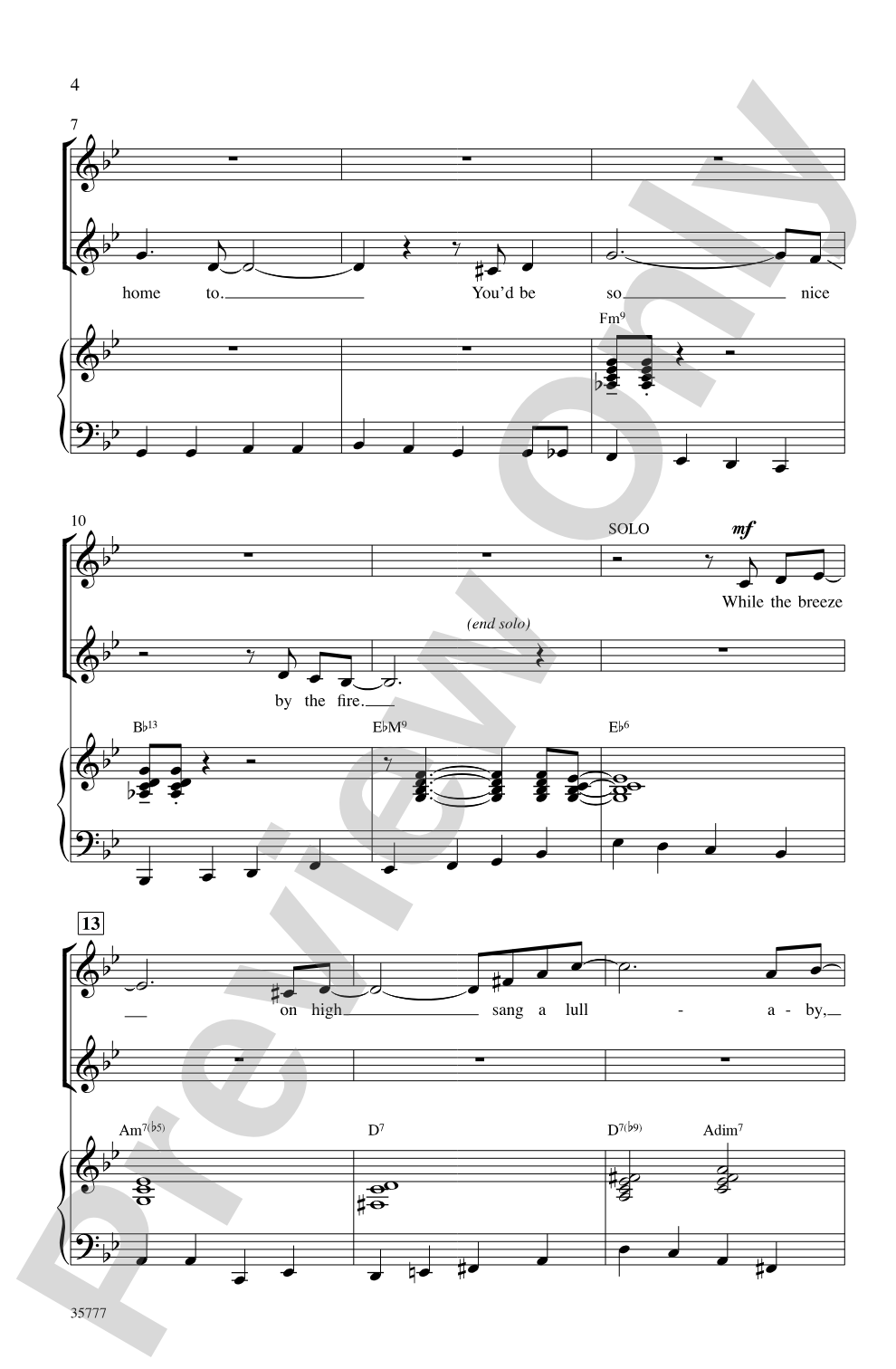
Jay offers a light swing approach to this Cole Porter favorite from the 1943 film Something to Shout About. Sung by jazz artists across the board, such as Ella Fitzgerald, Frank Sinatra, and Mel Tormé. Opens with two brief solos.


You'd Be So Nice to Come Home To: SSA Choral Octavo isn't in MakeMusic Cloud just yet...but it could be. Let us know you'd like to see it, and you'll help shape what comes next. In the meantime, start a free trial and dive into thousands of interactive titles your students can play along with today.
Request This Title
Tell us you want it.
Start Your Free Trial
Explore everything that's ready to play right now.
Sample Audio
1
Audio File
--:--
0:00
0:00
Sample Video
No sample videos found.
Additional Details
Series:
Alfred Pop Choral Series
Publisher:
Alfred Music
Page Count:
12
SKU:
00-PO-0001088
More about this title
About the Composer: Cole Porter
Cole Porter (1891-1964) was an American composer and lyricist whose sophisticated wit and elegant melodies defined the Golden Age of musical theatre. A Yale graduate and trained pianist, Porter wrote both music and lyrics for Broadway shows and film scores, bringing urbane humor and complex harmonies to popular song. His career spanned decades and produced some of the most performed standards in American music, from "Night and Day" to "I've Got You Under My Skin."
Porter's gift for memorable melody combined with clever wordplay made his songs naturals for jazz interpretation. His harmonic language, rooted in classical training but enriched by jazz influences, gave singers like Ella Fitzgerald and Frank Sinatra endless material for reinterpretation. For choral directors, Porter's standards offer the chance to teach how popular song can be approached with musical depth and how a single tune can support multiple stylistic treatments.
Why we love this
Jay Althouse's swing arrangement captures the casual elegance of this Porter standard without overcomplicating it. The brief solos create natural opportunities for feature singers, while the SSA writing keeps the piece accessible for a wide range of choirs. This is a song that jazz audiences know and love, making it a smart programming choice when you want familiar material that still sounds fresh.
What to expect
There's a warmth and gentleness to this piece, like someone softly hoping for a beloved's return. The swing style keeps it buoyant and never sentimental; it swings with a breeziness that reminds you why this song has been recorded hundreds of times. The solos add moments of intimacy before the choir joins in with a feeling of welcome and ease.
Who it's for
This arrangement works for choirs with some singing experience and comfort in contemporary styles. The SSA voicing makes it accessible to treble choirs, emerging adult ensembles, or mixed choirs selecting a piece for lighter entertainment programming. Directors looking to teach swing style and jazz interpretation will find this a manageable entry point.
How to get the most out of it
- Balance the opening solos so they sit naturally against the choral texture that follows; these aren't operatic moments but intimate conversational lines.
- Approach the swing rhythm with ease rather than precision. The groove should feel like it's settling into place, not snapping to attention.
- Shape the lyrics for meaning. Porter's words are conversational and warm, so let your singers connect to the sentiment rather than just the notes.
- Use the recorded accompaniment to anchor the style early in rehearsal; hearing the harmonic movement and rhythmic pocket first makes learning curves faster.
How to use it
Program this when you want to shift energy toward something lighter and more contemporary. It pairs well on a concert that mixes standards with other pop or jazz selections, or it can anchor a "Great American Songbook" themed set. The piece works equally well as a surprise closer or as a moment of levity within a longer formal concert.
Skills your students will build
- Singing swing rhythms and interpreting straight eighth notes as jazz phrasing
- Balancing solo features with ensemble texture
- Interpreting Cole Porter's conversational lyrical style
- Reading jazz harmonies and chord changes
- Listening and responding to recorded accompaniments for stylistic accuracy