
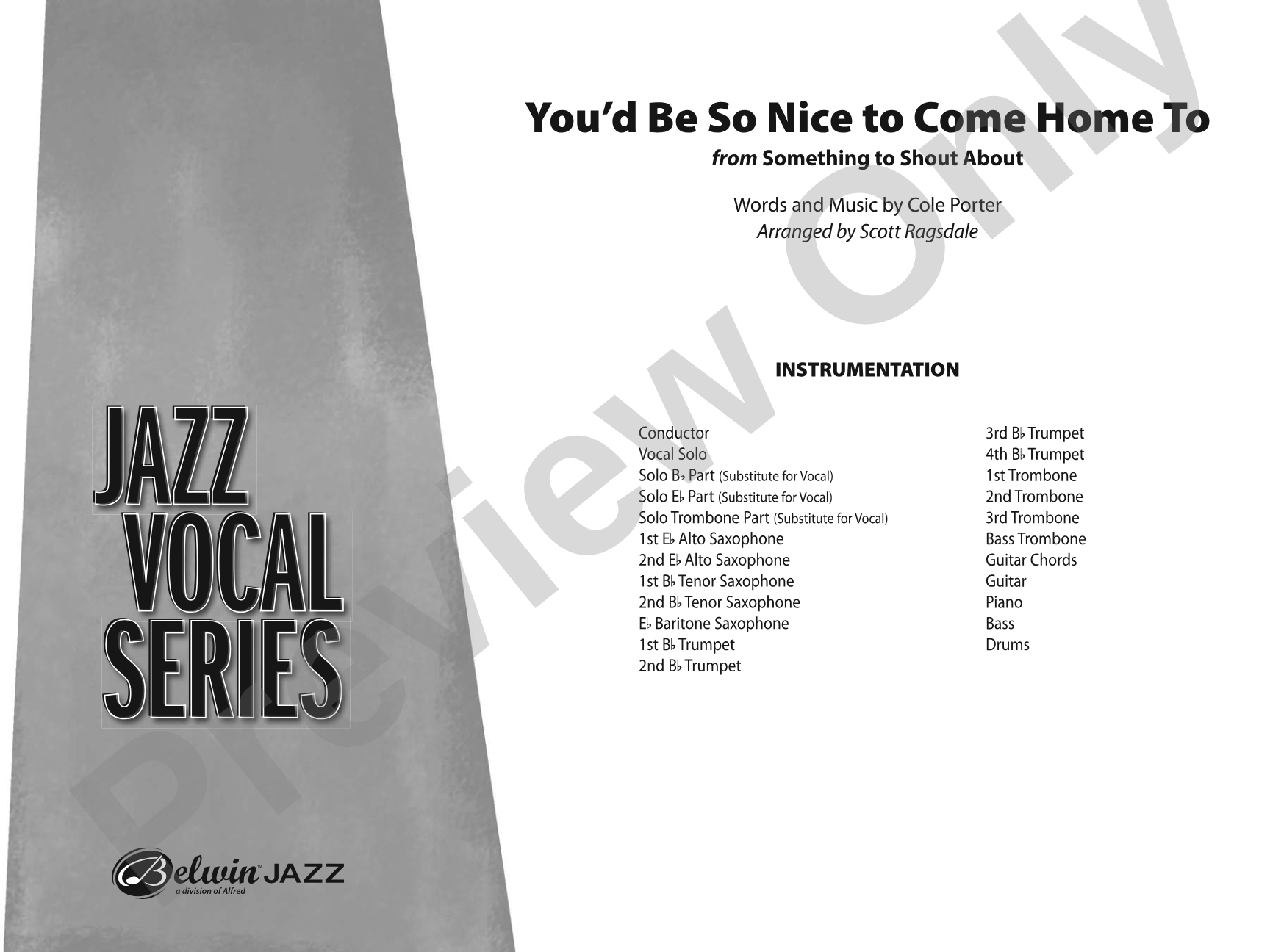
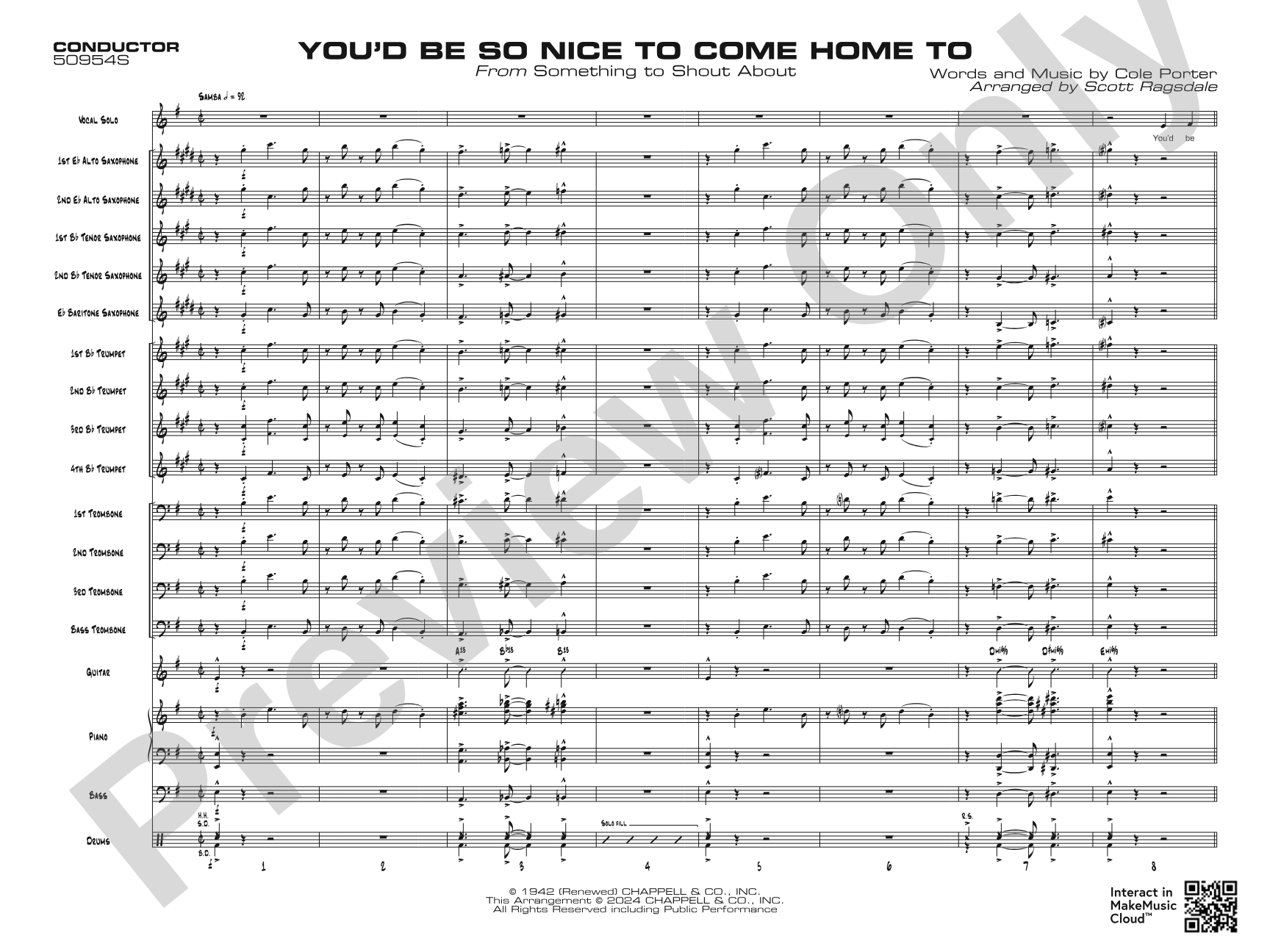
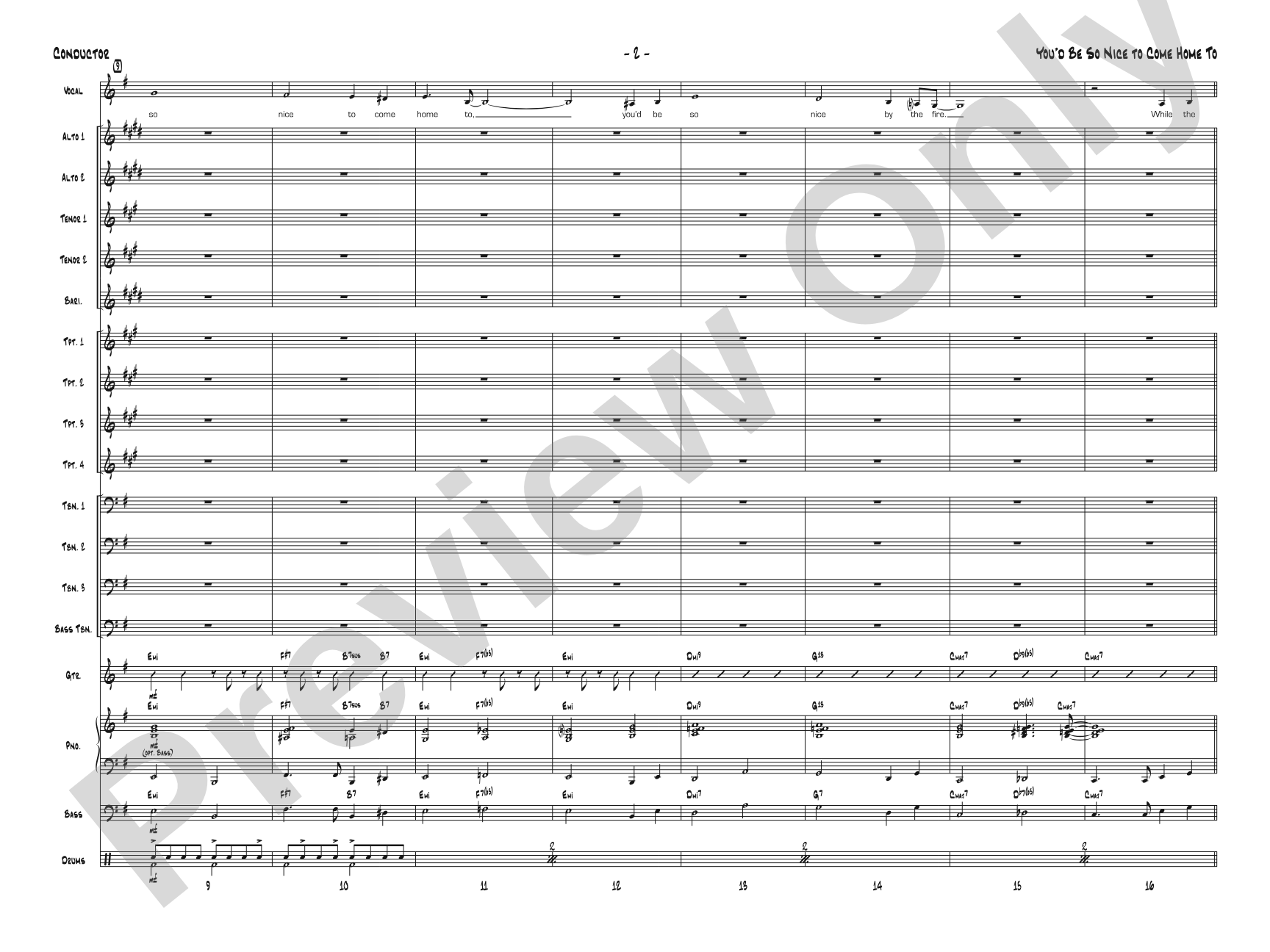
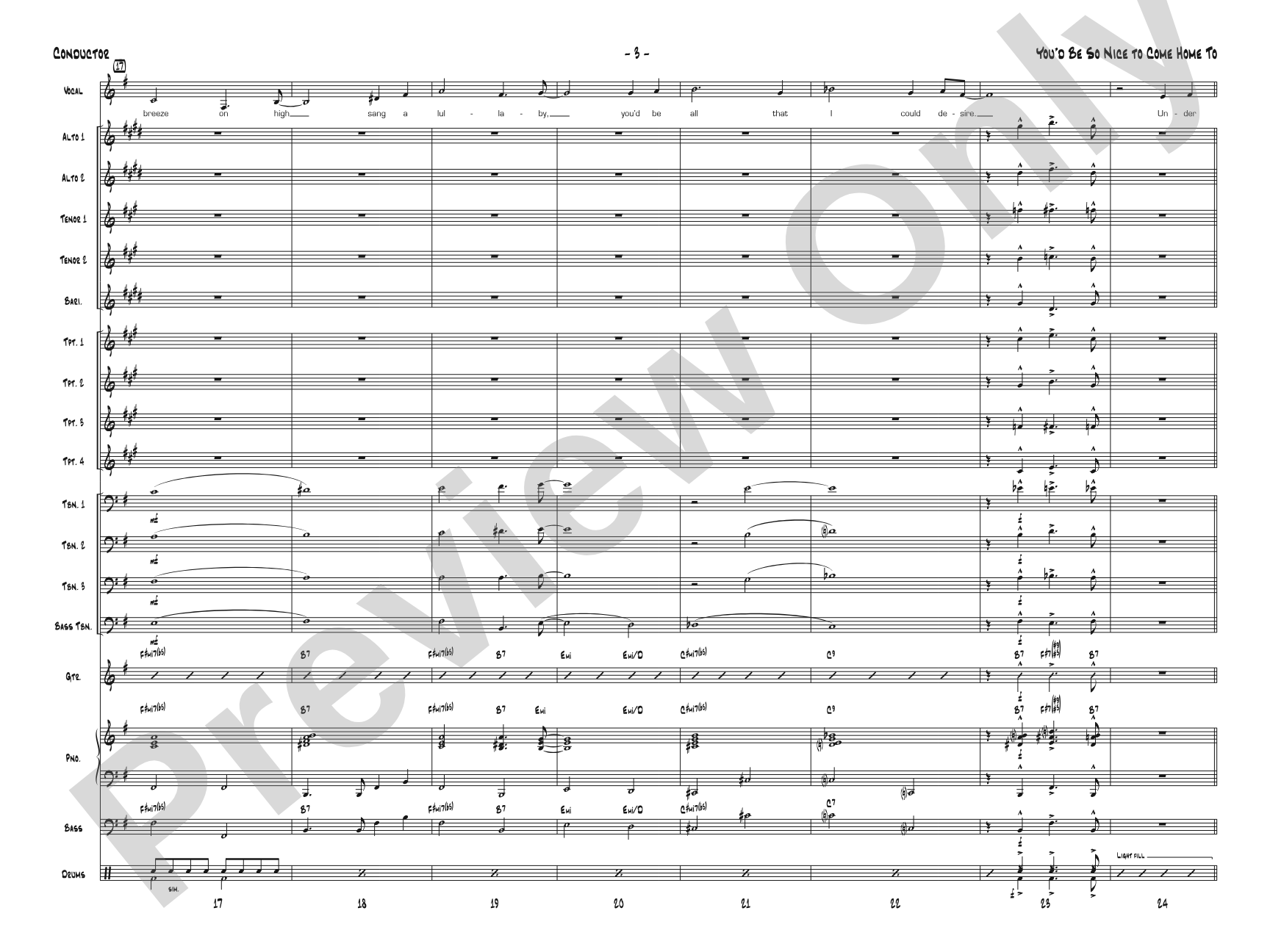
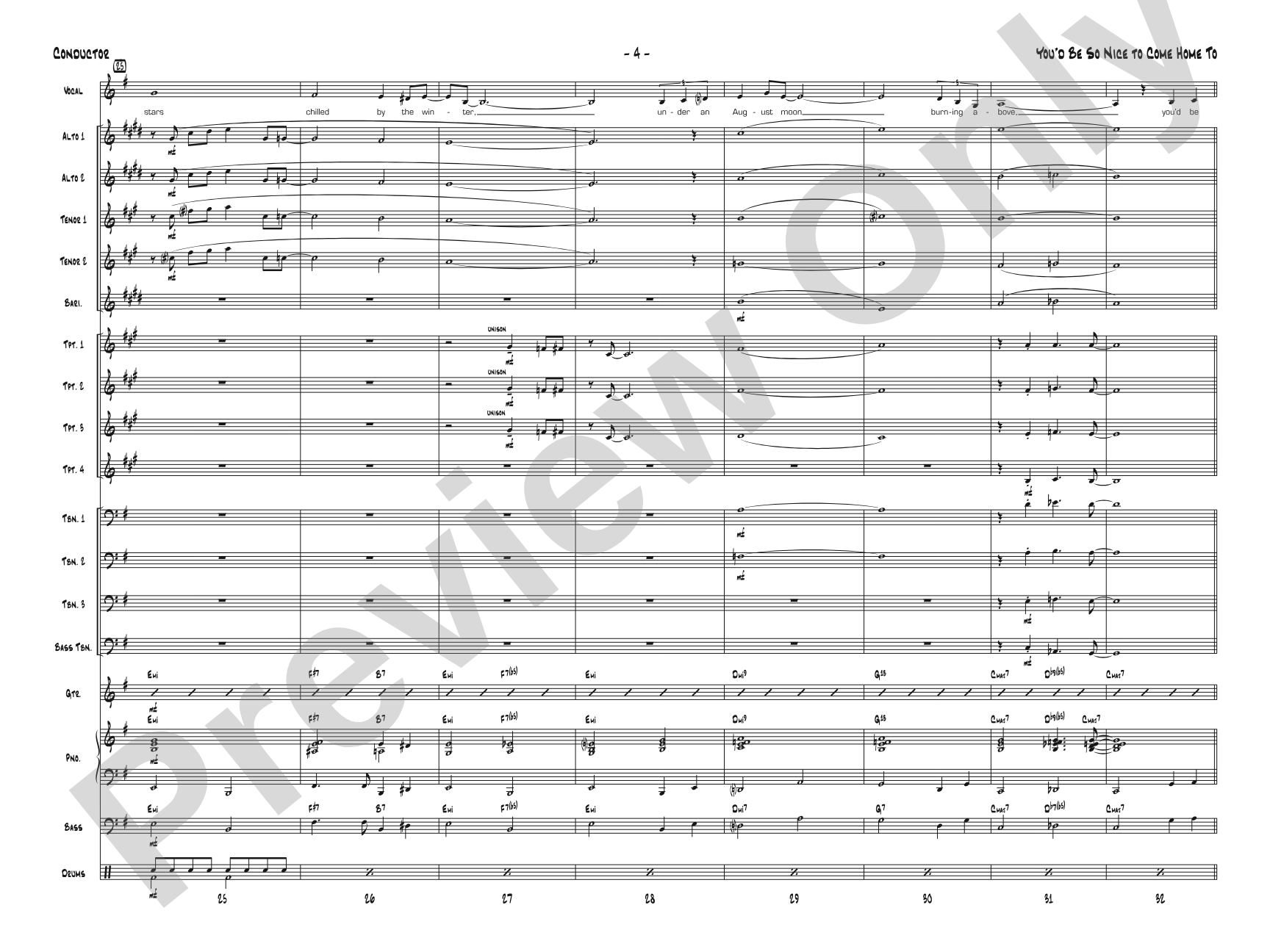
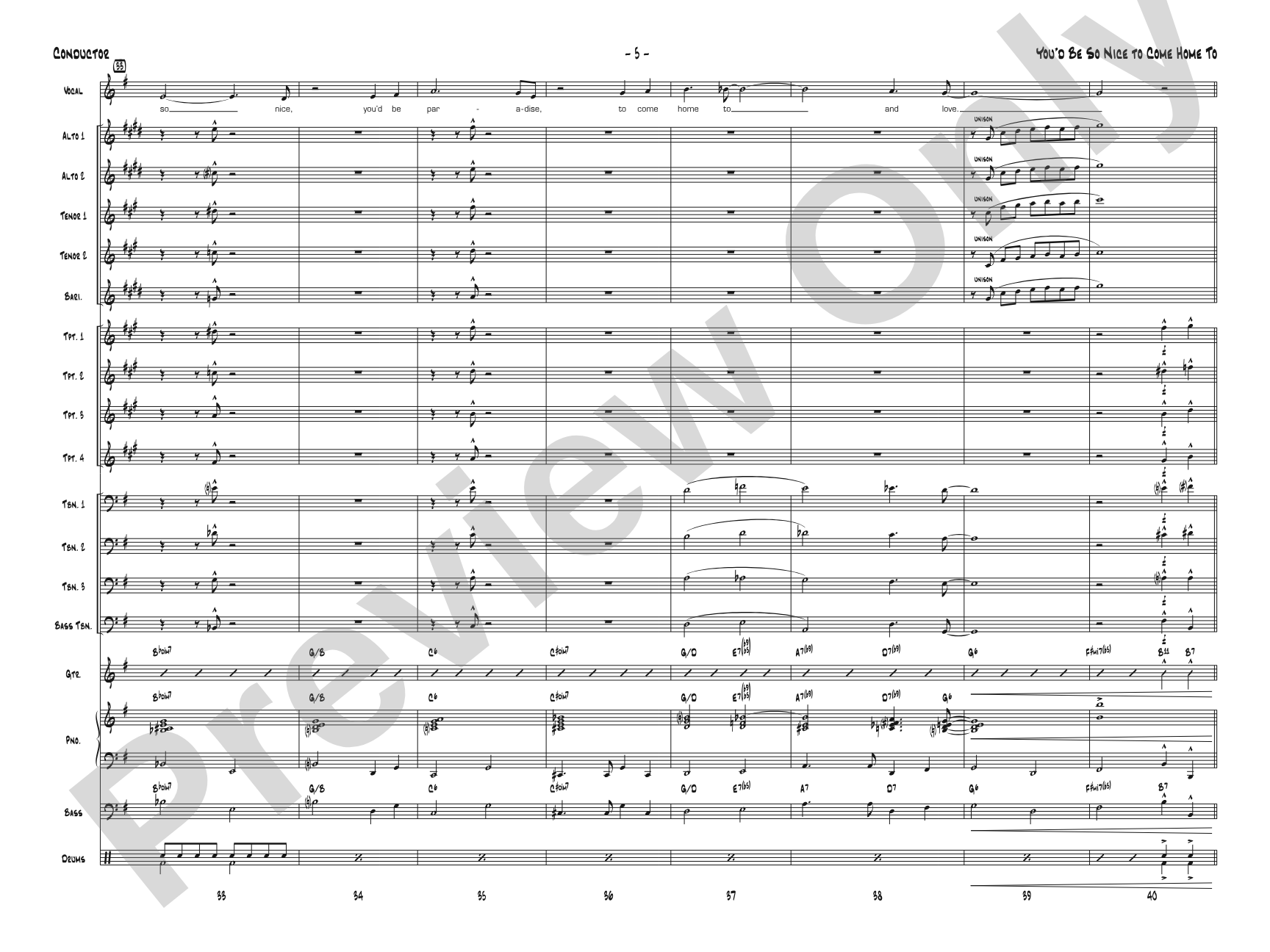
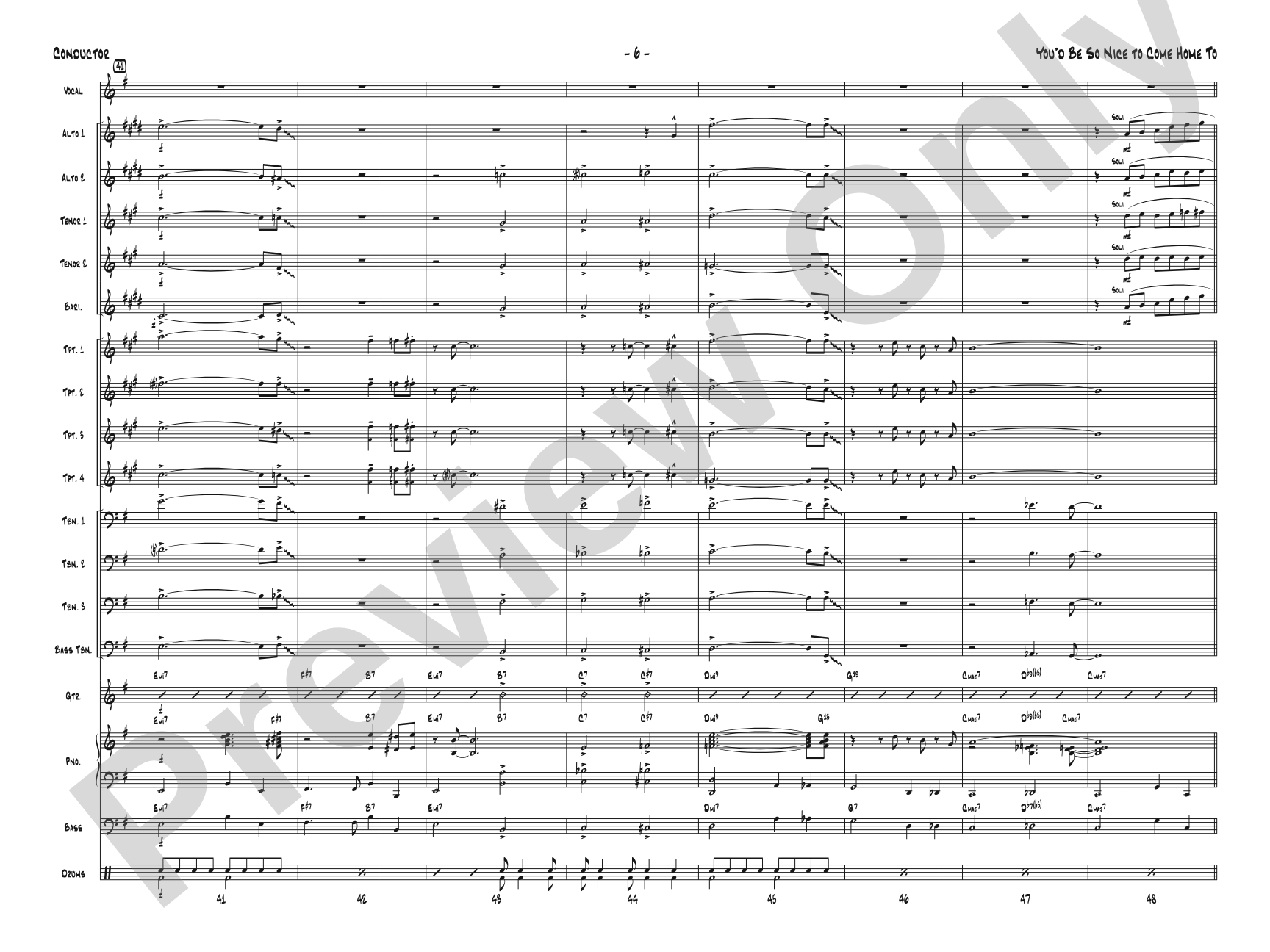
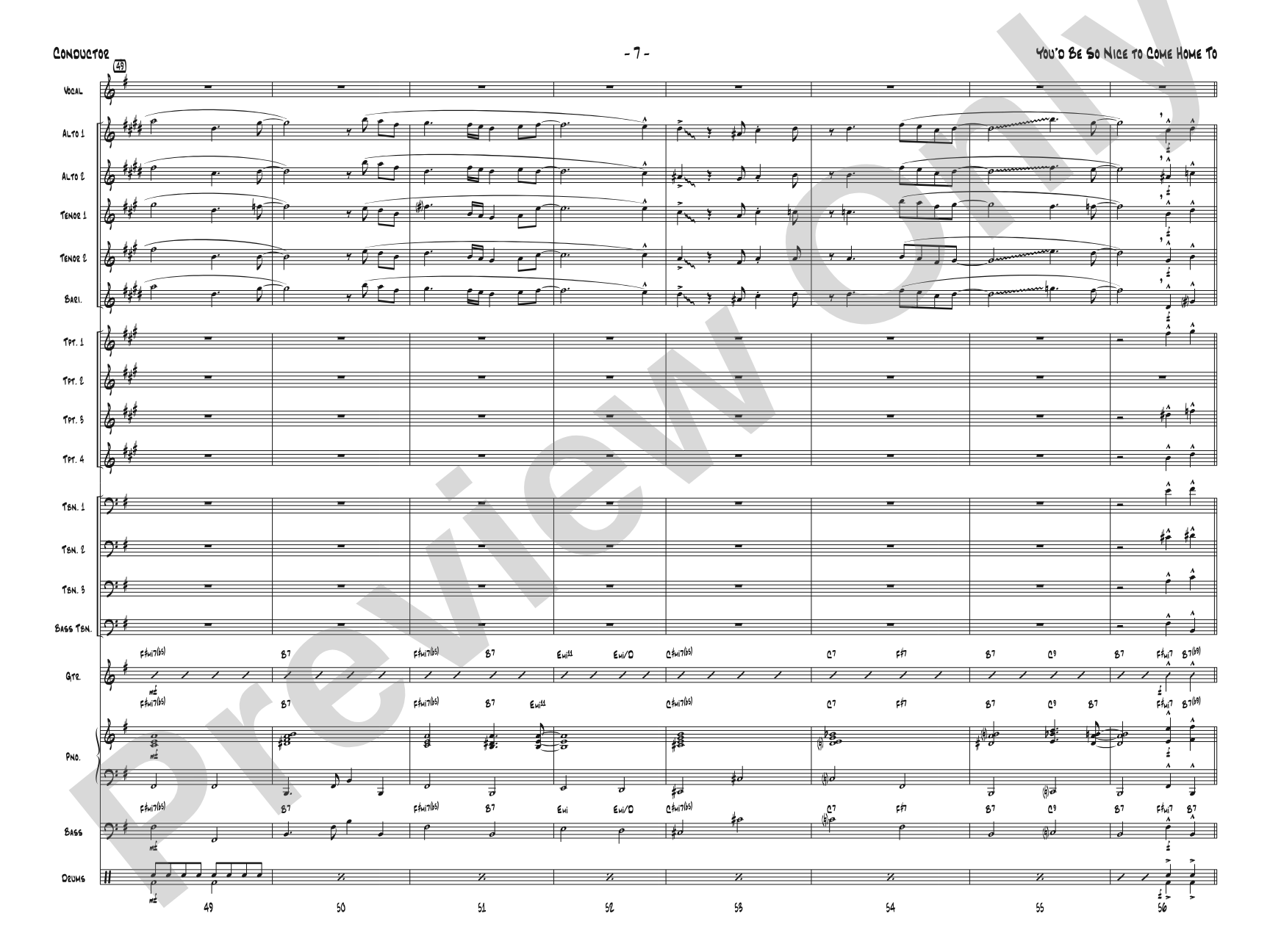
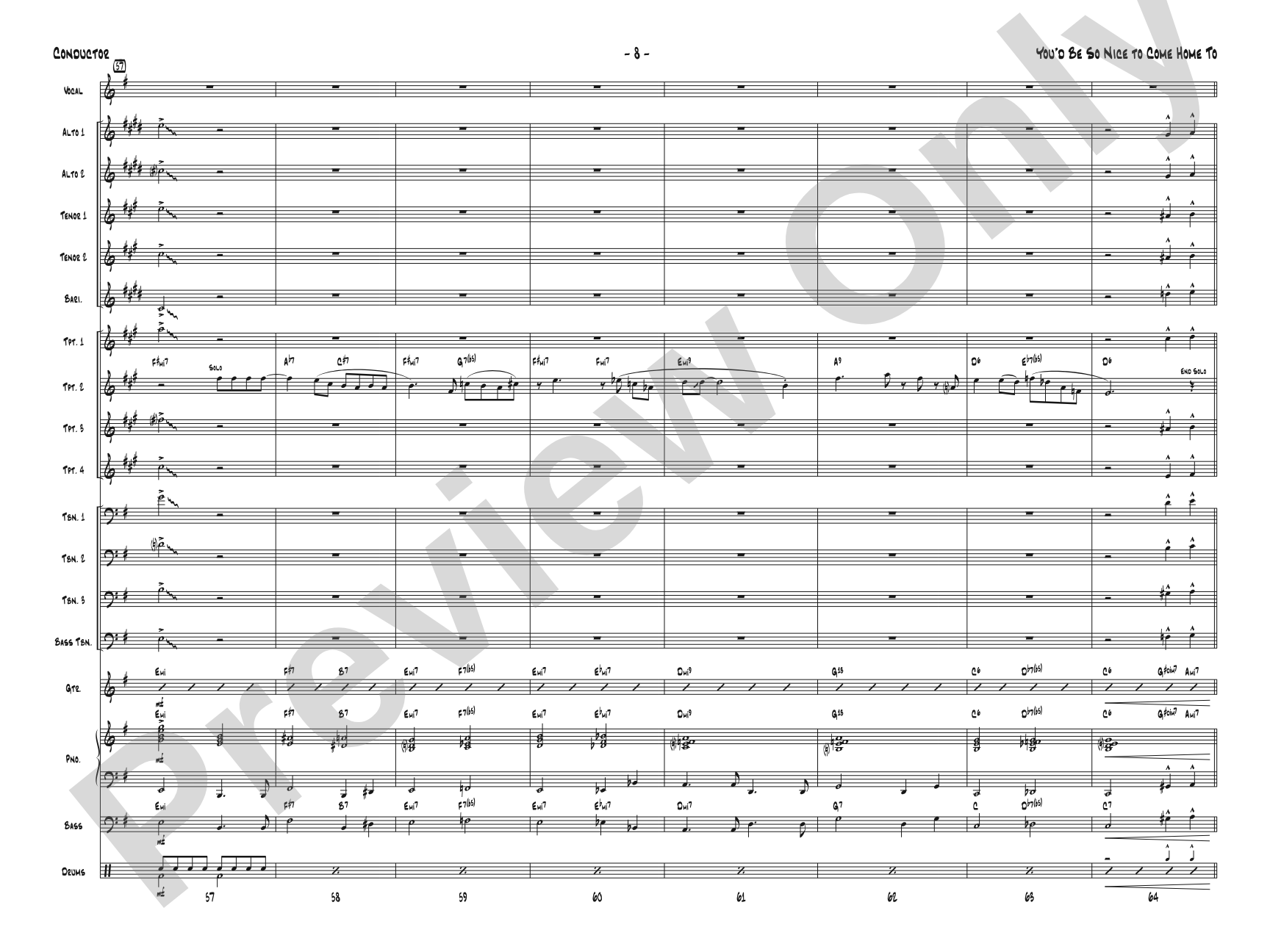
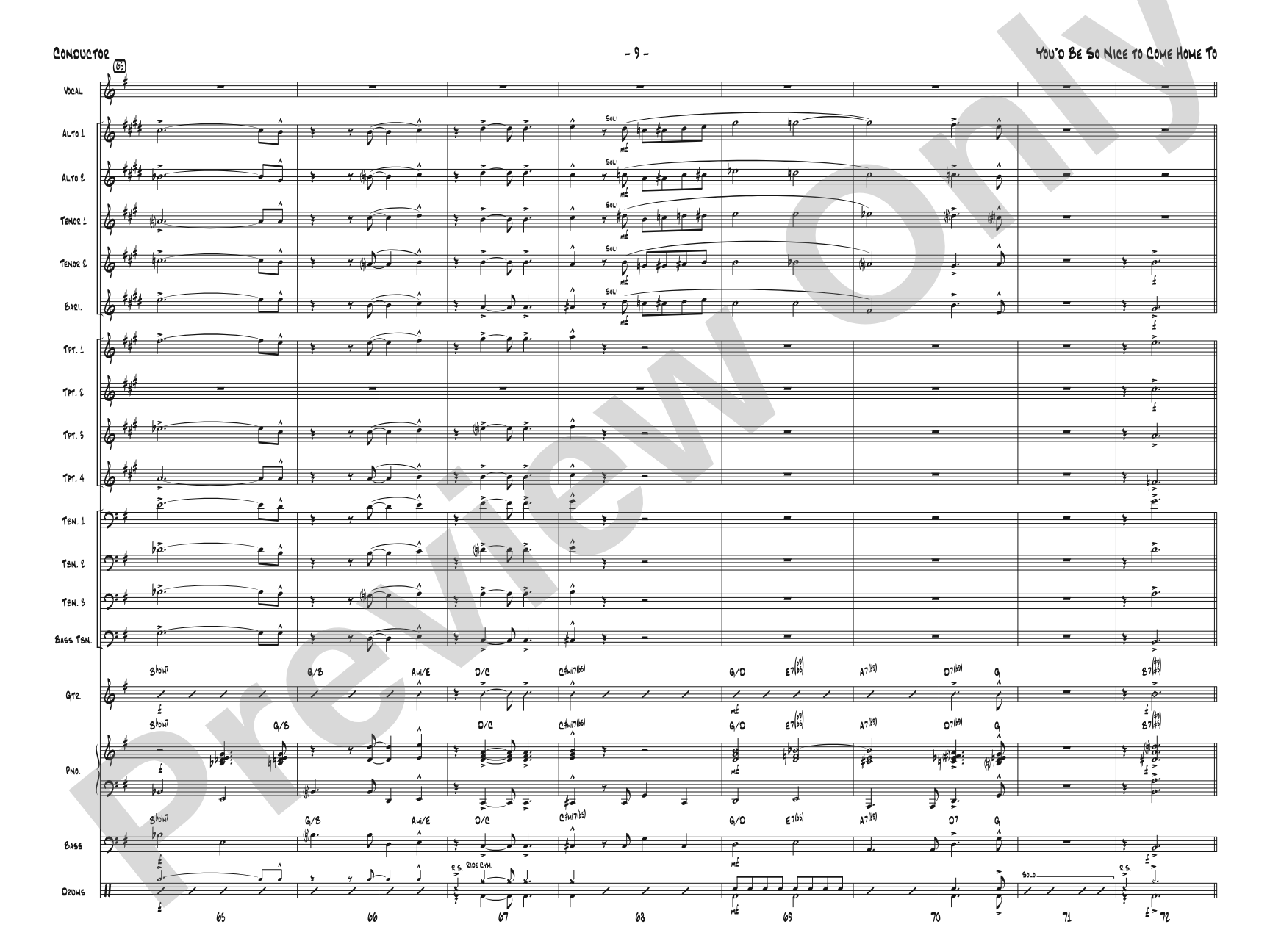
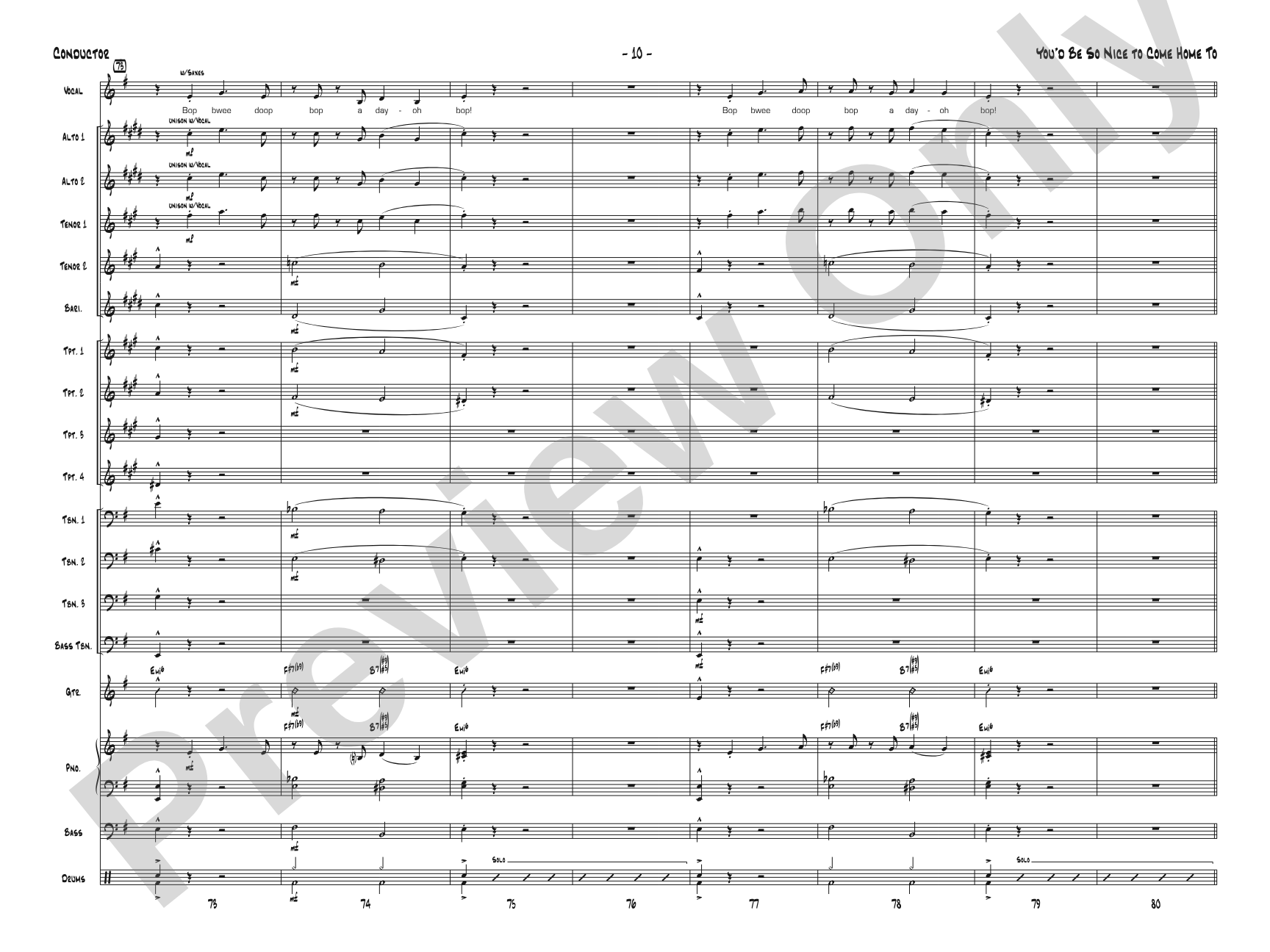
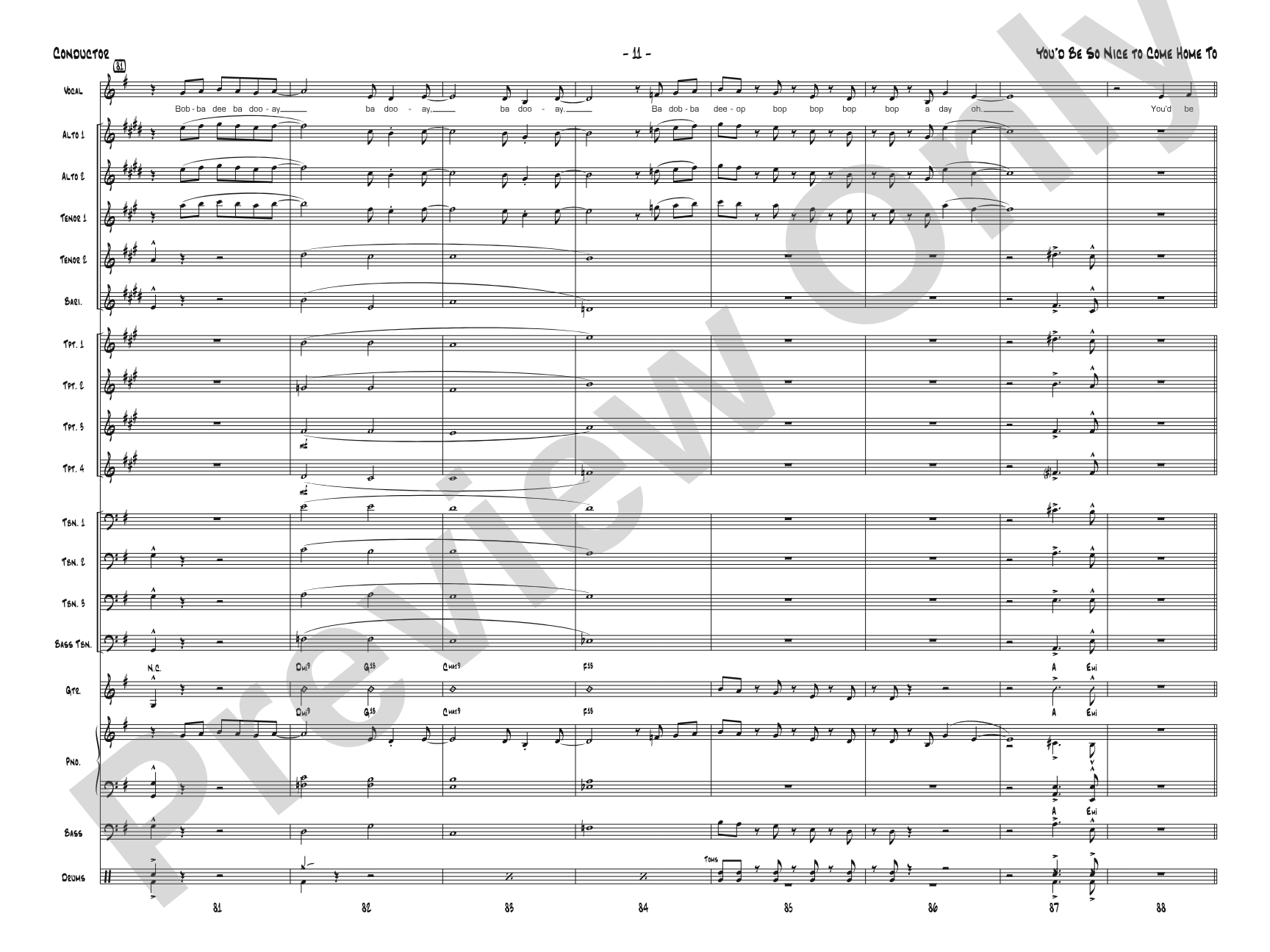
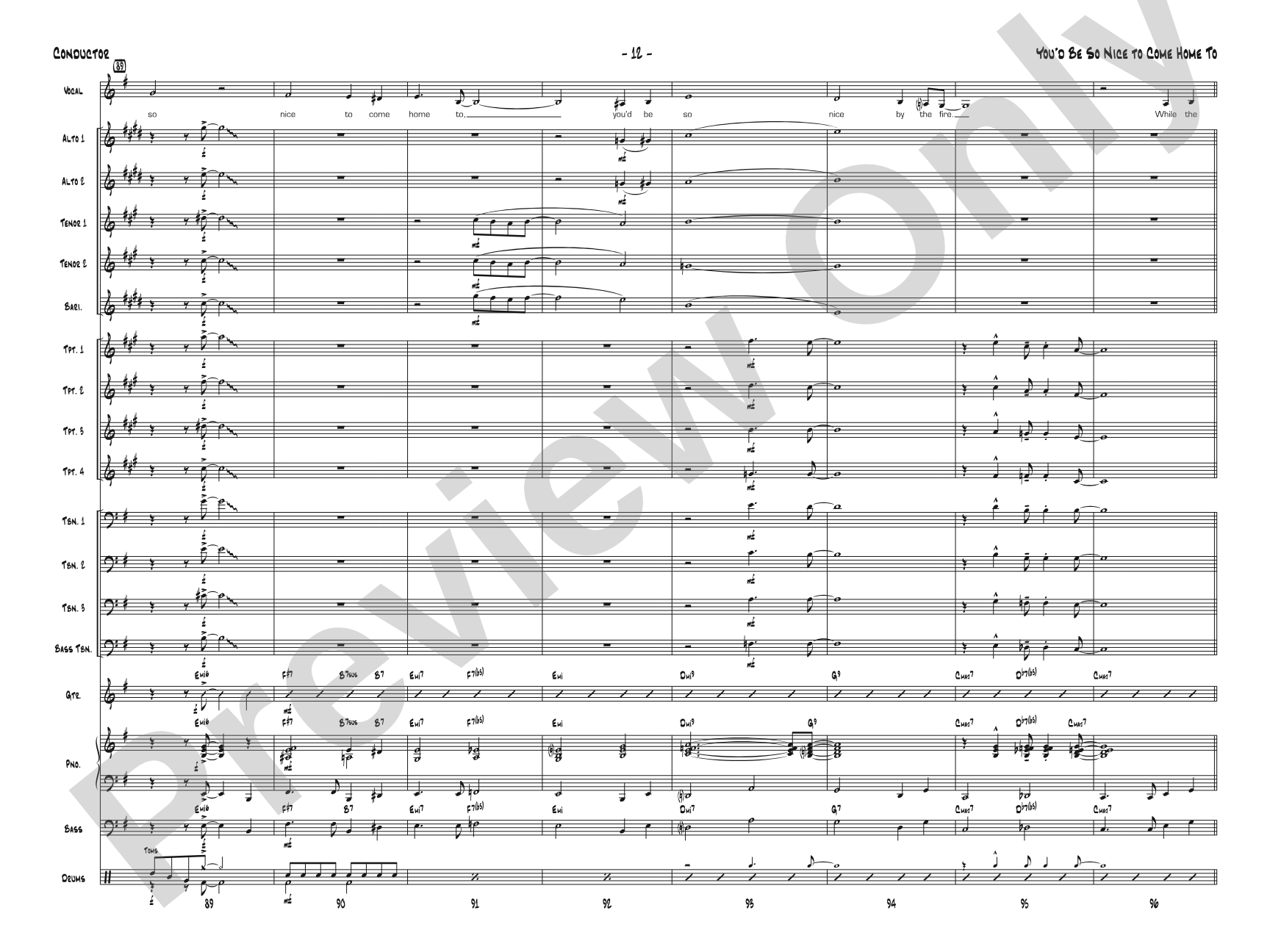
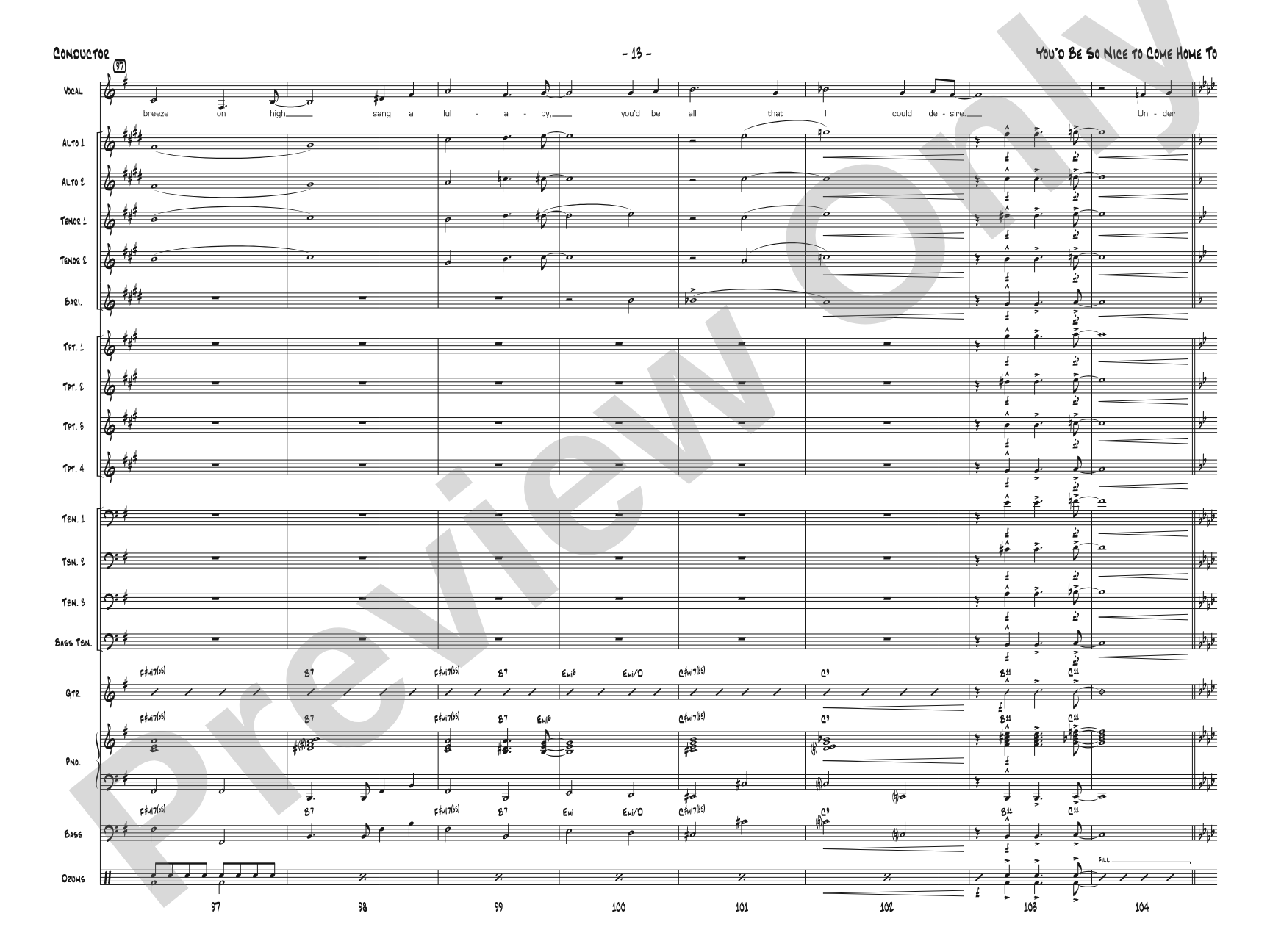
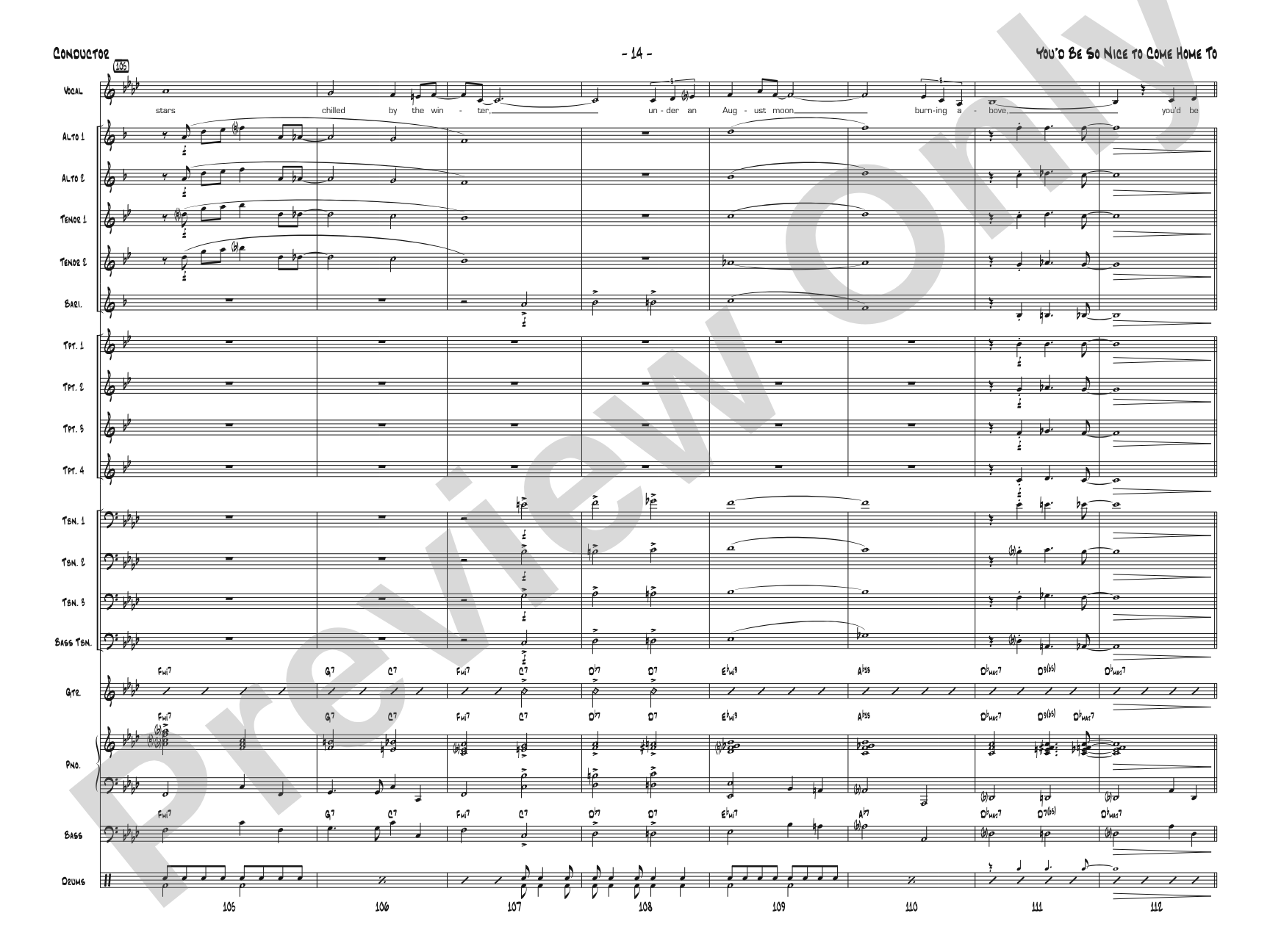
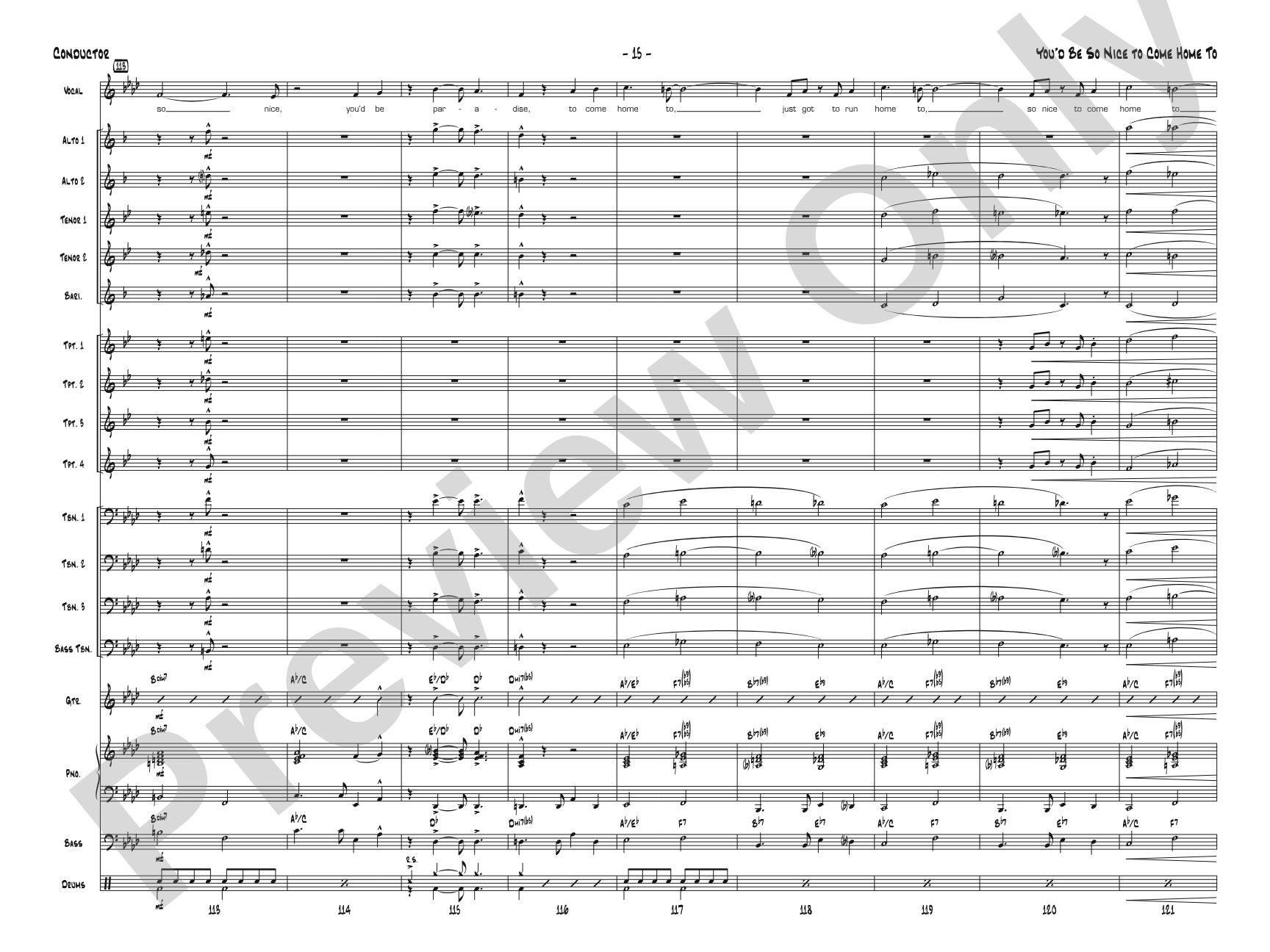
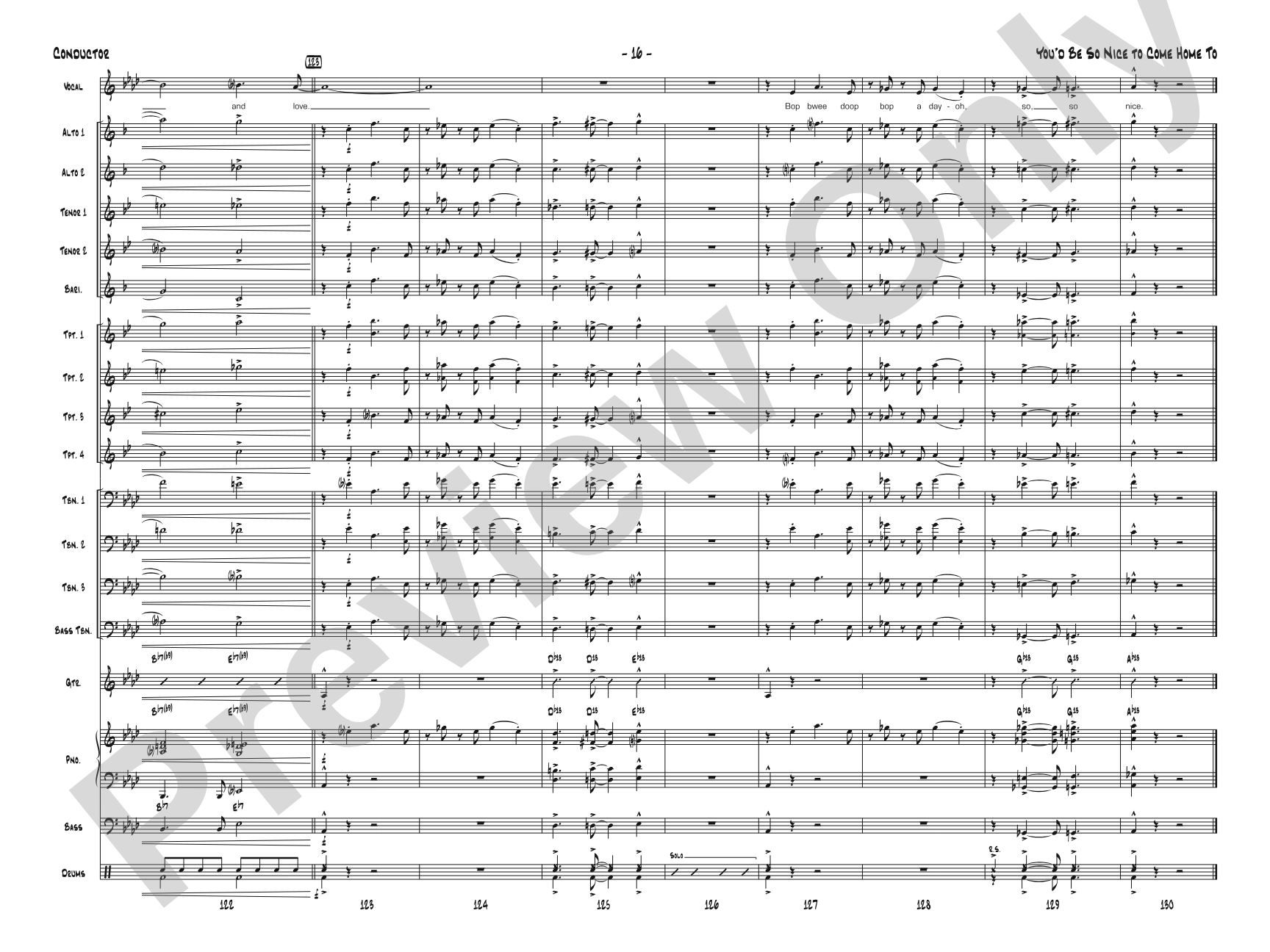

You'd Be So Nice to Come Home To: Jazz Ensemble Conductor Score & Parts
From Something to Shout About
Words and music by Cole Porter / arr. Scott Ragsdale
Grade: 3.5
Item: 00-PK-0009070

$57.00
One moment…
Description
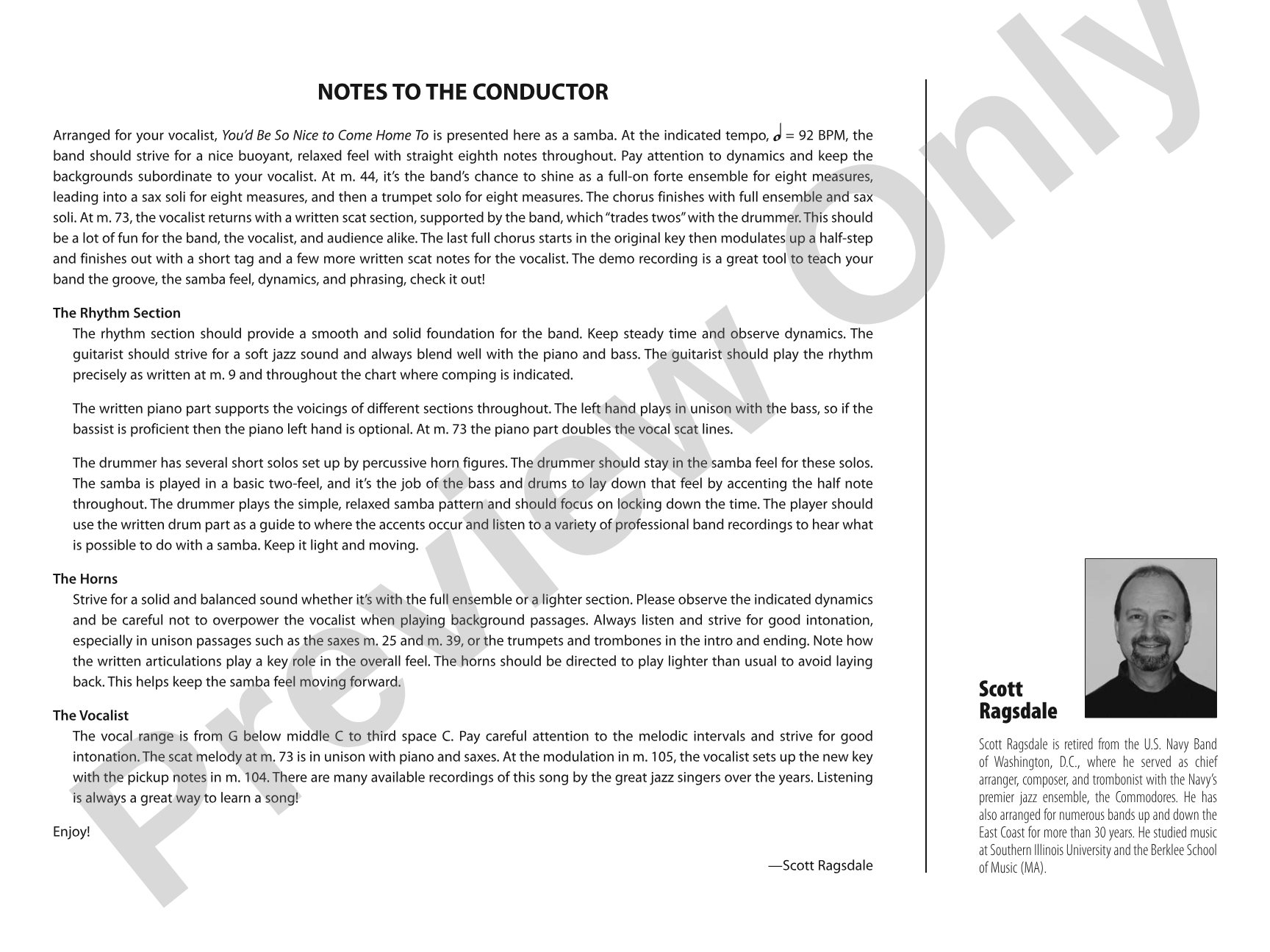
A superb vocal chart with big band on a great jazz standard. The cut-time tempo is around 92 BPM. The vocal range is from G below middle C to third space C, plus there's some unison scat with the saxes, too. Lead trumpet range is to written A above the staff. An exciting and very effective chart for your featured vocalist. (2:50)


Don't just read it, hear it, play along with it, and watch your students grow with it. In MakeMusic Cloud, You'd Be So Nice to Come Home To: Jazz Ensemble Conductor Score & Parts comes alive with professional accompaniment, adjustable tempo, and built-in practice tools that turn solo practice into real progress.
Open in the Player
Jump straight in and assign it today.
Start Your Free Trial
Open this title and explore the full library in minutes.
Sample Audio
1
Audio File
--:--
0:00
0:00
Sample Video
Additional Details
Series:
Jazz Vocal Series
Publisher:
Alfred Music
SKU:
00-PK-0009070
More about this title
About the Composer: Cole Porter
Cole Porter (1891-1964) was an American composer and lyricist whose sophisticated harmonies and witty lyrics defined the golden age of Broadway musical theater. A Yale-educated composer from Indiana, Porter brought urbane elegance to popular song, crafting standards that have remained central to jazz and vocal repertoire for decades. His melodies are instantly recognizable; his chord changes reward musicians who dig deeper.
Why we love this
Scott Ragsdale's arrangement captures the swagger and polish of a big band vocal feature while keeping the ensemble engaged throughout. The chart sits comfortably in the vocalist's range yet gives everyone onstage something vital to play, and the scat section with the saxophones creates genuine excitement without veering into novelty.
What to expect
Smooth, urbane, and inviting. The big band swings with restraint while the vocalist floats over changes that feel both classic and contemporary. There's warmth here, not just flash; the tune's message of welcome and homecoming comes through even as the ensemble sparkles around it.
Who it's for
Jazz ensemble directors seeking a polished vocal feature for a confident singer with solid range and scat ability. This works equally well for contest festivals, concert programs, or special events where you want to showcase both your vocalist and your ensemble's sophistication.
How to get the most out of it
- Lock the rhythm section into the cut-time feel early. At 92 BPM, the groove should feel unhurried but never drag; think 'walking' rather than 'sliding.'
- Blend the unison sax scat passages carefully. The vocalist needs to lead, but the saxes should lock in as a unified layer, not as soloist-plus-section.
- Balance the lead trumpet so it cuts through the ensemble without overwhelming the vocal line. This is a feature chart, and the voice remains the main event.
- Shape the arrangement's dynamics to support the vocalist's phrasing. Build into the ensemble hits and pull back during lyrical moments so the melody remains clear.
How to use it
Program this as a headliner in your second half or as a strategic contrast to up-tempo swingers. The 2:50 length makes it perfect for a concert that pairs several vocal features, and it programs particularly well alongside other Porter or Gershwin standards where you can build a 'golden age' mini-set.
Skills your students will build
- Cut-time groove and feel in a jazz context
- Ensemble balance in a vocal feature arrangement
- Unison scat singing and articulation
- Lead trumpet writing in the upper register
- Accompaniment and support roles for non-featured players