

Yo Vivo Cantando (I Live to Sing): 2-Part Choral Octavo
(I Live to Sing)
Words and music by Jay Althouse
Item: 00-PO-0000111
$2.25
Minimum order quantity: 20 copies
Pickup currently not available
Related Items
Yo Vivo Cantando (I Live to Sing): SATB Choral Octavo |
$1.65
|
View | |
Yo Vivo Cantando (I Live to Sing): SAB Choral Octavo |
$1.65
|
View | |
Yo Vivo Cantando (I Live to Sing): Choral SoundPax |
$35.00
|
View | |
Yo Vivo Cantando: SATB Choral Octavo |
$1.65
|
View | |
Yo Vivo Cantando: SAB Choral Octavo |
$1.65
|
View | |
Yo Vivo Cantando: 2-Part Choral Octavo |
$2.25
|
View | |
Yo Vivo Cantando: Choral Octavo SoundTrax CD |
$27.99
|
View | |
Yo Vivo Cantando: Choral SoundPax |
$35.00
|
View |
Description
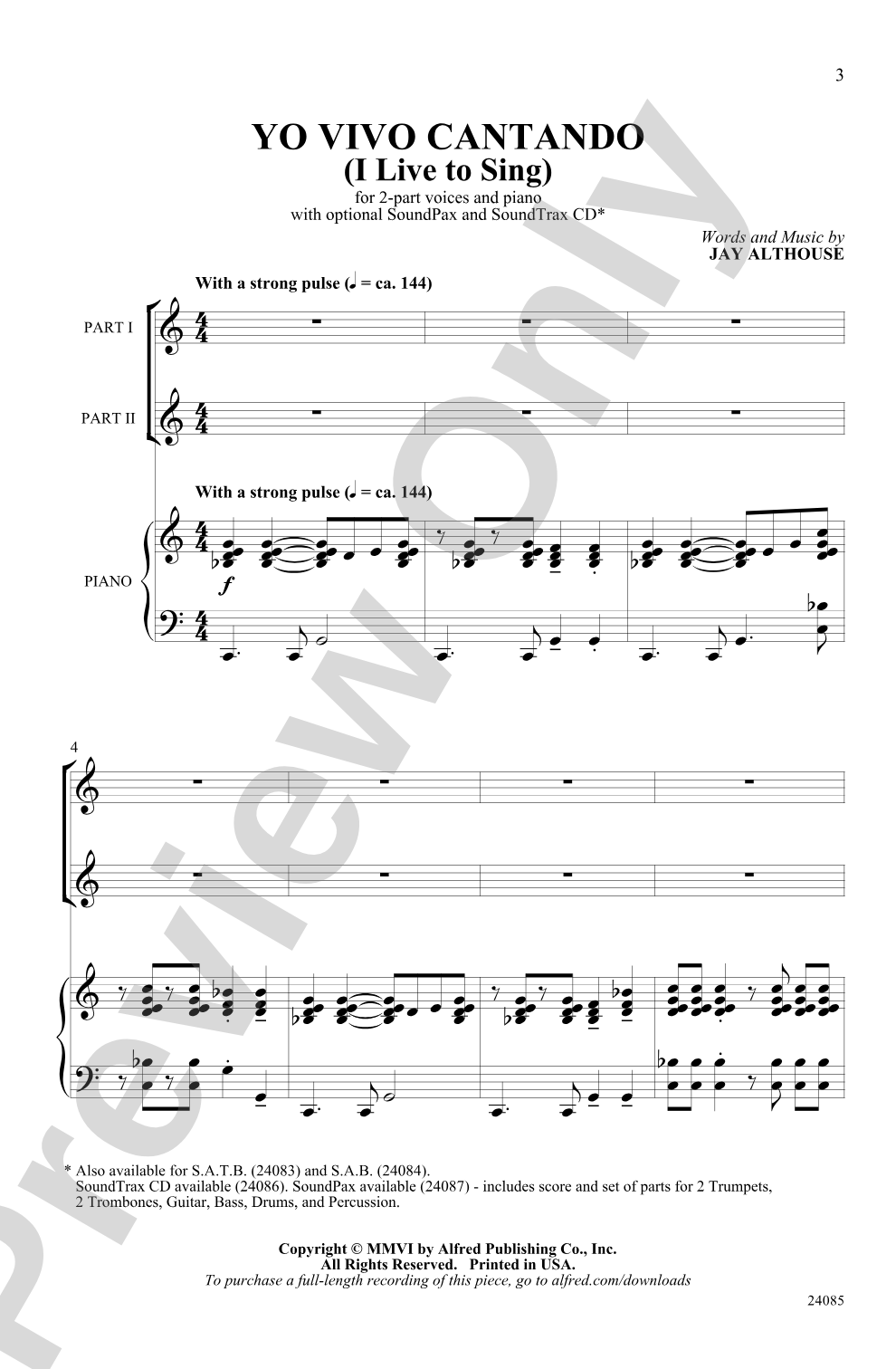
An Afro/Latin/Cuban fusion piece with a combination English/Spanish text. It's all about music and it's all about the rhythm of life. Your singers will sound great on this one; easy voice leadings make the Latin-jazz inspired harmonies fall right into place. "Yo vivo cantando, I live to sing!"


Yo Vivo Cantando (I Live to Sing): 2-Part Choral Octavo isn't in MakeMusic Cloud just yet...but it could be. Let us know you'd like to see it, and you'll help shape what comes next. In the meantime, start a free trial and dive into thousands of interactive titles your students can play along with today.
Request This Title
Tell us you want it.
Start Your Free Trial
Explore everything that's ready to play right now.
Sample Audio
1
Audio File
--:--
0:00
0:00
Sample Video
No sample videos found.
Additional Details
Series:
Alfred Archive Edition: Alfred Choral Designs
Publisher:
Alfred Music
Page Count:
12
SKU:
00-PO-0000111
More about this title
About the Composer: Jay Althouse

Jay Althouse holds degrees in Music Education and Music from Indiana University of Pennsylvania, where he received the Distinguished Alumni award. His eight-year tenure as a rights and licenses administrator at a major educational music publisher gave him deep insight into how choral music reaches classrooms and concert halls. He served on the Executive Board of the Music Publishers Association of America during this time.
As a composer, Althouse has over 800 works in print across all choir levels, with his music performed regularly throughout the English-speaking world. His contributions span choral arrangements, children's musicals co-written with Sally K. Albrecht, and instructional resources including The Complete Choral Warm-up Book and Ready to Read Music. A writer member of ASCAP, he is a longtime recipient of the ASCAP Special Award and has served on the boards of the North Carolina Master Chorale and the Folk Art Society of America.
Why we love this
Althouse writes Latin-jazz harmonies that sit naturally in young voices without requiring advanced ensemble experience. The bilingual text and driving rhythmic energy make this piece genuinely exciting to teach and perform, not just pedagogically sound. Directors appreciate how the easy voice leading lets singers focus on style and character rather than struggling to find their parts.
What to expect
Energetic and celebratory, with an infectious rhythmic pulse that comes straight from Caribbean and Latin traditions. The English-Spanish blend feels natural and joyful, anchored by harmonies that shimmer with jazz color while remaining rooted in accessibility.
Who it's for
This is ideal for developing 2-part choirs and younger singers encountering contemporary multicultural repertoire. Programs featuring world music, fusion styles, or bilingual repertoire gain immediate appeal and authenticity when this piece is included.
How to get the most out of it
- Emphasize the conversational relationship between the two parts; they trade rhythmic and melodic ideas, so encourage singers to listen across the parts during rehearsal to understand the whole picture.
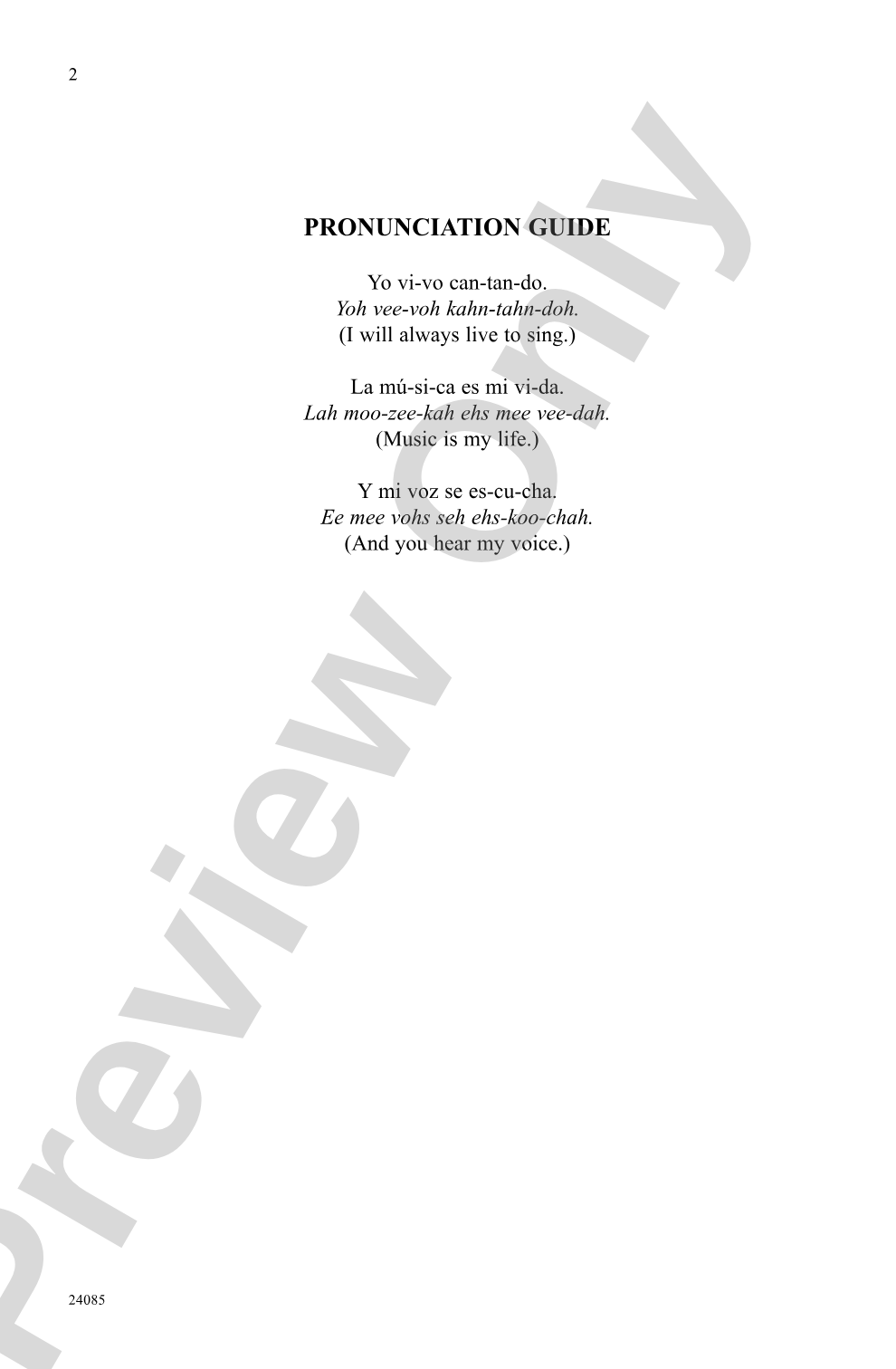
- Work the Spanish pronunciation early and separately from the English text so singers can commit the sounds to muscle memory before adding melodic demands.
- Lean into the Latin-jazz vocabulary; this piece thrives on syncopation and swing, so don't metronomically square up the rhythm even in slower sections.
- If you're using the recorded accompaniment, rehearse often without it so singers develop confidence in finding their own harmonic and rhythmic footing.
How to use it
Use this as a standalone feature on a concert celebrating multicultural voices, or pair it with other world music selections to create thematic programming. Spring and fall concerts especially benefit from its uplifting energy and audience-friendly appeal; it also works beautifully in cultural celebration events or world music showcases.
Skills your students will build
- Singing in Spanish with authentic pronunciation and rhythm
- Hearing and singing Latin-jazz harmonies and syncopated rhythms
- Balancing bilingual text across two independent vocal lines
- Responding to call-and-response rhythmic patterns between voice parts