

Yo Vivo Cantando (I Live to Sing): SATB Choral Octavo
(I Live to Sing)
By Jay Althouse
Item: 00-PO-0000109
$1.65
Minimum order quantity: 20 copies
Pickup currently not available
Related Items
Yo Vivo Cantando (I Live to Sing): SAB Choral Octavo |
$1.65
|
View | |
Yo Vivo Cantando (I Live to Sing): 2-Part Choral Octavo |
$2.25
|
View | |
Yo Vivo Cantando (I Live to Sing): Choral SoundPax |
$35.00
|
View | |
Yo Vivo Cantando: SATB Choral Octavo |
$1.65
|
View | |
Yo Vivo Cantando: SAB Choral Octavo |
$1.65
|
View | |
Yo Vivo Cantando: 2-Part Choral Octavo |
$2.25
|
View | |
Yo Vivo Cantando: Choral Octavo SoundTrax CD |
$27.99
|
View | |
Yo Vivo Cantando: Choral SoundPax |
$35.00
|
View |
Description
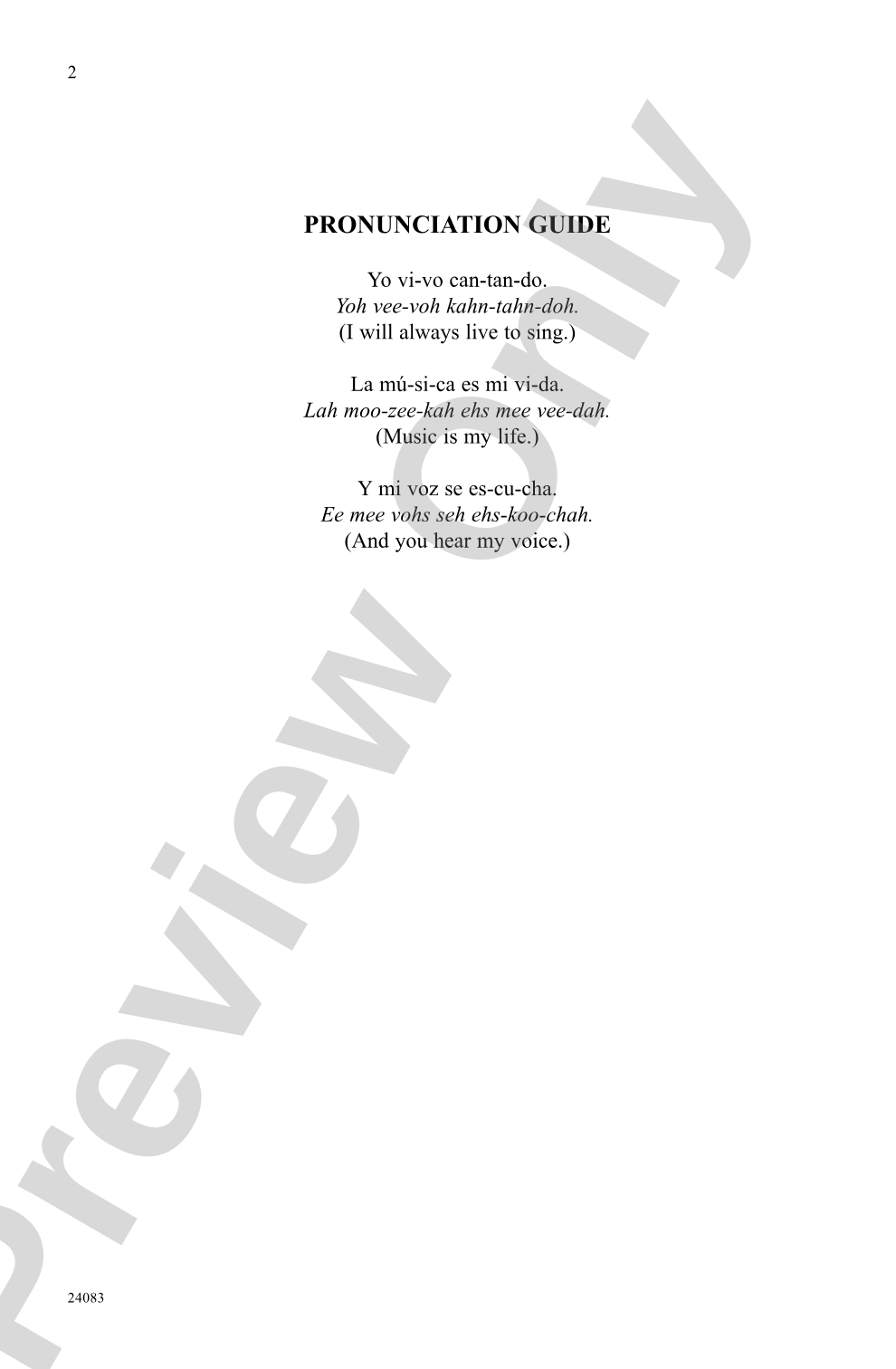
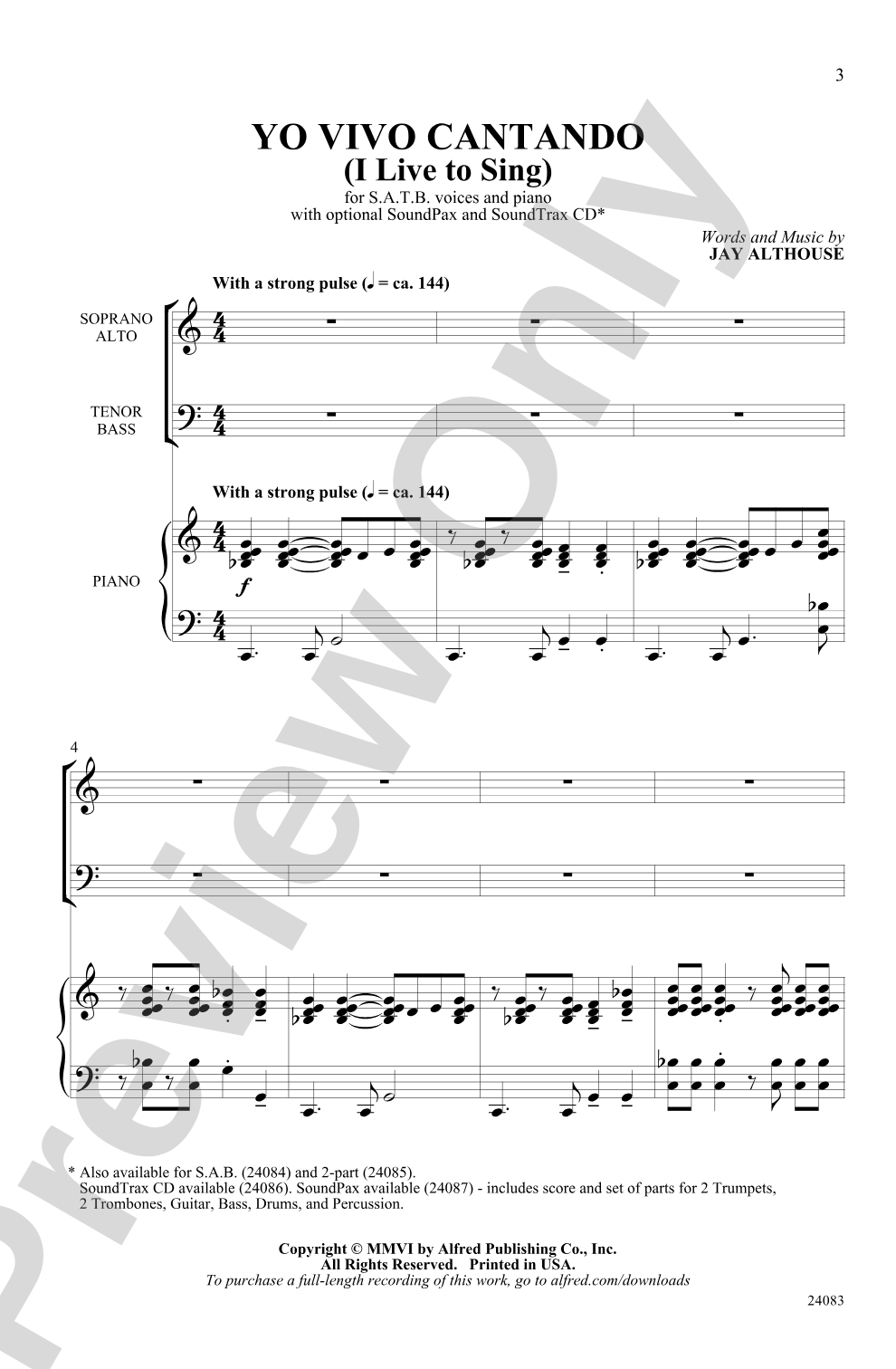
An Afro/Latin/Cuban fusion piece with a combination English/Spanish text. It's all about music and it's all about the rhythm of life. Your singers will sound great on this one; easy voice leadings make the Latin-jazz inspired harmonies fall right into place. "Yo vivo cantando, I live to sing!"


Yo Vivo Cantando (I Live to Sing): SATB Choral Octavo isn't in MakeMusic Cloud just yet...but it could be. Let us know you'd like to see it, and you'll help shape what comes next. In the meantime, start a free trial and dive into thousands of interactive titles your students can play along with today.
Request This Title
Tell us you want it.
Start Your Free Trial
Explore everything that's ready to play right now.
Sample Audio
1
Audio File
--:--
0:00
0:00
Sample Video
No sample videos found.
Additional Details
Series:
Alfred Choral Designs
Publisher:
Alfred Music
Page Count:
12
SKU:
00-PO-0000109
More about this title
About the Composer: Jay Althouse

Jay Althouse holds degrees in Music Education and Music from Indiana University of Pennsylvania, where he was honored with the Distinguished Alumni award. Early in his career, he spent eight years managing rights and licensing for a major educational music publisher and served on the Executive Board of the Music Publishers Association of America. His compositional output spans more than 800 choral works performed across the English-speaking world, and he maintains active membership in ASCAP with multiple Special Award recognitions.
Beyond composition, Althouse has shaped music education through diverse writing projects. He co-created children's musicals with his wife Sally K. Albrecht, compiled respected vocal solo collections including Folk Songs for Solo Singers, and co-authored influential pedagogical texts such as The Complete Choral Warm-up Book and Accent on Composers. His classroom-focused reproducible materials (Ready to Read Music, Sixty Music Quizzes, One-Page Composer Bios) reflect his commitment to accessible music instruction. He currently serves on the National Advisory Board of the Folk Art Society of America and resides in Wake Forest, North Carolina.
Why we love this
Althouse writes Latin and multicultural music with genuine fluency, not surface-level exoticism. The voice leading here feels natural rather than forced, which means your singers can focus on the infectious energy and message rather than wrestling with awkward intervallic jumps. Programming a piece that celebrates music and life itself creates an immediate emotional connection with audiences, especially when the text flows seamlessly between English and Spanish.
What to expect
This is music that moves bodies as well as hearts. The Afro/Latin/Cuban fusion creates a rhythmic momentum that feels both celebratory and grounded, with the bilingual text emphasizing a universal message about the sustaining power of song. Singers and audiences alike leave energized rather than drained.
Who it's for
Community and school choirs at intermediate to advanced levels will find this piece immediately rewarding. Singers appreciate the accessibility of the Latin-jazz harmonies paired with meaningful, uplifting text; directors appreciate writing that sits well for SATB voices without excessive range demands or technical complexity.
How to get the most out of it
- Emphasize the rhythmic drive underneath the vocal lines. Even in moments where singers hold longer notes, the underlying Latin-jazz pulse should remain active and felt, not metronomic.
- Balance the Spanish text pronunciation by having singers listen closely to native speakers. The piece gains authenticity and warmth when vowels and consonants reflect actual Caribbean and Cuban inflection.
- Let the harmony breathe. Because the voice leading sits so comfortably, resist the urge to push hard on every chord. This piece sounds best when it feels easy and joyful rather than labored.
- Use any available recorded accompaniment to lock the groove with your ensemble, then gradually move toward a cappella passages if you include them in performance.
How to use it
Open a spring concert with this piece to set a joyful, inclusive tone that welcomes multicultural perspectives into your repertoire. Its message and accessibility also make it suitable for community engagement events, family concerts, or any program celebrating the role of music in everyday life. The 12-page length keeps it manageable alongside larger choral works.
Skills your students will build
- Latin rhythm and groove awareness (syncopation, clave patterns)
- Singing in Spanish with authentic vowel production and phrasing
- Voice leading in jazz-influenced harmony (seventh chords, chromatic movement)
- Ensemble balance in multicultural contexts
- Expressive interpretation of bilingual text