
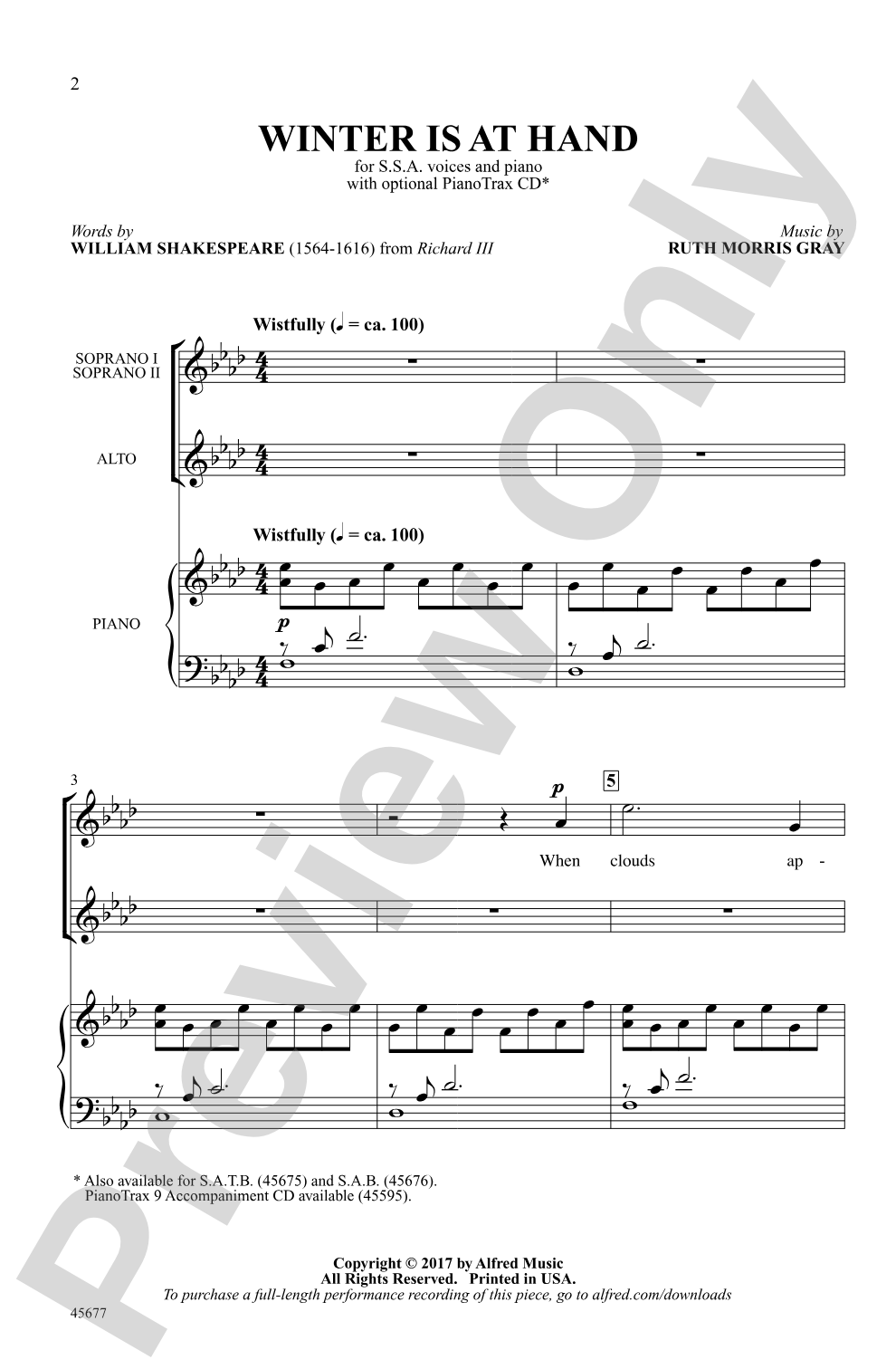

Winter Is at Hand: SSA Choral Octavo
Words by William Shakespeare, music by Ruth Morris Gray
Item: 00-PO-0005553
$1.90
Minimum order quantity: 20 copies
Pickup currently not available
Related Items
Winter Is at Hand: PianoTrax Digital Download |
$9.99
|
View | |
Winter Is at Hand: SATB Choral Octavo |
$1.90
|
View | |
Winter Is at Hand: SAB Choral Octavo |
$1.90
|
View | |
Winter Is at Hand: SATB Choral Octavo |
$1.90
|
View | |
Winter Is at Hand: SAB Choral Octavo |
$1.90
|
View | |
Winter Is at Hand: SSA Choral Octavo |
$1.90
|
View |
Description
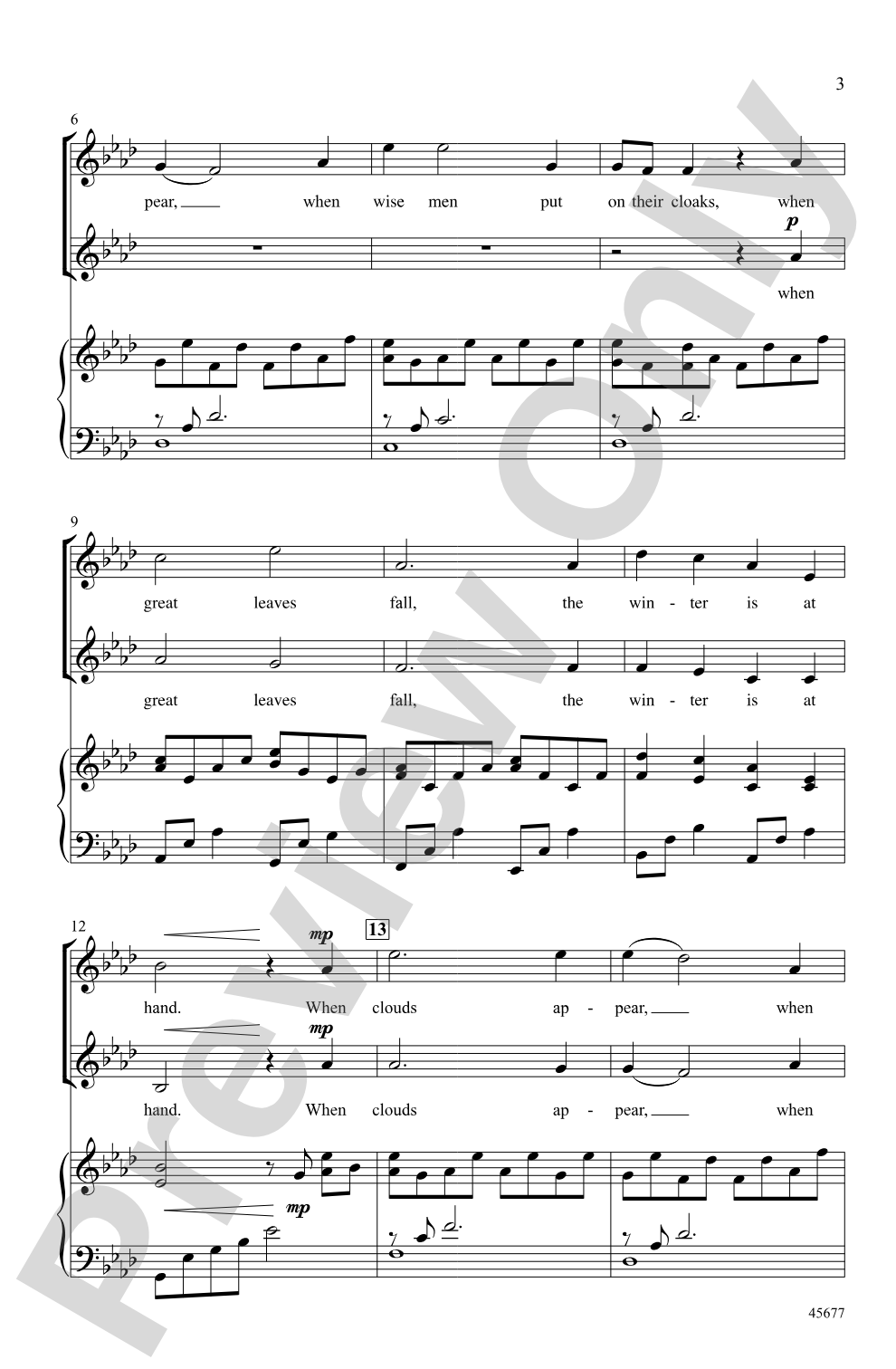
"When clouds appear, when wise men put on their cloaks, when great leaves fall, the winter is at hand." Comprised of lines from Shakespeare's immortal drama Richard III, the text of this haunting and evocative piece is rich with seasonal imagery. Push and pull of tempos and the rise and fall of dynamics ensure musical interpretation.


Winter Is at Hand: SSA Choral Octavo isn't in MakeMusic Cloud just yet...but it could be. Let us know you'd like to see it, and you'll help shape what comes next. In the meantime, start a free trial and dive into thousands of interactive titles your students can play along with today.
Request This Title
Tell us you want it.
Start Your Free Trial
Explore everything that's ready to play right now.
Sample Audio
1
Audio File
--:--
0:00
0:00
Sample Video
No sample videos found.
Additional Details
Series:
Alfred Choral Designs
Publisher:
Alfred Music
Page Count:
12
SKU:
00-PO-0005553
More about this title
About the Composer: Ruth Morris Gray

Ruth Morris Gray holds the position of Director of Choirs at Rosemead High School in California, where she has led choral and piano instruction since 2004. She holds a Bachelor of Music degree in Piano Performance and Composition from Biola University and a Master of Arts degree in Music Composition from the University of California, Santa Barbara, along with her California Single Subject Music Credential from California State University, Northridge.
Gray has published over 100 choral compositions and maintains an active career as a composer, educator, and performer. Beyond her work in music, she pursues travel, swimming, reading, and cycling with her husband.
Why we love this
Gray draws directly from Shakespeare to create a piece that speaks to literary sophistication and seasonal relevance without sacrificing singability. The carefully controlled shifts in tempo and dynamic shape the text's imagery into something vivid and urgent; directors will find genuine interpretive choices built into the score rather than a static arrangement. This is the kind of SSA octavo that elevates a winter concert while remaining accessible to mid-level choirs.
What to expect
The piece inhabits a twilight space between foreboding and beauty, much like the seasonal transition it describes. Gray's harmonic language supports this duality, creating an evocative soundscape that feels both modern and timeless, with the push and pull of tempos generating a sense of impending change.
Who it's for
This octavo suits intermediate to advanced SSA or SSAA choirs seeking repertoire that pairs accessible ranges with literary substance. It works equally well for concert programming and competitive festival settings, offering the kind of distinctive material that stands apart in adjudication.
How to get the most out of it
- Pay close attention to the indicated tempo and dynamic shifts; they are essential to how the piece communicates its dramatic arc. These aren't optional expressive choices but integral to Gray's compositional intent.
- Balance the treble voices carefully when the text becomes particularly dense. SSA writing can easily blur in the upper register if all three parts push equally forward.
- Use the Shakespearean language as an anchor for phrasing decisions. Let the natural speech rhythms of lines like 'when great leaves fall' inform your breath points and legit connections.
- Release cleanly and precisely on fermatas. Gray's use of silence is as deliberate as her use of sound.
How to use it
This is a natural centerpiece for a winter or late-fall concert, particularly one with a literary or thematic focus. Its dramatic weight and seasonal imagery pair well with both lighter seasonal pieces and more serious concert fare, making it a versatile choice for mixed programming.
Skills your students will build
- Executing dynamic and tempo shifts with expressive control and intention
- Sustaining tone through sustained notes while balancing three distinct voice parts
- Interpreting text through musicality rather than literal word painting
- Reading and performing from literary poetry with appropriate phrasing and breath placement
- Tuning and blend in close harmonic voicings typical of contemporary choral writing