

Winter Is at Hand: SATB Choral Octavo
Words by William Shakespeare, music by Ruth Morris Gray
Item: 00-PO-0005551
$1.90
Minimum order quantity: 20 copies
Pickup currently not available
Related Items
Winter Is at Hand: PianoTrax Digital Download |
$9.99
|
View | |
Winter Is at Hand: SAB Choral Octavo |
$1.90
|
View | |
Winter Is at Hand: SSA Choral Octavo |
$1.90
|
View | |
Winter Is at Hand: SATB Choral Octavo |
$1.90
|
View | |
Winter Is at Hand: SAB Choral Octavo |
$1.90
|
View | |
Winter Is at Hand: SSA Choral Octavo |
$1.90
|
View |
Description
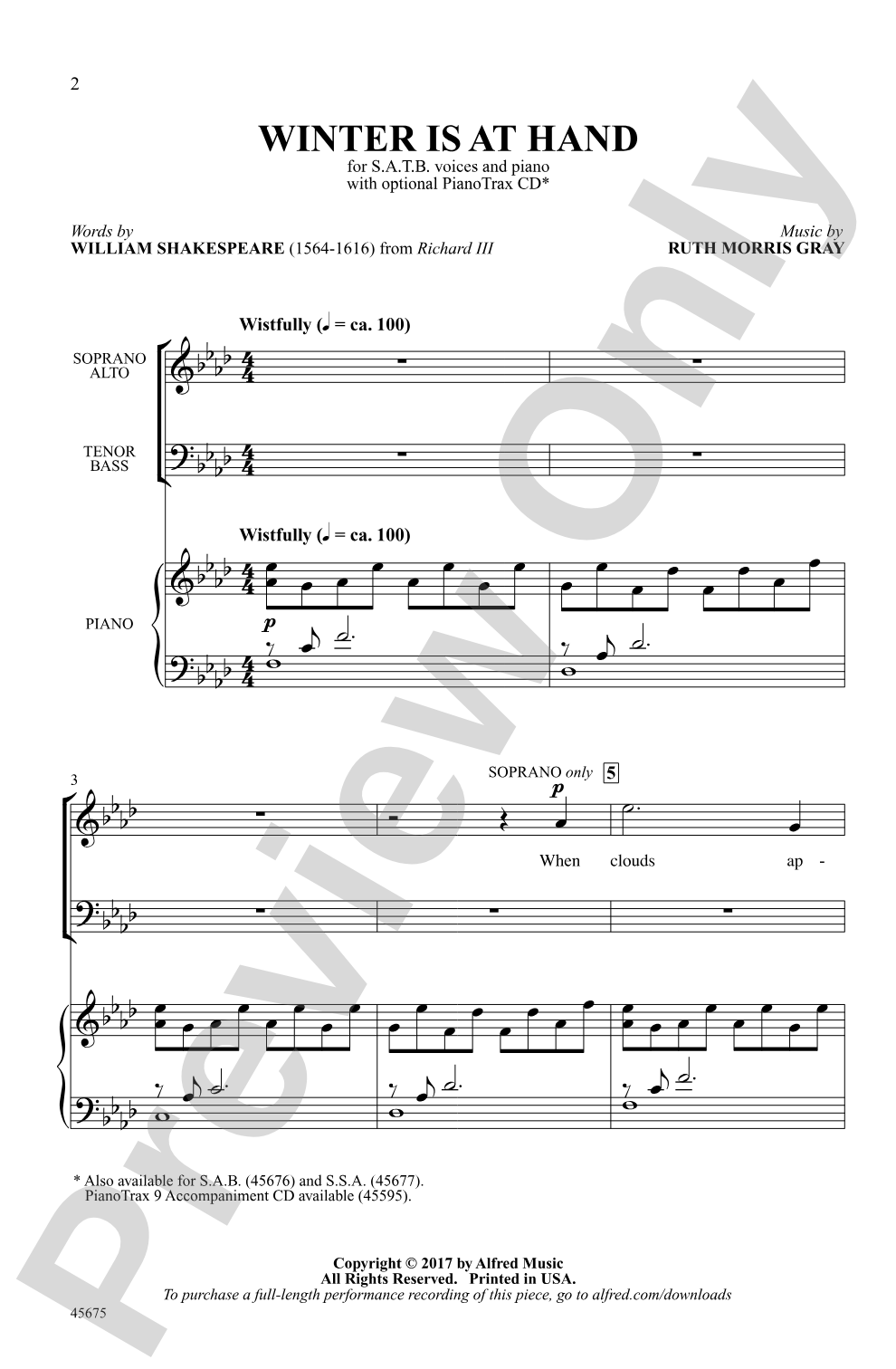
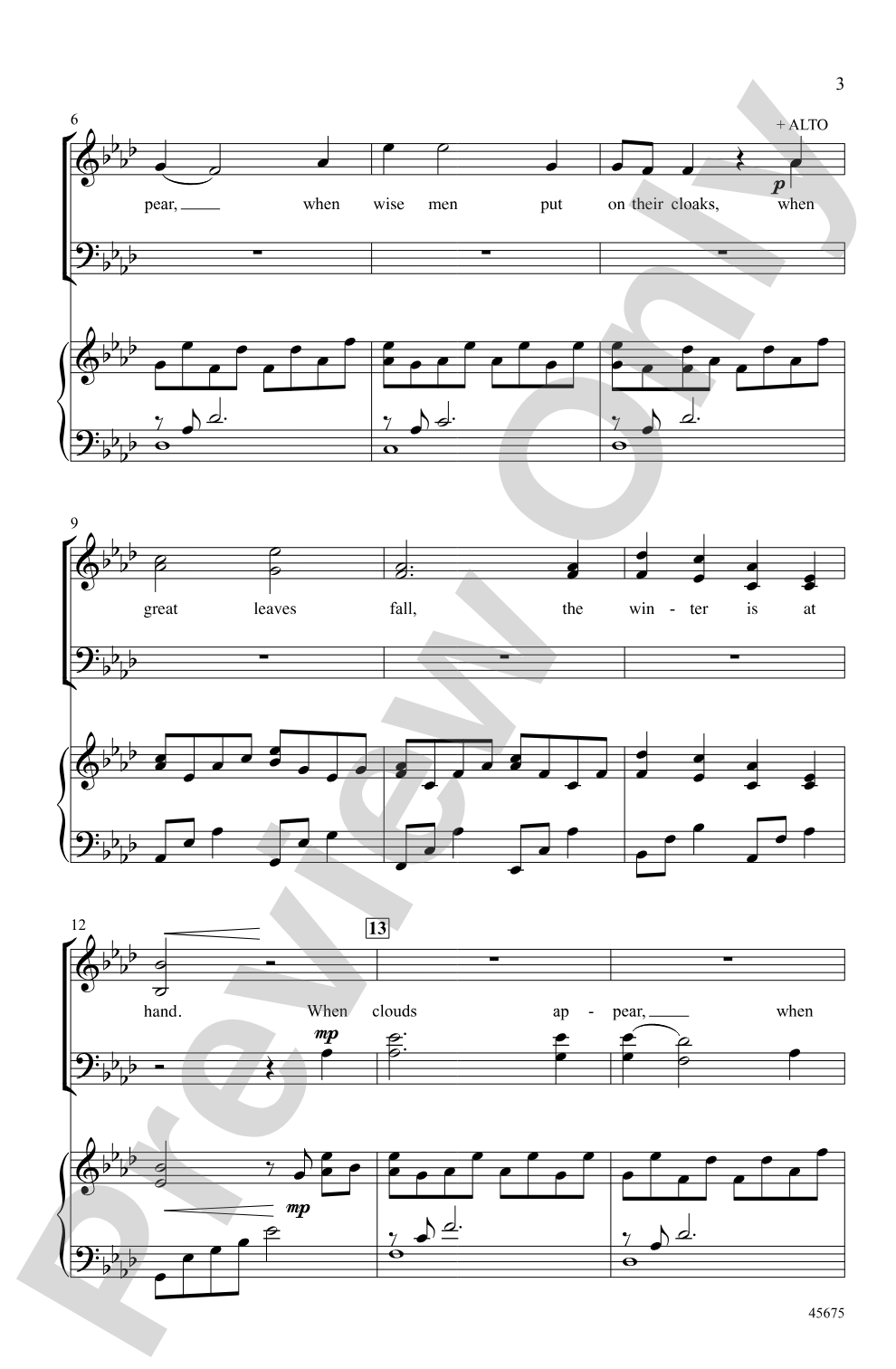
"When clouds appear, when wise men put on their cloaks, when great leaves fall, the winter is at hand." Comprised of lines from Shakespeare's immortal drama Richard III, the text of this haunting and evocative piece is rich with seasonal imagery. Push and pull of tempos and the rise and fall of dynamics ensure musical interpretation.


Winter Is at Hand: SATB Choral Octavo isn't in MakeMusic Cloud just yet...but it could be. Let us know you'd like to see it, and you'll help shape what comes next. In the meantime, start a free trial and dive into thousands of interactive titles your students can play along with today.
Request This Title
Tell us you want it.
Start Your Free Trial
Explore everything that's ready to play right now.
Sample Audio
1
Audio File
--:--
0:00
0:00
Sample Video
Additional Details
Series:
Alfred Choral Designs
Publisher:
Alfred Music
Page Count:
12
SKU:
00-PO-0005551
More about this title
About the Composer: Ruth Morris Gray

Ruth Morris Gray brings two decades of choral direction and composition to her work at Rosemead High School, where she has shaped the choir program since 2004. Her formal training spans piano performance and composition at Biola University, with advanced study in composition at UC Santa Barbara and credential work at Cal State Northridge. With over 100 published choral compositions to her name, Gray demonstrates a deep commitment to creating music that serves both the choir classroom and the concert stage.
Beyond the rehearsal room, Gray is an active musician and lifelong learner who pursues travel, reading, swimming, and cycling with her husband Douglas. Her breadth of interests and experiences informs the literary sophistication and musical depth that characterize her compositions.
Why we love this
Gray's gift for pairing language with music shines here. The text from Richard III provides immediate dramatic weight, and she responds with carefully shaped dynamics and tempo shifts that mirror the imagery without overselling it. Your singers will feel how the music serves the poetry, not the other way around.
What to expect
The music unfolds like watching the season turn. There's a contemplative quality grounded in real imagery: falling leaves, wise preparation, the encroaching cold. Gray avoids sentimentality; instead, the harmonic choices feel inevitable, almost resigned, matching the inevitability of winter itself.
Who it's for
This octavo suits advanced high school choirs and college ensembles with solid musicianship and comfort navigating variable tempos. It works equally well for festival competition or concert programming when you want a piece that impresses through sophistication rather than technical showiness.
How to get the most out of it
- Honor the tempo fluctuations as structural signposts. When Gray shifts pace, she's signaling a change in the text's mood or focus; mark these transitions clearly in your scores so everyone moves together.
- Balance the dynamic range carefully across all four parts. The piece relies on subtle rises and falls rather than extremes, so resist the urge to exaggerate. Precision here creates the haunting quality.
- Let the Shakespearean text inform your articulation choices. Words like 'clouds' and 'fall' deserve space and clarity; cluster them musically rather than rushing through.
How to use it
Place this piece in a concert alongside other seasonal or literary-text works to create thematic cohesion, or use it as a showcase for your choir's interpretive abilities in a mixed program. Its modest length (12 pages) makes it ideal for a festival set or as an opening or closing statement where you want to end on a note of quiet sophistication.
Skills your students will build
- Interpreting tempo and dynamic markings as expressive tools tied to text
- Sustaining clarity and diction in contemplative, slower material
- Balancing part independence with tonal blend across SATB voicing
- Responding to literary imagery through musical phrasing