
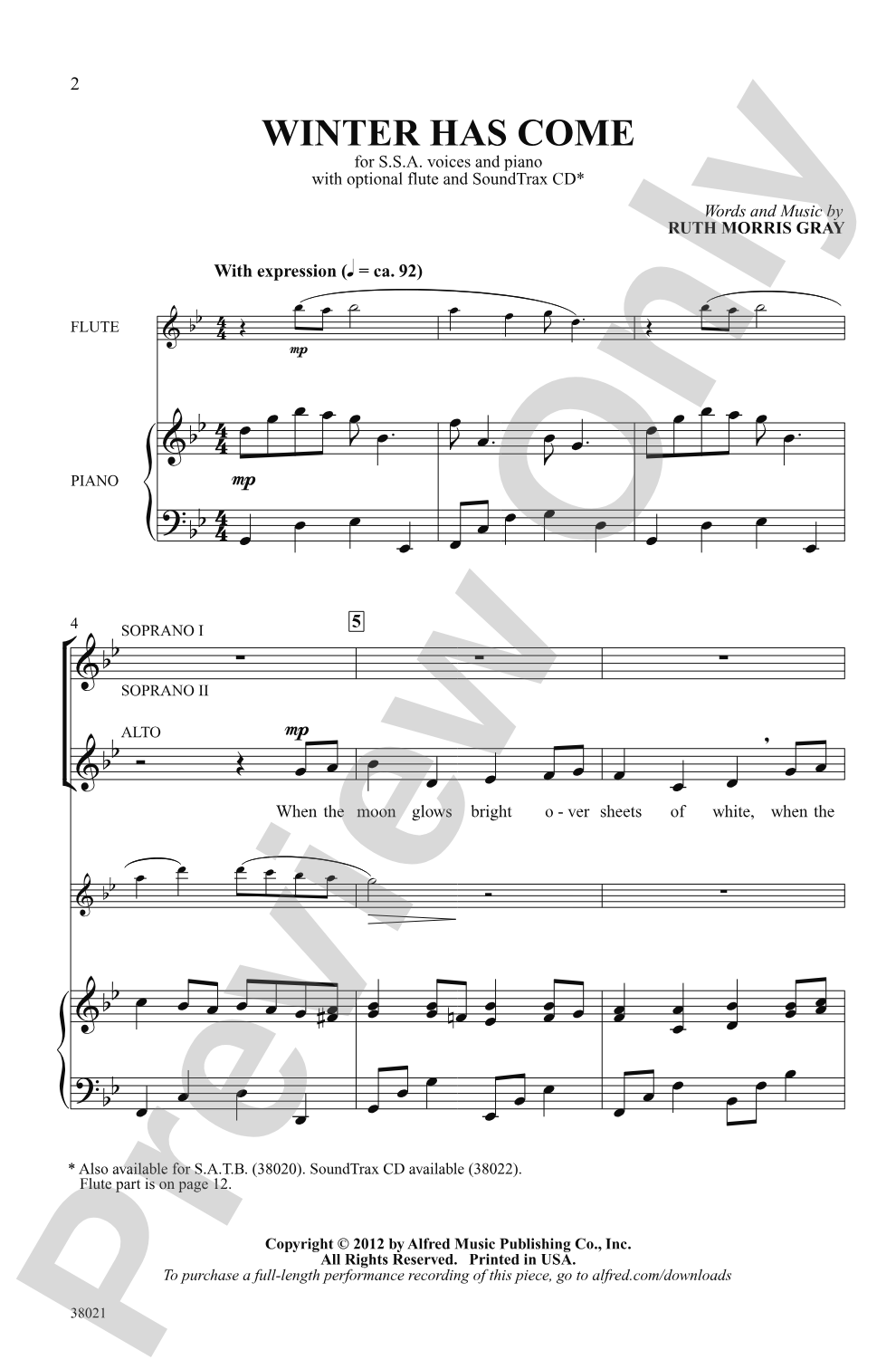
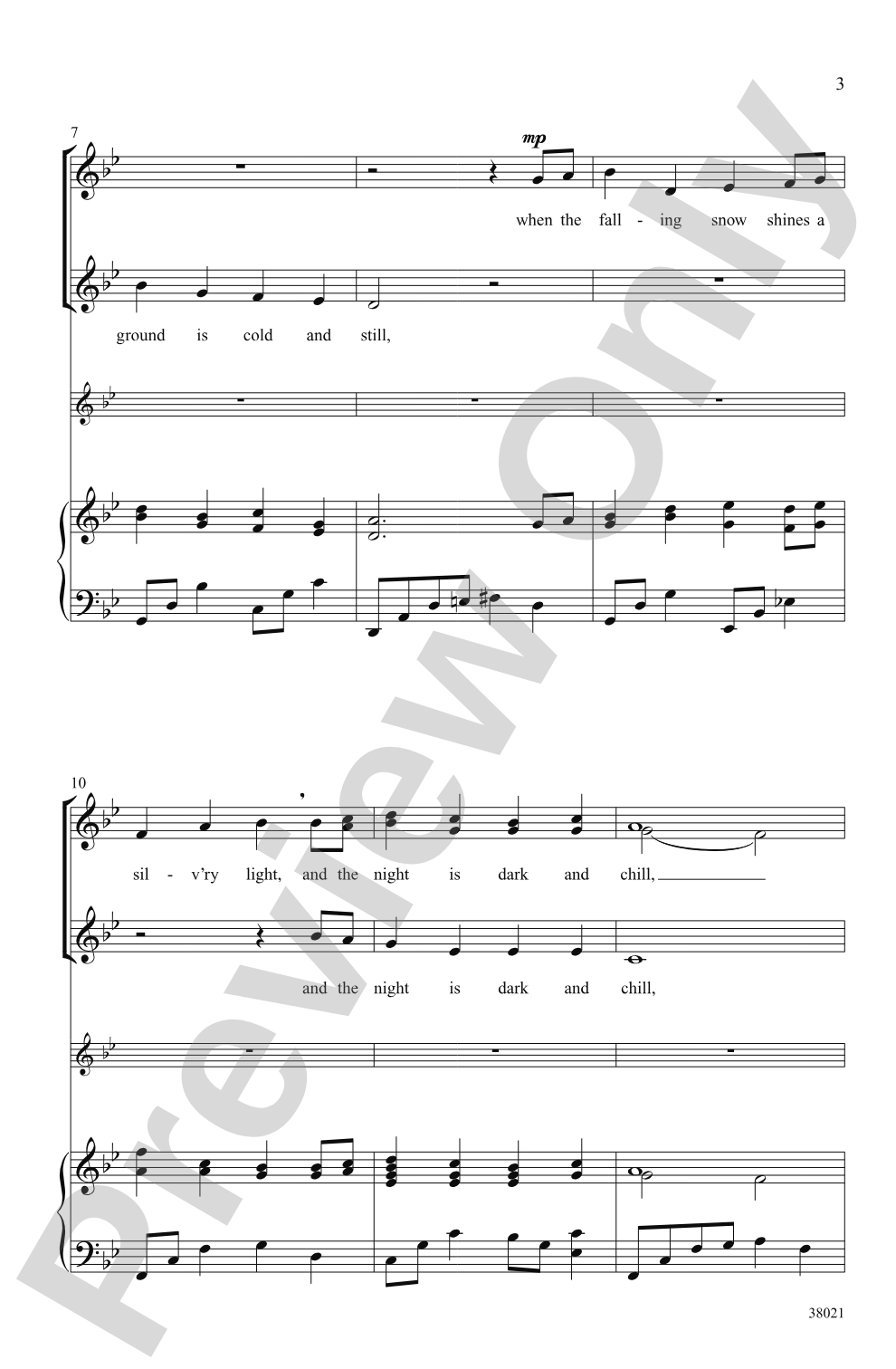
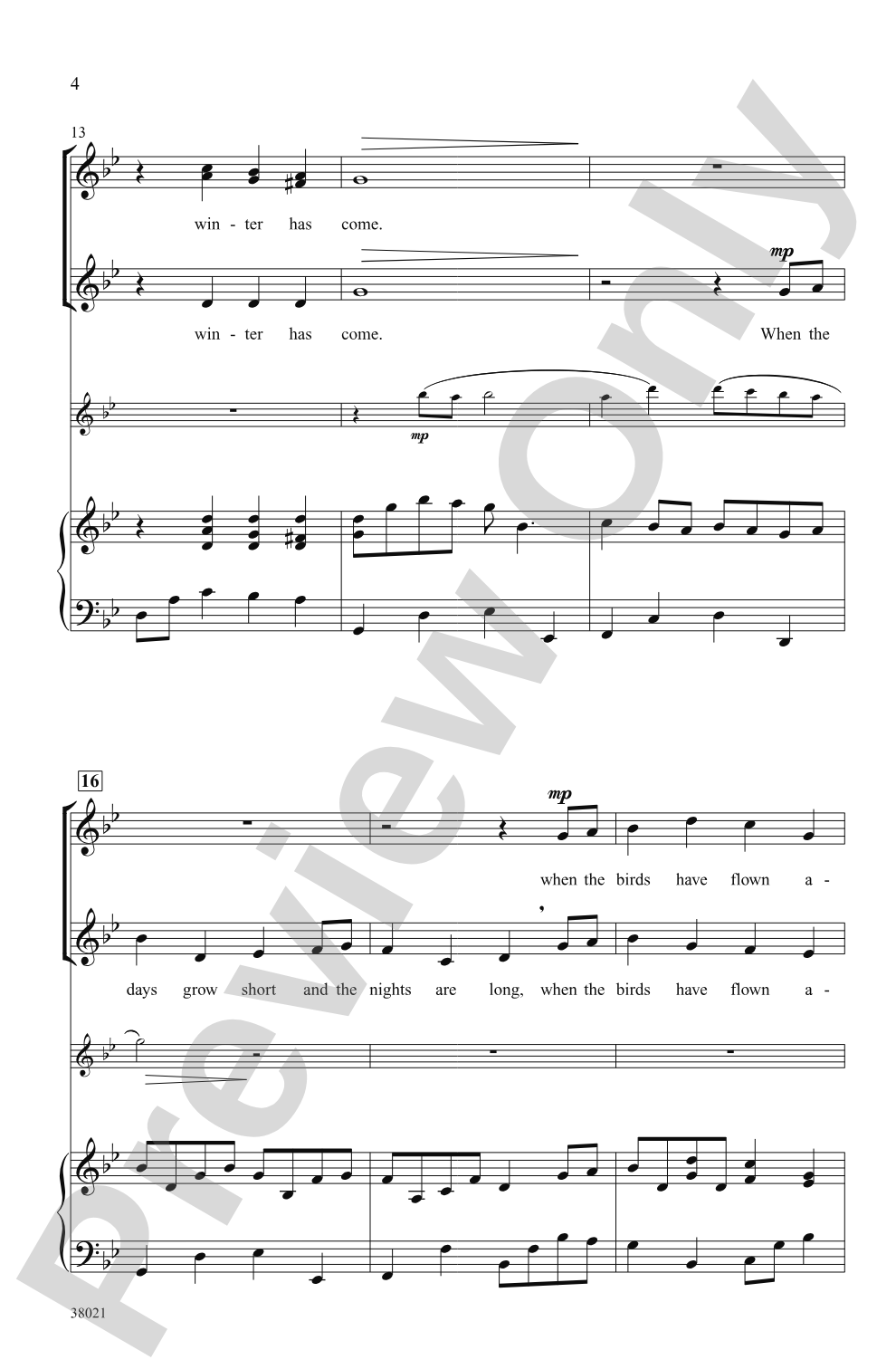

Winter Has Come: SSA Choral Octavo
Words and music by Ruth Morris Gray
Item: 00-PO-0001338
$1.80
Minimum order quantity: 20 copies
Pickup currently not available
Description
The poetry of this expressive winter song provides a florid description of the season's most distinct attributes. Warm choral harmonies are a stark contrast to the icy imagery, and an optional flute obbligato floats above.
A NOTE FROM THE COMPOSER
In December 2011, I directed my intermediate-level mixed choir in a performance of two of my new Alfred publications. We opened with the traditional "Carol of the Bells," then performed "Winter Has Come" and "Rise Up and Follow that Star." The set worked really well. "Winter Has Come" was a lovely lyrical contrast to the quick opening piece, and allowed me to feature an outstanding student flutist. "Rise Up and Follow that Star" made a terrific closer! I had the choir open singing forte (instead of mezzo-forte as marked) and all 60 singers lifted up their hands on each "rise up!" We grabbed the audience's attention with the first line--I saw several people almost jump out of their seats. They loved it!


A NOTE FROM THE COMPOSER
In December 2011, I directed my intermediate-level mixed choir in a performance of two of my new Alfred publications. We opened with the traditional "Carol of the Bells," then performed "Winter Has Come" and "Rise Up and Follow that Star." The set worked really well. "Winter Has Come" was a lovely lyrical contrast to the quick opening piece, and allowed me to feature an outstanding student flutist. "Rise Up and Follow that Star" made a terrific closer! I had the choir open singing forte (instead of mezzo-forte as marked) and all 60 singers lifted up their hands on each "rise up!" We grabbed the audience's attention with the first line--I saw several people almost jump out of their seats. They loved it!
Winter Has Come: SSA Choral Octavo isn't in MakeMusic Cloud just yet...but it could be. Let us know you'd like to see it, and you'll help shape what comes next. In the meantime, start a free trial and dive into thousands of interactive titles your students can play along with today.
Request This Title
Tell us you want it.
Start Your Free Trial
Explore everything that's ready to play right now.
Sample Audio
1
Audio File
--:--
0:00
0:00
Sample Video
No sample videos found.
Additional Details
Series:
Alfred Choral Designs
Publisher:
Alfred Music
Page Count:
12
SKU:
00-PO-0001338
Instrumentation:
Opt. Flute
More about this title
About the Composer: Ruth Morris Gray

Ruth Morris Gray directs choirs at Rosemead High School in Rosemead, California, where she has taught since 2004. She holds a Bachelor of Music in Piano Performance and Composition from Biola University and a Master of Arts in Music Composition from UC Santa Barbara, along with a California Single Subject Music Credential from Cal State Northridge.
Gray has composed over 100 choral works published by major educational music houses. Beyond her work as composer and director, she performs and teaches piano, and pursues travel, reading, swimming, and cycling.
Why we love this
Gray captures something rare here: the tension between lyrical warmth and cold imagery creates genuine emotional depth rather than surface sweetness. The optional flute obbligato gives you a chance to feature an exceptional player without requiring one, making this piece flexible for ensembles at different skill levels.
What to expect
The music wraps around winter's imagery like a warm blanket, creating an intimate quality that contrasts beautifully with the season's cold visual details. The optional flute adds an ethereal, crystalline dimension that evokes falling snow and clear winter air.
Who it's for
This octavo works well for intermediate SSA or SSAA choirs seeking repertoire that balances accessibility with artistic depth. Directors looking for a gentle, expressive piece that can feature an accomplished flutist will find it particularly valuable.
How to get the most out of it
- Shape the warm harmonies with gentle dynamic swells that echo the poetic imagery rather than holding them at one level; the contrast between the cozy choral sound and icy text needs space to breathe.
- If you include the flute obbligato, balance it as a delicate layer floating above rather than competing with the voices; rehearse the ensemble to listen up while maintaining their own phrasing.
- Let your treble voices find the natural resonance in their upper register for this piece; forcing volume will lose the lyrical quality that makes the winter imagery effective.
How to use it
Pair this as a lyrical second piece in a winter concert after something more energetic; Gray's composer note describes exactly this programming strategy with "Carol of the Bells" preceding it. The expressive, moderate tempo makes it an ideal contrast piece in a longer choral program.
Skills your students will build
- Singing sustained, warm tone across SSA voicing
- Balancing lyrical phrasing with expressive text painting
- Blending optional instrumental lines with vocal parts
- Managing dynamic shape and musical intention across a moderate-length work