
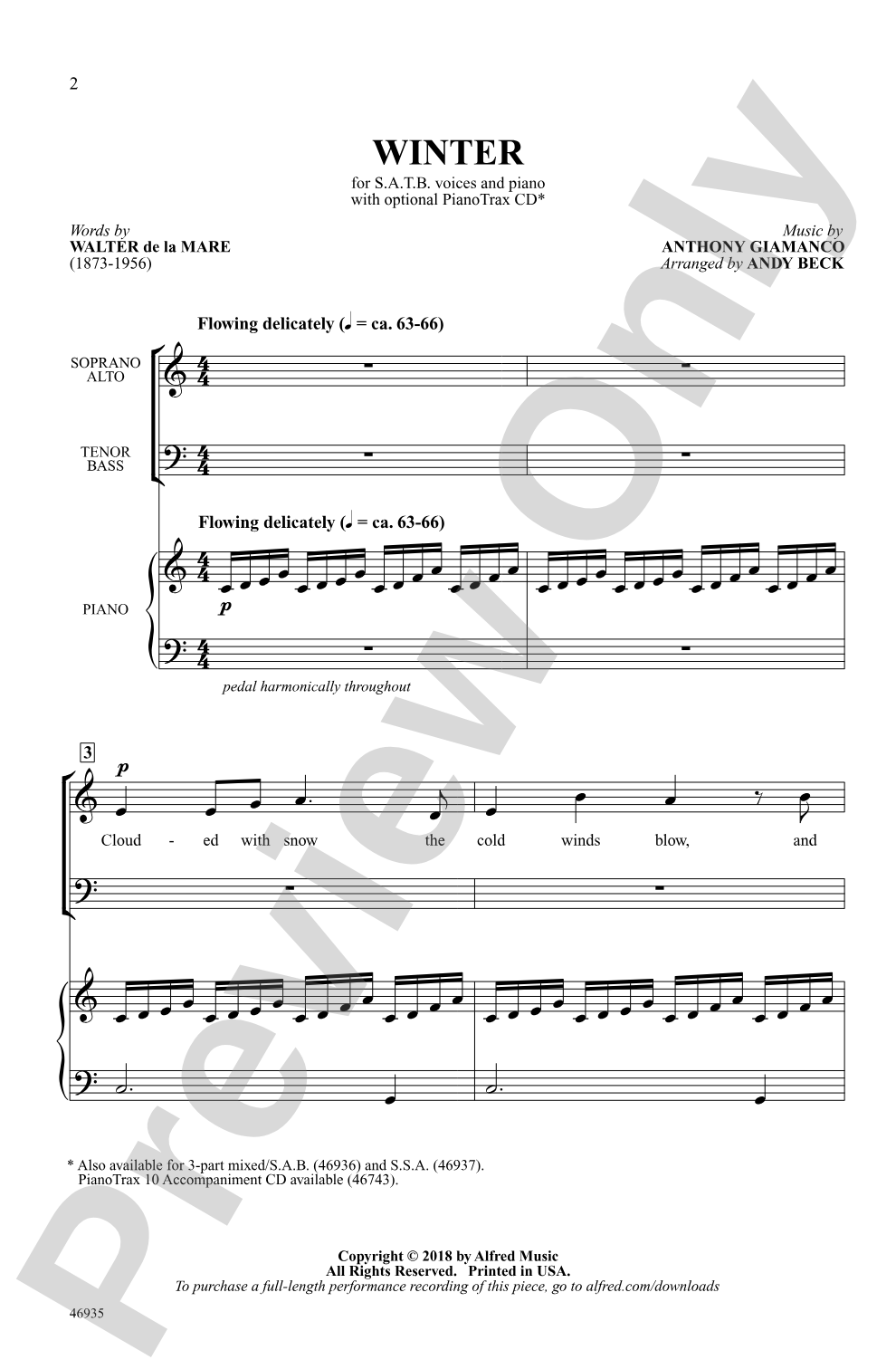
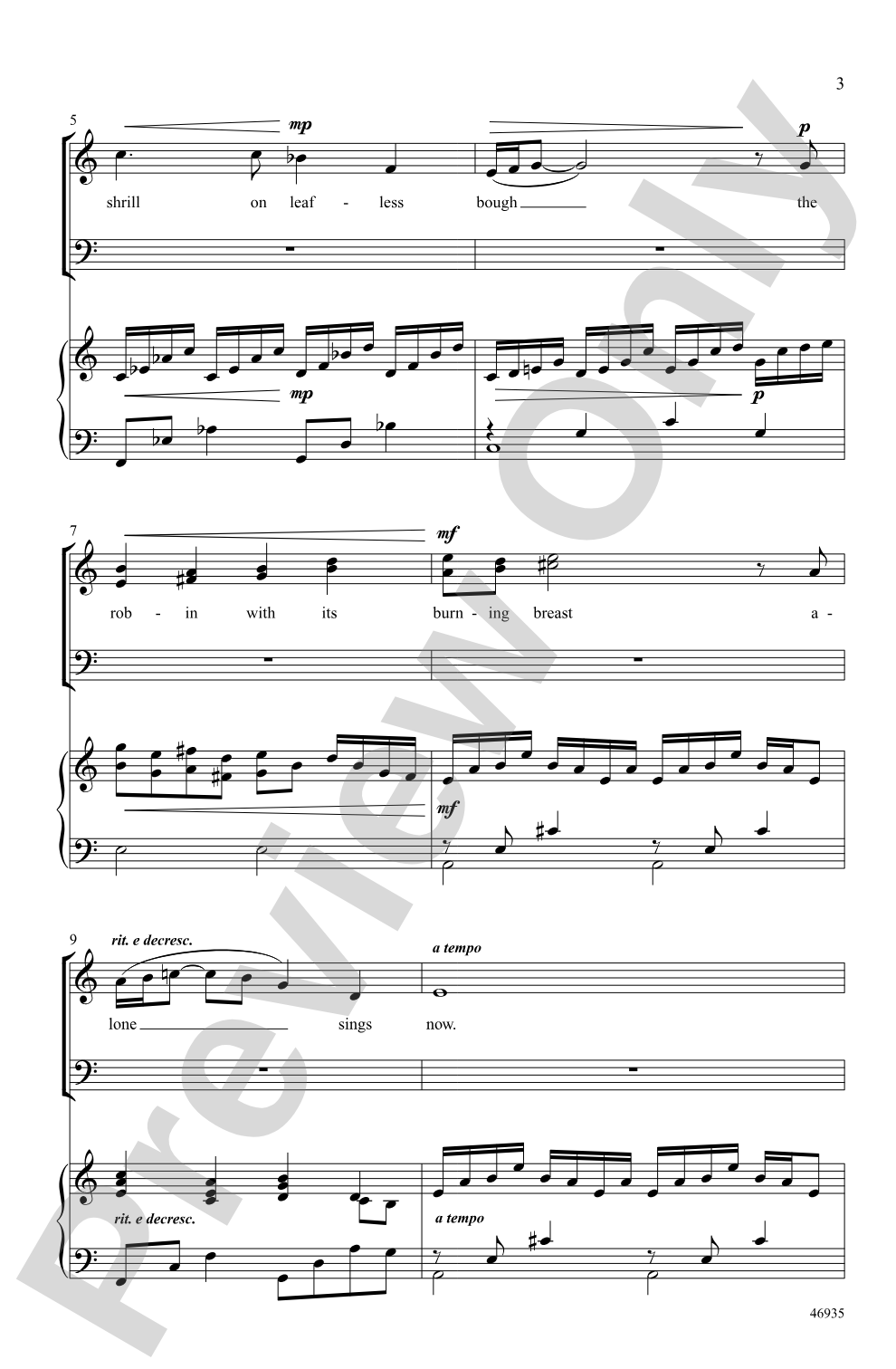

Winter: SATB Choral Octavo
Words by Walter de la Mare, music by Anthony Giamanco / arr. Andy Beck
Item: 00-PO-0005803
$2.05
Minimum order quantity: 20 copies
Pickup currently not available
Description
Walter de la Mare's poem is a fantastic example of the Romantic-era imagination, and even more so when paired with this gorgeously haunting music. A delicately constructed piano accompaniment glides beneath shifting contemporary harmonies and varied choral textures, ultimately leading to a beautifully subdued ending.


Winter: SATB Choral Octavo isn't in MakeMusic Cloud just yet...but it could be. Let us know you'd like to see it, and you'll help shape what comes next. In the meantime, start a free trial and dive into thousands of interactive titles your students can play along with today.
Request This Title
Tell us you want it.
Start Your Free Trial
Explore everything that's ready to play right now.
Sample Audio
1
Audio File
--:--
0:00
0:00
Sample Video
Additional Details
Series:
Alfred Choral Designs
Publisher:
Alfred Music
Page Count:
8
SKU:
00-PO-0005803
More about this title
About the Composer: Anthony Giamanco

Anthony Giamanco studied composition at Eastern Michigan University, where he worked with distinguished mentors including Dady Mehta, Mary Ida Yost, Ernest Brandon, and Anthony Iannaconne. His works for choir, piano, organ, and chamber groups are published by Alfred Music, Lorenz, Laudation Music, GIA, Augsburg Fortress, and Shawnee Press.
Giamanco currently serves as Director of Creative Arts and Worship at Shalom Lutheran Church in Pinckney, Michigan, and resides in South Lyon, Michigan. His music reflects both his liturgical experience and his commitment to compelling choral writing.
Why we love this
Giamanco's setting brings genuine sophistication to a literary treasure without sacrificing accessibility. The interplay between de la Mare's Romantic imagery and contemporary harmonic language creates something that feels both fresh and timeless, giving your choir a piece that rewards both rehearsal investment and audience attention.
What to expect
Delicate and introspective, with a luminous quality that emerges from the interaction between elegant piano writing and shimmering vocal textures. The piece unfolds like a carefully observed winter landscape, moving from surface detail to something more meditative and resigned.
Who it's for
High school and college choirs seeking concert and festival repertoire with literary substance. Directors who want their ensembles to engage with contemporary choral writing that doesn't sacrifice musicality or singability.
How to get the most out of it
- Balance the piano part carefully; the accompaniment should enhance rather than compete with the harmonic movement in the voices. Rehearse with piano early to establish how much weight it carries in different sections.
- Shape the shifting harmonies by attending to voice leading within each chord; singers should understand how their part moves from one harmony to the next, not just sing the sonority itself.
- Reserve full dynamic power for moments that earn it. The piece's beauty lives in restraint, and a subdued approach to climactic passages will intensify their impact.
- Experiment with tempo flexibility in the final measures. The 'beautifully subdued ending' suggests space for rubato that lets the harmonic resolution breathe naturally.
How to use it
Program this as a quiet moment in a concert, paired with works of contrasting energy to highlight its reflective character. Its literary foundation and contemporary but approachable harmonic language make it equally effective in thematic concert programming or festival competition where your choir's musicianship and attention to text are assets.
Skills your students will build
- Reading and balancing contemporary choral harmonies
- Sustaining ensemble cohesion through varied textures and shifting voice leading
- Interpreting poetic text with musical sensitivity and restraint
- Collaborative rehearsal with piano, attending to blend and balance