

Wind in the Pines: SAB Choral Octavo
Words by Madison Cawein, music and additional words by Bruce W. Tippette
Item: 00-PO-0007445
$2.40
Minimum order quantity: 20 copies
Pickup currently not available
Description
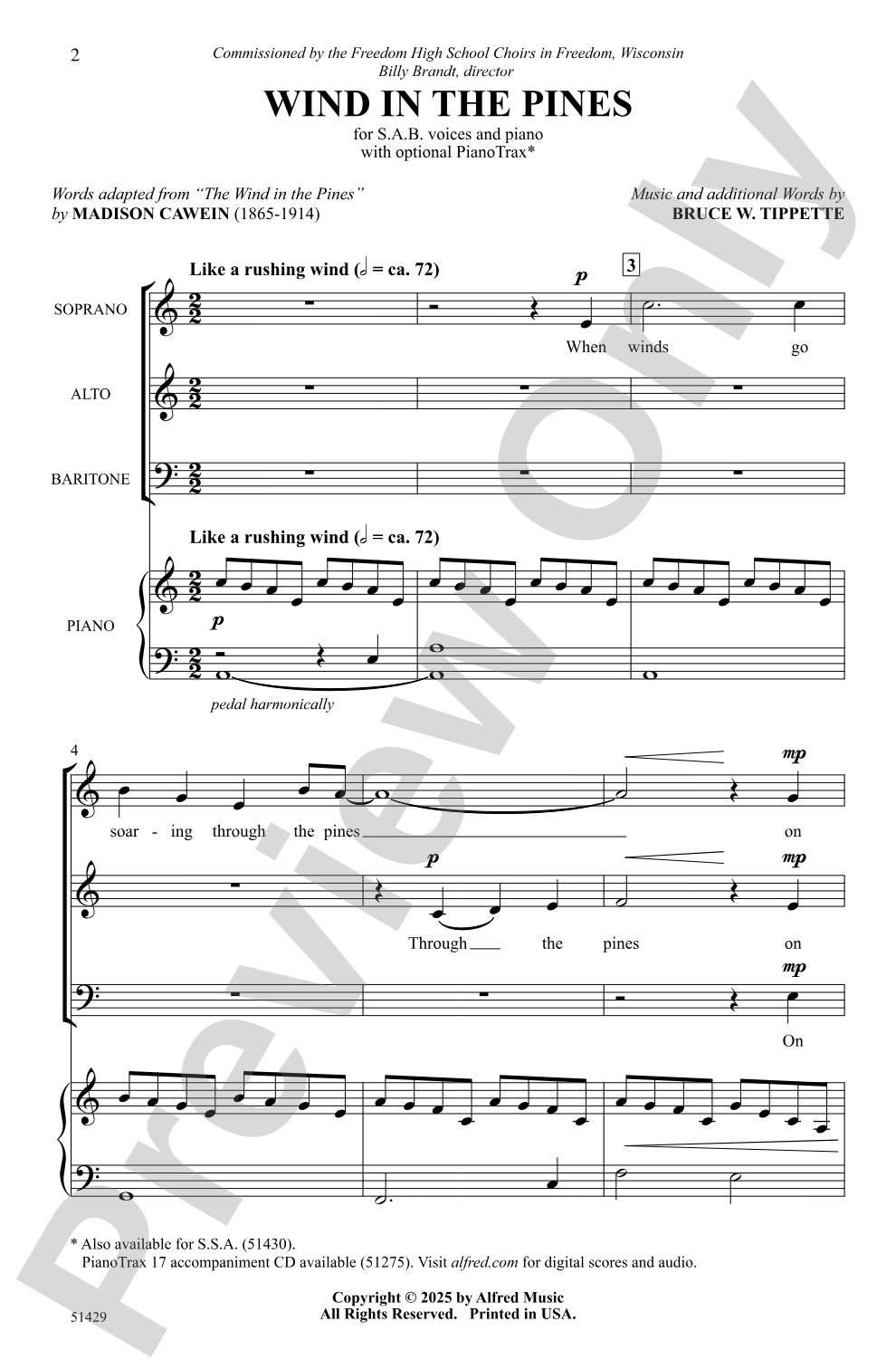
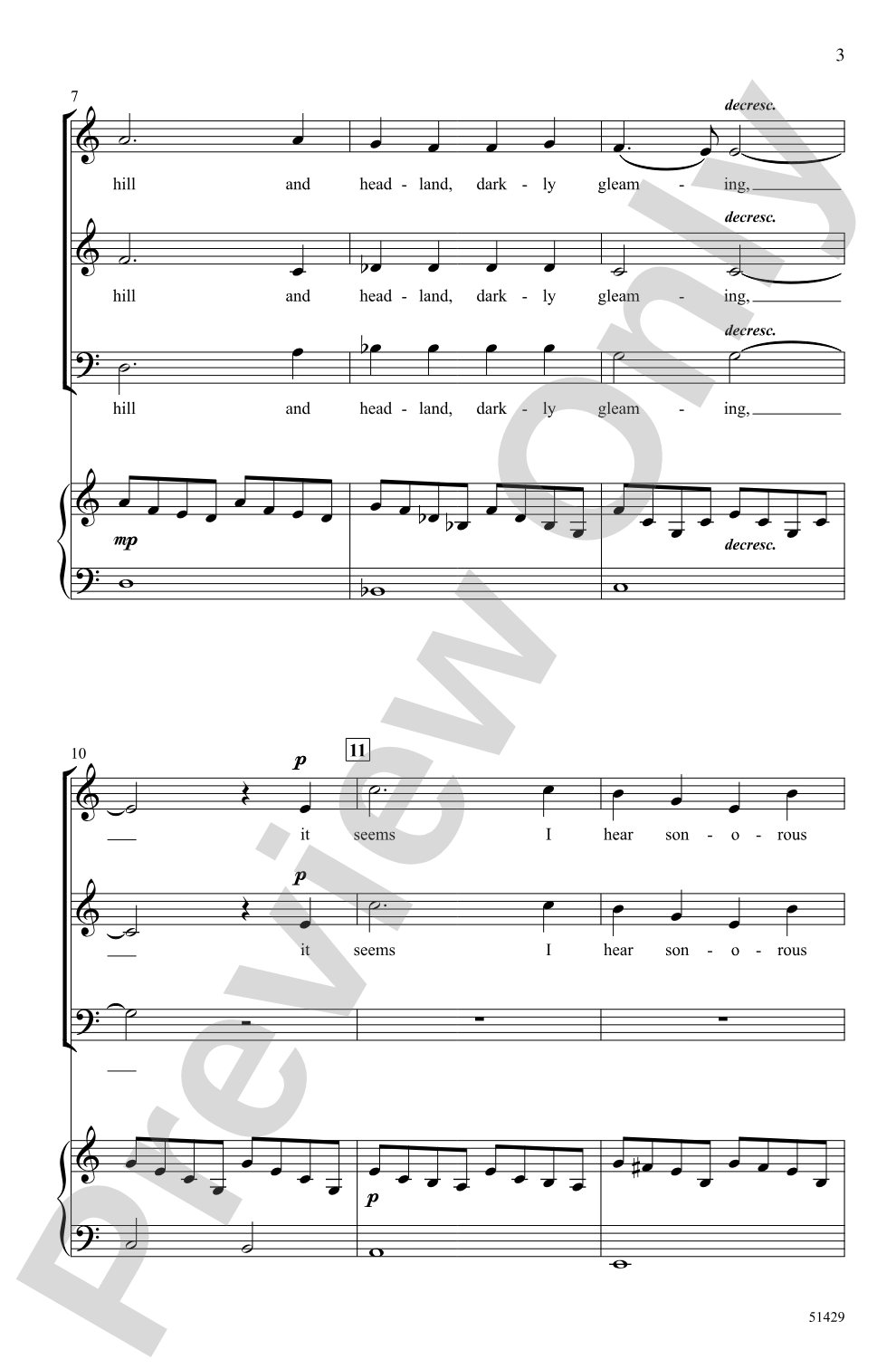
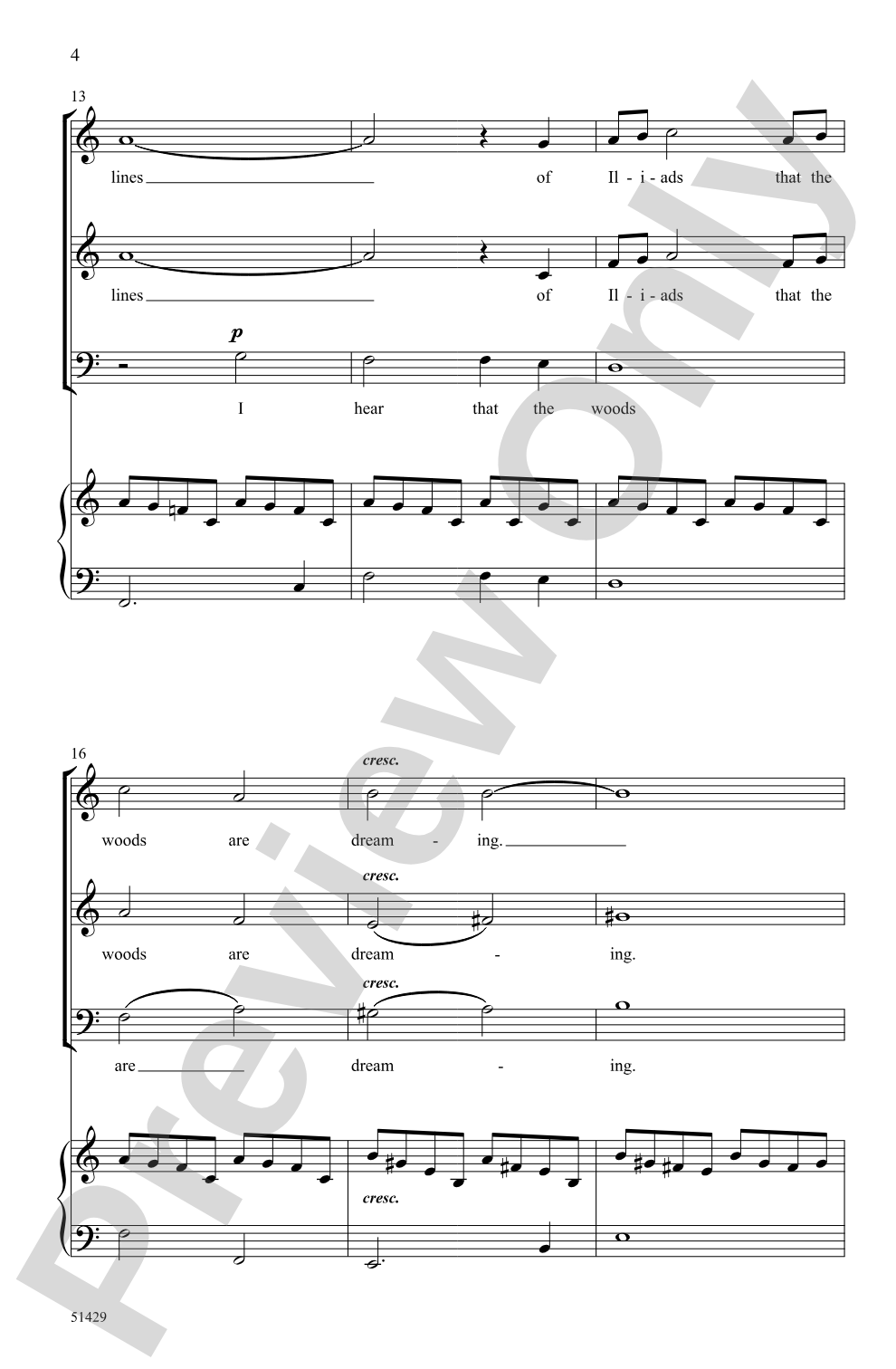
This expressive poetic setting opens with a piano motif reminiscent of rushing wind. Three legato voice parts unfold and intertwine. Staggered entrances in the middle assemble and grow until we "hear sonorous lines soaring through the pines." Encourage singers to soften and slow to a dreamy, relaxed ending. Ideal for contest and festival use.


Discover MakeMusic Cloud: thousands of interactive titles your students can play along with today.
Sample Audio
1
Audio File
--:--
0:00
0:00
Sample Video
Additional Details
Series:
Alfred Choral Designs
Publisher:
Alfred Music
Page Count:
16
SKU:
00-PO-0007445
More about this title
Why we love this
Tippette crafts a piece that lives in the liminal space between impressionism and lyricism, anchored by that hypnotic piano figure that immediately sets mood without overshadowing the voices. The staggered entrances and gradual assembly create genuine architectural interest; singers aren't just sustaining harmony, they're building a textural landscape. It's sophisticated enough to win at festival without feeling overwrought for a school ensemble.
What to expect
Wind in the Pines captures that quiet moment when you step into a forest and the air itself seems to move. The piece opens like a breath, builds to a moment of serene power where three voices shimmer in the trees, then subsides into stillness. There's poetry without sentimentality, movement without agitation.
Who it's for
SAB choirs seeking repertoire that challenges without requiring a fourth voice part or extreme range demands. Excellent for mixed ensembles of intermediate to advanced singers who can sustain legato lines and respond to subtle dynamic shaping. Works equally well in contest settings and concert programs.
How to get the most out of it
- Let the piano establish the wind imagery clearly in the opening measures before voices enter; resist the urge to have singers jump in too soon or loudly.
- Shape the staggered entrances with attention to line independence; each voice part should be heard as it weaves in, not blended into a blur.
- Find the exact moment the piece reaches its fullest sonority, then intentionally begin the descent into that dreamy, relaxed ending; this transition should feel inevitable, not abrupt.
- Use dynamic restraint in the middle section even as parts intertwine and grow; the soaring quality comes from resonance and legit singing, not pushing.
How to use it
Pair this with other nature-inspired or impressionistic literature for a thematic concert set, or place it near the end of a program where its soft, introspective close can linger. The poetic text and recorded accompaniment availability make it a strong choice for festival performance or as an anchor piece in a spring concert.
Skills your students will build
- Sustaining legato lines across phrase boundaries
- Entering cleanly on staggered cues without breaking ensemble cohesion
- Balancing individual voice independence with blended three-part harmony
- Responding to subtle dynamic shaping and textural layering
- Releasing and decelerating deliberately into a soft, cohesive ending