Will There Really Be a Morning? Cover Image

Will There Really Be a Morning?: 2-Part Choral Octavo

$2.05 USD
Sale price  $2.05 USD Regular price 
Skip to product information
Will There Really Be a Morning? Cover Image

Will There Really Be a Morning?: 2-Part Choral Octavo

Words by Emily Dickinson, music and additional words by Mary Donnelly and George L. O. Strid

Item: 00-39786

makemusic Cloud badge

Need it now?

Buy Digital Version
$2.05
Shipped

One moment…

Description
A tuneful melody floats above the arpeggiated piano part in this delightful choral for treble voices. The setting is free from musical roadblocks, with success woven into the fabric, making it a perfect choice for developing choirs.

Don't just read it, hear it, play along with it, and watch your students grow with it. In MakeMusic Cloud, Will There Really Be a Morning?: 2-Part Choral Octavo comes alive with professional accompaniment, adjustable tempo, and built-in practice tools that turn solo practice into real progress.

Sample Pages

Sample Audio
0:00
0:00
Sample Video
Additional Details
Series: Alfred Choral Designs
Publisher: Alfred Music
Page Count: 8
UPC: 038081444475
SKU: 00-39786

More about this title

About the Composer: Mary Donnelly
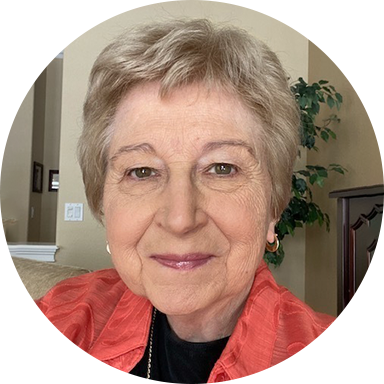
Mary Donnelly

Mary Donnelly grew up in Reno, Nevada, and studied English and French at the University of Nevada before discovering her true calling in music education. While completing her undergraduate degree, she founded two children's choruses, an experience that inspired her to pursue formal music training. She earned her Master's Degree in Education from Lesley College in Cambridge, Massachusetts, where she focused on integrating the arts across the curriculum.

Donnelly spent thirty years teaching general music and choir in the Washoe County School District, retiring after a career dedicated to making music accessible to young learners. In 1985, she began collaborating with George L. O. Strid when their principal asked them to compose a musical for Reading Week. That partnership flourished into an extraordinarily prolific one, resulting in more than two hundred songs and twenty-five full musicals. She remains active in ACDA, NEA, and ASCAP.

Why we love this

Donnelly and Strid have engineered this octavo specifically for the developing choir: the melody sits comfortably, the two-part writing offers clarity without oversimplification, and the arpeggiated accompaniment provides both harmonic richness and rhythmic ease. The poetic text elevates the piece beyond typical filler material, giving singers something genuinely meaningful to interpret. You'll find rehearsal time spent efficiently here, with musical success arriving naturally rather than through endless corrections.

What to expect

The piece carries a reflective, hopeful quality; the tuneful melody floats naturally above the gentle piano figurations, creating an atmosphere of quiet contemplation. The arpeggiated accompaniment lends an intimate, almost conversational character that invites listeners into the emotional world of the text.

Who it's for

This octavo suits treble choirs in middle school and early high school, particularly those still building confidence with two-part harmony. Directors working with developing ensembles will appreciate how the writing removes technical barriers while maintaining musical substance. It's equally valuable for community or recreational choirs seeking repertoire that engages without demanding advanced technique.

How to get the most out of it

  • Maintain a light, conversational tone in the melody line; this piece thrives on clarity of phrase rather than dramatic intensity.
  • Balance the arpeggiated accompaniment so it supports without overpowering the voices, especially in measures where both parts move together.
  • Shape the text expressively by identifying the key emotional moments in the poem, allowing the music to follow the poetry's natural contours.
  • Use the eight-page length as an opportunity to rehearse multiple times through; familiarity will deepen the singers' connection to both tune and text.

How to use it

Slot this into a concert celebrating poetry, literature, or introspection; the literary quality of the text makes it a natural pairing with other art-focused programming. It also works beautifully as a transitional moment in a longer concert, offering a moment of stillness between more energetic selections. Consider programming it early in the season when you're building ensemble confidence and musicianship.

Skills your students will build

  • Two-part harmony and voice independence
  • Lyrical phrasing and text expression
  • Listening to sustained melodic lines over moving accompaniment
  • Reading and interpreting poetic content within a musical setting

You May Also Like
