

Why Does The Willow Tree Weep?: 3-Part Mixed Choral Octavo
By Andy Beck
Item: 00-PO-0000042
$2.25
Minimum order quantity: 20 copies
Pickup currently not available
Description
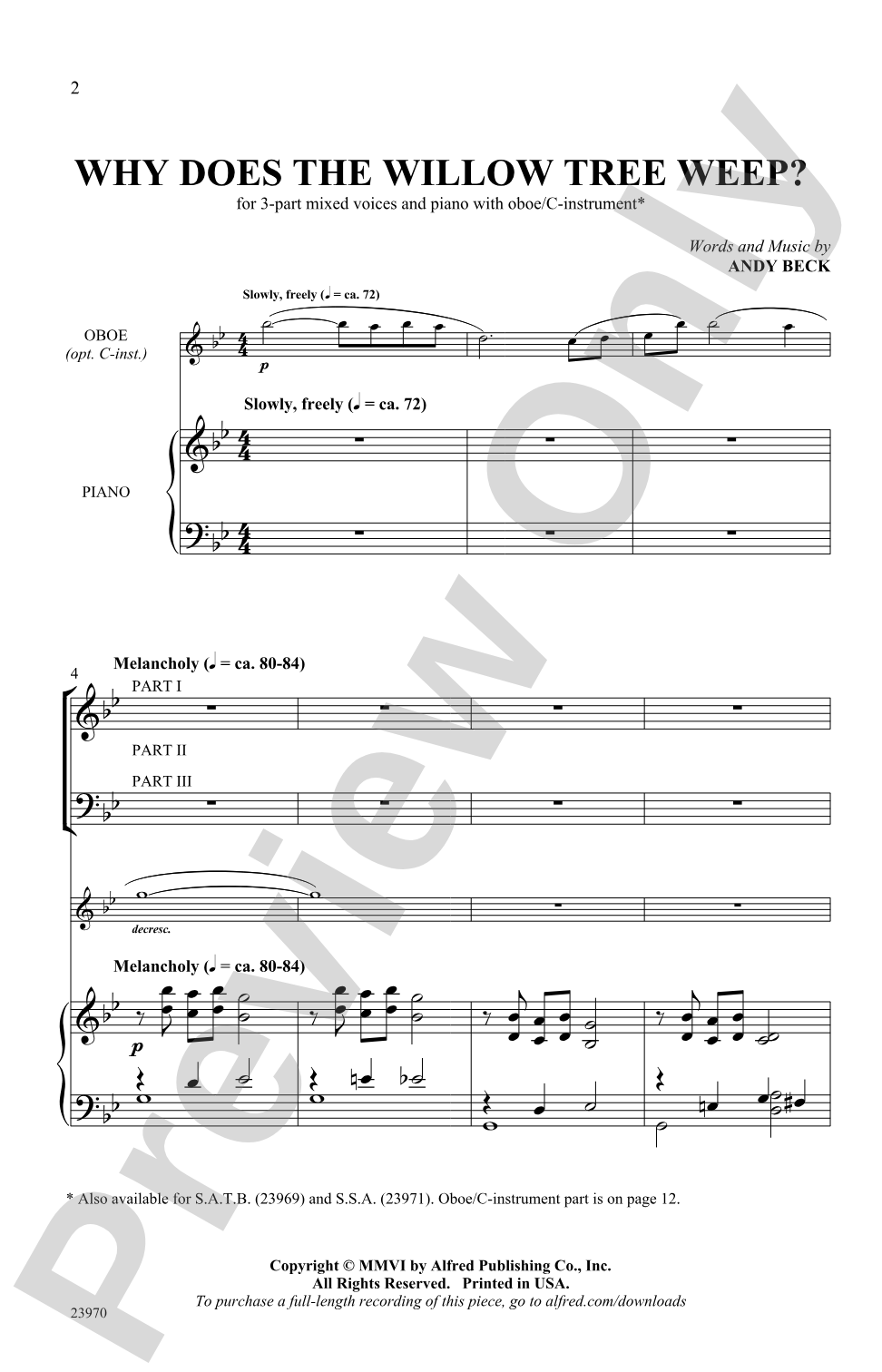
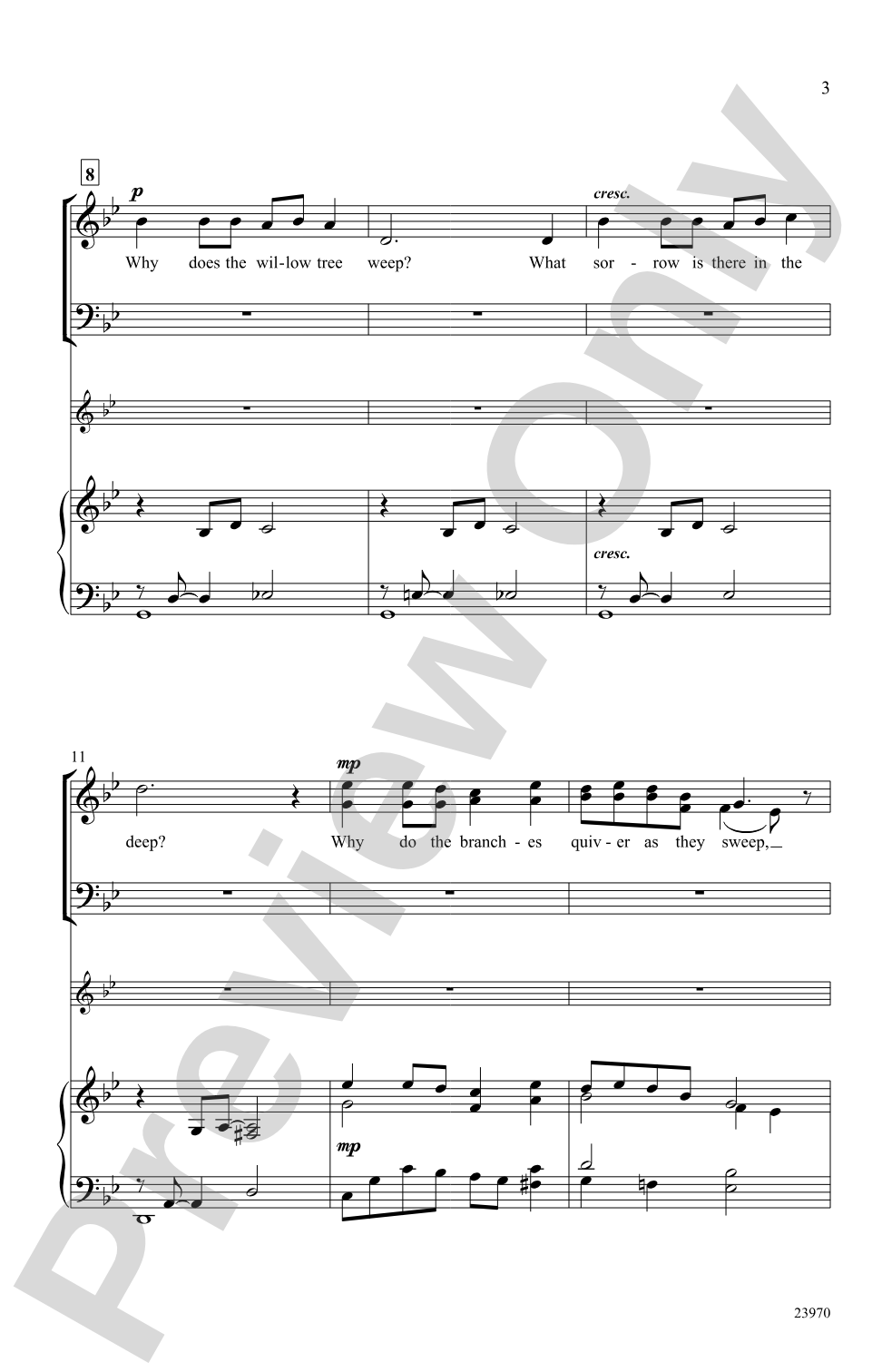
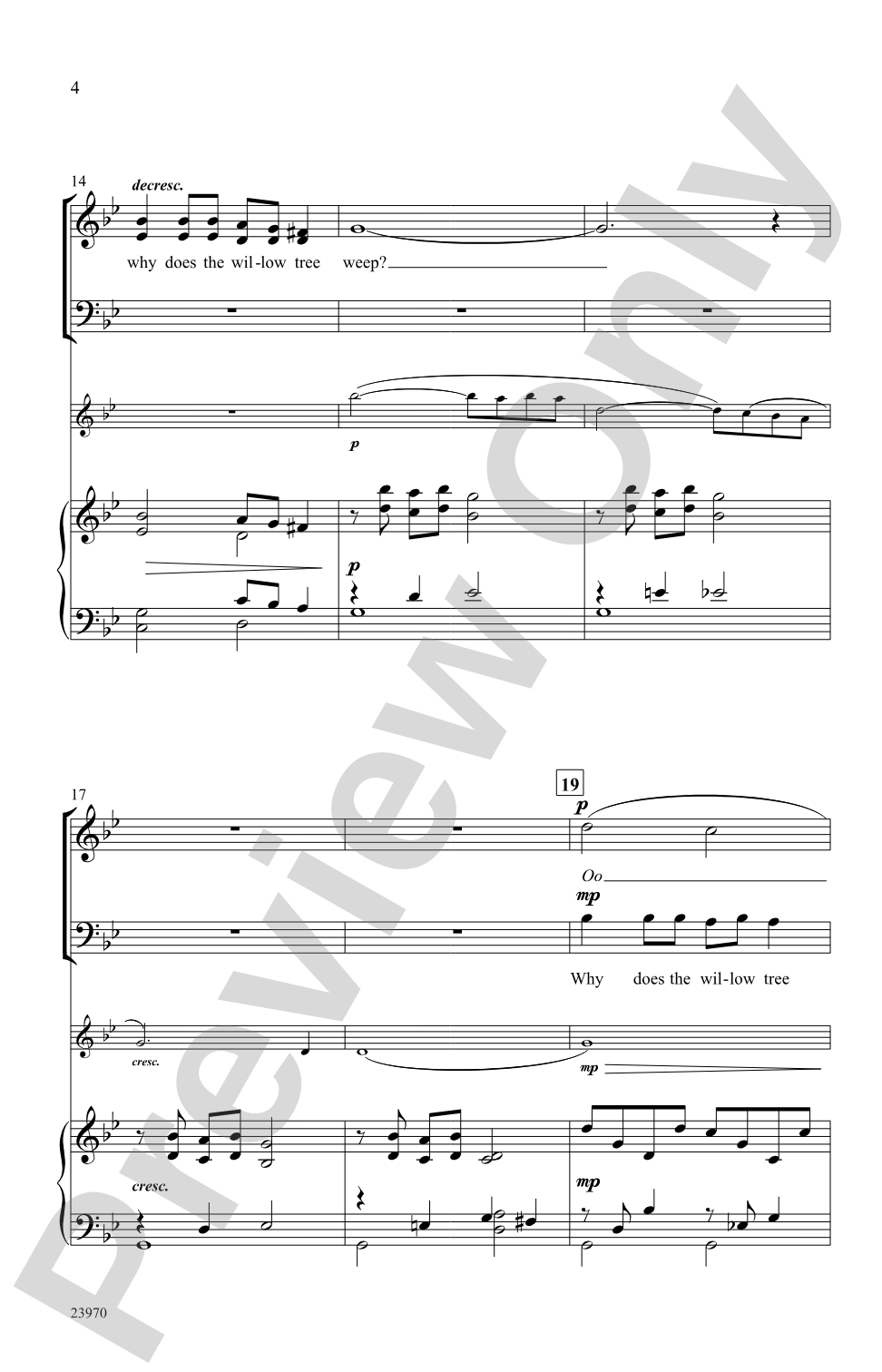
Cascading vocal lines, expressive piano, and a melancholy oboe (optional C-instrument) reflect upon the symbolic willow tree. Each of the three poetic verses is further developed musically in this inquisitive text inspired by folklore. A breathtaking choral work!


Why Does The Willow Tree Weep?: 3-Part Mixed Choral Octavo isn't in MakeMusic Cloud just yet...but it could be. Let us know you'd like to see it, and you'll help shape what comes next. In the meantime, start a free trial and dive into thousands of interactive titles your students can play along with today.
Request This Title
Tell us you want it.
Start Your Free Trial
Explore everything that's ready to play right now.
Sample Audio
1
Audio File
--:--
0:00
0:00
Sample Video
No sample videos found.
Additional Details
Series:
Alfred Choral Designs
Publisher:
Alfred Music
Page Count:
12
SKU:
00-PO-0000042
Instrumentation:
Opt. Oboe
More about this title
About the Composer: Andy Beck

Andy Beck serves as Director of Choral Publications at Alfred Music, a role that shapes choral repertoire for educators nationwide. His catalog spans over 450 choral works, vocal resources, and musicals in print, alongside foundational choral literacy resources like Sing at First Sight and Vocalize! 45 Vocal Warm-Ups That Teach Technique. He holds degrees in Music Education from Ithaca College and Northwest Missouri State University.
Beyond the page, Beck maintains an active presence as a guest conductor, adjudicator, and clinician for honor choirs and all-state ensembles throughout the United States. A tenor who performs with the North Carolina Master Chorale Chamber Choir and has sung as an Alfred Music studio artist since 1992, he brings performer's insight to every piece he writes. His commissioned works and conducting appearances reflect a deep investment in choral artistry and music literacy at all levels.
Why we love this
Beck crafts cascading vocal writing that feels inevitable rather than contrived, allowing singers to discover the emotional weight of the text through the music itself. The optional oboe part gives you programming flexibility: perform it as a purely choral work for smaller ensembles, or add the instrumental layer when you have the player available and want a richer tonal palette. At 12 pages, this sits perfectly in that sweet spot where the piece has real substance without overwhelming a mixed-voice ensemble still building confidence.
What to expect
The piece unfolds like a meditation on nature and symbolism, with vocal lines that seem to flow and interconnect like branches bending in wind. The optional oboe adds a wistful, searching quality, as though the willow itself is answering the questions posed by the singers. There's genuine melancholy here, but never heaviness; the expressive piano accompaniment supports rather than overwhelms.
Who it's for
Mixed-voice choirs at the high school and community level who are ready for expressive, literary texts and elegant four-part writing that doesn't sacrifice accessibility. This works equally well for chamber choirs seeking a substantive piece or larger ensembles looking to program something introspective alongside more extroverted selections.
How to get the most out of it
- Shape the cascading lines by thinking horizontally rather than vertically; each voice part should sing its melody with intention, trusting that the counterpoint will create the desired harmonic effect.
- Balance the soprano line so it sings through without strain, especially in passages where it carries the primary narrative while lower voices provide support.
- If you include the oboe, rehearse it separately first so the player feels secure, then blend it into sectional rehearsals to ensure the choir hears how it colors the texture without overpowering the voices.
- Let the melancholy mood breathe; resist the urge to push the tempo, and encourage singers to sustain through the poetic pauses that allow the text to land.
How to use it
Pair this with folk-inspired or nature-themed repertoire to create a thematic concert arc, or use it as a contemplative moment in a longer program to give audiences a chance to settle into something emotionally substantive. It also works beautifully as a concert opener, setting an introspective tone before moving into contrasting material.
Skills your students will build
- Sustaining legato lines across phrase boundaries
- Blending three-part SAB voicing with balanced tone quality
- Interpreting poetic text through vocal expression and phrasing
- Singing counterpoint where each line maintains independence while creating harmonic coherence
- Responding to optional instrumental doubling and adjusting blend when an oboe is added