

Why Does The Willow Tree Weep?: SATB Choral Octavo
By Andy Beck
Item: 00-PO-0000041
$1.65
Minimum order quantity: 20 copies
Pickup currently not available
Description
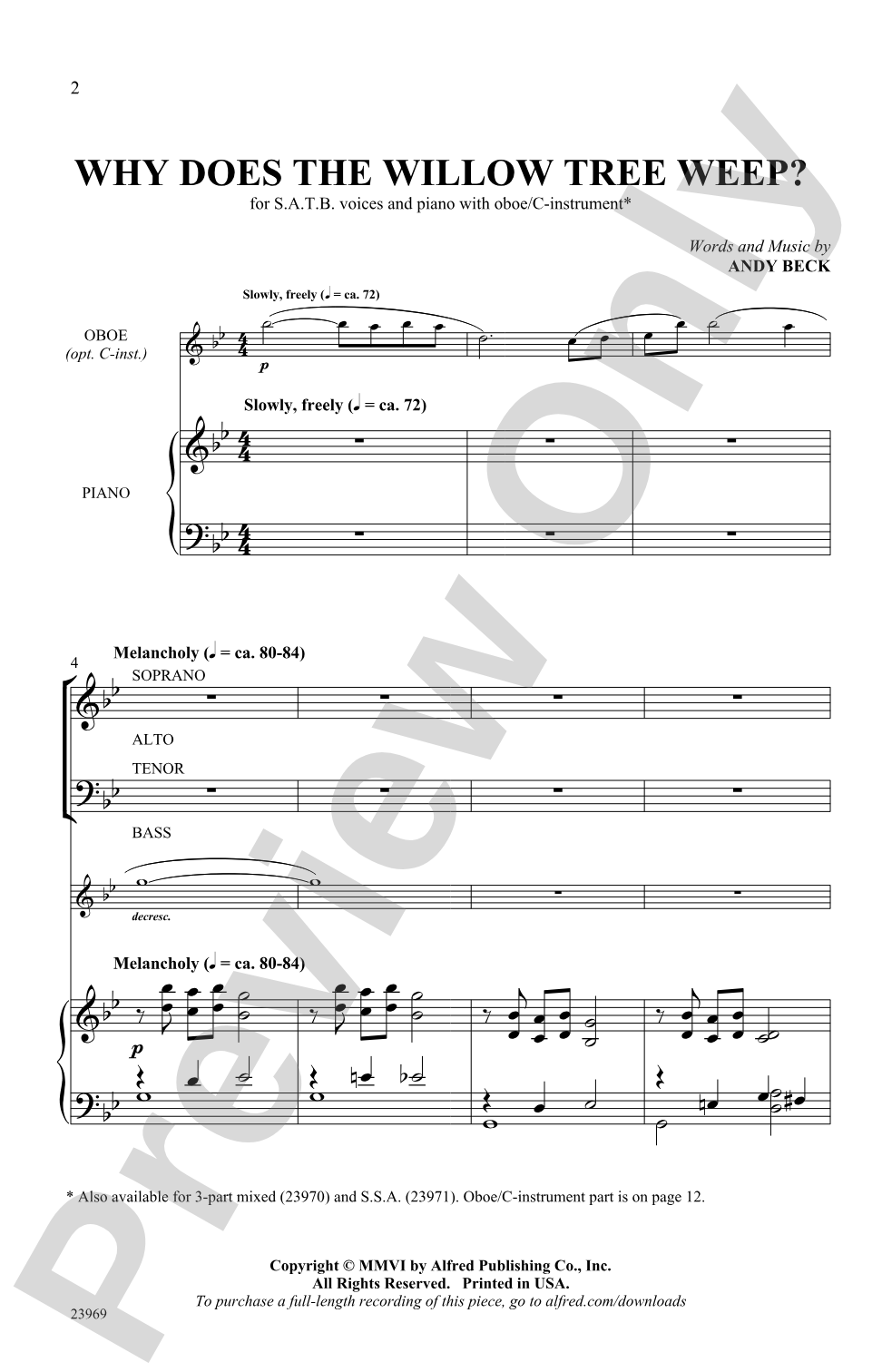
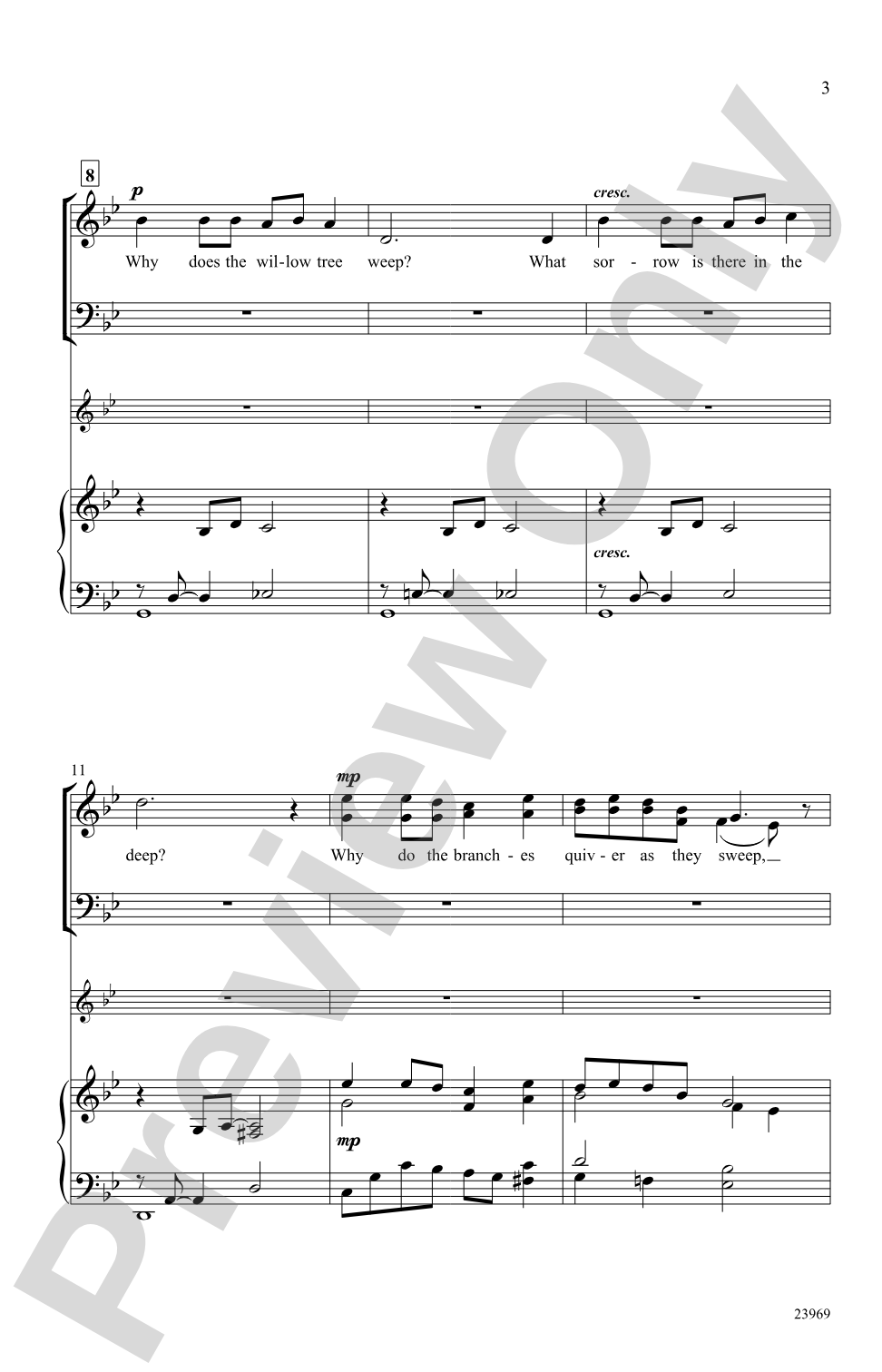
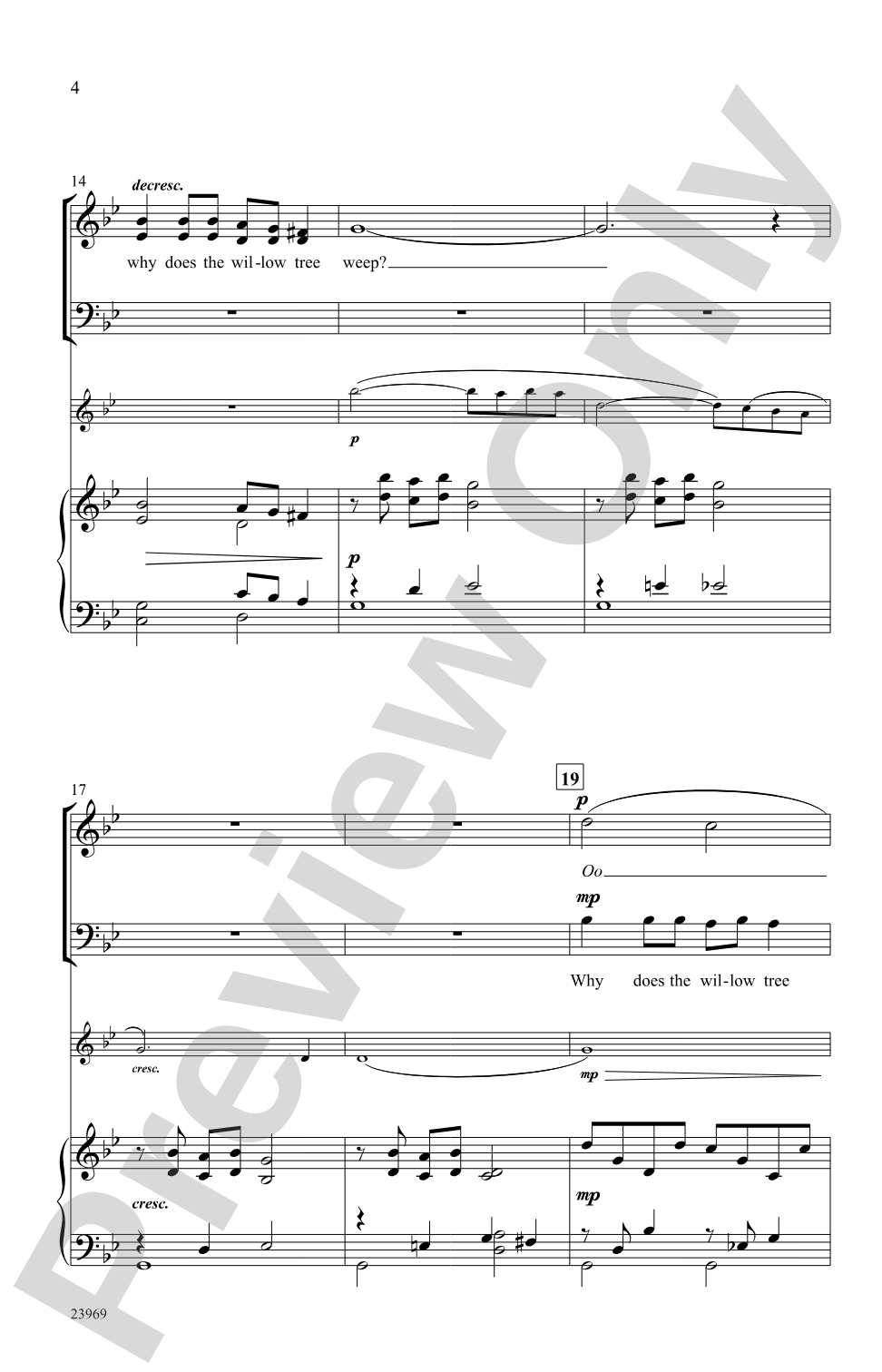
Cascading vocal lines, expressive piano, and a melancholy oboe (optional C-instrument) reflect upon the symbolic willow tree. Each of the three poetic verses is further developed musically in this inquisitive text inspired by folklore. A breathtaking choral work!


Why Does The Willow Tree Weep?: SATB Choral Octavo isn't in MakeMusic Cloud just yet...but it could be. Let us know you'd like to see it, and you'll help shape what comes next. In the meantime, start a free trial and dive into thousands of interactive titles your students can play along with today.
Request This Title
Tell us you want it.
Start Your Free Trial
Explore everything that's ready to play right now.
Sample Audio
1
Audio File
--:--
0:00
0:00
Sample Video
No sample videos found.
Additional Details
Series:
Alfred Choral Designs
Publisher:
Alfred Music
Page Count:
12
SKU:
00-PO-0000041
Instrumentation:
Opt. Oboe
More about this title
About the Composer: Andy Beck

Andy Beck directs choral publications at Alfred Music and has composed and arranged more than 450 choral works now in circulation, spanning secular pieces, vocal resources, and children's musicals. His pedagogical resources—including Sing at First Sight, Foundations in Choral Sight Singing, and Vocalize! 45 Vocal Warm-Ups That Teach Technique—have shaped choral music education nationwide. Beck holds a Bachelor's degree in Music Education from Ithaca College and a Master's degree from Northwest Missouri State University.
Beyond the publishing office, Beck maintains an active life as a tenor, conductor, and clinician. He has served as guest conductor and commissioned composer for all-state honor choirs throughout the Southeast, adjudicates at festivals across the country, and continues to perform with the North Carolina Master Chorale Chamber Choir. His work as a studio singer for Alfred Music since 1992 keeps him connected to the recording and performance world. The breadth of his experience in both composition and music education informs every piece he writes.
Why we love this
Beck's gift for writing singable yet sophisticated lines shows clearly here. The cascading vocal writing feels natural in the voice while the optional oboe adds a layer of atmospheric reflection that can deepen the piece without demanding it. Programming this piece signals to your choir that expressive, poetic repertoire is within reach.
What to expect
This piece unfolds like a meditation on loss and persistence. The cascading lines create a sense of gentle inevitability, while the melancholy oboe (when included) hovers above the texture like a questioning voice. The overall effect is introspective and quietly moving, never heavy-handed.
Who it's for
SATB choirs seeking a contemplative, literature-based piece that sits comfortably for most voices while offering interpretive depth. High school and college choirs, adult community ensembles, and chamber choir programs will find this piece rewards both focused rehearsal and meaningful performance.
How to get the most out of it
- Balance the piano accompaniment carefully; its expressiveness should frame the voices rather than compete with them. Rehearse several times with just voices and oboe (if using) to establish the choral foundation first.
- Shape each of the three verses differently. Since they develop musically as the text unfolds, use subtle tempo and dynamic variations to highlight how the music deepens with each iteration.
- If performing with the optional oboe, mark clear cues for the player during rehearsals. The oboe's melody should feel like a commentary on the choir's questions, not an echo of them.
- Attend to vowel consistency in the cascading lines; slight vowel drift can muddy the effect. Isolate these sections in sectionals to ensure clean, unified sonorities across each pass.
How to use it
Pair this with other folklore-inspired pieces or nature-themed repertoire for a cohesive concert section. Its reflective quality makes it an excellent anchor for a program exploring symbol and meaning in poetry and music. The piece also works well as a concert closer, leaving the audience in a contemplative mood.
Skills your students will build
- Singing cascading lines with independence and clarity
- Expressive interpretation of text-painting and poetic symbolism
- Balancing ensemble blend while maintaining individual line clarity
- Responding to optional instrumental colors and adapting blend accordingly
- Shaping phrases across longer text structures with musical development