

Who's That Baby?: SATB, a cappella Choral Octavo
Music by Jay Althouse
Item: 00-PO-0004087
$2.25
Minimum order quantity: 20 copies
Pickup currently not available
Description
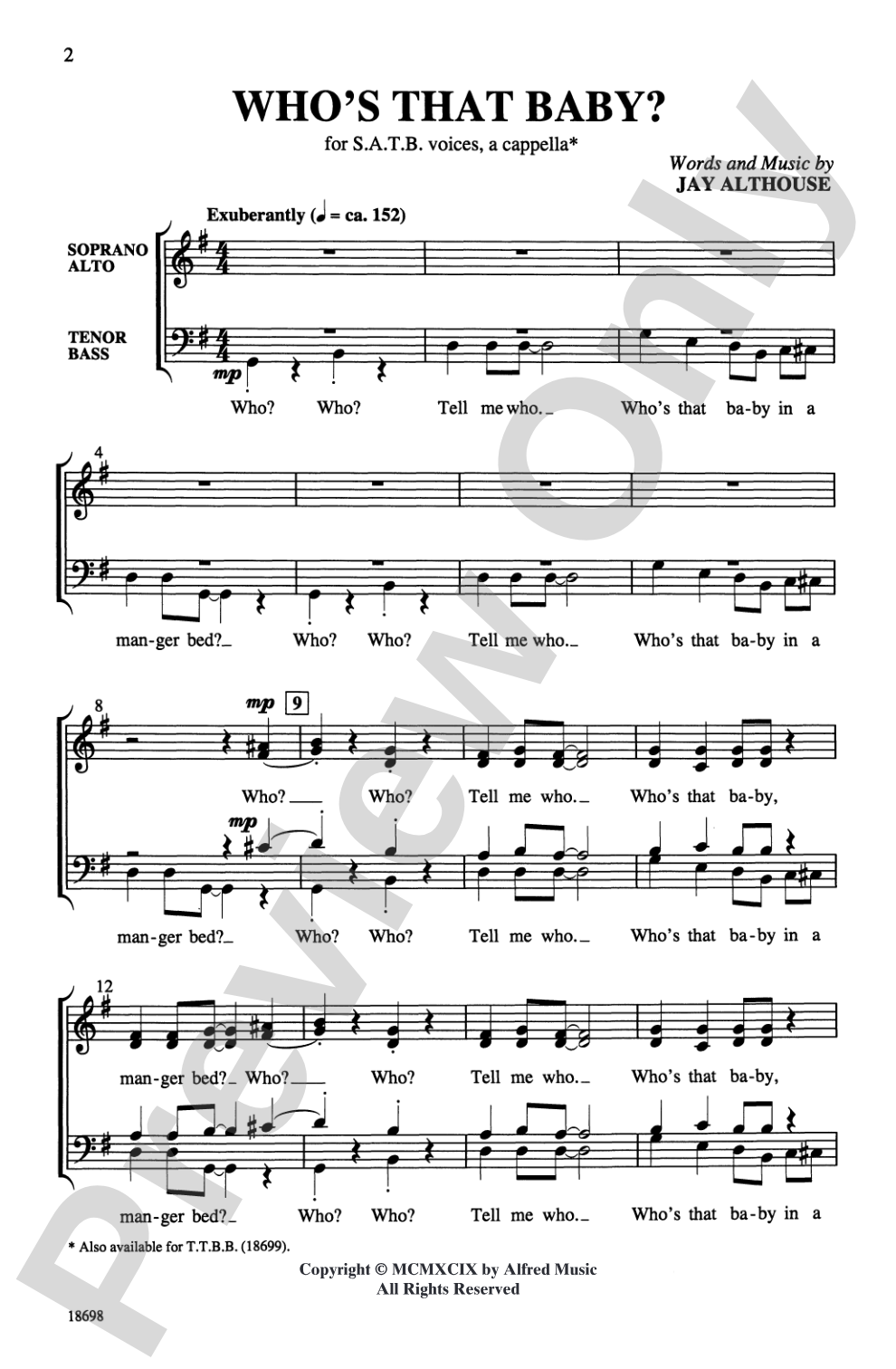
This may be the most exciting Christmas sprirtual Jay Althouse has ever written. It opens with the basses asking, in a hushed, rhythmic melody, "Who's that baby in a manger bed?" The text is classic spiritual style, but the music is anything but . . . t's fresh, new, and alive!


Who's That Baby?: SATB, a cappella Choral Octavo isn't in MakeMusic Cloud just yet...but it could be. Let us know you'd like to see it, and you'll help shape what comes next. In the meantime, start a free trial and dive into thousands of interactive titles your students can play along with today.
Request This Title
Tell us you want it.
Start Your Free Trial
Explore everything that's ready to play right now.
Sample Audio
1
Audio File
--:--
0:00
0:00
Sample Video
No sample videos found.
Additional Details
Series:
Alfred Archive Edition: Alfred Choral Designs
Publisher:
Alfred Music
Page Count:
8
SKU:
00-PO-0004087
More about this title
About the Composer: Jay Althouse

Jay Althouse studied music education and music at Indiana University of Pennsylvania, where he later received the Distinguished Alumni award. His compositional output spans more than 800 choral works across all skill levels, performed consistently throughout English-speaking choral programs. He served eight years in rights and licensing at a major educational music publisher and held a position on the Executive Board of the Music Publishers Association of America.
As an ASCAP writer member, Althouse regularly receives the ASCAP Special Award for his compositions. Beyond choral writing, he has co-authored children's musicals with his wife Sally K. Albrecht, edited respected vocal solo collections including Folk Songs for Solo Singers, and written pedagogical resources such as The Complete Choral Warm-up Book, Accent on Composers, and classroom materials for music literacy. His work I Hear America Singing, co-written with Albrecht, was performed by the San Francisco Girls and Boys Choirs at President Barack Obama's inauguration in 2009. He resides in North Carolina and serves on the National Advisory Board of the Folk Art Society of America.
Why we love this
Althouse delivers a spiritual with genuine rhythmic energy and harmonic sophistication, shedding the predictability that can weigh down this genre. The opening bass line sets the work apart immediately; from there, the arrangement builds momentum through call-and-response textures and contemporary voicing choices that keep singers engaged and audiences invested. This is Christmas repertoire with real musical substance.
What to expect
The piece unfolds like a spiritual conversation, beginning in shadow with the bass inquiry and gradually brightening as the full choir joins. Despite its contemporary harmonic palette, the music breathes genuine reverence and wonder, creating an emotional arc that feels both fresh and spiritually grounded.
Who it's for
Choirs with solid voice part independence and comfort with contemporary harmonic language will find this piece rewarding. Whether you're programming a Christmas concert for an adult community choir, high school ensemble, or college singers, this spiritual suits programs that want sacred music with modern sensibility rather than conventional arrangements.
How to get the most out of it
- Establish the hushed, rhythmic character in the opening bass section before other voices enter. This moment anchors the entire piece and requires steady ensemble precision to land properly.
- Balance the spiritual's traditional text with the modern harmonic language by letting the freshness of the chords breathe. Avoid oversinging or adding unnecessary vibrato that would muddy the contemporary sound Althouse crafted.
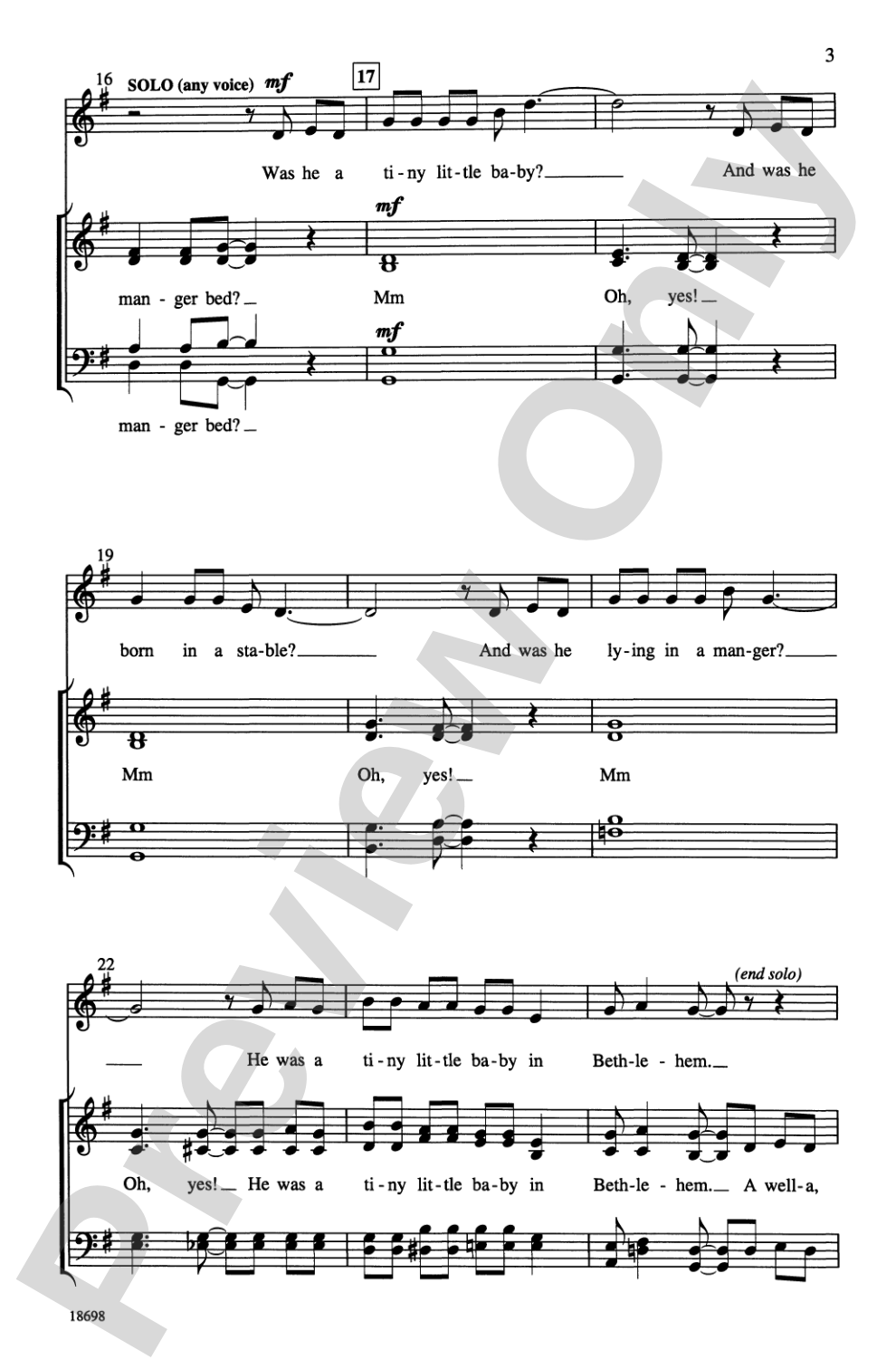
- Work the call-and-response sections with clear section leadership so replies feel conversational rather than mechanical. The dialogue between bass questions and full-choir answers should feel like natural musical conversation.
- Shape phrases through strategic breath placement rather than dynamic extremes. This a cappella writing depends on your ensemble finding collective resonance, which means intentional ensemble vowels and supported lines across all four parts.
How to use it
Open a Christmas concert with this piece to signal that your program will take familiar traditions in unexpected directions. The eight-page length and a cappella format make it an excellent anchor for a mixed-repertoire holiday program, pairing naturally with both traditional spirituals and modern sacred works.
Skills your students will build
- Rhythmic independence and ensemble precision in call-and-response textures
- Reading and intonating contemporary harmonic language
- Blending voices in unaccompanied singing across four distinct parts
- Stylistic interpretation of spiritual tradition with modern musical language
- Phrase shaping and breath management in a cappella contexts