
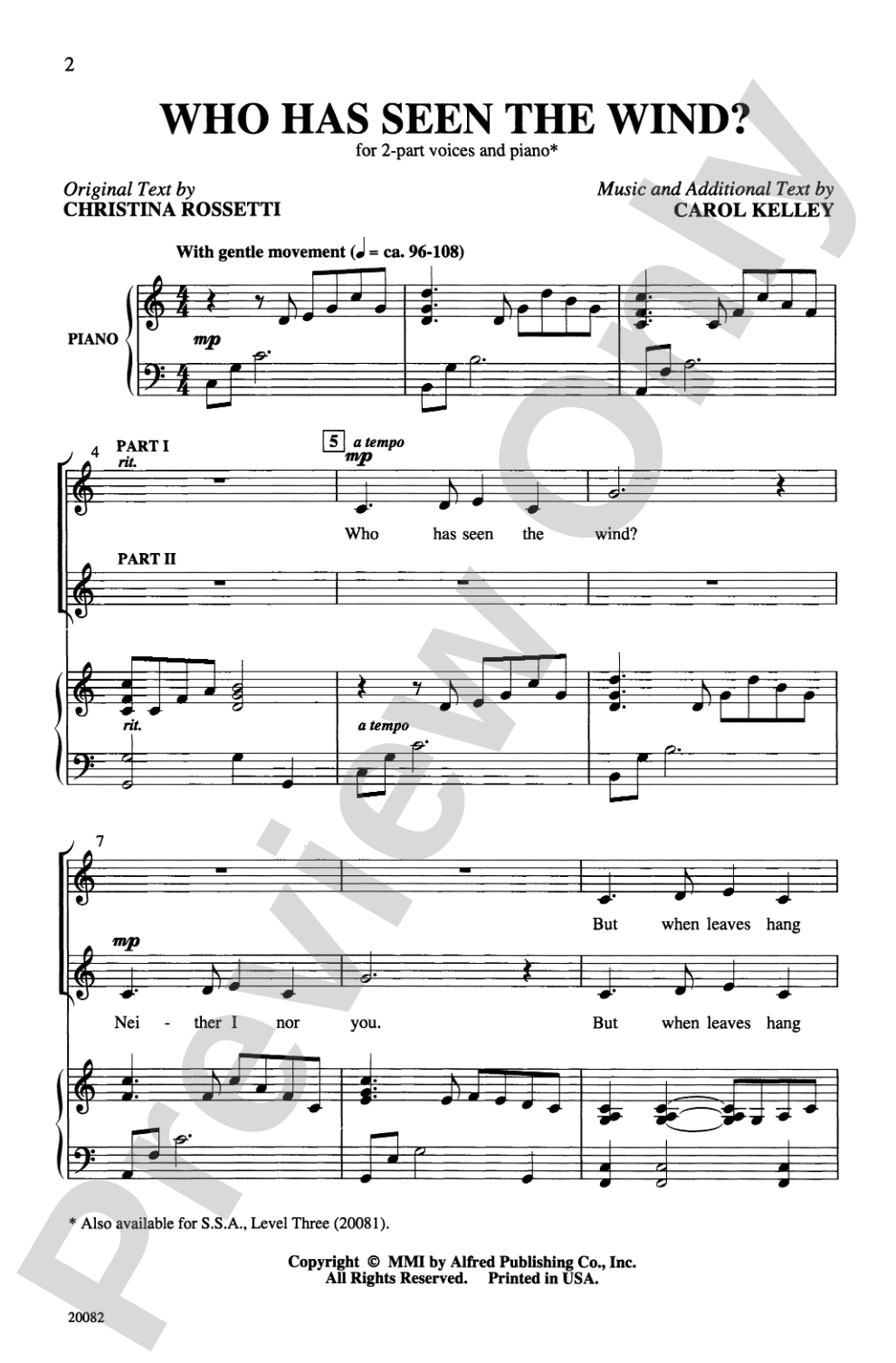

Who Has Seen the Wind?: 2-Part Choral Octavo
Music by Christina Rossetti / arr. Carol Kelley
Item: 00-PO-0002173
$2.25
Minimum order quantity: 20 copies
Pickup currently not available
Description
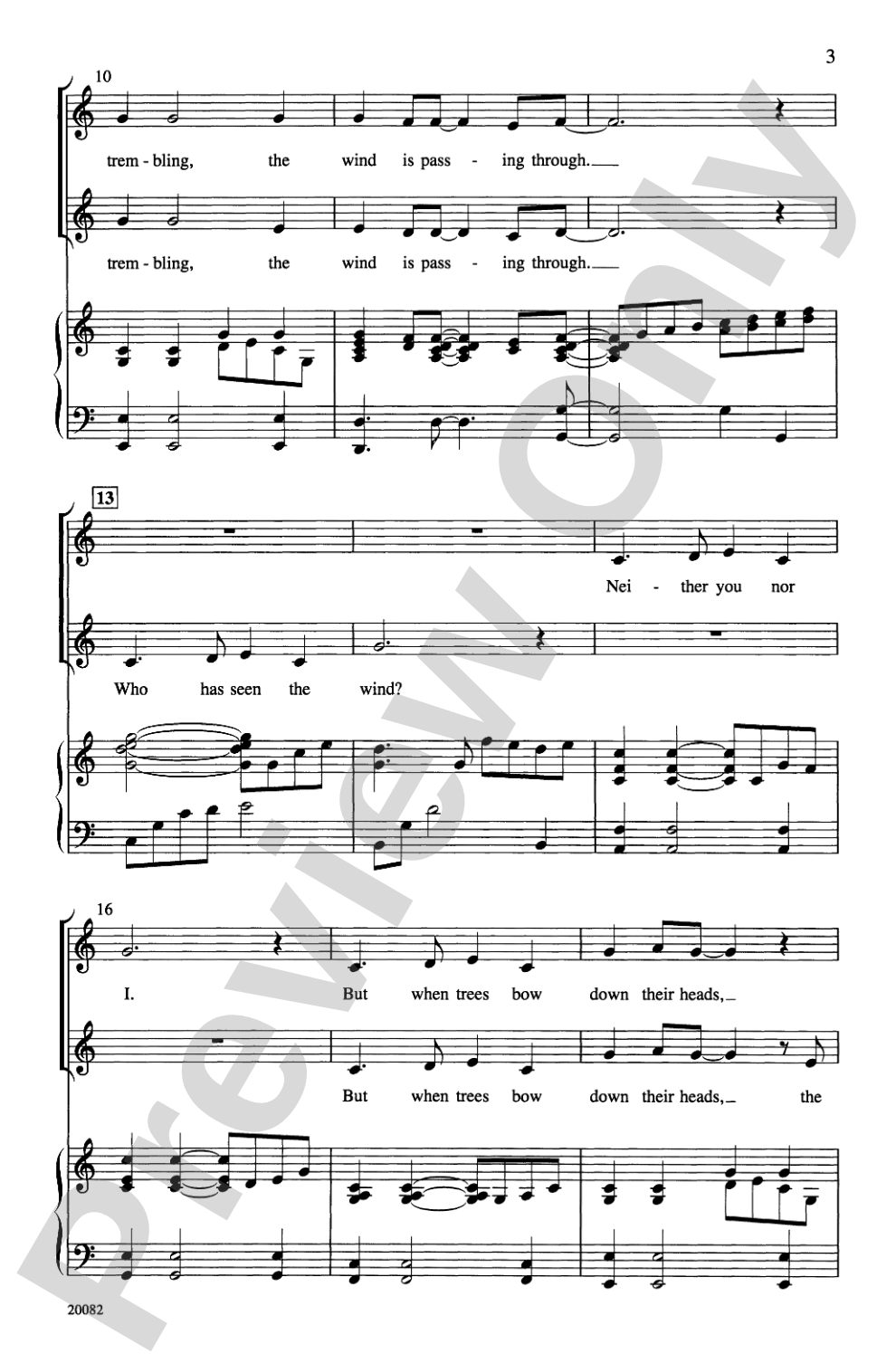
A lovely Christina Rossetti text is the foundation for this pensive new choral work for treble voices by Carol Kelley. It's a thought provoking question that can never be answered: "Who has seen the wind? Neither you nor I." The fluid piano accompaniment highlights the flowing opening melody which contrasts with the more homophonic "B" section. Who Has Seen the Wind? will show off your treble choirs at concerts, festivals, and adjudications.


Who Has Seen the Wind?: 2-Part Choral Octavo isn't in MakeMusic Cloud just yet...but it could be. Let us know you'd like to see it, and you'll help shape what comes next. In the meantime, start a free trial and dive into thousands of interactive titles your students can play along with today.
Request This Title
Tell us you want it.
Start Your Free Trial
Explore everything that's ready to play right now.
Sample Audio
1
Audio File
--:--
0:00
0:00
Sample Video
No sample videos found.
Additional Details
Series:
Alfred Archive Edition: Alfred Choral Designs
Publisher:
Alfred Music
Page Count:
8
SKU:
00-PO-0002173
More about this title
About the Composer: Christina Rossetti
Christina Rossetti (1830-1894) was a British poet whose work combined narrative power with lyrical precision. Her verses explored themes of love, faith, loss, and the natural world with a directness that made them accessible to readers while maintaining considerable depth. She remains one of the most widely anthologized poets in English literature, and her texts have inspired countless musical settings across centuries.
Rossetti's influence on choral literature extends well beyond her lifetime. Her clear, memorable language and emotional restraint make her words natural partners for melody. "Who Has Seen the Wind?" exemplifies her gift for turning a simple, unanswerable question into a meditation on mystery and perception, qualities that give singers rich interpretive ground.
Why we love this
Carol Kelley's setting captures the contemplative quality of Rossetti's text without overshadowing it. The contrast between the flowing opening melody and the homophonic middle section gives your treble choir distinct musical territories to shape, and the fluid piano part supports without dominating. This piece works equally well in a concert setting or festival context because it's musically substantial yet doesn't demand extended technical virtuosity.
What to expect
Serene and contemplative, with a sense of gentle questioning. The opening floats above the accompaniment, creating space and air around the melody, while the middle section grounds the texture in broader harmonic movement. The piece evokes watching wind move through leaves or grass, visible only through its effects.
Who it's for
This piece suits treble choirs at the middle school through early high school level. It works for singers who have some facility with independent voice parts but don't need extreme technical demands to make an impact.
How to get the most out of it
- Shape the opening melody with long, connected phrases that follow the natural speech rhythms of the text. The fluidity of the accompaniment supports a singing line rather than a punctuated one.
- In the "B" section, balance the homophonic texture carefully so that no single voice part overwhelms the others. This section should feel unified rather than sectioned off.
- Let the question "Who has seen the wind?" land clearly each time it appears. The rhetorical weight of those words carries the piece forward.
- Work closely with your pianist to ensure the accompaniment breathes with the singers. The fluid writing suggests flexibility rather than metronomic precision.
How to use it
Pair this with other pieces that explore natural imagery or philosophical themes for a thematic concert. It also serves as an effective opening piece when you want to settle an audience into a reflective mood before moving into more energetic repertoire. Festival judges appreciate pieces that demonstrate musical maturity without relying on novelty or technical display.
Skills your students will build
- Sustaining long, connected melodic lines with consistent breath support
- Balancing independent voice parts within homophonic textures
- Singing with text expression and emotional restraint
- Responding to fluid, expressive accompaniment by following rather than leading the piano