
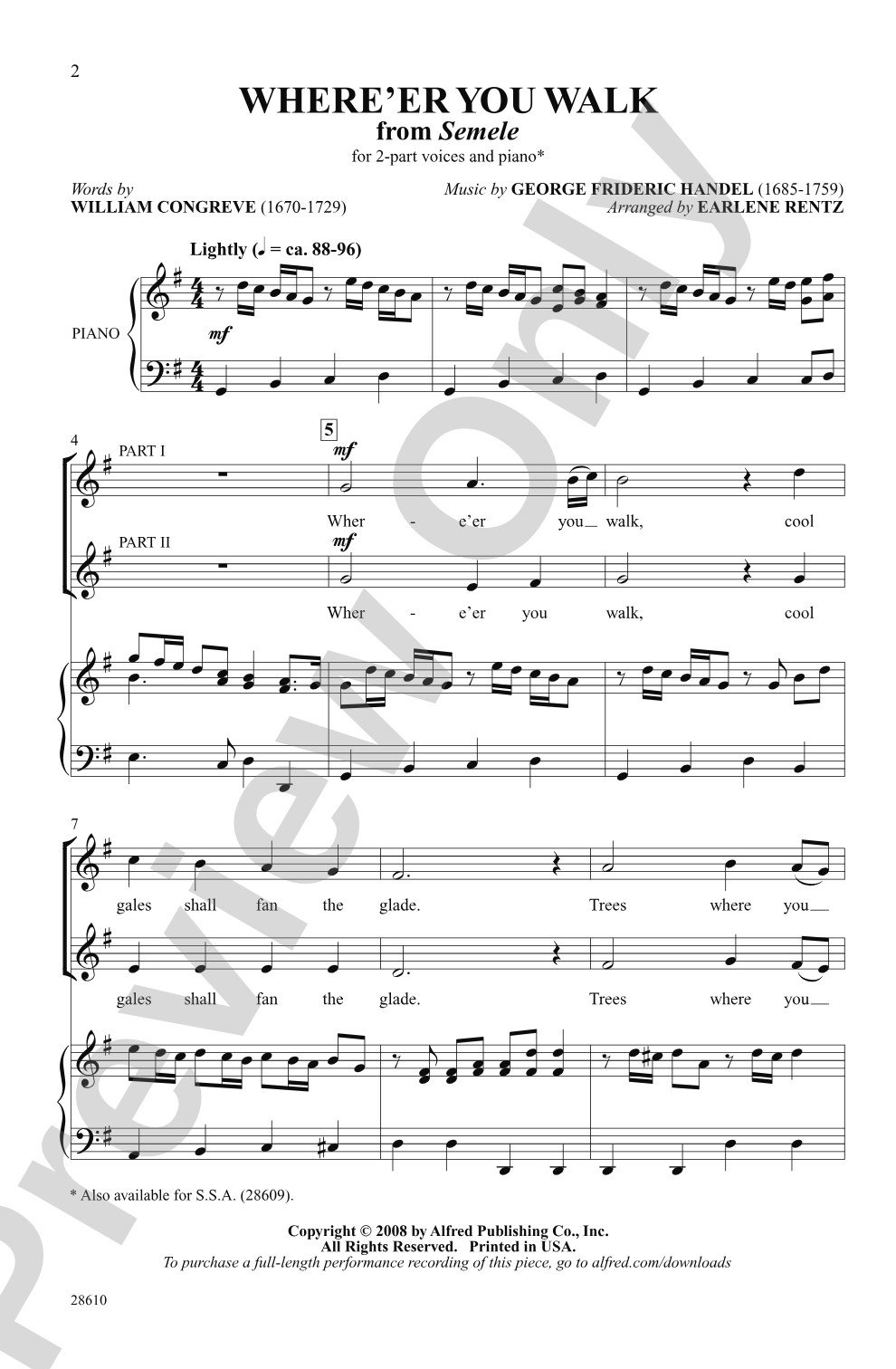

Where'er You Walk (from Semele): 2-Part Choral Octavo
From Semele
Words and music by George Frideric Handel / arr. Earlene Rentz
Item: 00-PO-0000504
$1.75
Minimum order quantity: 20 copies
Pickup currently not available
Description
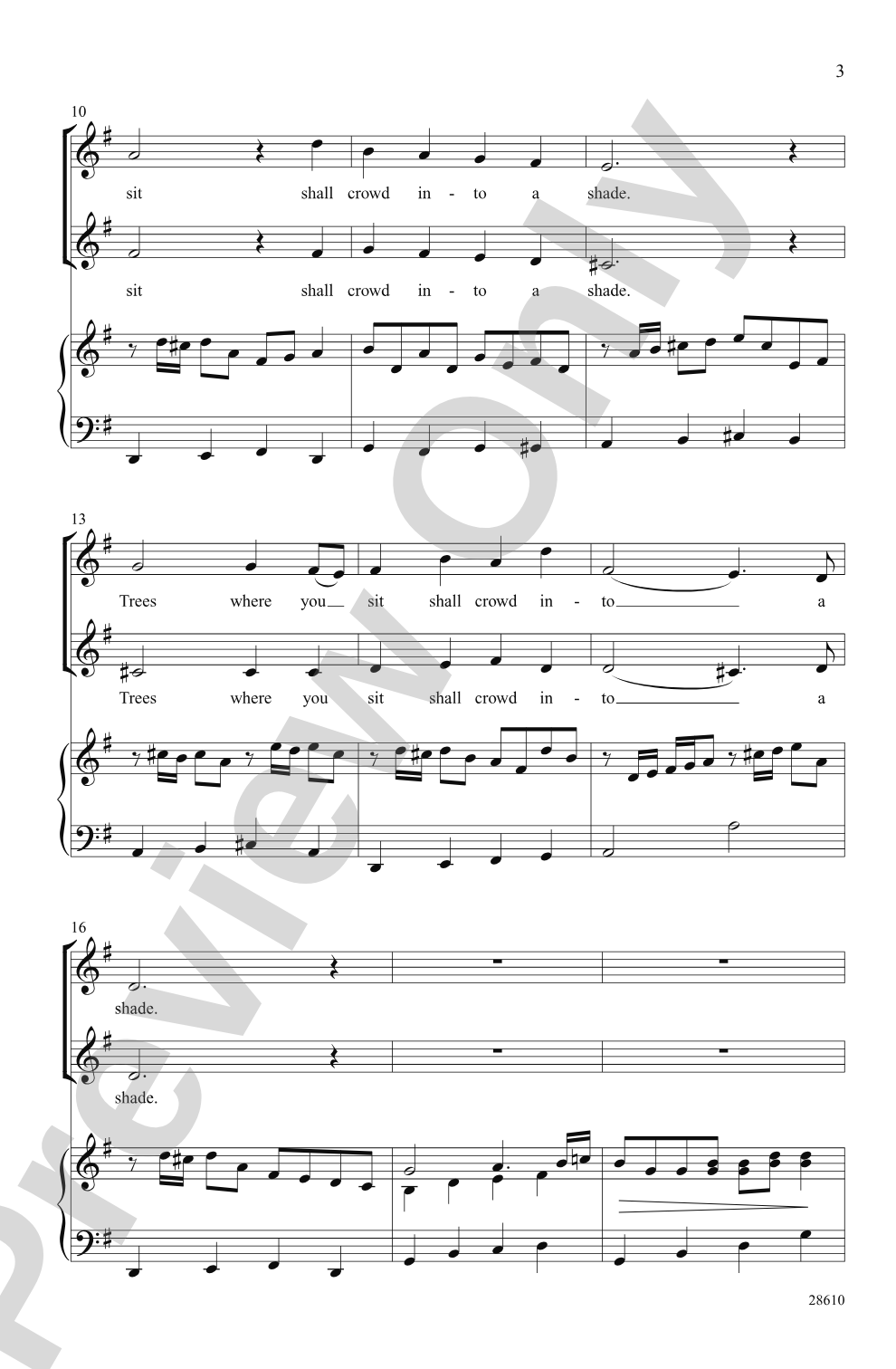
Now this favorite aria from Handel's opera Semele can be enjoyed by treble choirs of any age. The nimble new piano part aids in shaping the legato choral phrases, just as the augmented interludes provide momentary ensemble rest. A delightfully distinguished arrangement.


Where'er You Walk (from Semele): 2-Part Choral Octavo isn't in MakeMusic Cloud just yet...but it could be. Let us know you'd like to see it, and you'll help shape what comes next. In the meantime, start a free trial and dive into thousands of interactive titles your students can play along with today.
Request This Title
Tell us you want it.
Start Your Free Trial
Explore everything that's ready to play right now.
Sample Audio
1
Audio File
--:--
0:00
0:00
Sample Video
No sample videos found.
Additional Details
Series:
Alfred Choral Designs
Publisher:
Alfred Music
Page Count:
8
SKU:
00-PO-0000504
More about this title
About the Composer: George Frideric Handel
George Frideric Handel (1685–1759) composed across every major genre of his time, from operas and oratorios to instrumental concertos and keyboard works. His gift for memorable melody and dramatic expression made him one of the most performed composers of the Baroque era, and his music remains central to choral and orchestral repertoire today.
Why we love this
Earlene Rentz has unlocked this beloved Baroque aria for younger and developing treble choirs without sacrificing Handel's soaring lyricism. The arrangement's thoughtful piano part drives the legato phrasing naturally, while built-in rests let singers breathe and recover, making this a genuinely performable introduction to operatic masterworks.
What to expect
Handel's melody unfolds with the grace and warmth of a garden refuge, each phrase blooming naturally into the next. The piano part moves with gentle elegance, supporting and complementing rather than competing, creating an intimate yet dignified sound that feels both timeless and welcoming.
Who it's for
This arrangement works beautifully for treble choirs in middle school through early high school, as well as adult amateur singers seeking accessible Baroque literature. Directors looking to build singers' comfort with longer melodic phrases and Baroque style will find the 2-part setting and supportive piano part ideal.
How to get the most out of it
- Shape the long melodic lines with a warm, connected tone; the piano interludes are designed to release tension and reset phrasing, so use them as breath points that still feel musical.
- Balance the two parts so neither overwhelms, especially where they move in parallel motion; the legato quality depends on both voices supporting each other equally.
- Work the text carefully for diction clarity without sacrificing the sustained, lyrical quality; Handel's setting asks for both expressiveness and articulate delivery.
How to use it
Program this as part of a Baroque concert or a broader survey of operatic arias arranged for ensemble voices. Its moderate length and accessible voicing make it an excellent pairing with other treble-voiced masterwork arrangements, or position it as a bridge between folk-based repertoire and more complex classical literature.
Skills your students will build
- Sustaining long legato lines across phrases
- Baroque style and text expression
- Two-part voice independence and balance
- Following piano accompaniment for musical shaping
- Breath management in sustained melody