
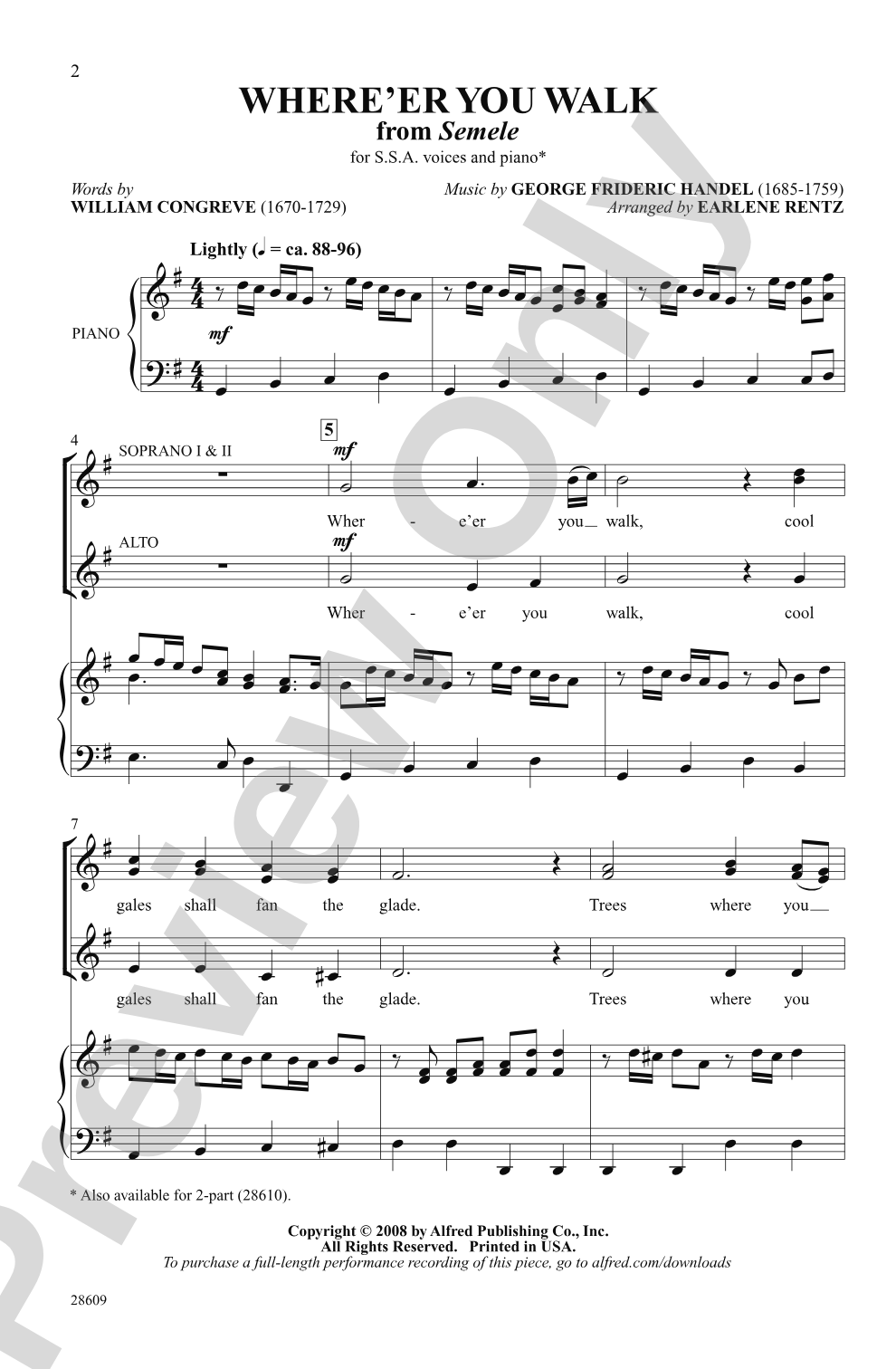
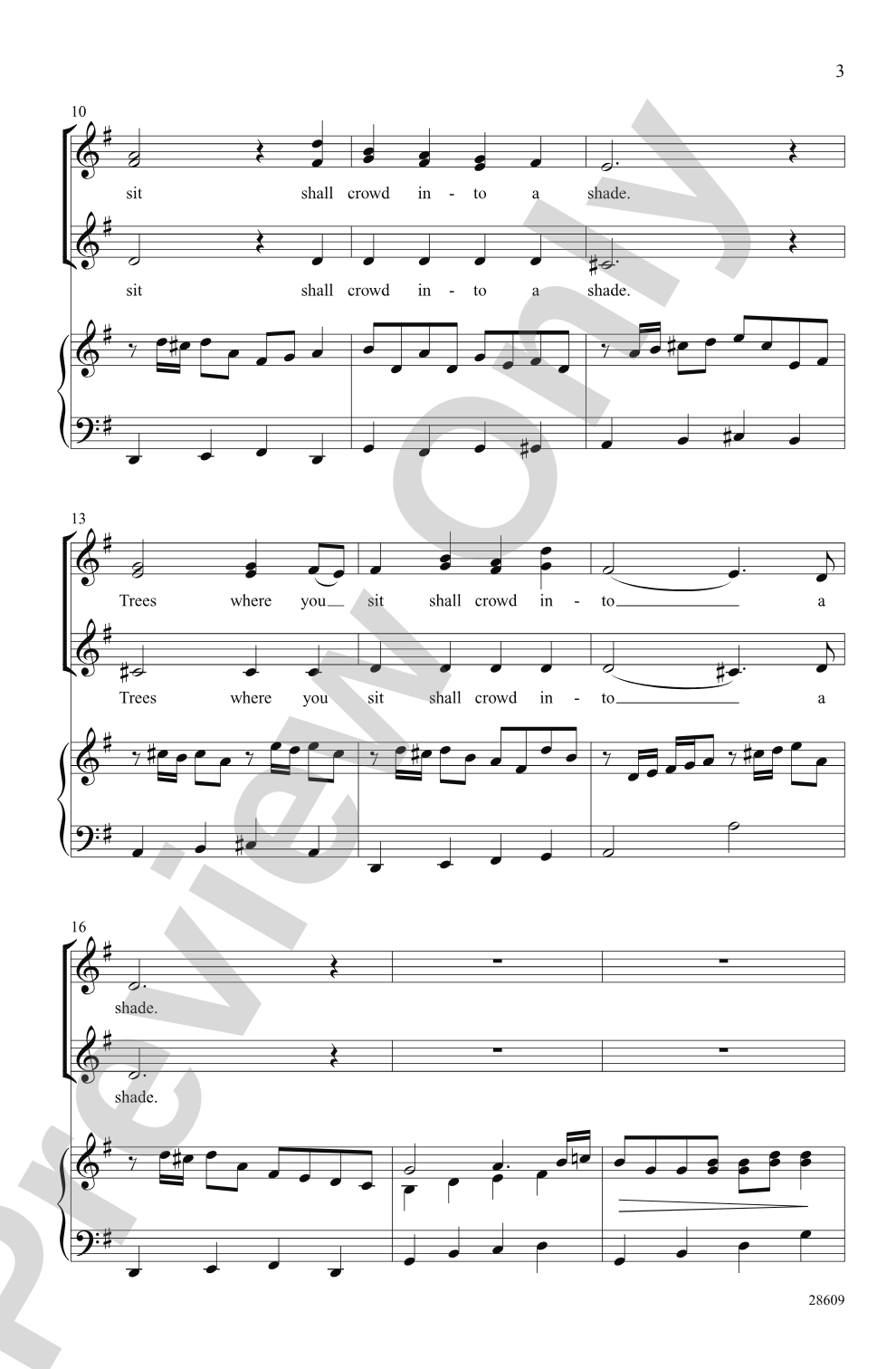

Where'er You Walk (from Semele): SSA Choral Octavo
From Semele
Words and music by George Frideric Handel / arr. Earlene Rentz
Item: 00-PO-0000503
$1.85
Minimum order quantity: 20 copies
Pickup currently not available
Description
Now this favorite aria from Handel's opera Semele can be enjoyed by treble choirs of any age. The nimble new piano part aids in shaping the legato choral phrases, just as the augmented interludes provide momentary ensemble rest. A delightfully distinguished arrangement.


Where'er You Walk (from Semele): SSA Choral Octavo isn't in MakeMusic Cloud just yet...but it could be. Let us know you'd like to see it, and you'll help shape what comes next. In the meantime, start a free trial and dive into thousands of interactive titles your students can play along with today.
Request This Title
Tell us you want it.
Start Your Free Trial
Explore everything that's ready to play right now.
Sample Audio
1
Audio File
--:--
0:00
0:00
Sample Video
No sample videos found.
Additional Details
Series:
Alfred Choral Designs
Publisher:
Alfred Music
Page Count:
8
SKU:
00-PO-0000503
More about this title
About the Composer: George Frideric Handel
George Frideric Handel (1685-1759) spent much of his career in England, where he became the dominant figure in opera and oratorio. His gift for melody was unmatched; he could spin out vocal lines that seemed to unfold naturally while maintaining structural clarity and dramatic power. Handel's works remain central to the choral and operatic repertoire, prized for their accessibility alongside their musical sophistication.
Why we love this
This arrangement captures everything that makes the original aria enduring: a soaring melodic line that sits beautifully in the treble range and text setting that feels inevitable rather than imposed. Rentz's piano writing is genuinely musical rather than merely supportive, providing harmonic anchoring that helps singers hear the legato phrasing Handel demands while the instrumental interludes give your choir strategic breathing room.
What to expect
There is an air of gracious elegance in this music, unhurried and almost courtly. The melody floats above gentle harmonic support, inviting singers into long, singing lines that feel both natural and refined.
Who it's for
SSA choirs at the middle school level and above will find this octavo accessible yet musically substantial. The arrangement honors Handel's melodic gift while removing the technical barriers of the original opera setting, making it ideal for developing singers who want to experience genuine masterworks.
How to get the most out of it
- Shape the legato line through the piano's voice leading; have singers follow the harmonic motion in the accompaniment to avoid rhythmic choppiness across phrase boundaries.
- Use the augmented interludes as true rests for the ensemble. Conductors should give singers permission to release tension and reset breath during these moments rather than maintaining constant readiness.
- Attend to the text underlay carefully, especially in melismatic passages. Handel's original setting rewards clear diction and unified vowel production across the decoration.
How to use it
Program this as a featured moment in a concert pairing lighter repertoire with more substantial fare, or use it to transition between contemporary works and a closing group of Baroque selections. Its moderate length and distinguished character make it equally effective as an opening statement or a bridge between contrasting musical periods.
Skills your students will build
- Sustaining legato phrasing across longer melodic arcs
- Balancing individual melodic lines in three-part writing
- Following piano accompaniment to refine harmonic awareness and intonation
- Interpreting Baroque text setting and ornamentation with stylistic clarity