
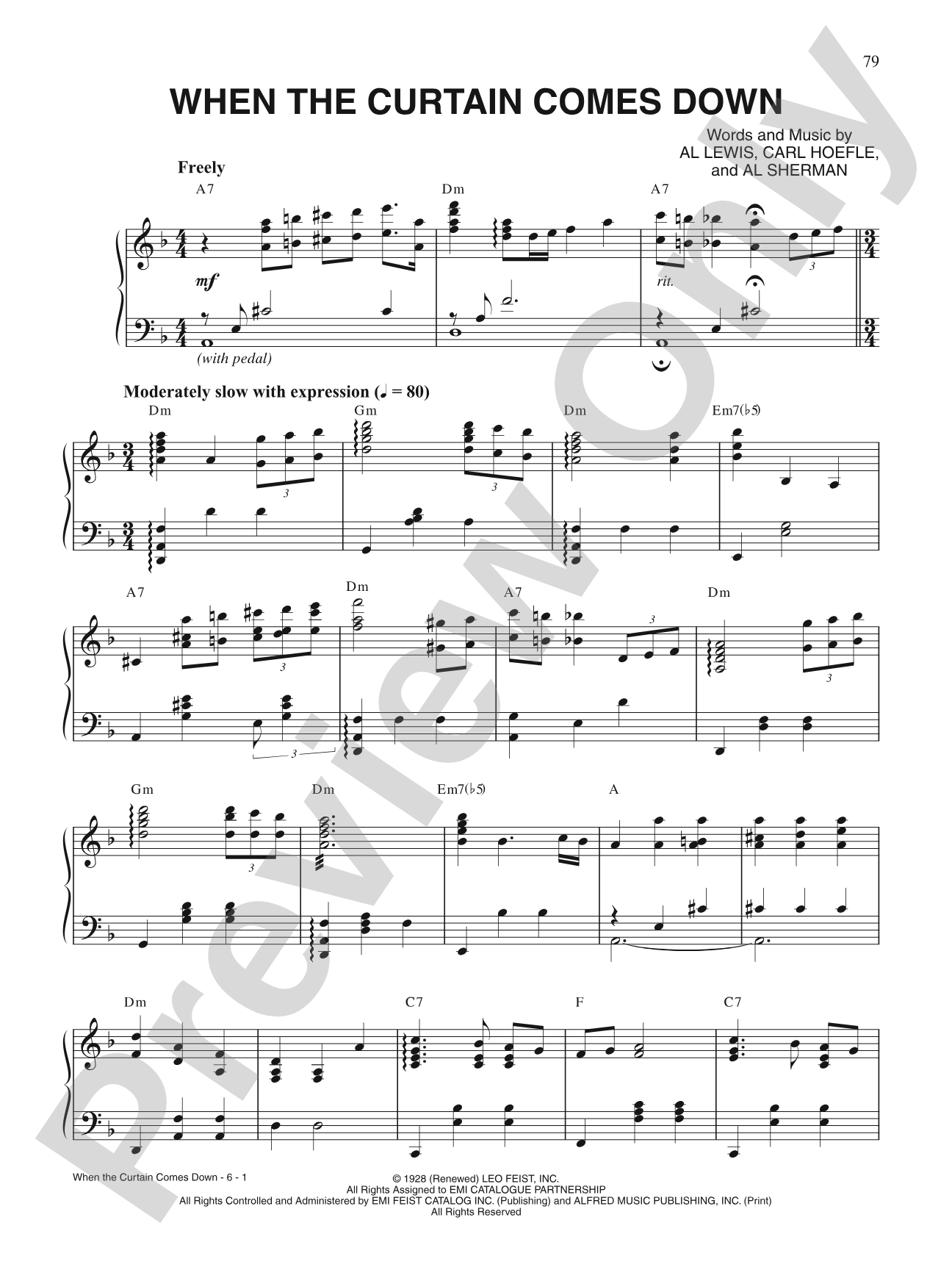
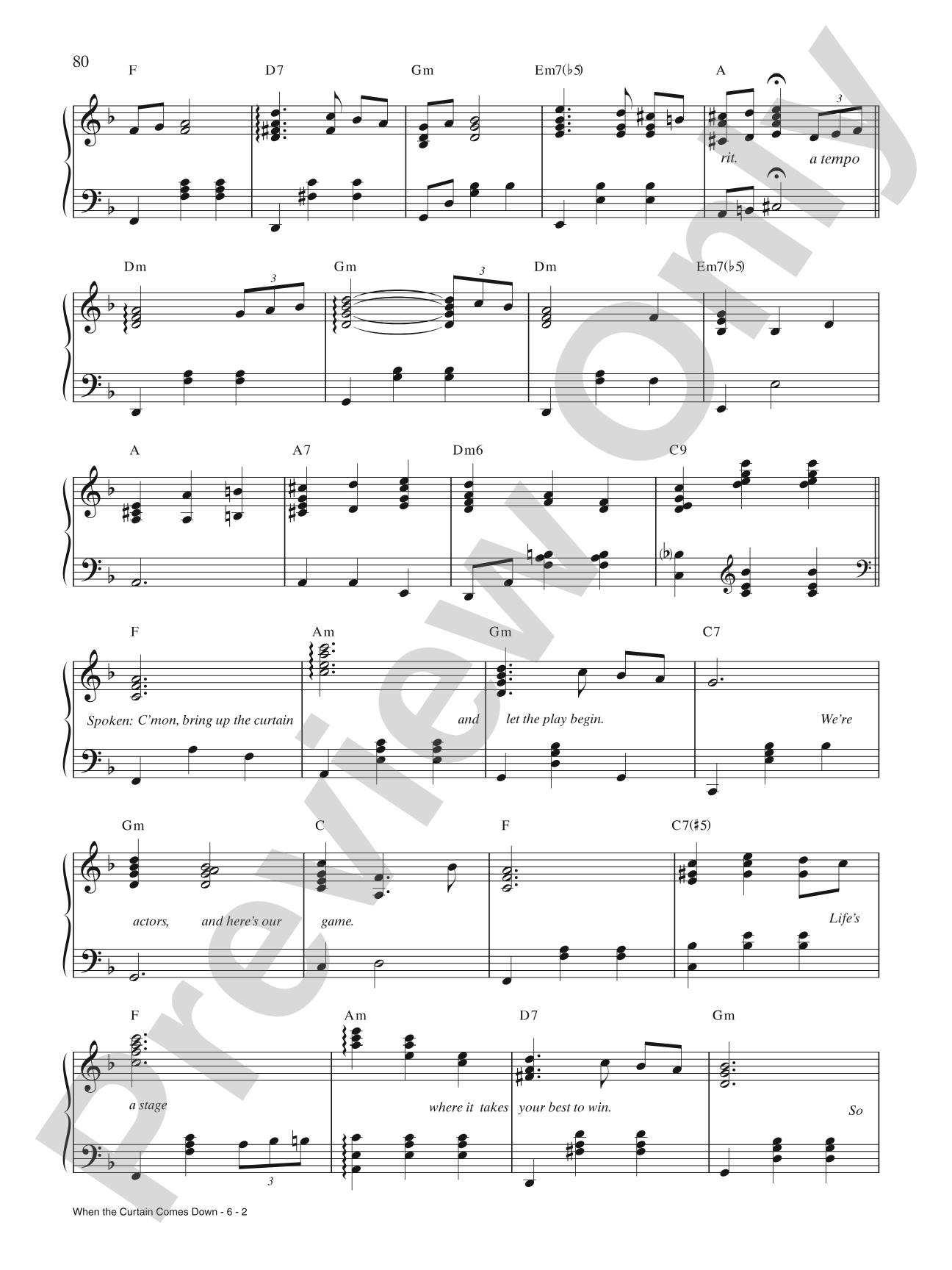

When the Curtain Comes Down: Piano/Vocal/Chords
Diana Krall
Item: 00-PS-0015535
$5.99
One moment…
Description
This official piano sheet music companion folio to Diana Krall's 11th studio album will delight any pianist who loves jazz and blues. The melodic 1920s- and '30s-era songs are naturally enjoyable at the keys, as are the songs from later eras, like "Lonely Avenue" and "Wide River to Cross." Vocal melodies, complete lyrics, and chords are included. Titles: We Just Couldn't Say Goodbye * There Ain't No Sweet Man That's Worth the Salt of My Tears * Just Like a Butterfly That's Caught in the Rain * You KnowF--I Know Ev'rything's Made for Love * Glad Rag Doll * I'm a Little Mixed Up * Prairie Lullaby * Here Lies Love * I Used to Love You but It's All Over Now * Let It Rain * Lonely Avenue * Wide River to Cross * When the Curtain Comes Down.


When the Curtain Comes Down: Piano/Vocal/Chords isn't in MakeMusic Cloud just yet...but it could be. Let us know you'd like to see it, and you'll help shape what comes next. In the meantime, start a free trial and dive into thousands of interactive titles your students can play along with today.
Request This Title
Tell us you want it.
Start Your Free Trial
Explore everything that's ready to play right now.
Sample Audio
No sample audio found.
Sample Video
No sample videos found.
Additional Details
Publisher:
Alfred Music
Page Count:
84
SKU:
00-PS-0015535
More about this title
About the Composer: Al Lewis
Al Lewis was a prolific American songwriter and composer who shaped the Great American Songbook, particularly during the jazz and blues era of the early 20th century. His gift for crafting memorable melodies and emotionally resonant lyrics made him a staple of performers seeking authentic period material with genuine character and depth.
Why we love this
Diana Krall's interpretations of these vintage and contemporary standards reveal why she remains one of jazz's most compelling pianists and vocalists. This folio captures songs that sit naturally under the hands, with chord voicings and melody lines that reward both study and performance without demanding excessive technical gymnastics. Pianists gain direct access to the arrangements that shaped one of the 21st century's best-selling jazz albums.
What to expect
These songs evoke late-night venues, intimate stages, and the kind of weariness and longing that define blues and jazz ballads. The arrangements balance accessibility with sophistication, never sacrificing the melancholy or sensuality that makes standards timeless.
Who it's for
Pianists who read chord symbols fluently and understand jazz voicing conventions will find this folio immediately playable. Singers with piano accompaniment skills can expand their jazz standards repertoire with authentically arranged material. Classically trained pianists exploring jazz will discover how jazz piano differs from concert music in rhythm, touch, and harmonic thinking.
How to get the most out of it
- Let the lyrics guide your phrasing at the piano. These are songs built on vocal storytelling; the instrumental breaks and accompaniment patterns should echo the emotional arc of each lyric line.
- Approach the older standards (1920s and '30s material) with attention to period idioms: stride bass patterns, swung eighths, and blue notes sit at the heart of these arrangements.
- If you're doubling on vocal and piano, map out your breathing points first. Test whether you can sustain the melodic line while maintaining the harmonic foundation, or plan to simplify the left hand during your sung phrases.
- Study how Krall voices chords in the higher registers on these tunes. The sophistication often lies not in bass notes but in the color of the upper structures.
How to use it
A jazz ensemble or jazz elective class can draw individual tunes from this collection for student performances or sectional study of standards interpretation. Pianists preparing recitals centered on jazz, blues, or 20th-century popular song gain a curated set of tested arrangements in one resource. Vocal jazz ensembles benefit from having multiple song options at varying levels of accompanimental complexity.
Skills your students will build
- Reading and performing jazz chord symbols and voicings
- Understanding swing rhythm and jazz articulation at the keyboard
- Balancing melodic line and harmonic accompaniment as a jazz pianist
- Interpreting blues phrasing and blue notes in both melody and harmony
- Vocal-instrumental coordination when doubling as singer and accompanist