
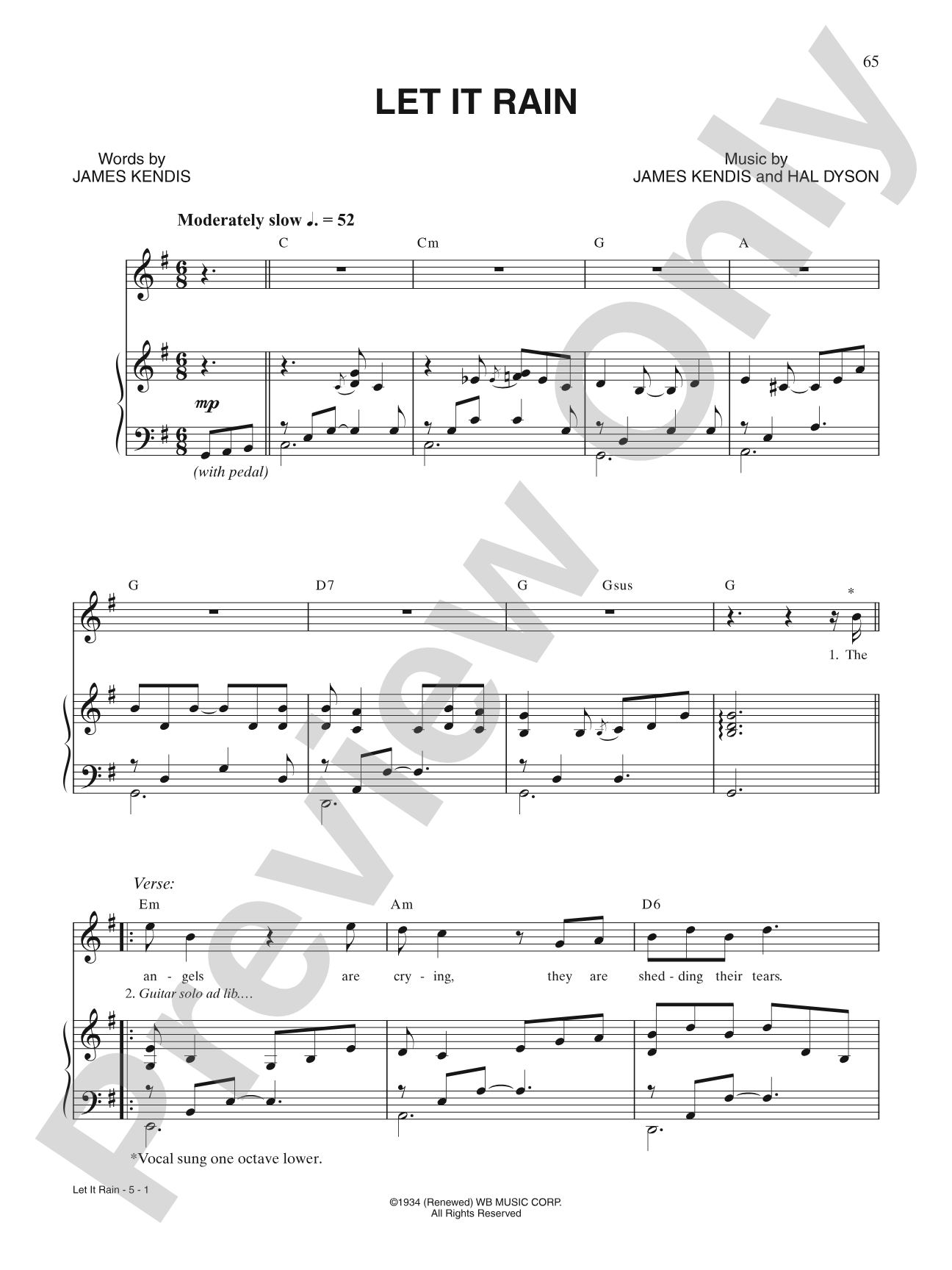

Let It Rain: Piano/Vocal/Chords
Diana Krall
Item: 00-PS-0015536
$4.99
One moment…
Description
This official piano sheet music companion folio to Diana Krall's 11th studio album will delight any pianist who loves jazz and blues. The melodic 1920s- and '30s-era songs are naturally enjoyable at the keys, as are the songs from later eras, like "Lonely Avenue" and "Wide River to Cross." Vocal melodies, complete lyrics, and chords are included. Titles: We Just Couldn't Say Goodbye * There Ain't No Sweet Man That's Worth the Salt of My Tears * Just Like a Butterfly That's Caught in the Rain * You KnowF--I Know Ev'rything's Made for Love * Glad Rag Doll * I'm a Little Mixed Up * Prairie Lullaby * Here Lies Love * I Used to Love You but It's All Over Now * Let It Rain * Lonely Avenue * Wide River to Cross * When the Curtain Comes Down.


Let It Rain: Piano/Vocal/Chords isn't in MakeMusic Cloud just yet...but it could be. Let us know you'd like to see it, and you'll help shape what comes next. In the meantime, start a free trial and dive into thousands of interactive titles your students can play along with today.
Request This Title
Tell us you want it.
Start Your Free Trial
Explore everything that's ready to play right now.
Sample Audio
No sample audio found.
Sample Video
No sample videos found.
Additional Details
Publisher:
Alfred Music
Page Count:
84
SKU:
00-PS-0015536
More about this title
Why we love this
Diana Krall's interpretations of these jazz standards and blues numbers showcase why this material endures. The folio gives pianists direct access to the voicings and accompaniment patterns Krall uses, making it possible to study her approach to these songs firsthand rather than reverse-engineering from recordings.
What to expect
These songs carry the warmth and resilience of classic blues and jazz writing. Whether you're playing the wistful melancholy of "We Just Couldn't Say Goodbye" or the earthy groove of "Let It Rain," there's a quality of storytelling and emotional directness that makes each number feel personal rather than notional.
Who it's for
Pianists who play jazz standards and blues will find these 14 songs immediately rewarding. Singers working with accompanists, jazz ensembles, and music directors programming classic American songbook material will all draw value from having both melody and harmony clearly laid out.
How to get the most out of it
- Lean into the rubato and phrasing marked in the piano part; these standards come alive when you allow breathing room between phrases rather than playing mechanically through the changes.
- Use the chord symbols to explore reharmonization and improvisation, especially in the blues numbers where substitutions and extensions add color without derailing the melody.
- Balance the vocal melody against the piano accompaniment so singers aren't forced to oversing. The arrangement works best when the piano provides a warm foundation rather than fighting for attention.
- Pay attention to the dynamic markings and articulation; the jazz language in these pieces relies on subtle touches as much as the harmonic framework.
How to use it
Use this folio as a source for intimate concert programming, informal recitals, or as a study resource for singers preparing jazz repertoire. A few selections could anchor a standards-focused set, or you might pull individual titles to pair with other blues and jazz pieces in a thematic program.
Skills your students will build
- Reading jazz chord symbols and understanding chord quality substitutions
- Coordinating vocal melody with piano accompaniment patterns in jazz idiom
- Interpreting swing rhythm and rubato in blues and standard songs
- Building fluency with jazz comping and improvisation frameworks
- Connecting written notation to jazz phrasing and articulation conventions