
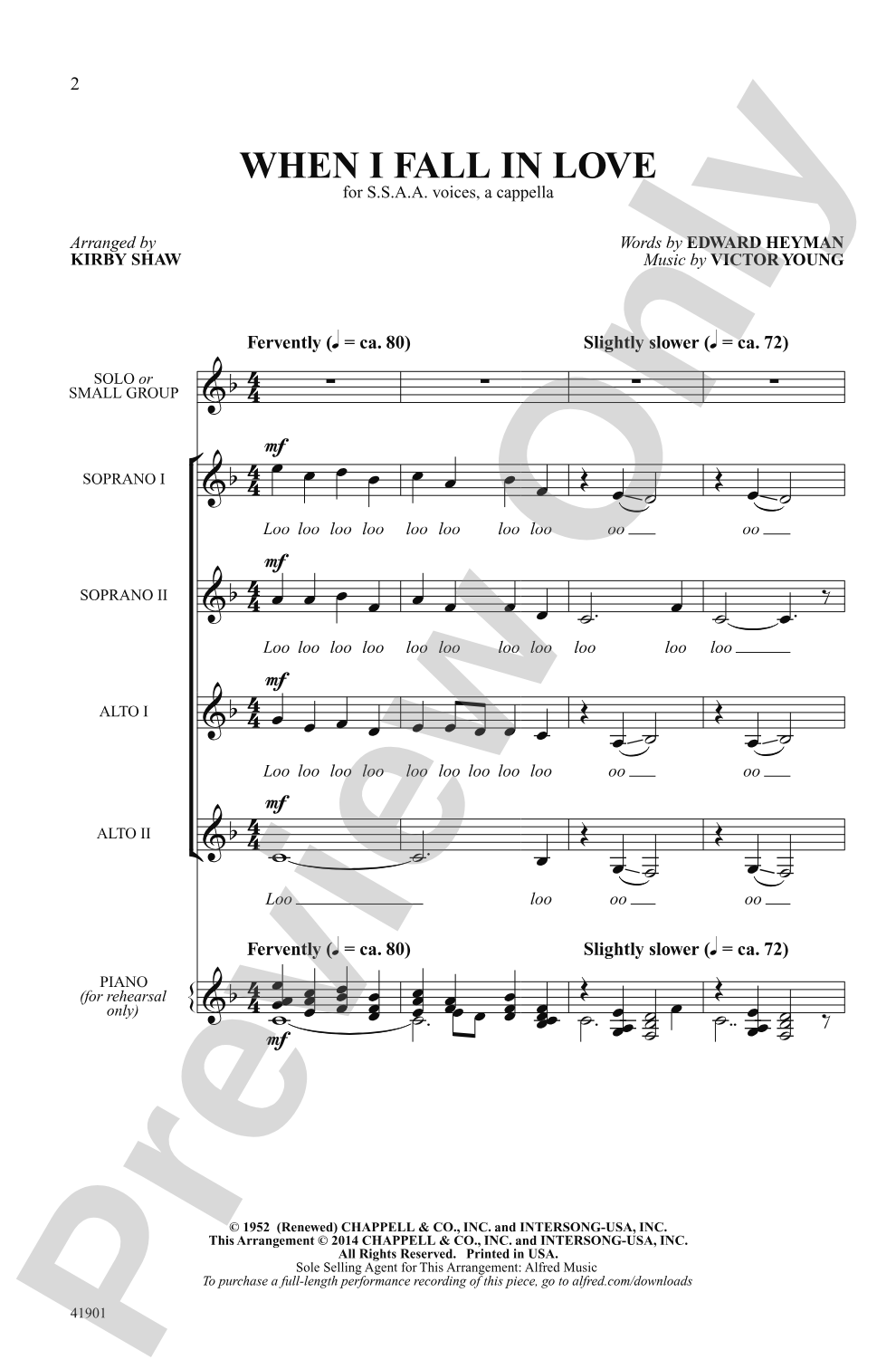
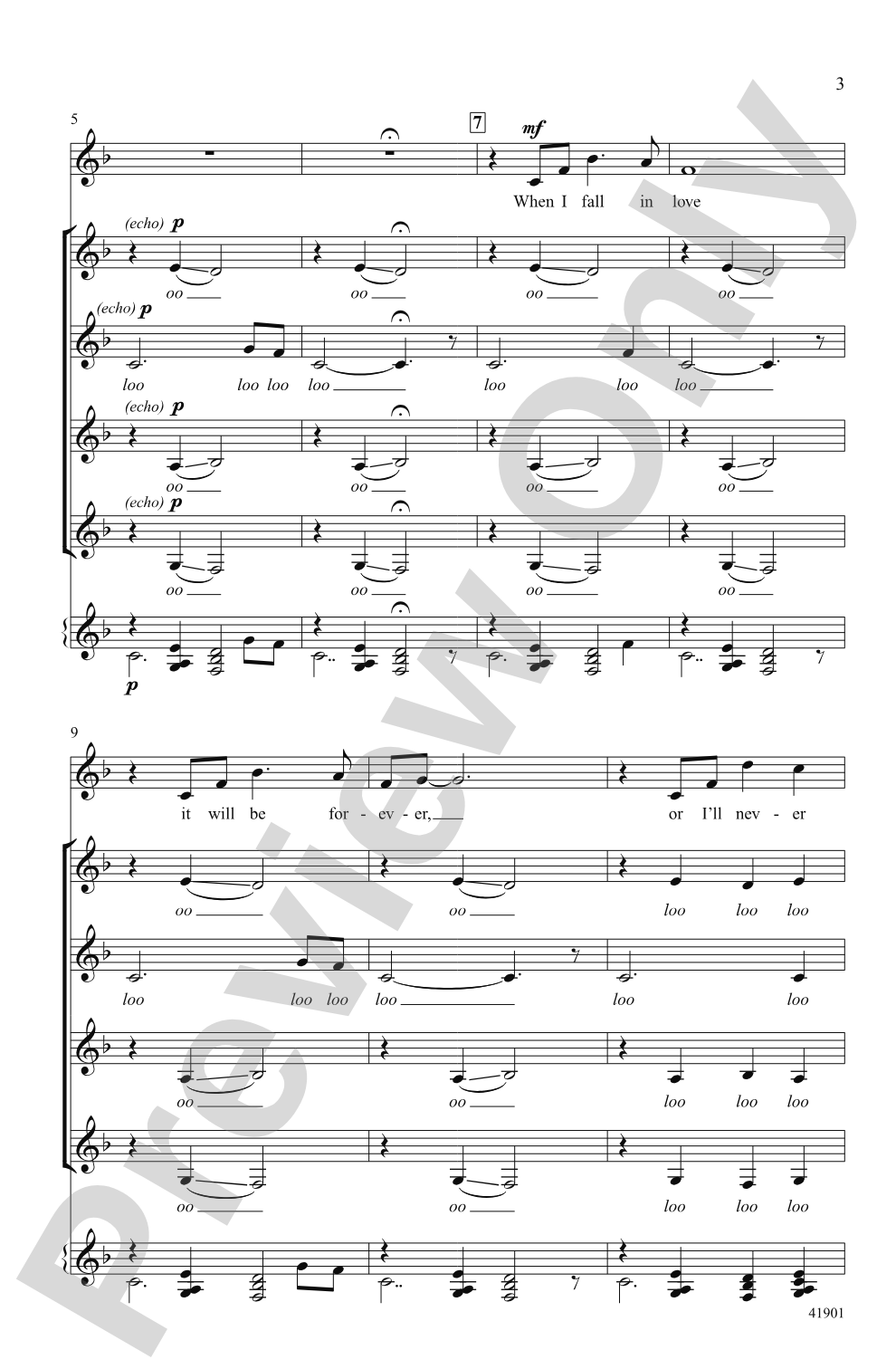

When I Fall in Love: SSAA, a cappella Choral Octavo
Words by Edward Heyman, music by Victor Young / arr. Kirby Shaw
Item: 00-PO-0002017
$1.95
Minimum order quantity: 20 copies
One moment…
Related Items
When I Fall in Love: SATB, a cappella Choral Octavo |
$2.10
|
View | |
When I Fall in Love: SSAB, a cappella Choral Octavo |
$2.10
|
View | |
When I Fall in Love: SATB, a cappella Choral Octavo |
$2.10
|
View | |
When I Fall in Love: SSAB, a cappella Choral Octavo |
$2.10
|
View | |
When I Fall in Love: SSAA, a cappella Choral Octavo |
$1.95
|
View |
Description
This expressive ballad has been expertly arranged for a cappella women's voices. A classic song plus a classic setting equals a memorable performance experience for all.


When I Fall in Love: SSAA, a cappella Choral Octavo isn't in MakeMusic Cloud just yet...but it could be. Let us know you'd like to see it, and you'll help shape what comes next. In the meantime, start a free trial and dive into thousands of interactive titles your students can play along with today.
Request This Title
Tell us you want it.
Start Your Free Trial
Explore everything that's ready to play right now.
Sample Audio
1
Audio File
--:--
0:00
0:00
Sample Video
No sample videos found.
Additional Details
Series:
Alfred Pop Choral Series
Publisher:
Alfred Music
Page Count:
8
SKU:
00-PO-0002017
More about this title
About the Composer: Victor Young
Victor Young (1900-1956) composed over 300 film scores and countless popular songs that defined the sound of American cinema and radio in the mid-twentieth century. His gift for melody and lush orchestration made him one of the most recorded composers of his era, with his work appearing in films from *The Big Sleep* to *Around the World in 80 Days*.
Young's compositions remain staples of choral and instrumental arrangements because of their inherent singability and emotional directness. Educators value his catalog for its accessibility and its ability to engage singers with music that feels both sophisticated and immediately enjoyable.
Why we love this
Kirby Shaw's arrangement captures the intimacy of this standard while giving each voice part something genuinely musical to sing. The a cappella setting strips away orchestration and asks singers to create the full emotional landscape themselves, which builds ensemble awareness and blend in ways backed arrangements often cannot. For concert programming, this piece lands with the warmth of a familiar song and the polish of a carefully crafted choral work.
What to expect
Warm, intimate, and deeply lyrical. The a cappella texture invites singers and listeners into the emotional world of the song without distraction, allowing the melody and harmonic language to carry their full weight. There is vulnerability in singing without accompaniment, and this arrangement honors that quality.
Who it's for
SSAA choirs seeking a ballad that sounds polished and accomplished without requiring instrumental support or advanced divisi work. This arrangement works equally well for treble choirs in high school, college, and adult community settings where singers value accessible, rewarding literature.
How to get the most out of it
- Balance the melody across the group rather than spotlighting a single soprano line. The arrangement asks all singers to share ownership of the tune at different moments.
- Shape the phrase arc through breath placement and dynamic support from the lower voices. Without instrumental accompaniment, the harmonic progression depends entirely on the singers' commitment to the line.
- Spend rehearsal time on vowel unification, especially across the multiple soprano parts. A cappella singing exposes every inconsistency in tone and vowel formation.
- Lean into the rubato and phrasing that made the original recording memorable. This arrangement honors the song's vocal roots rather than fighting against them.
How to use it
Program this as a standalone ballad in a concert where it can breathe and resonate without competing with louder or faster pieces. It pairs well with jazz standards or mid-century pop repertoire and serves as an excellent palate-cleansing moment between more energetic selections. This is also ideal for a Valentine's Day or spring concert where romantic repertoire makes sense.
Skills your students will build
- A cappella blend and intonation without instrumental reference
- Phrase shaping and rubato in a ballad setting
- Vowel consistency across multiple voice parts
- Ensemble listening and dynamic balance within four-part harmony