
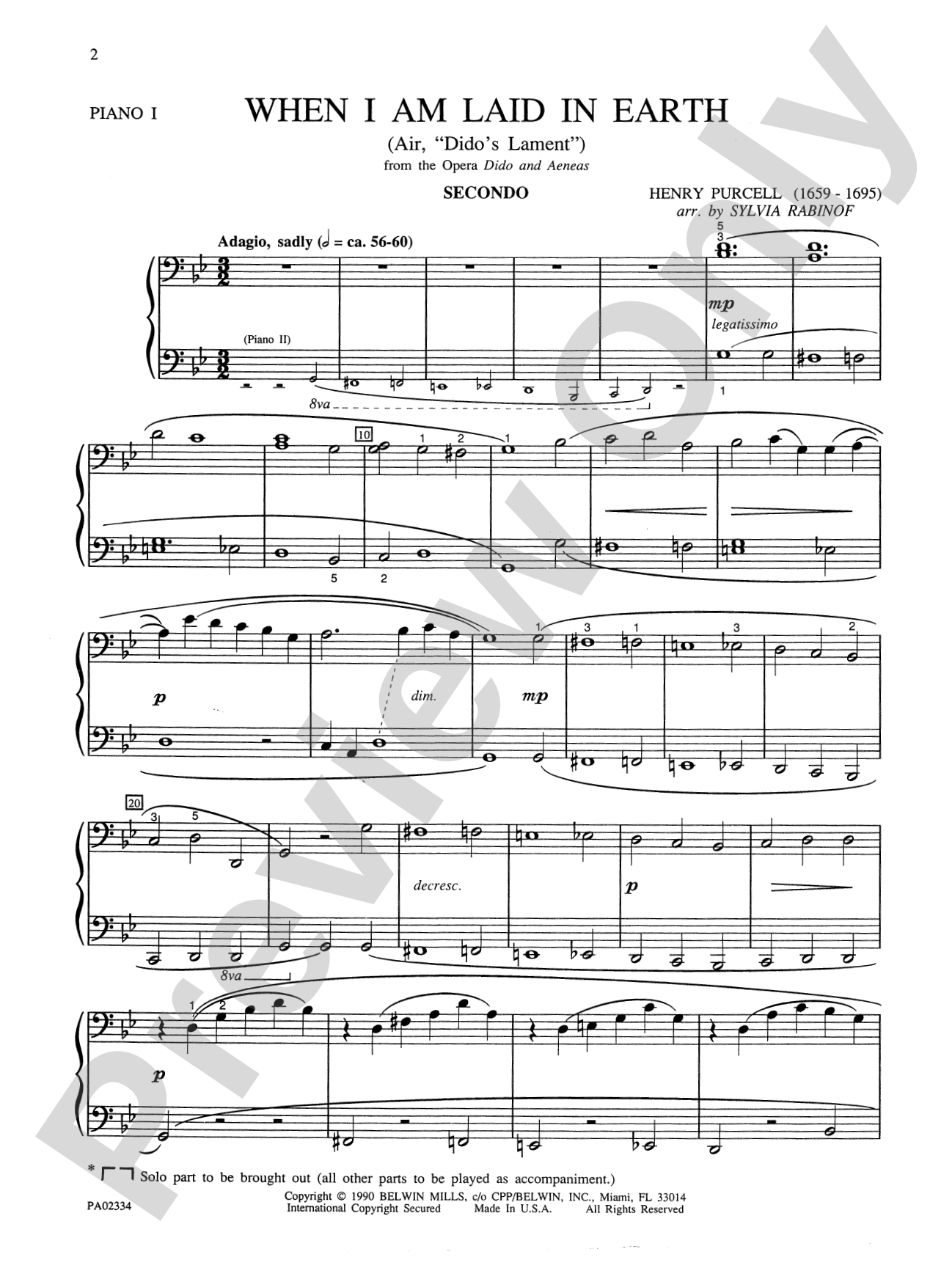
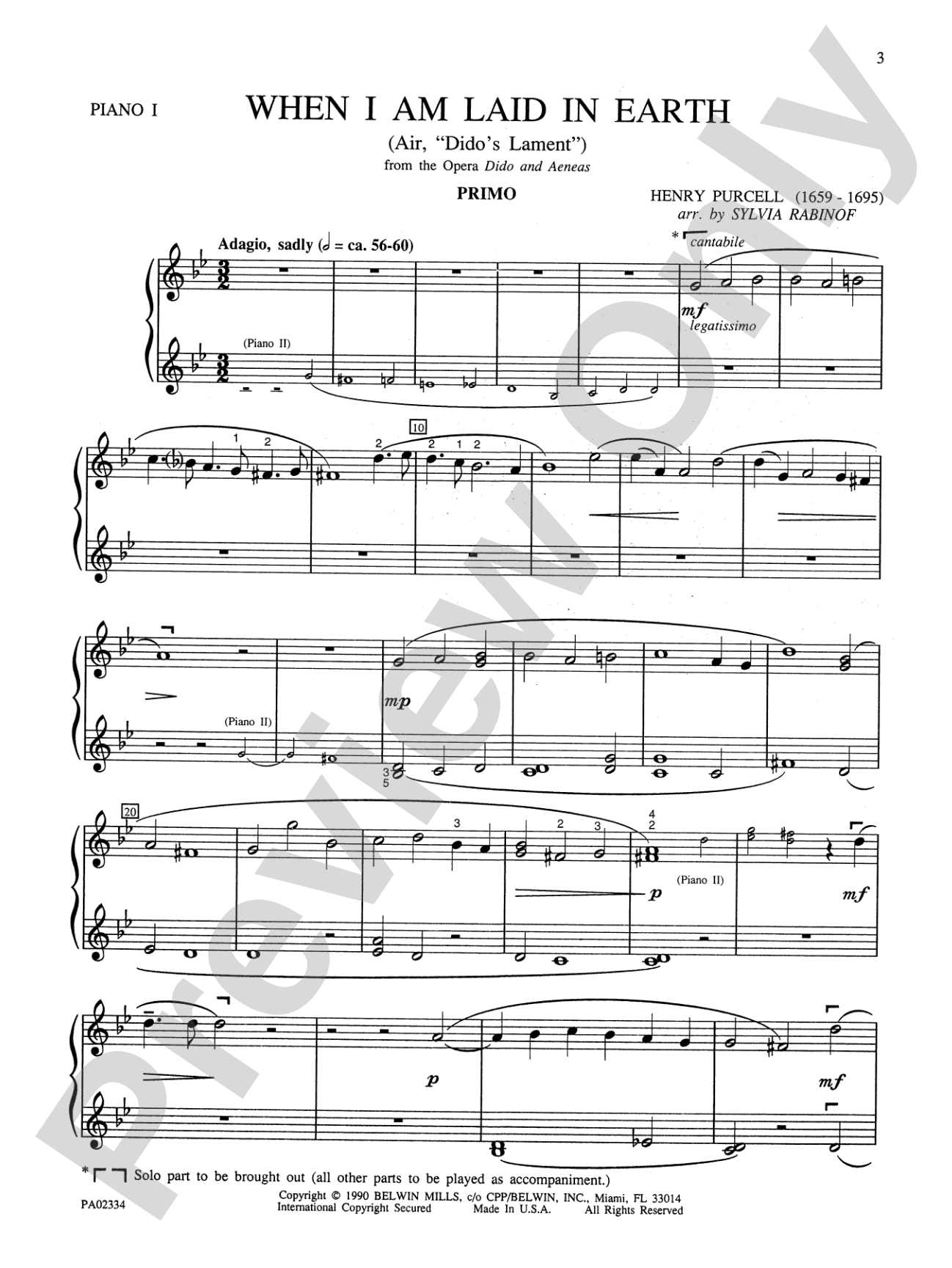

When I Am Laid in Earth (Air, "Dido's Lament" from the opera Dido and Aeneas) - Piano Quartet (2 Pianos, 8 Hands): Piano
By Henry Purcell / arr. Sylvia Rabinof
Level: Late Intermediate
Item: 00-PB-0000671

$7.50
Pickup currently not available
Related Items
When I Am Laid in Earth (Air, "Dido's Lament" from the opera Dido and Aeneas): Piano Quartet (2 Pianos, 8 Hands) Sheet (2 copies included) |
$7.50
|
Dido and Aeneas): Piano Quartet (2 Pianos, 8 Hands) Sheet (2 copies included)" > View |
Description
Henry Purcell's masterpiece, Dido and Aeneas, is considered the high point of English opera. "When I Am Laid in Earth" is a poignant, lovely aria sung by the lovelorn, dying Queen Dido as her hero Aeneas sails away. Beautifully arranged by Sylvia Rabinof for two pianos, eight hands, the delicate simplicity sings forth with subtle strength. A Federation Festivals 2024-2028 selection.


Don't just read it, hear it, play along with it, and watch your students grow with it. In MakeMusic Cloud, When I Am Laid in Earth (Air, "Dido's Lament" from the opera Dido and Aeneas) - Piano Quartet (2 Pianos, 8 Hands): Piano comes alive with professional accompaniment, adjustable tempo, and built-in practice tools that turn solo practice into real progress.
Open in the Player
Jump straight in and assign it today.
Start Your Free Trial
Open this title and explore the full library in minutes.
Sample Audio
No sample audio found.
Sample Video
No sample videos found.
Additional Details
Series:
Keyboard Ensemble Series
Publisher:
Alfred Music
Page Count:
20
SKU:
00-PB-0000671
More about this title
About the Composer: Henry Purcell
Henry Purcell (1659, 1695) stands as England's greatest native composer and a towering figure of the Baroque. Working during the Restoration period, he synthesized French and Italian musical idioms while maintaining a distinctly English character, creating a body of work that ranged from grand opera to intimate chamber music. His dramatic instinct and harmonic sophistication influenced generations of composers, and his operas remain vital parts of the vocal repertoire.
Purcell's gift for text-setting and emotional directness made him a natural for the stage. Dido and Aeneas, though brief, contains some of the most affecting music in the operatic canon. "When I Am Laid in Earth" exemplifies his ability to distill profound grief into a single, luminous melody that students and audiences immediately recognize as profound.
Why we love this
This arrangement captures the essence of one of opera's most essential arias while opening it to an ensemble that rarely encounters Baroque repertoire. Rabinof's writing for two pianos preserves the intimate vulnerability of Dido's lament while creating genuine musical dialogue between the players; it's accessible without being reductive. The Federation Festivals selection confirms what your ears already know: this is material worthy of serious preparation and performance.
What to expect
Heartbreak rendered in restraint. The harmonic language moves with dignified sorrow over a relentless bass pattern, creating an effect both ancient and timelessly human. Playing this music feels like holding something fragile; the texture invites delicacy but demands that you don't sentimentalize what Purcell has already given you.
Who it's for
Advanced intermediate and early advanced pianists who are ready to explore Baroque music beyond the standard keyboard repertoire. This works beautifully for students preparing for festivals, collaborative musicians developing ensemble skills, or piano students discovering opera arranged for their instrument.
How to get the most out of it
- Honor the ground bass foundation by having one pianist play it with rhythmic precision and subtle weight; the other parts will sit more naturally when that anchor is secure.
- Shape Dido's melody with long, connected phrasing rather than articulating each note; Baroque singers sustained through grief, and your interpretation should reflect that emotional continuity.
- Balance transparency with sonority. The texture can blur quickly with eight hands; listen for moments where individual lines emerge clearly and adjust dynamics accordingly.
- Let silence matter. Purcell knew when not to write music, and those rests between phrases create space for the emotional weight to land.
How to use it
Pair this with other Baroque keyboard works to create a cohesive concert segment, or use it as a bridge between instrumental and vocal programming when singers perform other Purcell selections. At twenty pages, it anchors a recital without overwhelming other repertoire, and the recognition factor makes it an ideal closer or showpiece for chamber music concerts.
Skills your students will build
- Baroque ornament and articulation style
- Balance and blend in ensemble playing across multiple keyboards
- Reading figured bass and understanding harmonic function
- Sustained phrasing and emotional narrative in instrumental music
- Coordination with chamber ensemble partners in real time