. . . when full moon's light Cover Image

... when full moon's light: Concert Band Conductor Score & Parts

$42.00 USD
Sale price  $42.00 USD Regular price 
Skip to product information
. . . when full moon's light Cover Image

... when full moon's light: Concert Band Conductor Score & Parts

By Barry E. Kopetz

Grade: 1.5 (Easy)

Item: 00-23293

makemusic Cloud badge

Need it now?

Buy Digital Version
$42.00
Shipped

One moment…

Description
Dark and brooding images are portrayed in the opening section of this original from Barry Kopetz. The mood soon changes, and an incessant ostinato follows, conjuring images of a chase. The work concludes in a breathtaking whirl of energy. Powerful!

Don't just read it, hear it, play along with it, and watch your students grow with it. In MakeMusic Cloud, ... when full moon's light: Concert Band Conductor Score & Parts comes alive with professional accompaniment, adjustable tempo, and built-in practice tools that turn solo practice into real progress.

Sample Pages

Sample Audio
0:00
0:00
Sample Video
Additional Details
Series: Alfred Debut Series
Publisher: Alfred Music
Page Count: 122
UPC: 038081233307
SKU: 00-23293

More about this title

About the Composer: Barry E. Kopetz
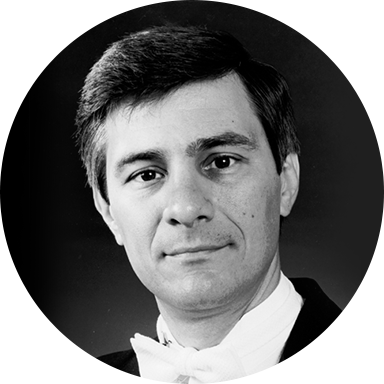
Barry E. Kopetz

Barry E. Kopetz directs the Wind Symphony and Chamber Winds at Capital University in Columbus, Ohio, where he also teaches conducting, rehearsal techniques, and arranging. His academic training includes degrees from Ohio State University and Indiana University, with doctoral distinction; he studied conducting with the legendary Frederick Fennell in Tokyo and trained under Ray Cramer and Donald McGinnis. His conducting experience spans faculty positions at the University of Utah, University of Minnesota, and Bowling Green State University, along with extensive work in Ohio and South Carolina public schools.

Kopetz's compositional output exceeds 50 published works, and his arrangements and original scores appear regularly in wind band literature. He maintains an active guest conducting schedule across the United States and Australia, serves as an adjudicator, and contributes analytical essays to Instrumentalist magazine. His recent work includes orchestrations for television and film, and he was elected to the American Bandmasters Association in 1998.

Why we love this

Kopetz packs genuine drama into an easy grade level without sacrificing musical substance. The three-part arc from darkness through relentless motion to climactic energy gives students a full emotional journey in under five minutes, making this an excellent choice for teaching how form and orchestration drive narrative in concert band writing.

What to expect

The piece opens with an unsettling calm, like watching storm clouds gather. Energy builds into a breathless hunt driven by a hypnotic, relentless pulse, then explodes into a kinetic finale that leaves listeners and players exhilarated.

Who it's for

Emerging concert bands working at Grade 1.5 who are ready to tackle pieces with real emotional architecture. Directors seeking accessible repertoire that doesn't rely on lyrical singing or technical pyrotechnics but instead challenges students to shape mood and sustain energy across contrasting sections.

How to get the most out of it

  • Establish the opening's weight through deliberate phrasing in the low reeds and brass; this foundation makes the transition to the ostinato's energy feel earned rather than abrupt.
  • Keep the chase section's ostinato locked between percussion and lower voices; rhythmic clarity here sustains the sense of propulsion.
  • Build the final section's acceleration gradually rather than jumping to full intensity at once; this gives the climax room to breathe and land with genuine impact.

How to use it

Program this as the opening or closing work on a concert where you want to establish the ensemble's dramatic range and command of dynamic control. It pairs well on a set with more lyrical pieces, giving audiences a sense of your band's versatility within a single rehearsal cycle.

Skills your students will build

  • Shaping extended sections through dynamic contrast and phrasing control
  • Maintaining rhythmic precision during repetitive ostinato figures
  • Balancing independent instrumental lines within a unified ensemble sound
  • Managing tempo flexibility and acceleration without losing ensemble cohesion

You May Also Like
