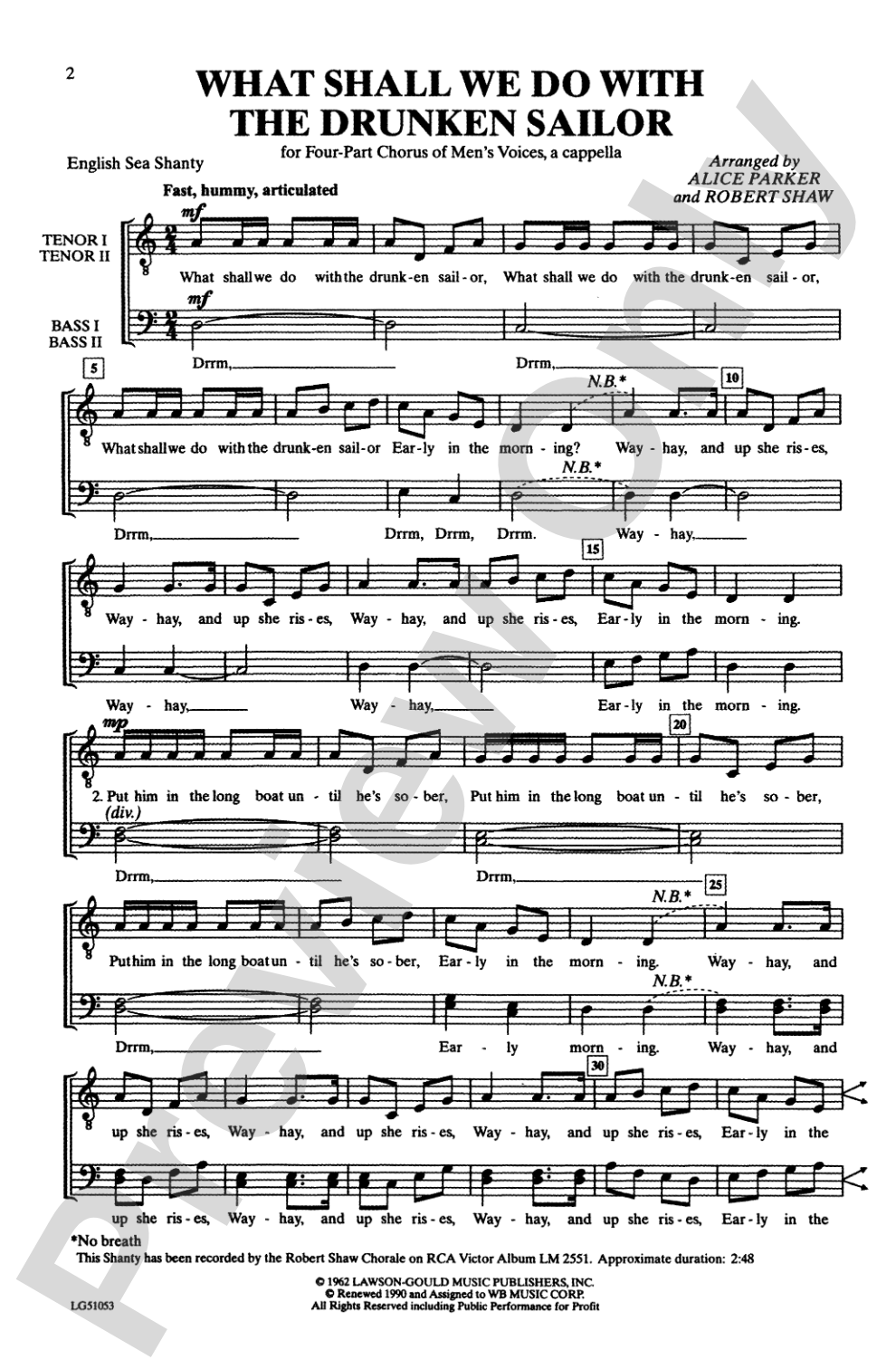
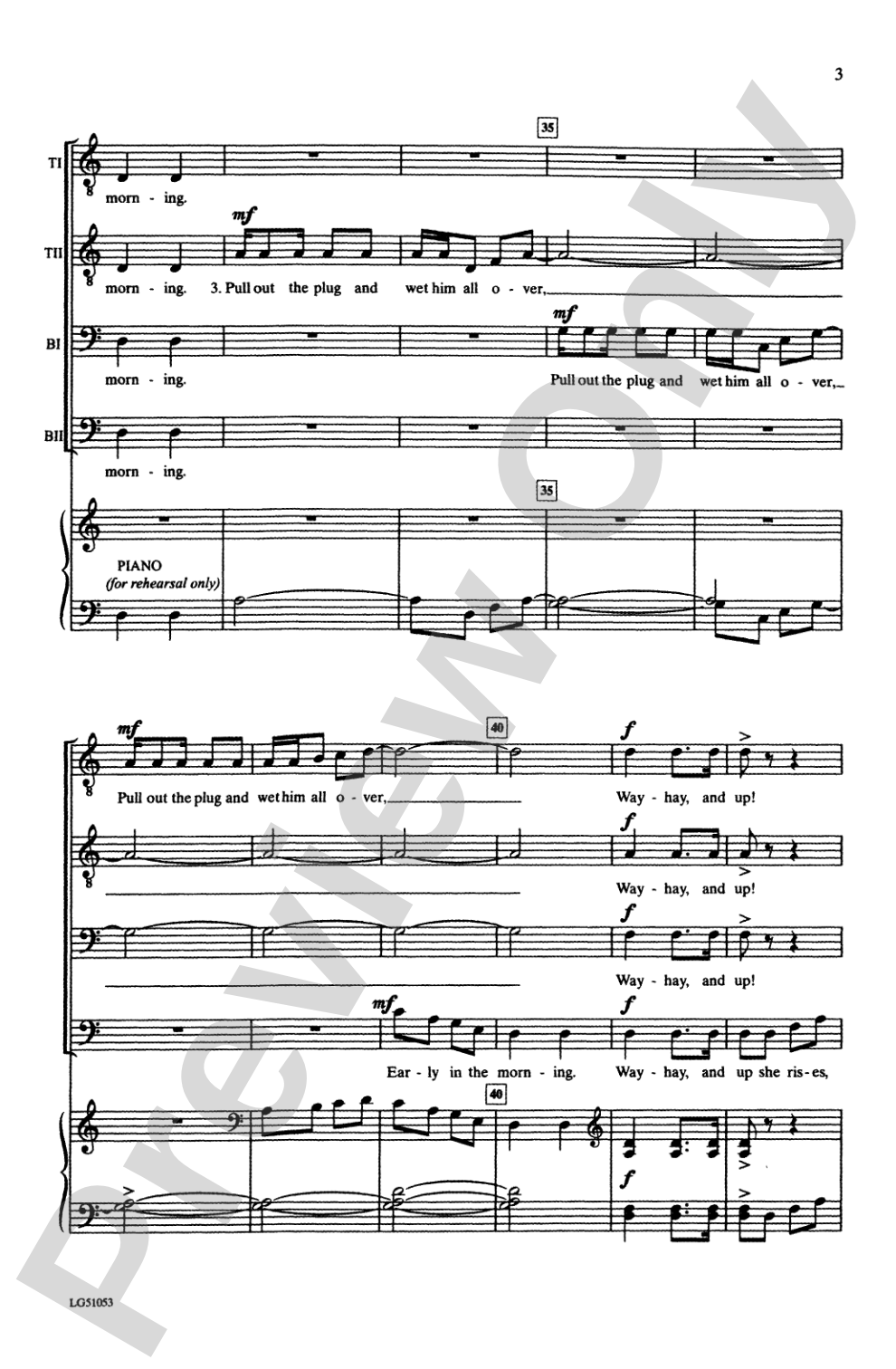
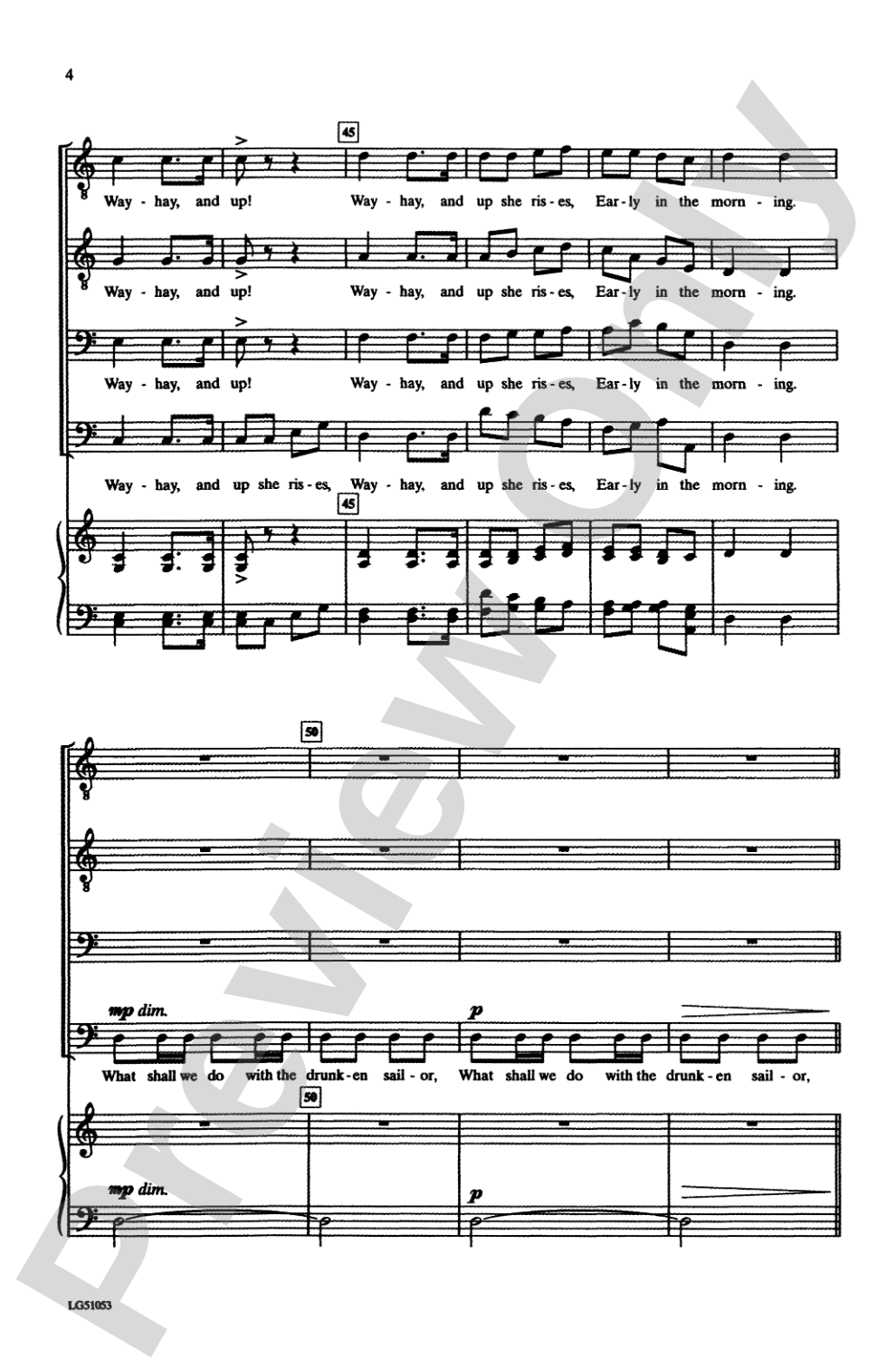
What Shall We Do with the Drunken Sailor Sheet Music Preview

What Shall We Do with the Drunken Sailor: TTBB Choral Octavo

English Sea Shanty

Arr. Robert Shaw and Alice Parker

Item: 00-PO-0003521

Digital Download
$2.20

Minimum order quantity: 20 copies

Description
This title is available in Music Prodigy.

What Shall We Do with the Drunken Sailor: TTBB Choral Octavo isn't in MakeMusic Cloud just yet...but it could be. Let us know you'd like to see it, and you'll help shape what comes next. In the meantime, start a free trial and dive into thousands of interactive titles your students can play along with today.

Sample Audio
No sample audio found.
Sample Video
Additional Details
Series: Lawson-Gould
Publisher: Alfred Music
Page Count: 16
SKU: 00-PO-0003521

More about this title

About the Arranger: Robert Shaw

Robert Shaw was a legendary American conductor and choral director whose influence on choral music education and performance standards shaped generations of singers. His collaborative arrangements with Alice Parker, often called the Shaw-Parker arrangements, became cornerstones of the choral repertoire, prized for their musicality, singability, and ability to honor traditional material while bringing fresh interpretive clarity.

Why we love this

Shaw and Parker's treatment of this sea shantey balances robust, driving rhythms with accessible voice leading that keeps all four parts engaged without demanding virtuosity. The arrangement sits perfectly in the male voice range and works equally well as a concert opener that energizes an audience or as a learning piece that teaches ensemble cohesion through rhythmic precision and textural contrast.

What to expect

Salty and propulsive, with the swagger of sailors hauling rope and the warm camaraderie of voices singing in unison before splitting into harmony. The arrangement captures both the work song's utilitarian urgency and its underlying good humor, creating a sound that feels both historically grounded and contemporary.

Who it's for

Male voice choirs at intermediate to advanced levels will find this arrangement rewarding for its directness and musical substance. It works well for groups seeking a showcase piece that audiences recognize while offering genuine four-part writing that challenges singers to listen across parts.

How to get the most out of it

  • Treat the rhythmic drive as the arrangement's foundation; lock the bass and baritone parts together first, then layer the tenors on top for clarity rather than blend.
  • Shape the narrative arc across all 16 pages by varying dynamics and vowel placement so the familiar melody remains fresh through repetition.
  • Balance syllabic text declamation with the folk idiom's natural speech rhythms; avoid over-legit singing that flattens the shantey's character.

How to use it

Open a concert with this to establish energy and audience engagement, or close the first half with it as a familiar anchor before moving into more demanding repertoire. It pairs naturally with other folk-based or sea-themed choral works and reads well as a palate cleanser between heavier contemporary or classical pieces.

Skills your students will build

  • Rhythmic precision in syncopated and driving meters
  • Part independence while maintaining ensemble cohesion
  • Projection and diction with sustained text repetition
  • Textural awareness through contrasting section writing (unison, two-part, four-part)

You May Also Like