
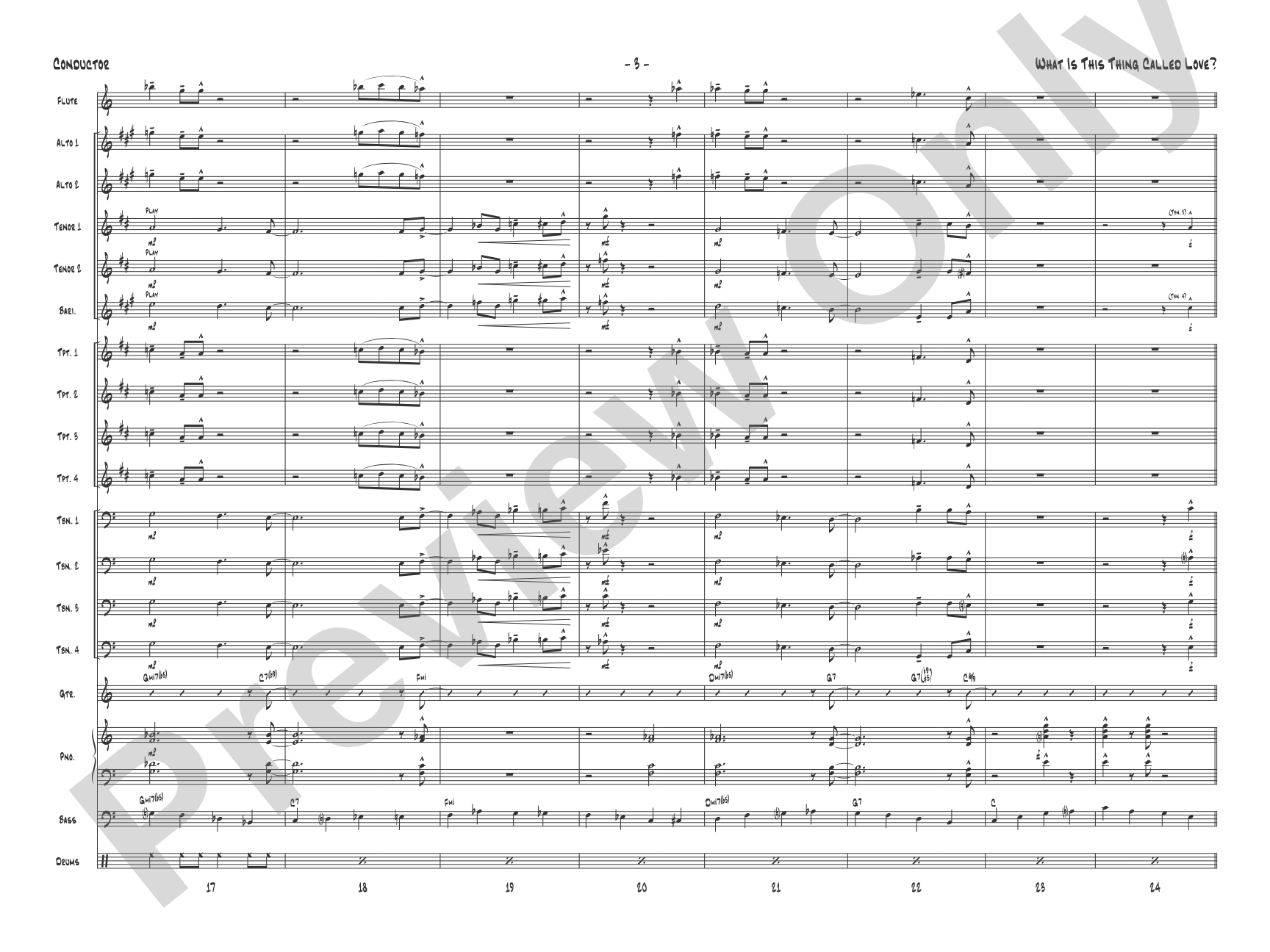
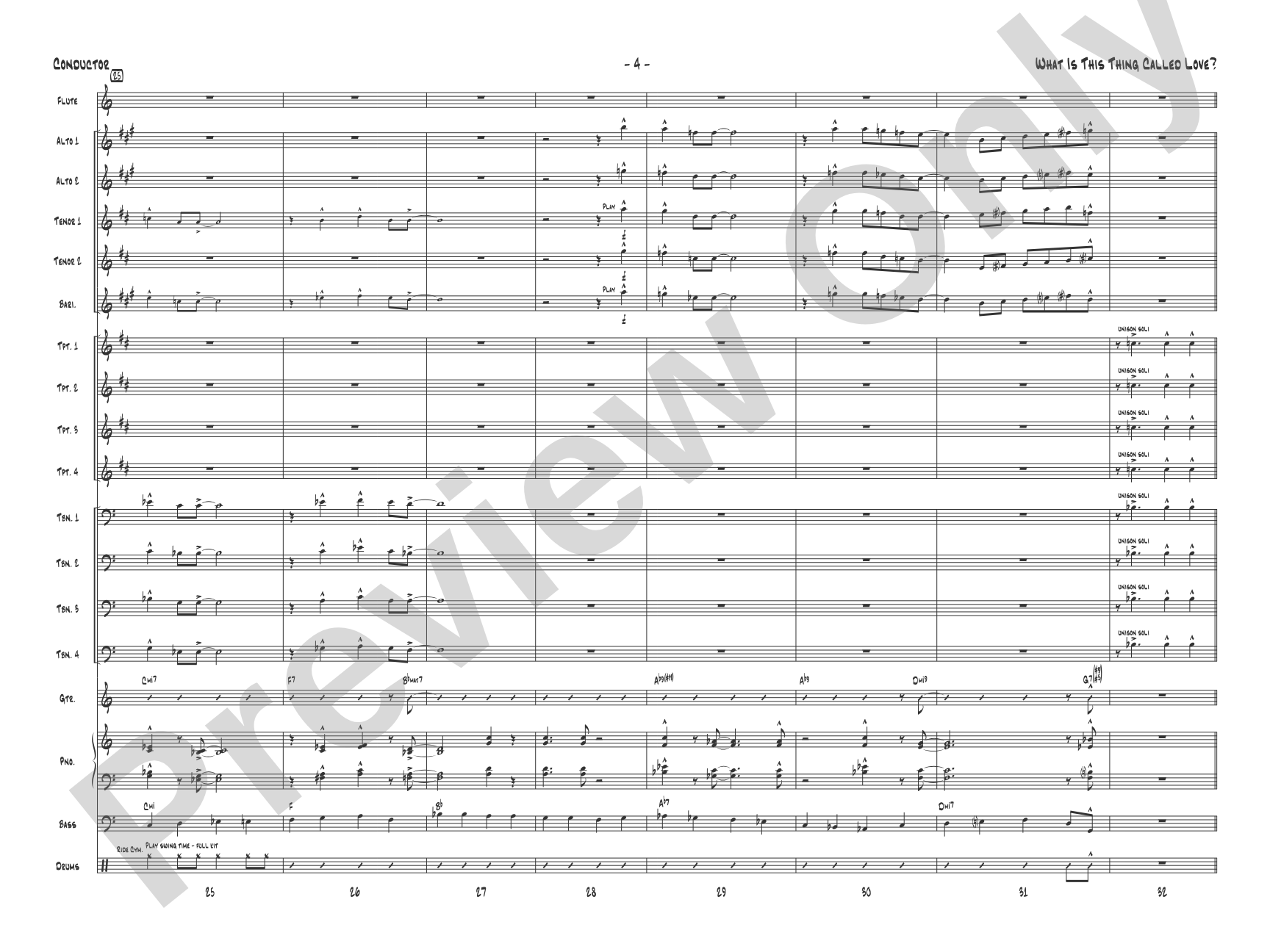
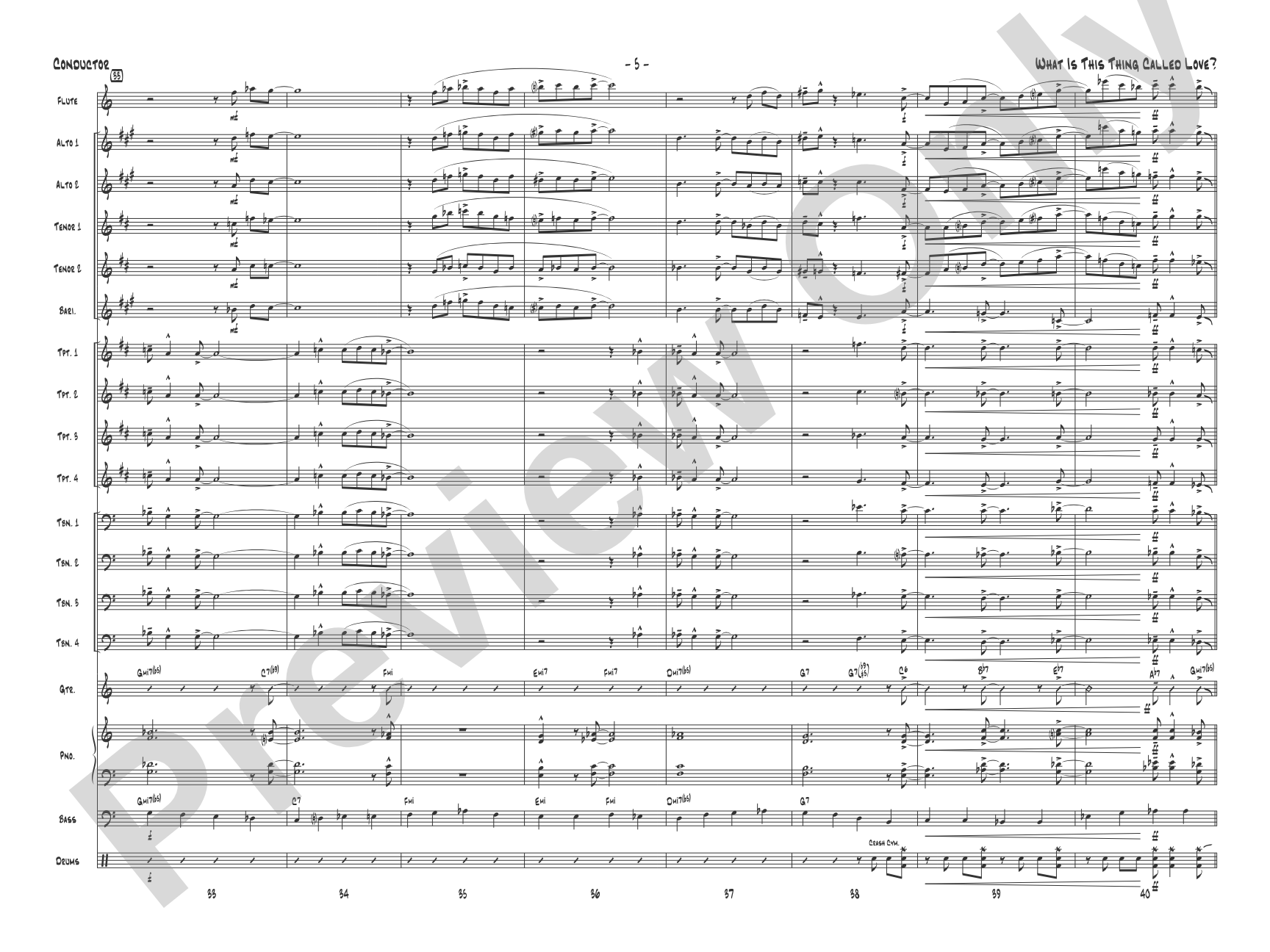
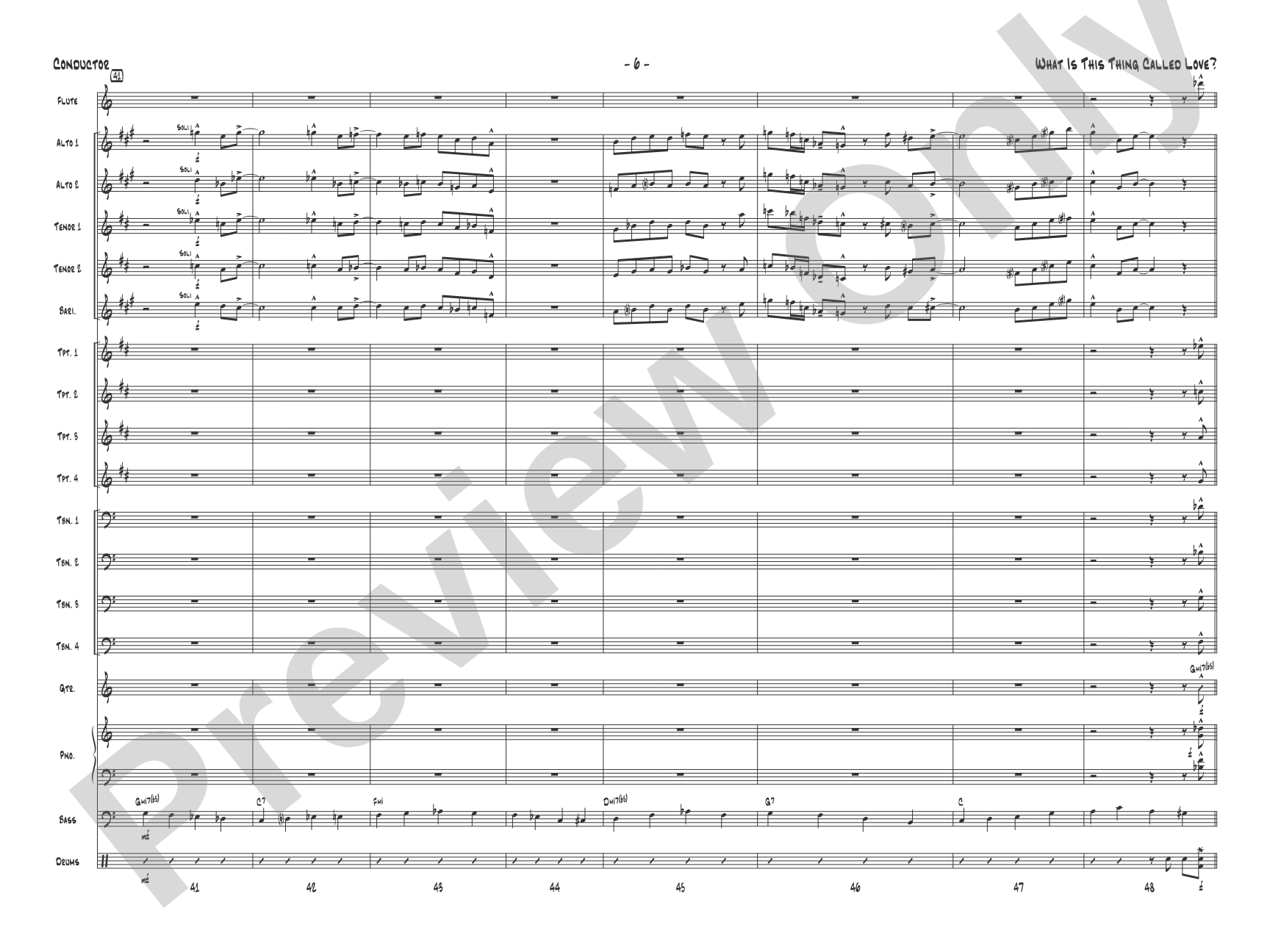
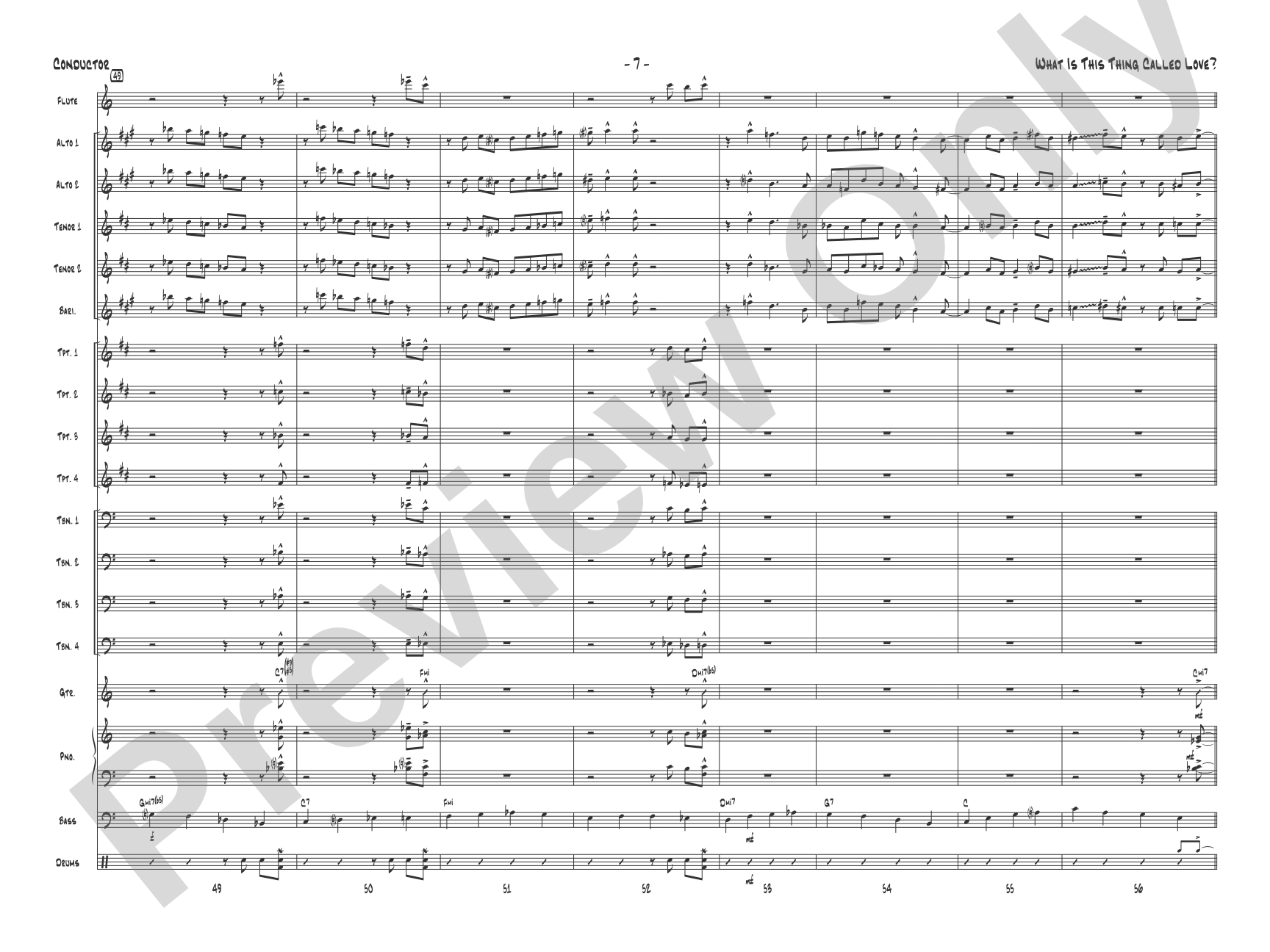
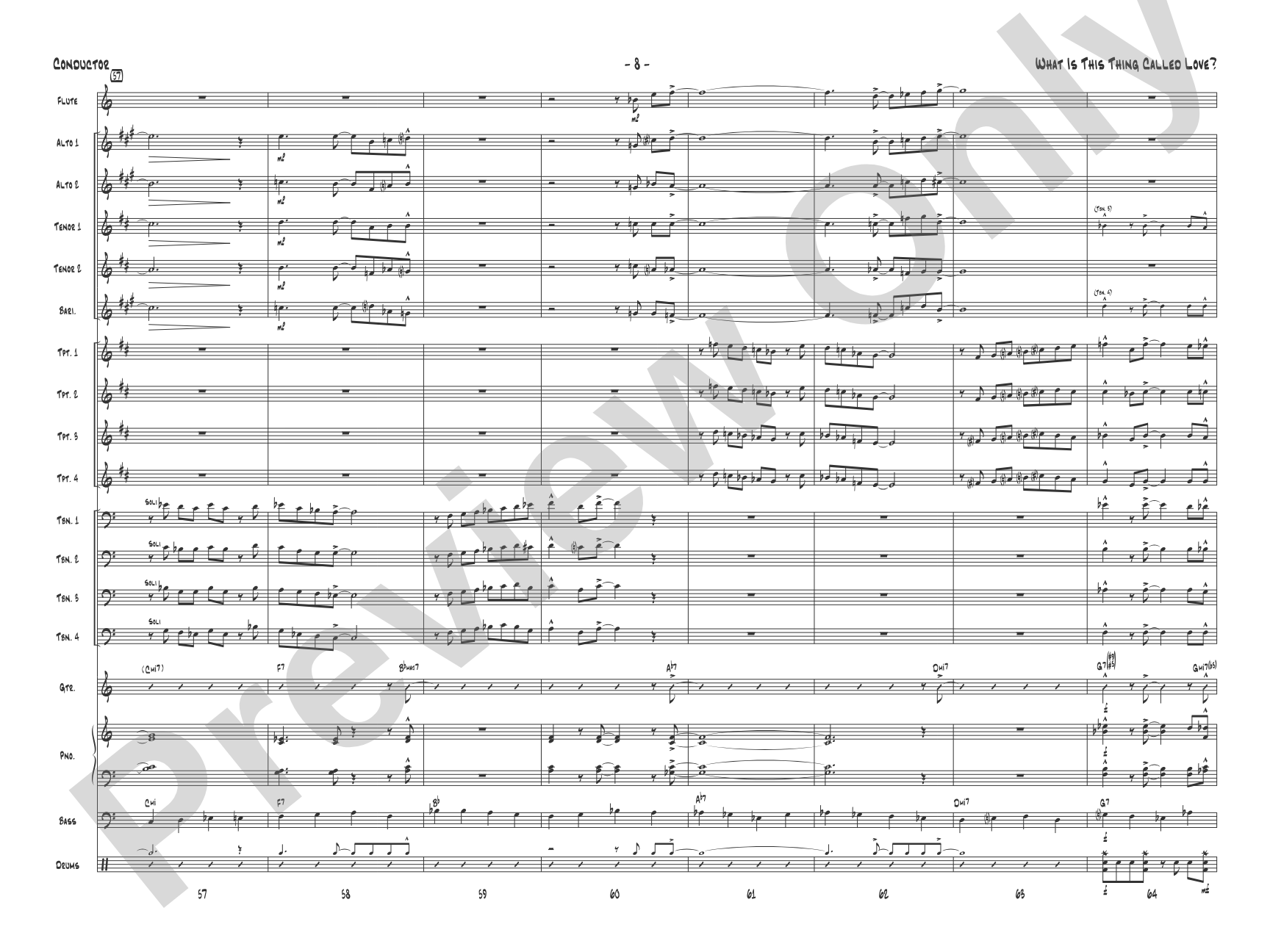
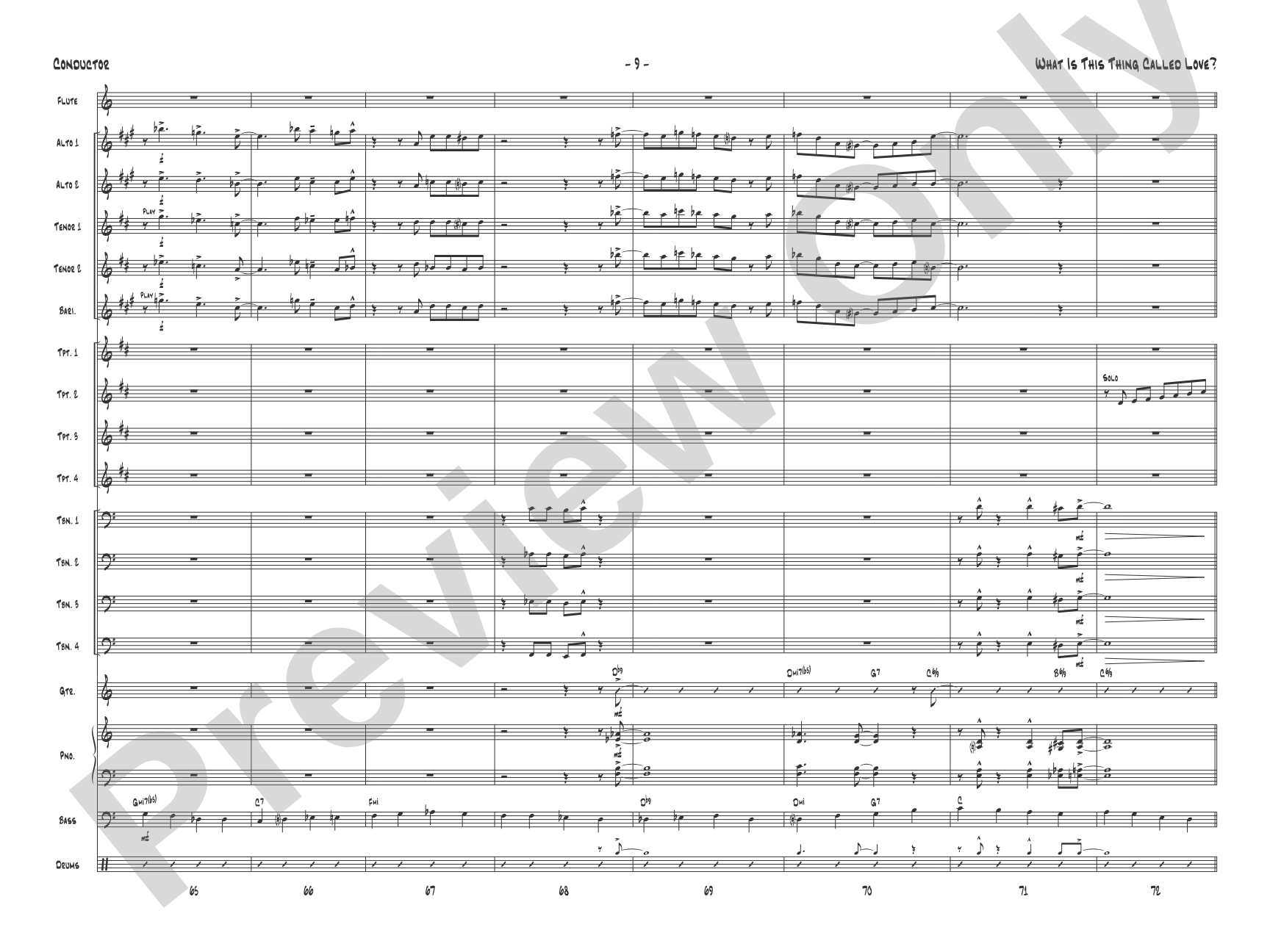
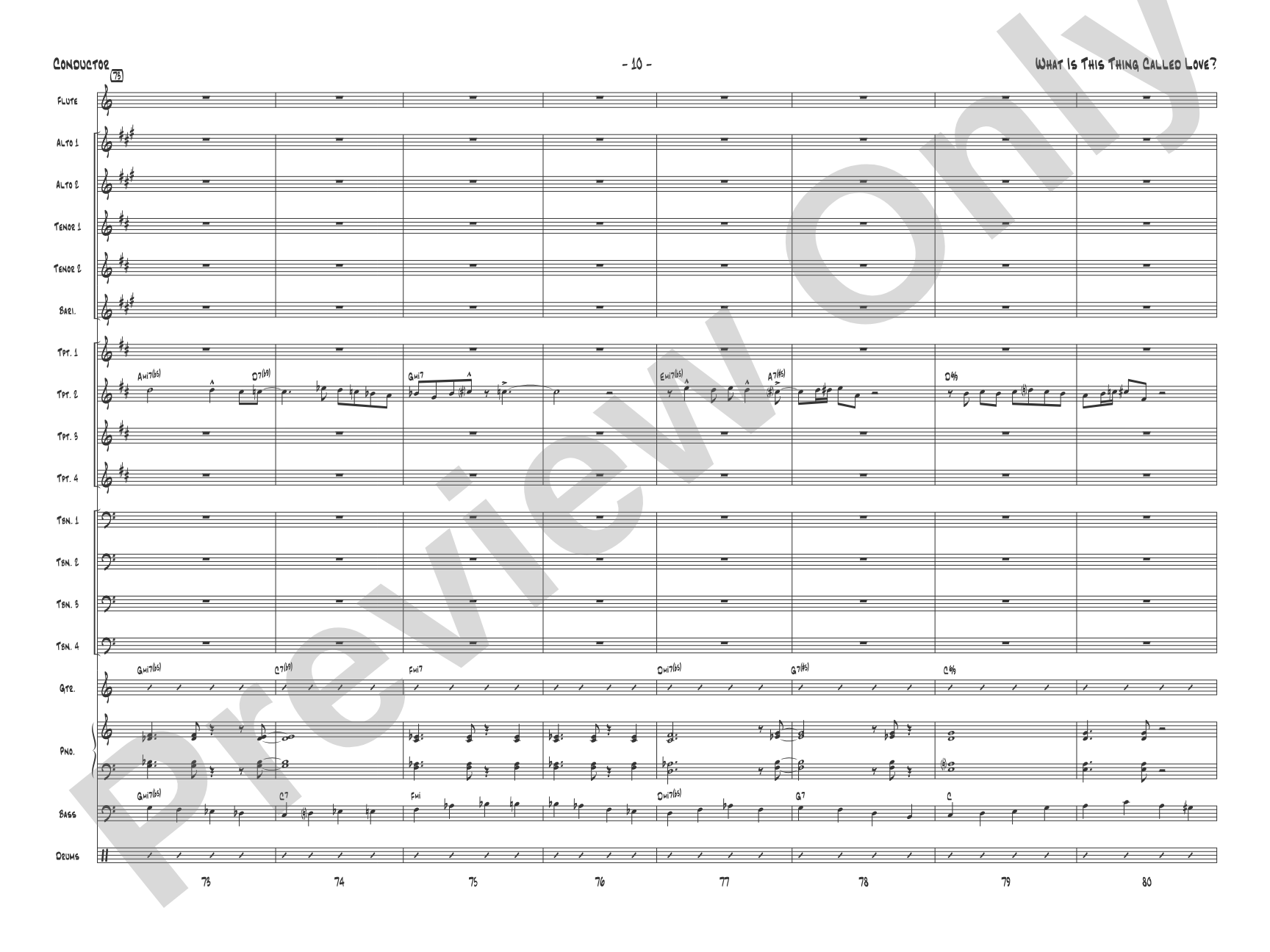
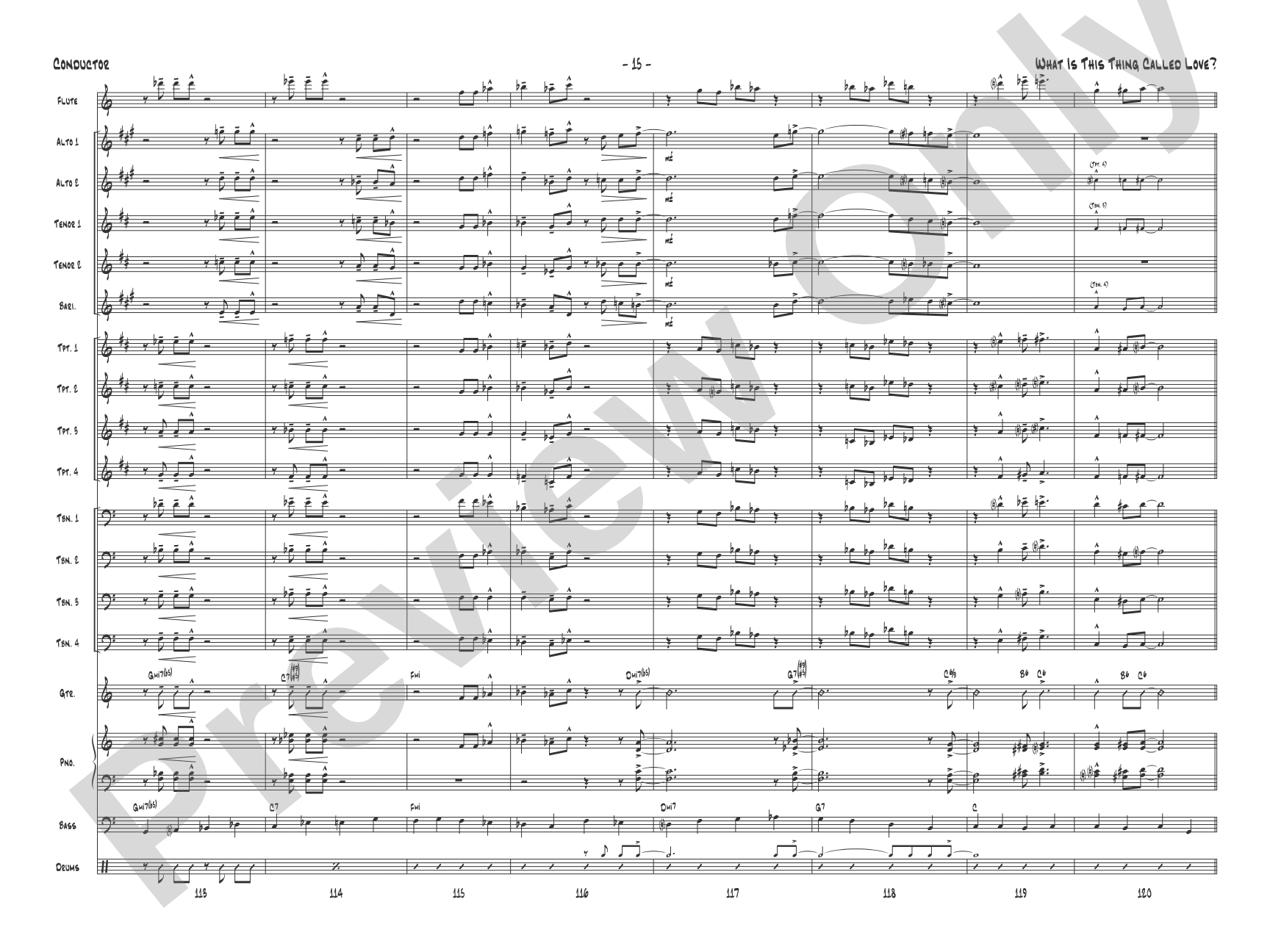
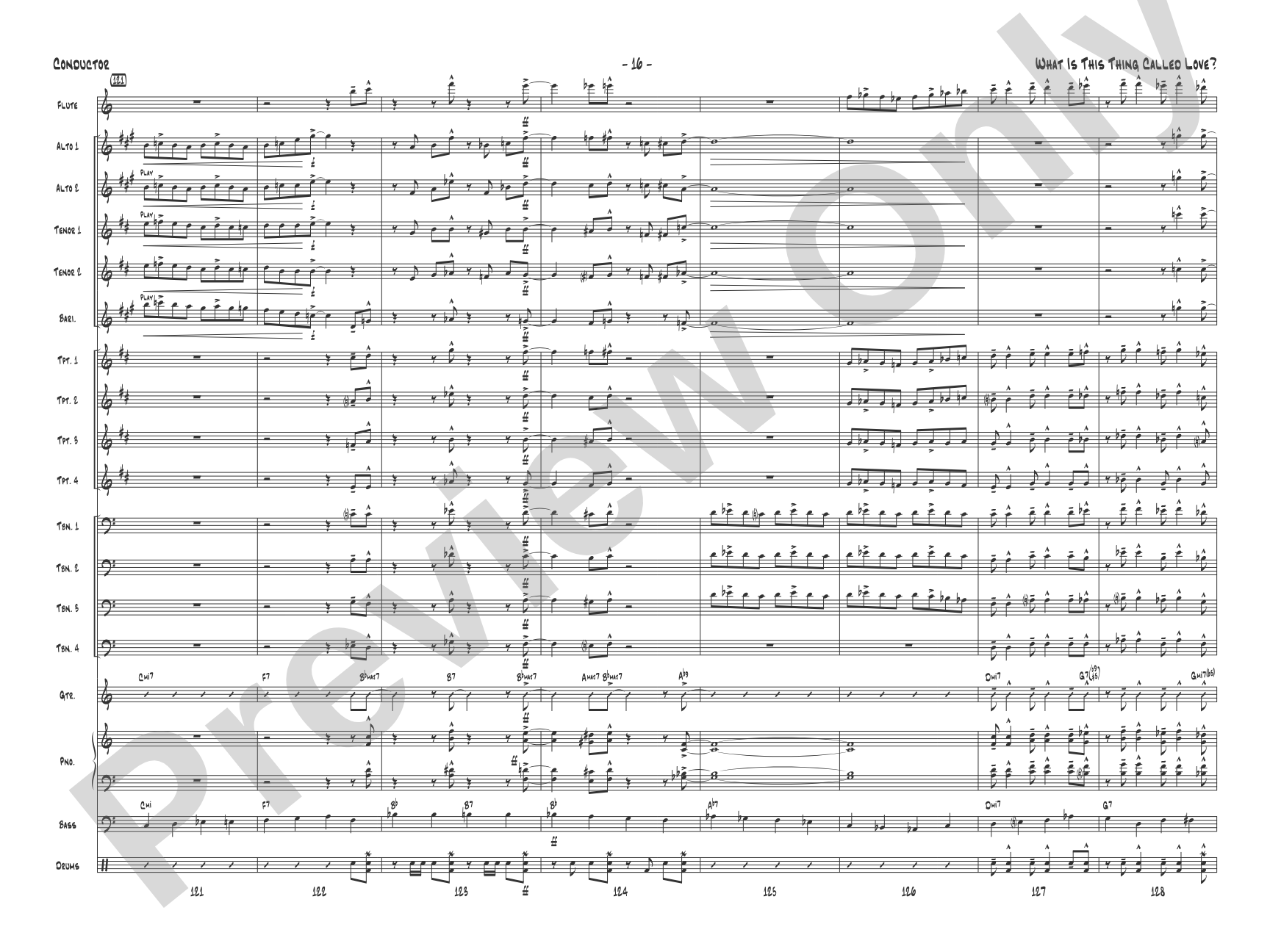
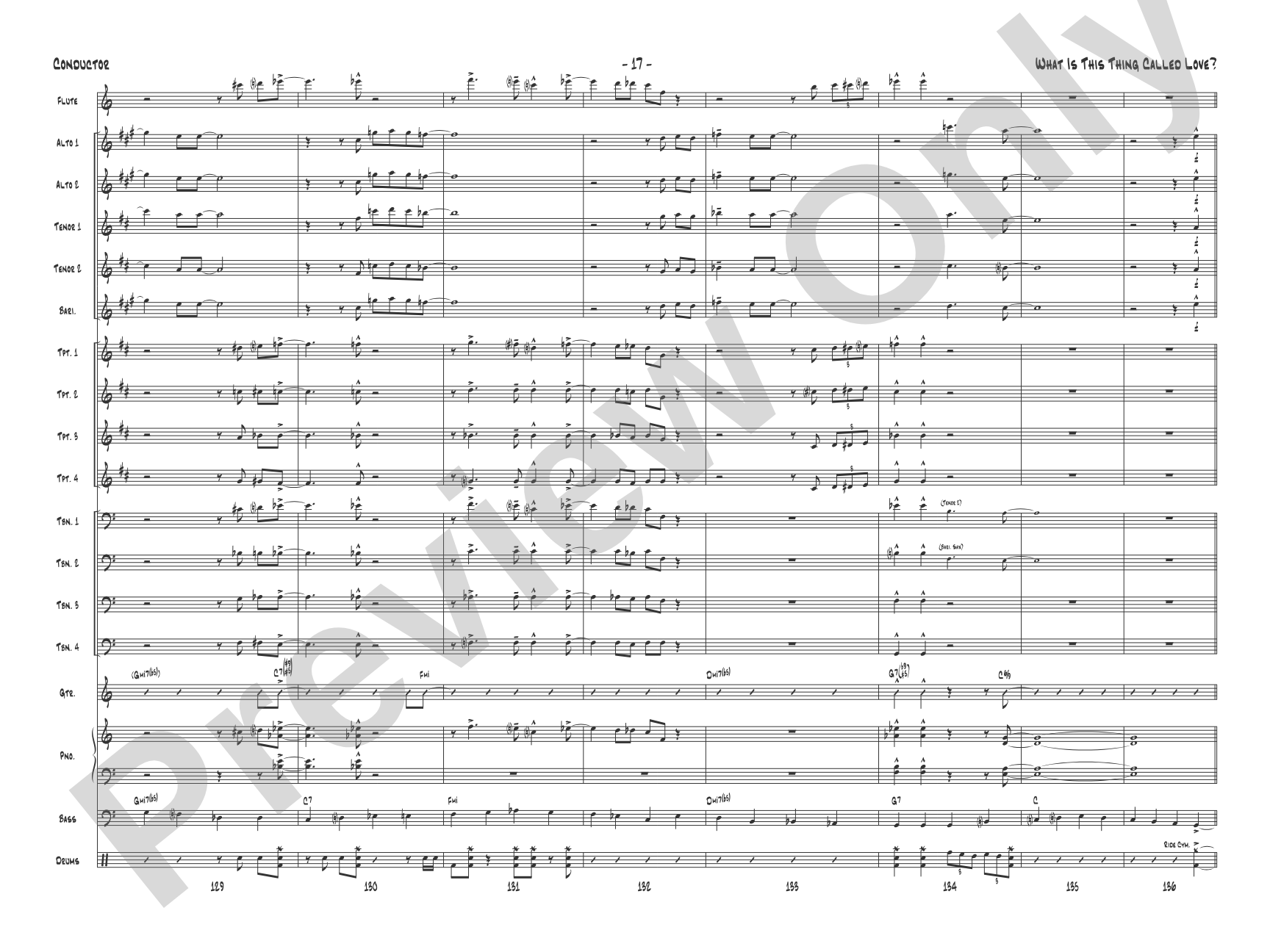
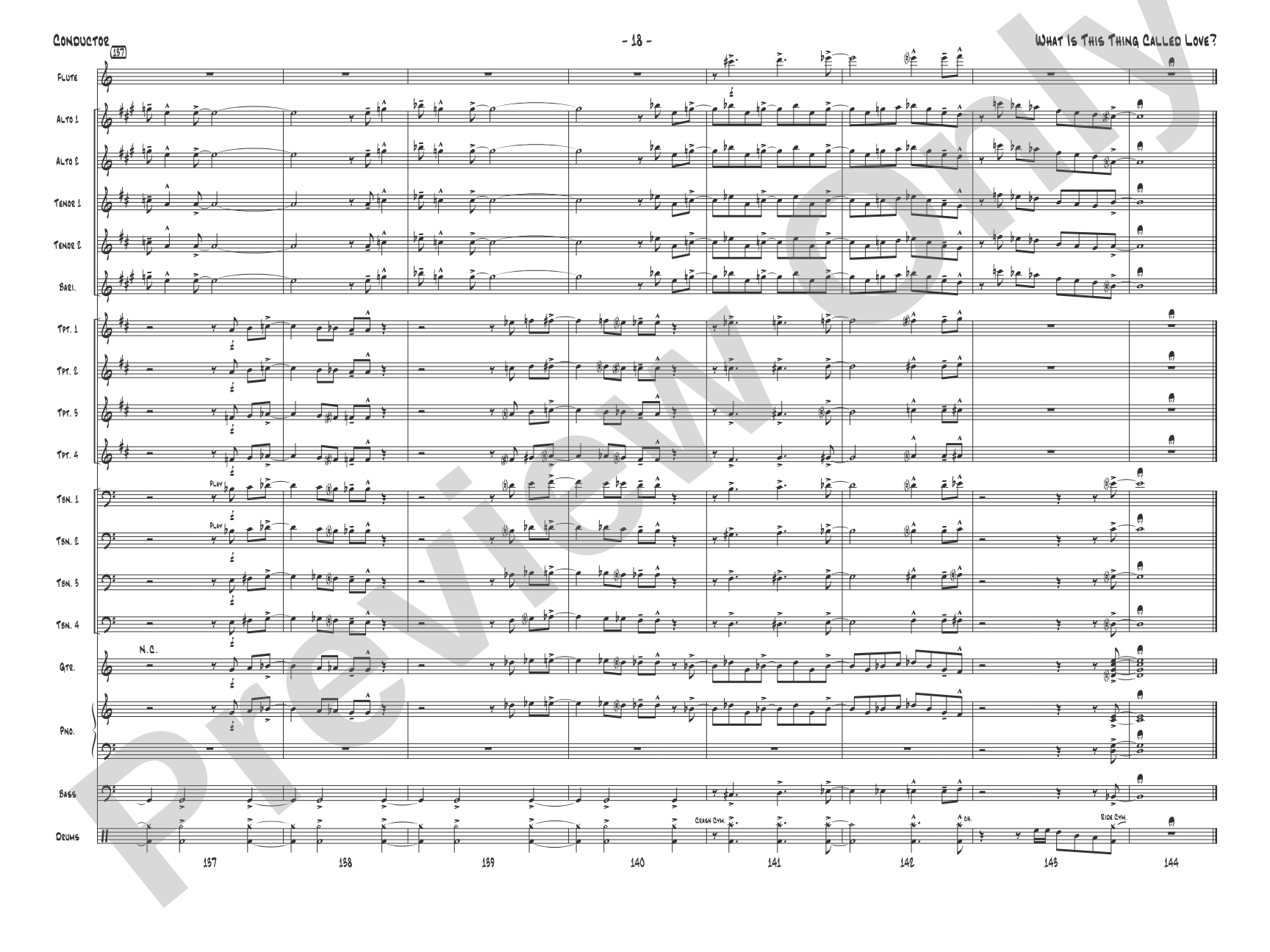

What Is This Thing Called Love?: Jazz Ensemble Conductor Score & Parts
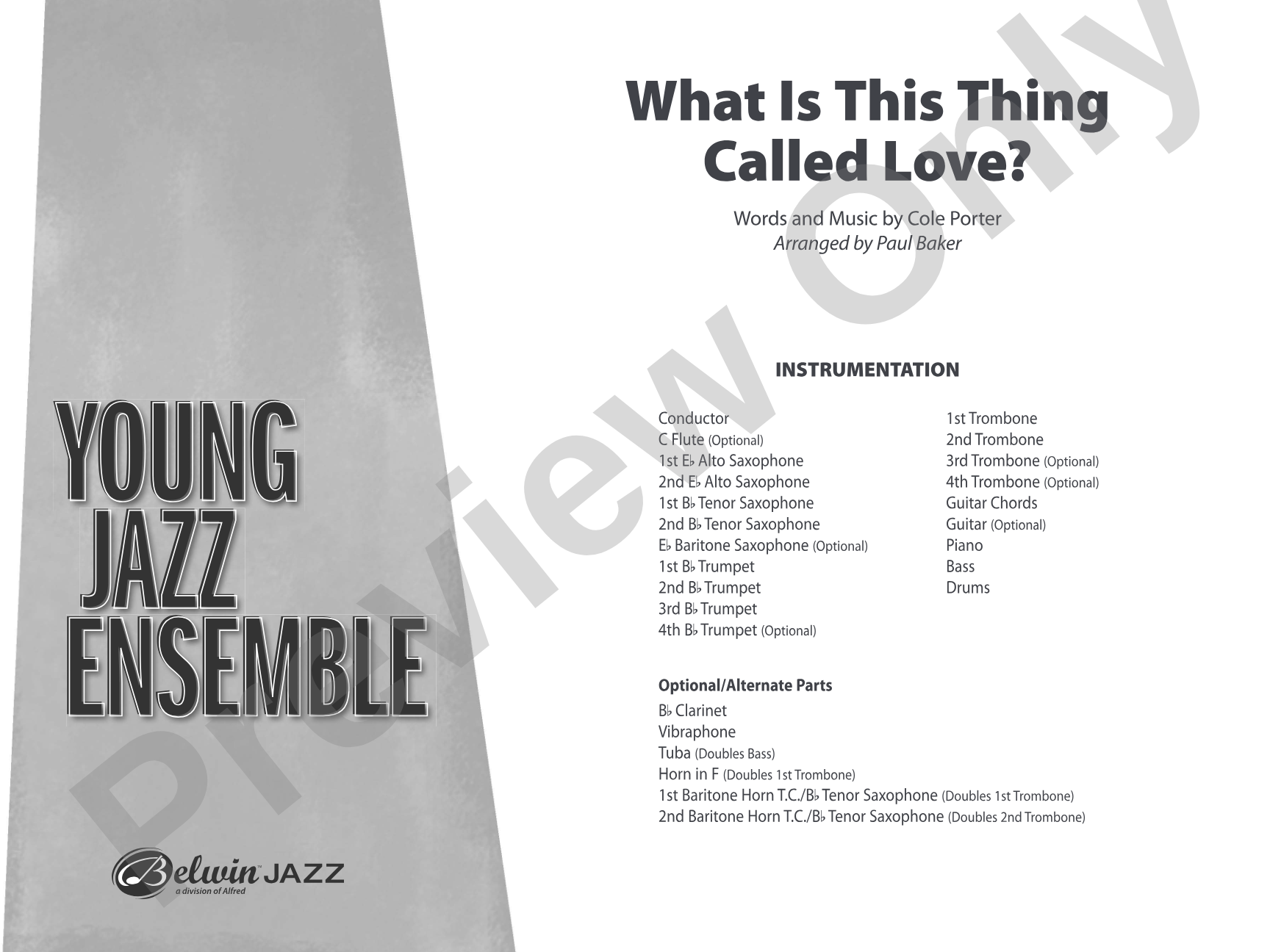
Words and music by Cole Porter / arr. Paul Baker
Grade: 2.5 (Medium Easy)
Item: 00-PK-0007571

$48.00
One moment…
Description
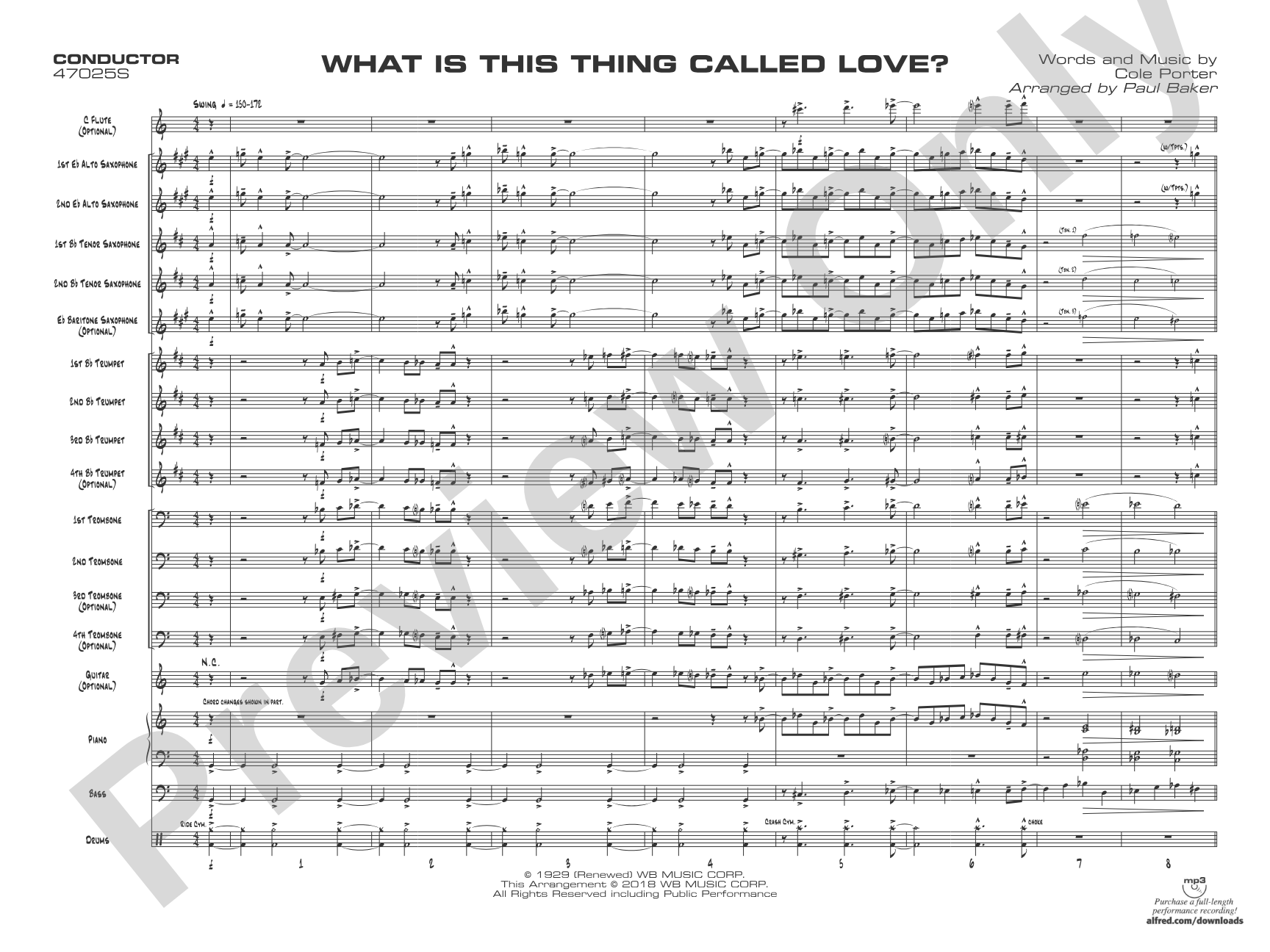
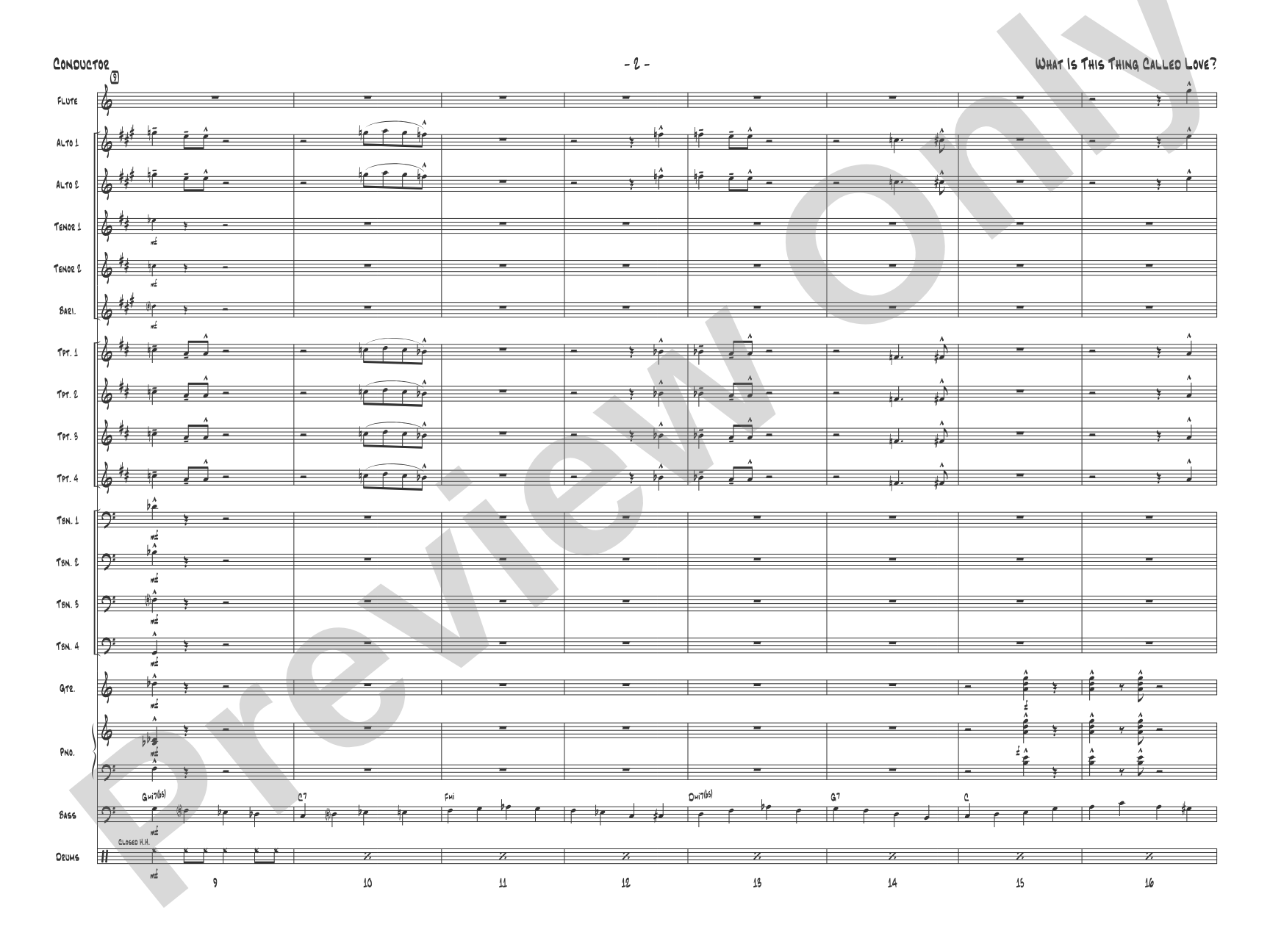
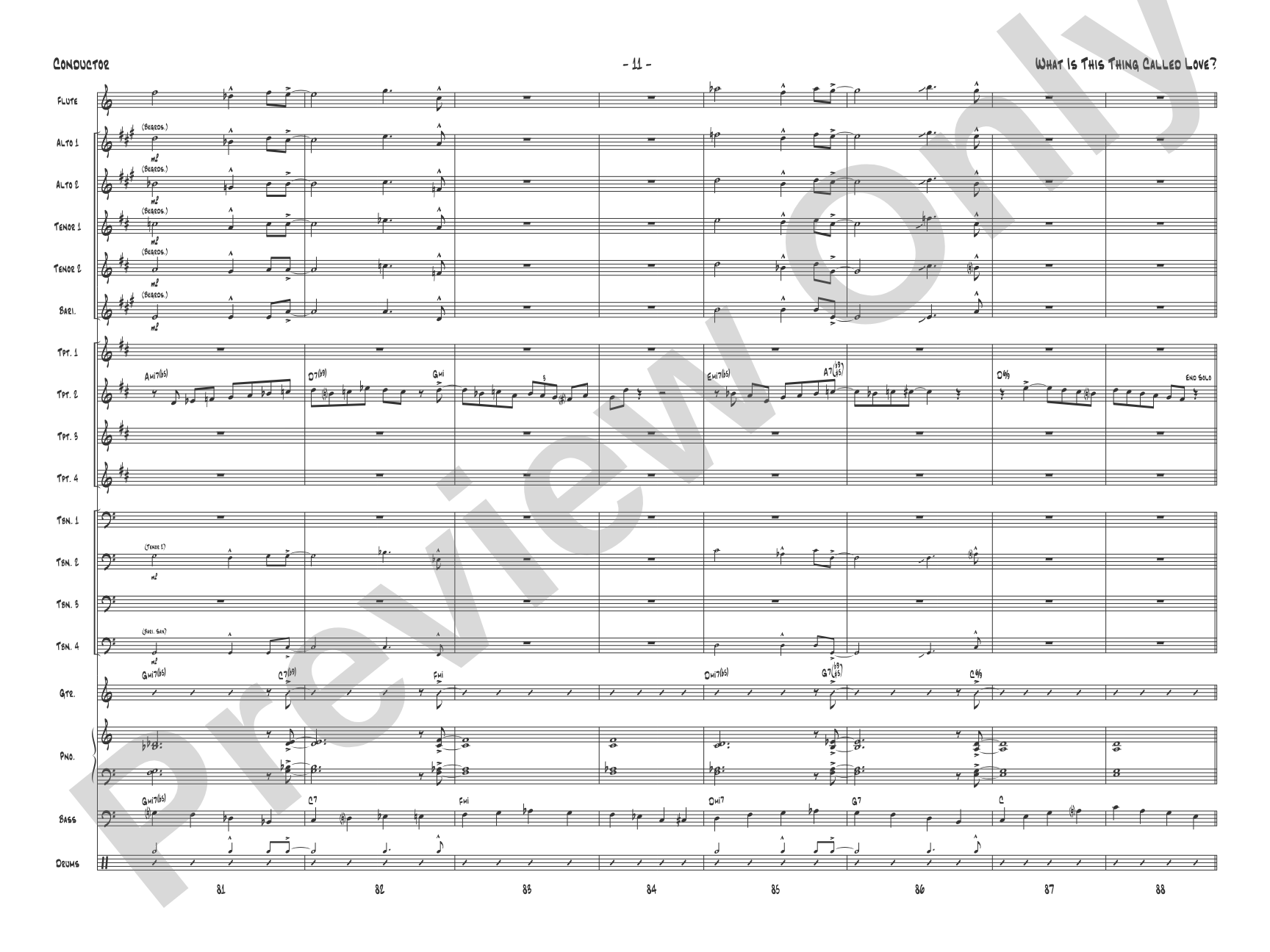
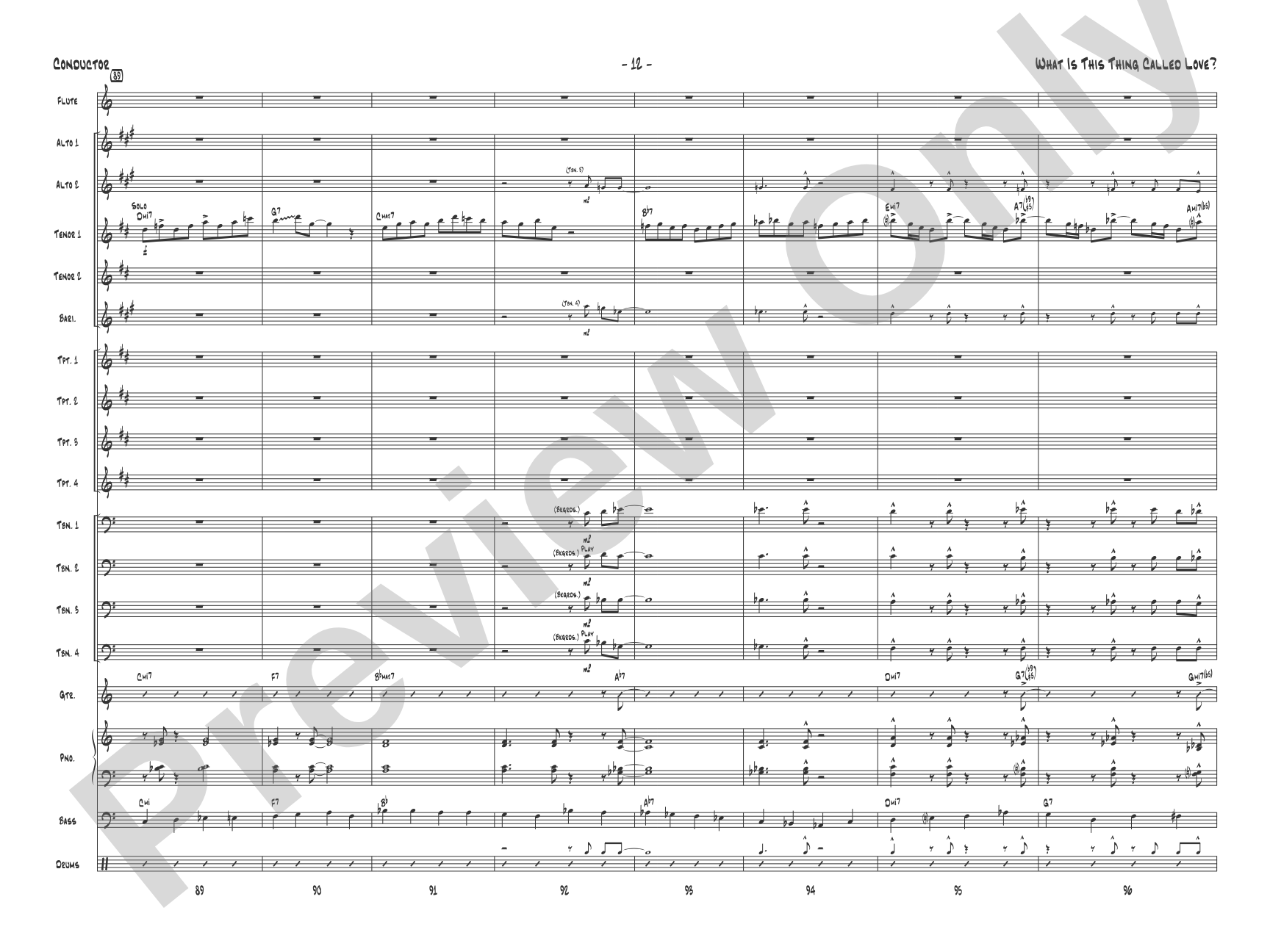
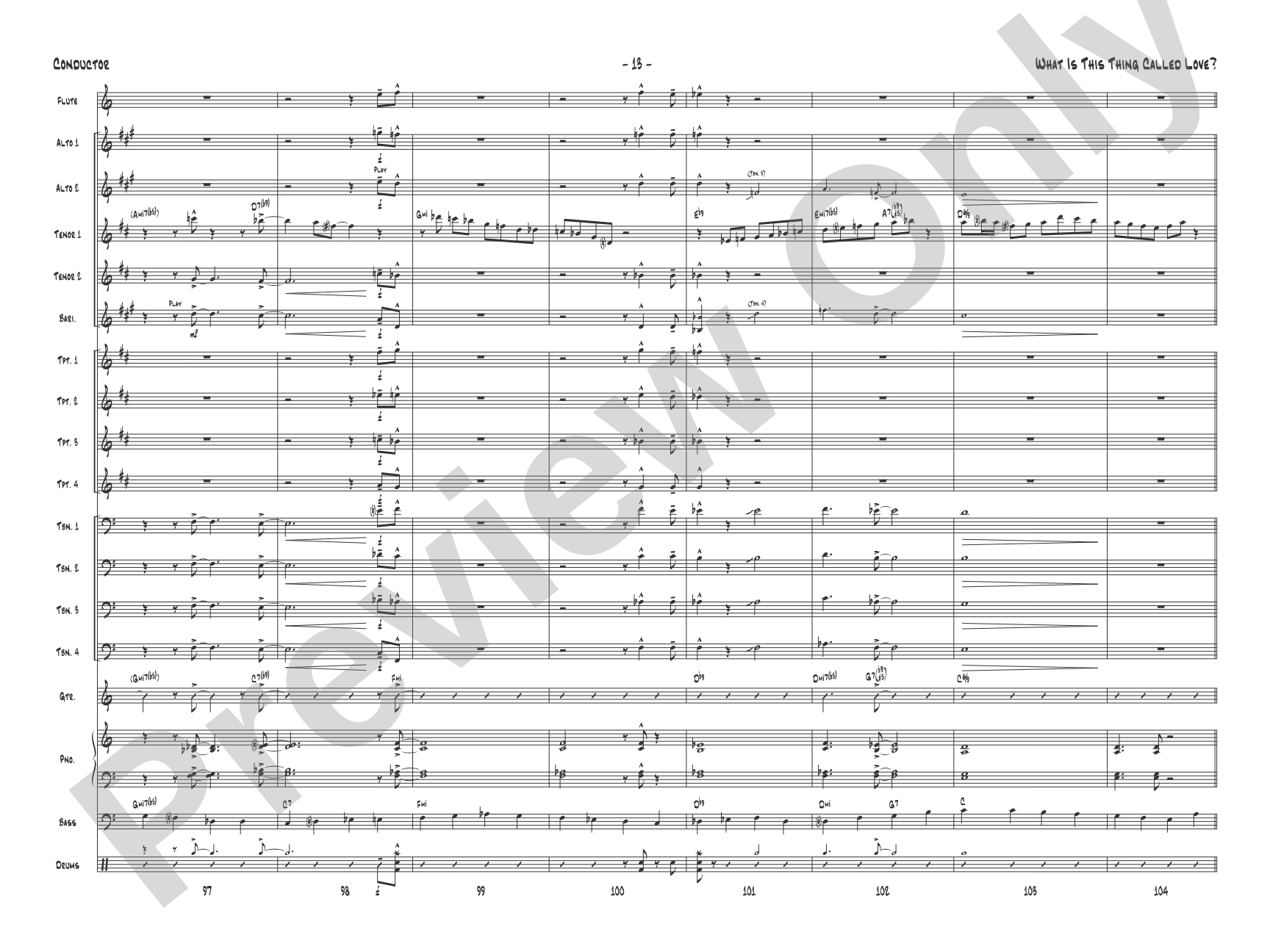
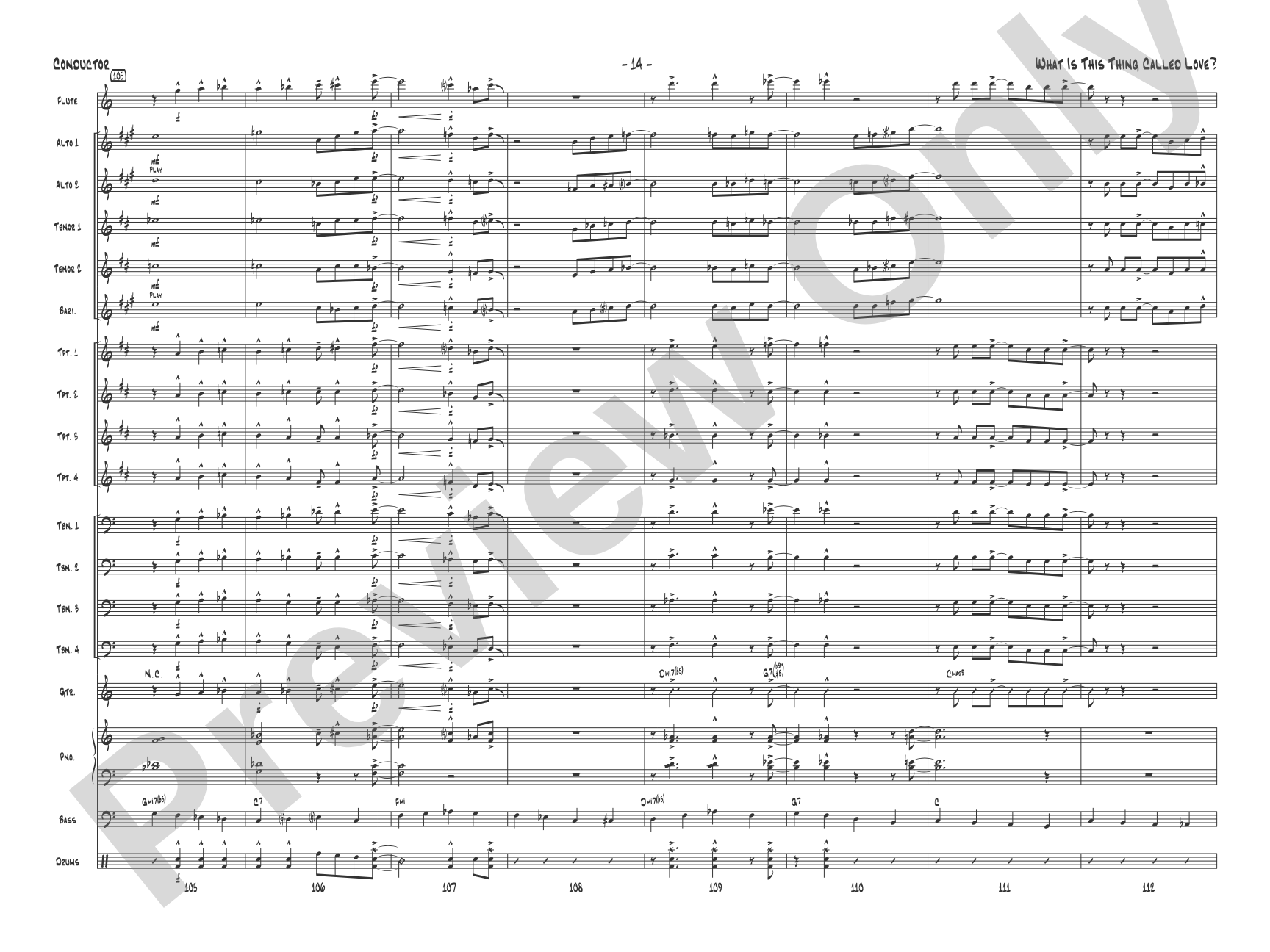
A swinger on a great jazz standard. Played around 160 BPM, this chart is packed with solis for all sections, especially saxes. Lead trumpet range is to written G on top of the staff. Then, add suggested written solos for trumpet and tenor and optional parts for flute, clarinet, and vibes, and you have yourself an excellent chart---simple as that.


Don't just read it, hear it, play along with it, and watch your students grow with it. In MakeMusic Cloud, What Is This Thing Called Love?: Jazz Ensemble Conductor Score & Parts comes alive with professional accompaniment, adjustable tempo, and built-in practice tools that turn solo practice into real progress.
Open in the Player
Jump straight in and assign it today.
Start Your Free Trial
Open this title and explore the full library in minutes.
Sample Audio
1
Audio File
--:--
0:00
0:00
Sample Video
Additional Details
Series:
Young Jazz Ensemble
Publisher:
Alfred Music
Page Count:
102
SKU:
00-PK-0007571
More about this title
About the Composer: Cole Porter
Cole Porter (1891-1964) was an American composer and lyricist whose sophisticated harmonies and witty lyrics defined the Golden Age of musical theater. His songs remain standards in jazz repertoire because of their harmonic richness and memorable melodic lines; they provide ideal teaching material for ensemble musicians learning to navigate jazz conventions with musicality and style.
Why we love this
Paul Baker's arrangement strikes a careful balance between accessibility and genuine musicianship. The Grade 2.5 difficulty doesn't mean simplified: students get real solo opportunities across all sections, meaningful ensemble parts that require listening, and a tempo (160 BPM) that's manageable but energetic enough to feel like real jazz playing.
What to expect
Sophisticated lightness. This is a swinger built on elegant harmonies, not a funk groove or hard-driving bebop line. The tempo and range accessibility create space for warm, lyrical playing while the abundance of solos keeps students engaged and motivated.
Who it's for
Jazz ensemble directors working with intermediate high school or competitive middle school groups. The chart suits programs seeking contest material with musical substance or concert repertoire that engages student soloists without requiring advanced harmonic reading.
How to get the most out of it
- Keep the swing feel consistent through the ensemble. The rhythm section sets the pocket; horns should lock into that groove rather than rushing or dragging.
- Balance the trumpet lead carefully so it sits above the section without overpowering the ensemble. Lead trumpet range to high G stays accessible without sacrificing presence.
- Give soloists space to breathe between chorus and ensemble figures. The chart's architecture leaves room for personality; encourage soloists to use dynamics and phrasing to shape their moments.
- Use the optional parts (flute, clarinet, vibes) strategically. Adding them for solo sections or specific choruses can refresh the texture without overcomplicating rehearsals.
How to use it
This works well in a jazz concert program as a feature for your section leaders or as a bridge between early-level ensemble charts and more complex repertoire. The multiple solo opportunities make it valuable for identifying student soloists throughout the ensemble.
Skills your students will build
- Swing interpretation and groove awareness
- Section balance and blend in swing style
- Jazz solo phrasing and improvisation (trumpet and tenor featured)
- Reading lead trumpet and ensemble parts in an idiomatic jazz context
- Accompanying and responding to soloists