

What a Wonderful World: SATB Choral Octavo
By George David Weiss and Bob Thiele / arr. Russell Robinson
Item: 00-PO-0003499
$2.25
Minimum order quantity: 20 copies
One moment…
Description
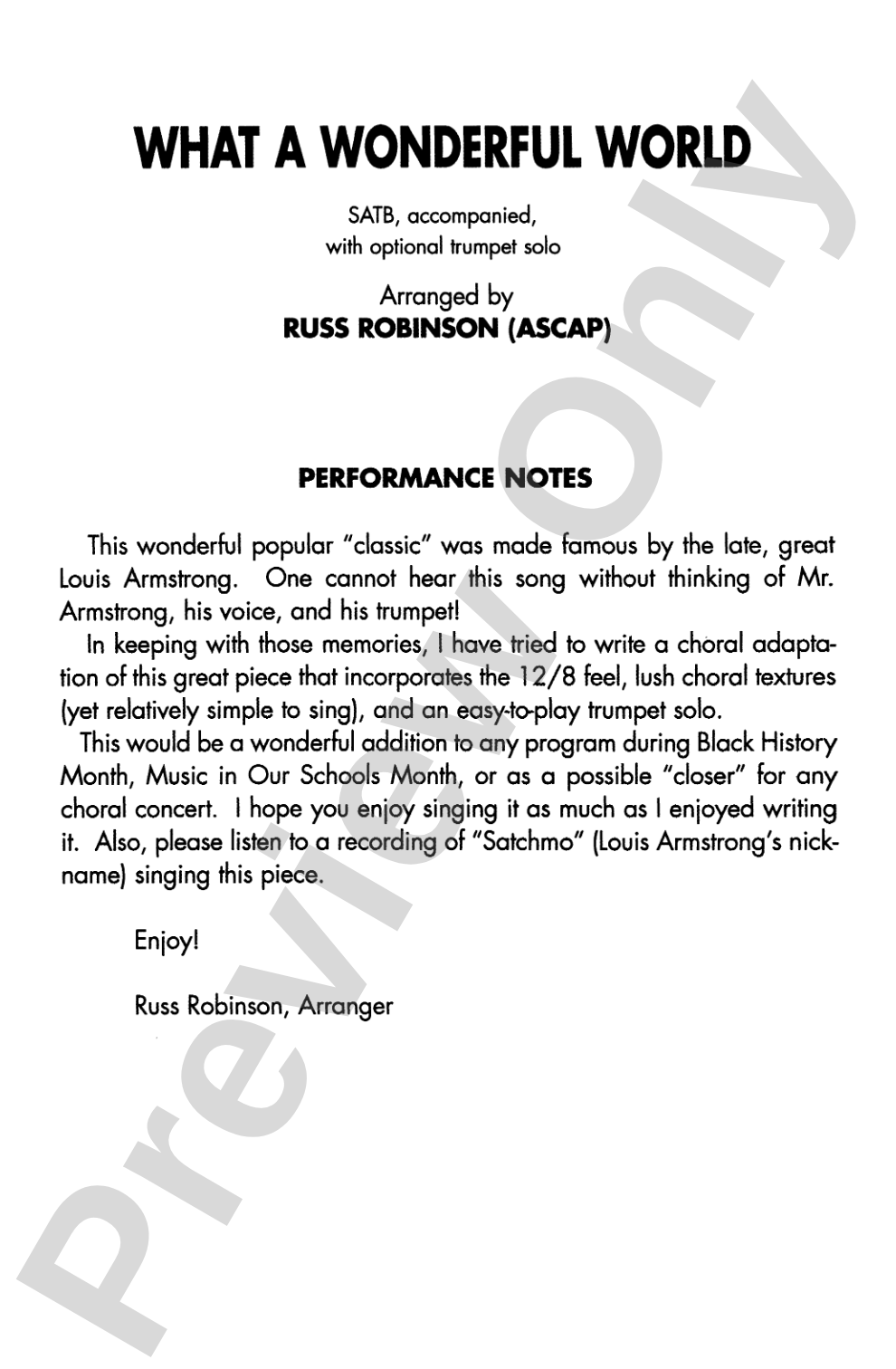
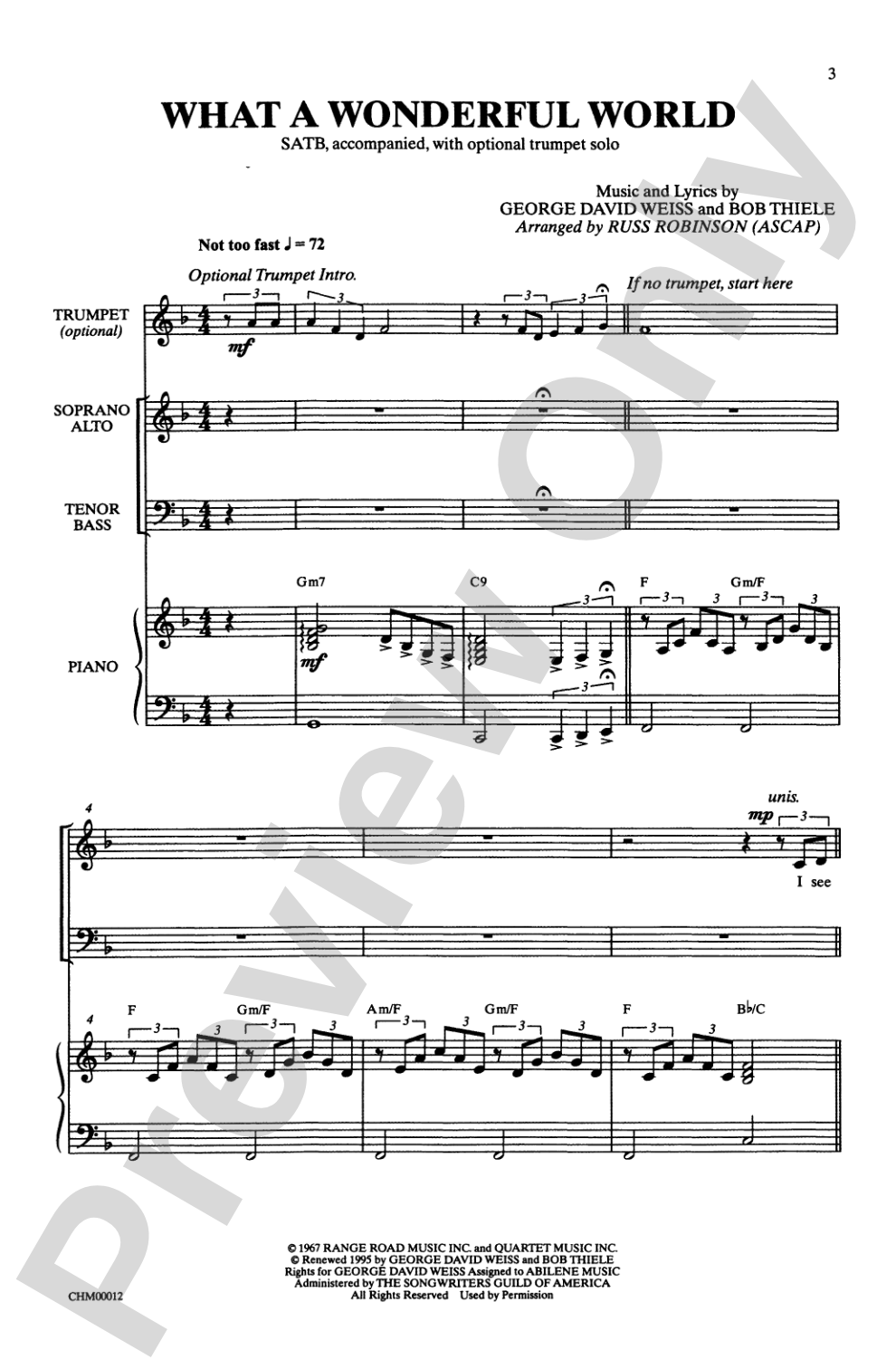
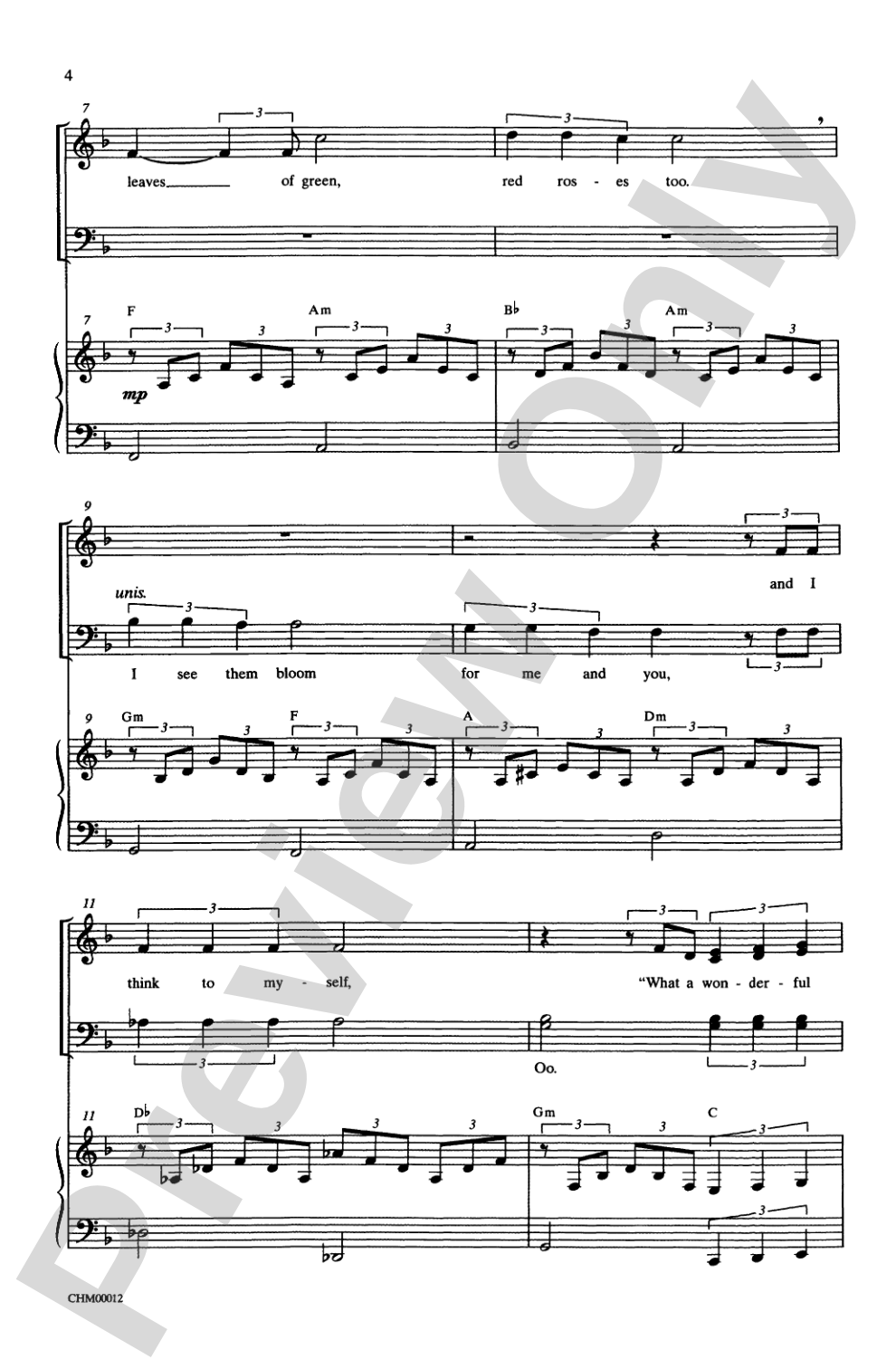
Few songs ever become hits as this one did for Louis Armstrong. He defined a style of music all his own and yet influenced every style existing to this day. Russ Robinson has done an incredible job of bringing all of these elements to life in this arrangement of the famous song. Done with optional trumpet solo part, the piece is truly becoming of Satchmo. All three voicings are beautiful and will touch the hearts of any audience.


What a Wonderful World: SATB Choral Octavo isn't in MakeMusic Cloud just yet...but it could be. Let us know you'd like to see it, and you'll help shape what comes next. In the meantime, start a free trial and dive into thousands of interactive titles your students can play along with today.
Request This Title
Tell us you want it.
Start Your Free Trial
Explore everything that's ready to play right now.
Sample Audio
1
Audio File
--:--
0:00
0:00
Sample Video
No sample videos found.
Additional Details
Series:
Alfred Pop Choral Series
Publisher:
Alfred Music
Page Count:
16
SKU:
00-PO-0003499
Instrumentation:
Opt. Trumpet Solo
More about this title
About the Composer: Howard Dietz
Howard Dietz (1896–1983) was a lyricist, librettist, and director who shaped the sound of American musical theater across five decades. Working primarily with composer Arthur Schwartz, Dietz created some of the era's most enduring songs, blending wit, sophistication, and emotional directness in ways that made standards feel both timeless and immediate. His influence extends far beyond Broadway; his work became the foundation of the American Songbook and continues to define how singers and arrangers approach popular song.
Why we love this
Russell Robinson's arrangement captures the warmth and simplicity that made Louis Armstrong's recording iconic while giving your choir real melodic substance across all four parts. The optional trumpet solo invites a soloists to step into Armstrong's legacy without overshadowing the ensemble, and the 16-page score provides enough musical texture to engage singers without overwhelming them.
What to expect
The piece radiates optimism and sincerity. Dietz and Schwartz's melody is inherently memorable and warm, and Robinson's voicings let that simplicity breathe while adding harmonic richness underneath. Singing this feels like sharing something genuine with an audience.
Who it's for
This octavo works for intermediate to advanced SATB choirs looking to add a accessible, audience-friendly piece to their repertoire. Whether your singers are familiar with Armstrong's version or discovering the song fresh, the arrangement rewards both readability and musical maturity.
How to get the most out of it
- Balance the vocal lines so no single part disappears; the beauty of this arrangement depends on hearing all voices equally in the ensemble passages.
- If you use the trumpet solo, spend time in rehearsal establishing a relaxed, conversational relationship between soloist and choir, letting the horn lead without dominating.
- Shape phrases around the lyrical content rather than bar lines; this is a song about wonder and gratitude, so breathe and swell where the text naturally does.
- Layer in the recorded accompaniment during later rehearsals so singers hear the harmonic support and rhythm section context that grounds the arrangement.
How to use it
This works beautifully in a concert that celebrates American songwriting or features popular standards alongside classical repertoire. It's also an excellent closer for a spring or holiday program, offering listeners a moment of genuine uplift and familiarity after more demanding pieces.
Skills your students will build
- Balancing multiple melodic lines while maintaining phrase coherence
- Interpreting lyrical content as a guide to musical phrasing and dynamics
- Singing with clarity and warmth in a popular music idiom
- Ensemble blend and intonation in jazz-inflected harmonies