

What a Wonderful World: SAB Choral Octavo
By George David Weiss and Bob Thiele / arr. Russell Robinson
Item: 00-PO-0002533
$2.25
Minimum order quantity: 20 copies
One moment…
Description
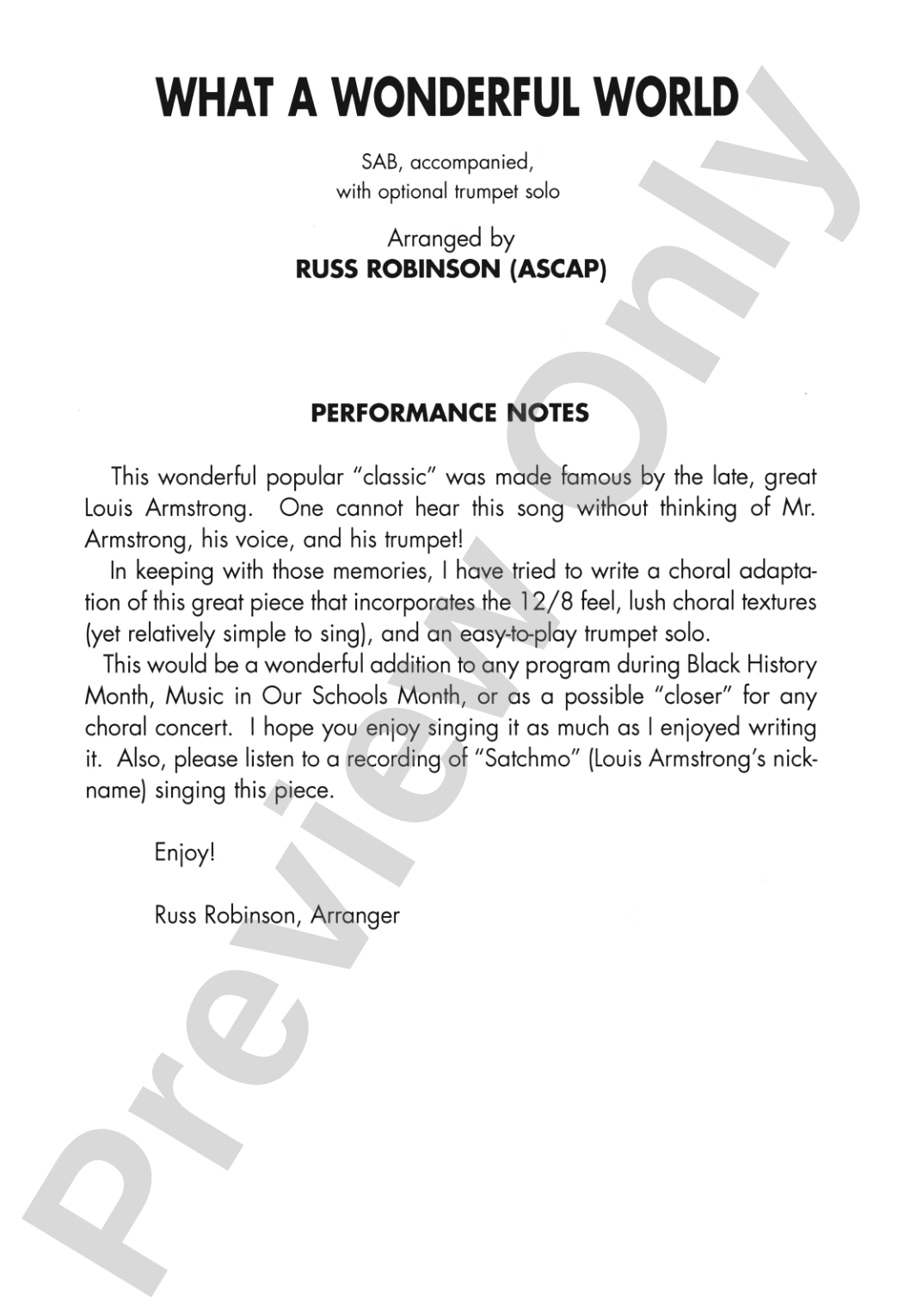
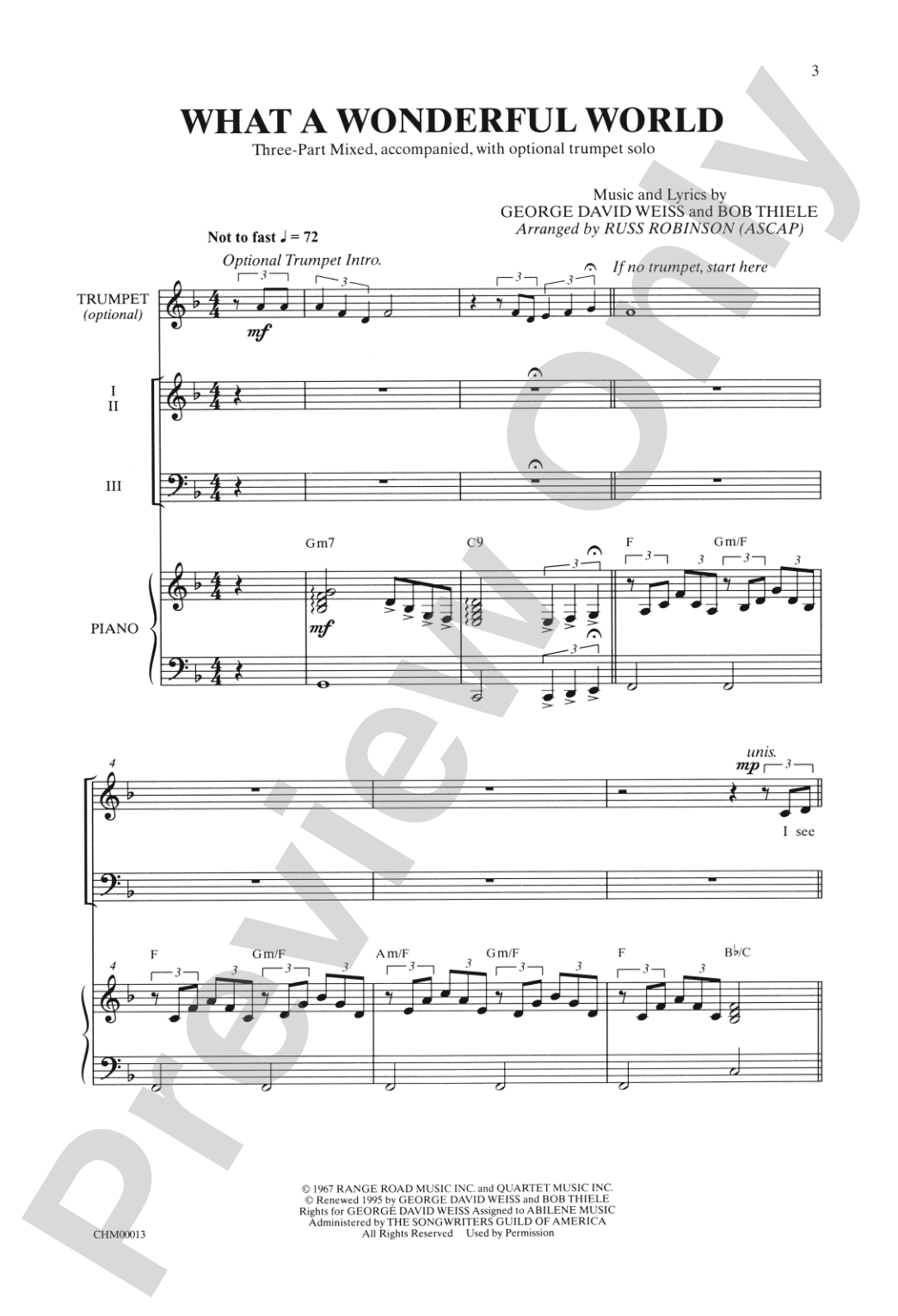
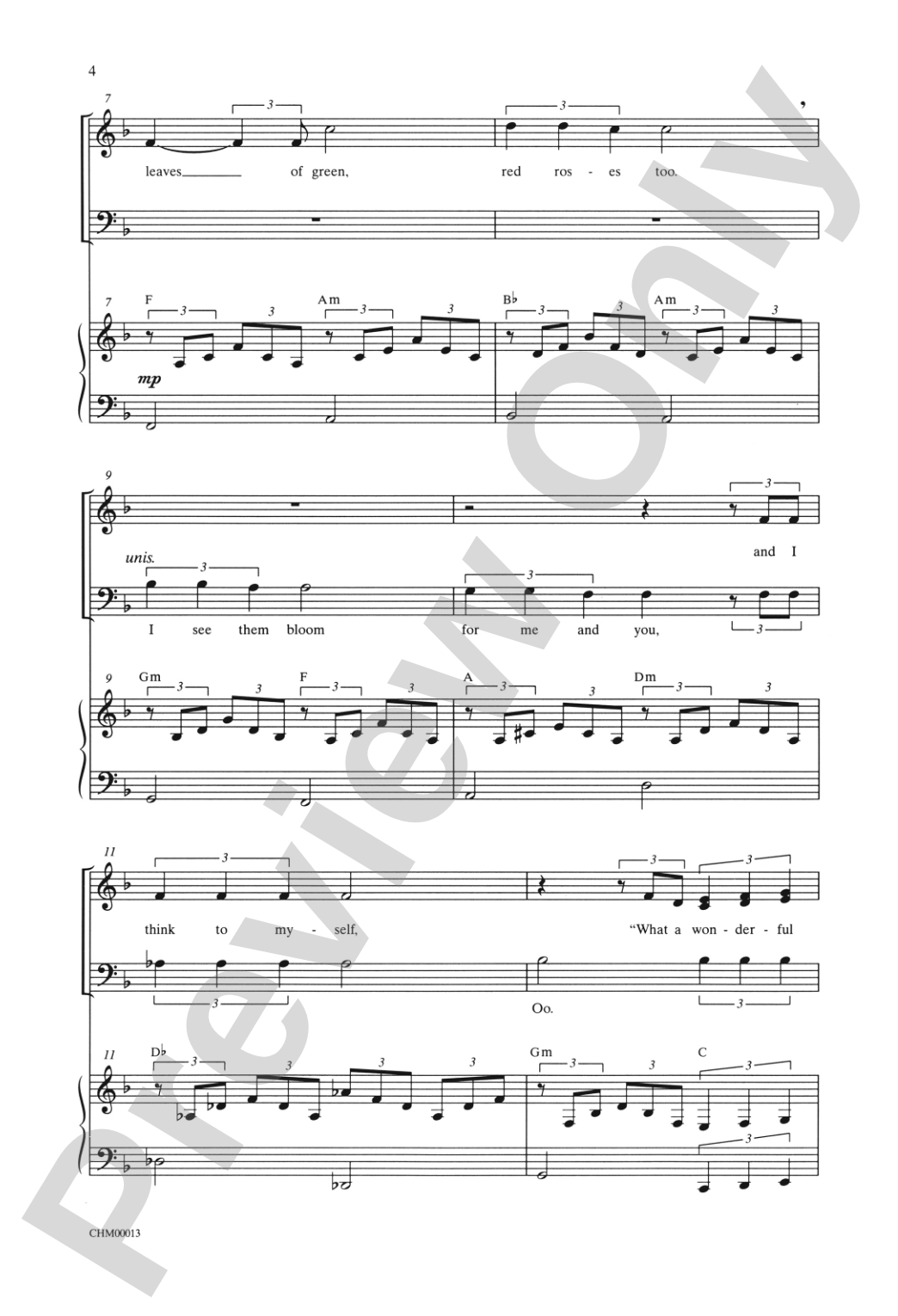
Few songs ever become hits as this one did for Louis Armstrong. He defined a style of music all his own and yet influenced every style existing to this day. Russ Robinson has done an incredible job of bringing all of these elements to life in this arrangement of the famous song. Done with optional trumpet solo part, the piece is truly becoming of Satchmo. All three voicings are beautiful and will touch the hearts of any audience.


What a Wonderful World: SAB Choral Octavo isn't in MakeMusic Cloud just yet...but it could be. Let us know you'd like to see it, and you'll help shape what comes next. In the meantime, start a free trial and dive into thousands of interactive titles your students can play along with today.
Request This Title
Tell us you want it.
Start Your Free Trial
Explore everything that's ready to play right now.
Sample Audio
1
Audio File
--:--
0:00
0:00
Sample Video
No sample videos found.
Additional Details
Series:
Alfred Pop Choral Series
Publisher:
Alfred Music
Page Count:
16
SKU:
00-PO-0002533
Instrumentation:
Opt. Trumpet Solo
More about this title
About the Composer: Howard Dietz
Howard Dietz (1896-1983) was a lyricist and librettist who shaped the sound of American musical theatre across five decades. Working primarily with composer Arthur Schwartz, he crafted witty, sophisticated lyrics for Broadway shows and film scores that balanced charm with musical substance. His ability to write memorable melodies paired with clever wordplay made him a sought-after collaborator in Hollywood's golden age.
Dietz's influence on popular song extends far beyond his era. Songs he wrote continue to appear in choral and vocal repertoire because they contain genuine melodic integrity and emotional directness. For music educators, his work demonstrates how popular song can be both accessible and artistically substantial.
Why we love this
Russell Robinson's arrangement honors the warmth and accessibility of the original while giving SAB singers genuinely singable voicings that sound full without requiring extended ranges. The optional trumpet solo adds that classic jazz inflection associated with Armstrong's legacy, creating a programming piece that works equally well at pops concerts, holiday celebrations, or spring shows. This is the kind of repertoire that reminds audiences why they love choral singing.
What to expect
Optimistic and gentle, with the kind of earnest sentiment that lands without seeming saccharine. The arrangement captures Armstrong's distinctive phrasing sensibility, giving singers the chance to sing with interpretive maturity while maintaining accessibility. There's an inherent lyricism here that makes singers feel like musicians rather than students.
Who it's for
Any choir that wants an audience favorite with genuine artistic substance. Works for mixed groups singing SAB voicing, intermediate to advanced choirs seeking accessible material, and programs aiming for repertoire that bridges jazz standards into a choral context.
How to get the most out of it
- Lean into the legit sound rather than oversinging; this song survives on sincerity, not volume. The arrangement sits well for SAB, so allow the natural balance of the three parts to carry the warmth.
- If you feature the trumpet solo, rehearse it separately with the choir so the altos and sopranos feel secure in their parts. The trumpet should enhance, not distract.
- Pay attention to the text painting on key words about the world's beauty. Small dynamic shapes here prevent the piece from feeling flat across its full length.
- Record a rehearsal with your preferred interpretation and share it with singers. This ballad benefits from singers internalizing the phrasing before performance.
How to use it
Program this as a standalone concert closer or within a set of standards and beloved pop songs. It pairs naturally with other feel-good repertoire at spring or holiday concerts. Consider it also for community engagement events where familiarity serves your goal of connecting with non-traditional audiences.
Skills your students will build
- Singing jazz-inflected phrasing and articulation
- Balancing legit vocal production with stylistic interpretation
- Managing SAB voicing density to create fullness without forcing range
- Coordinating with optional instrumental soloists in ensemble context
- Text-driven expressive singing