
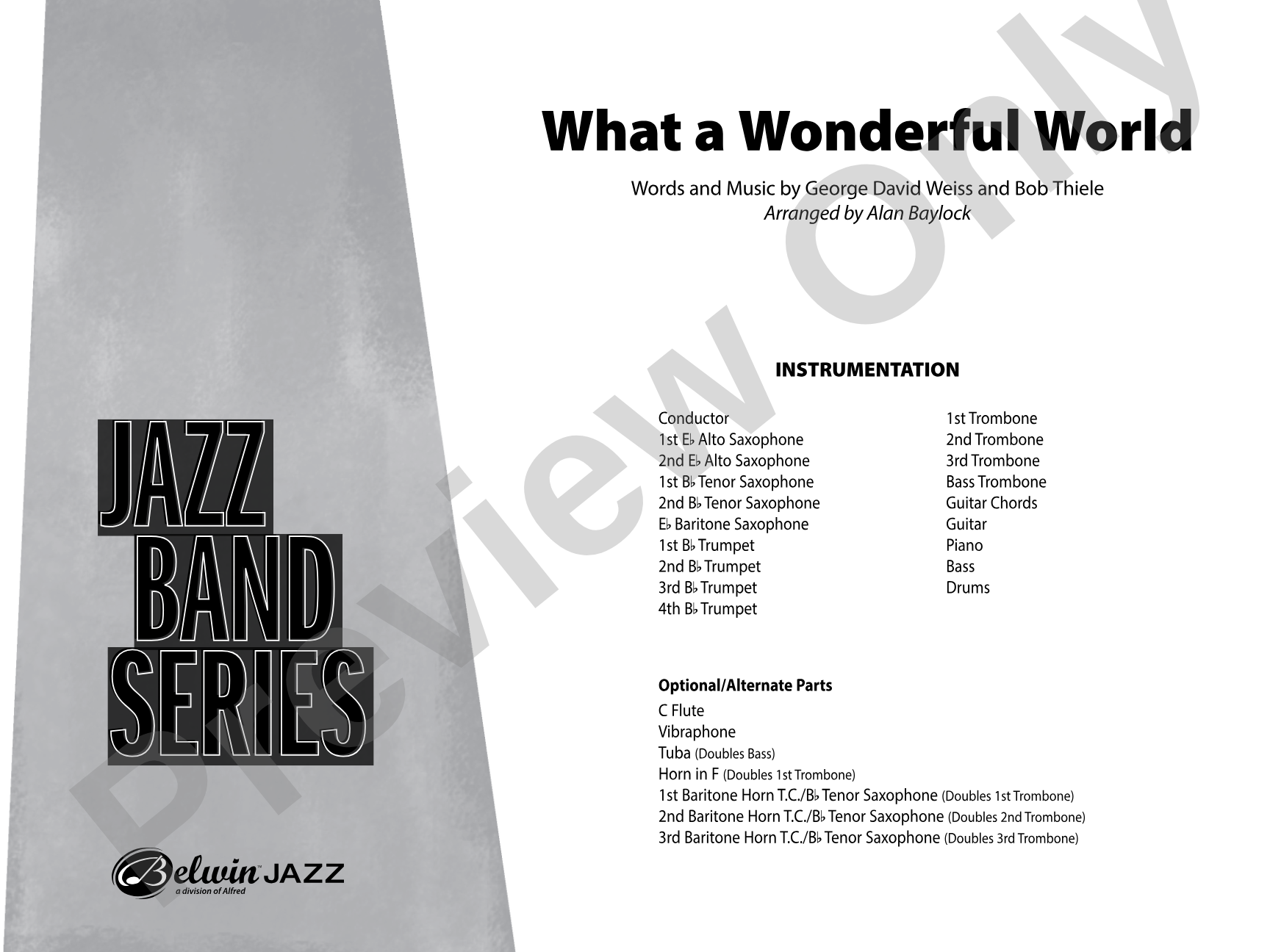
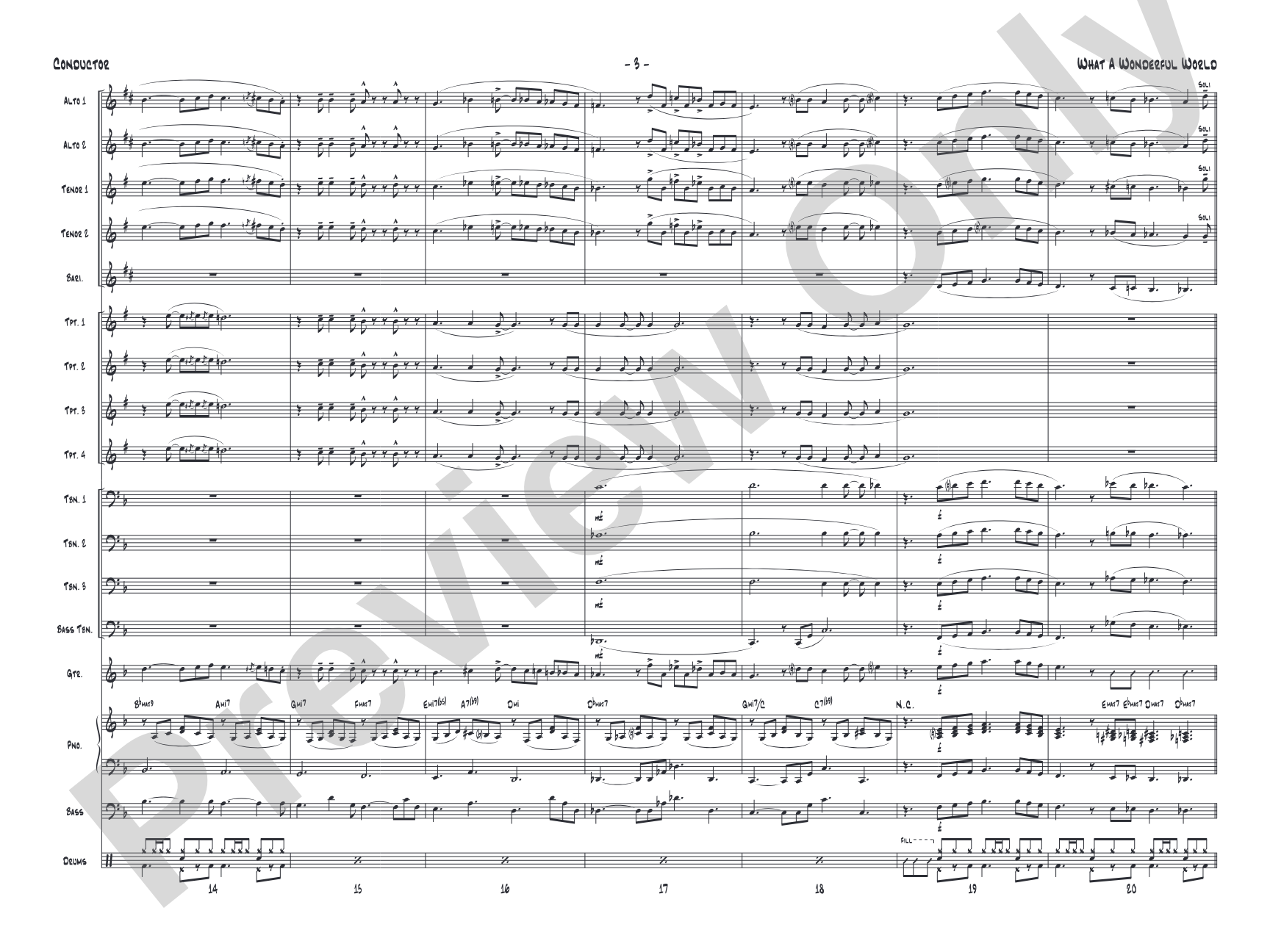
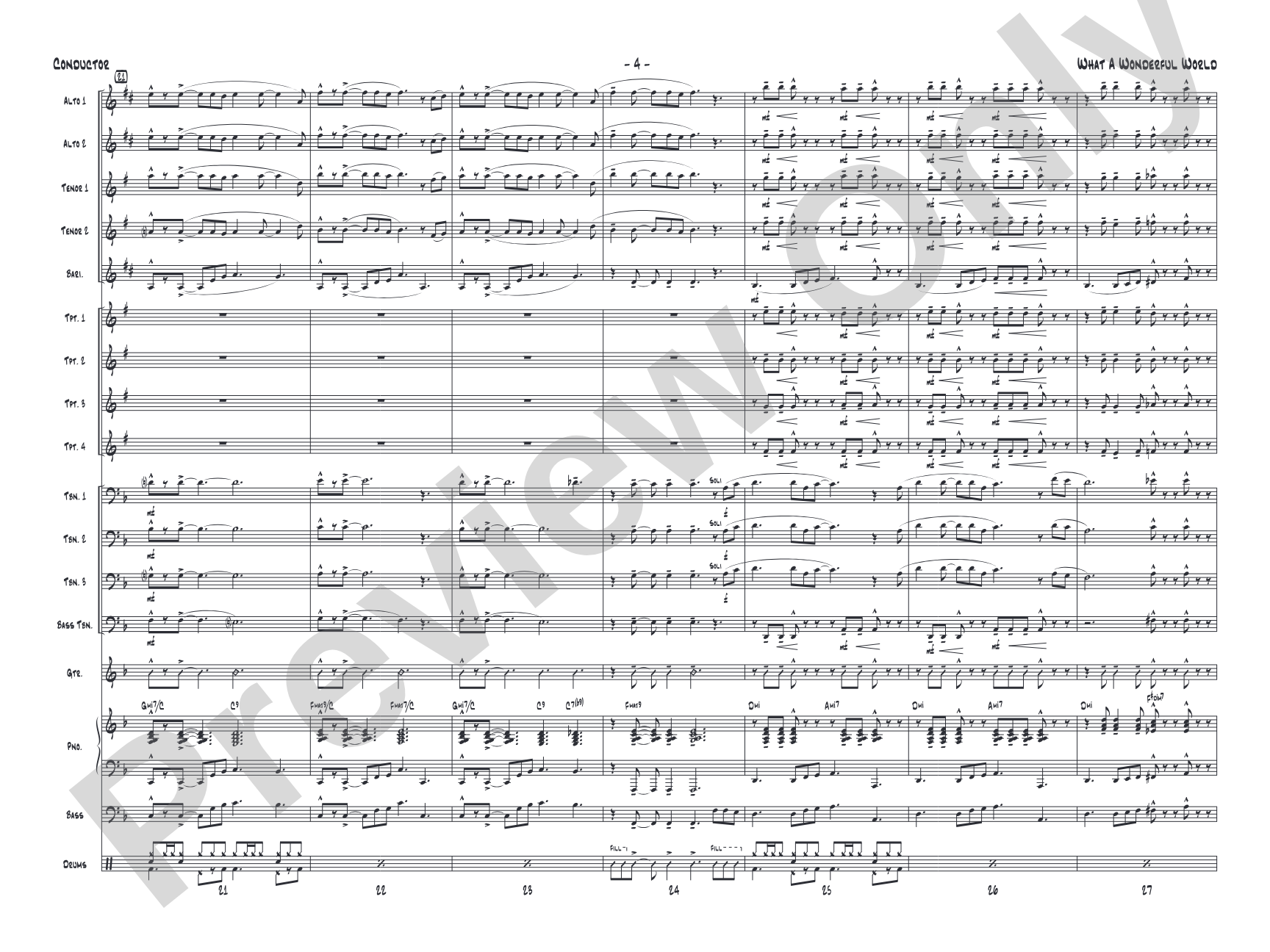
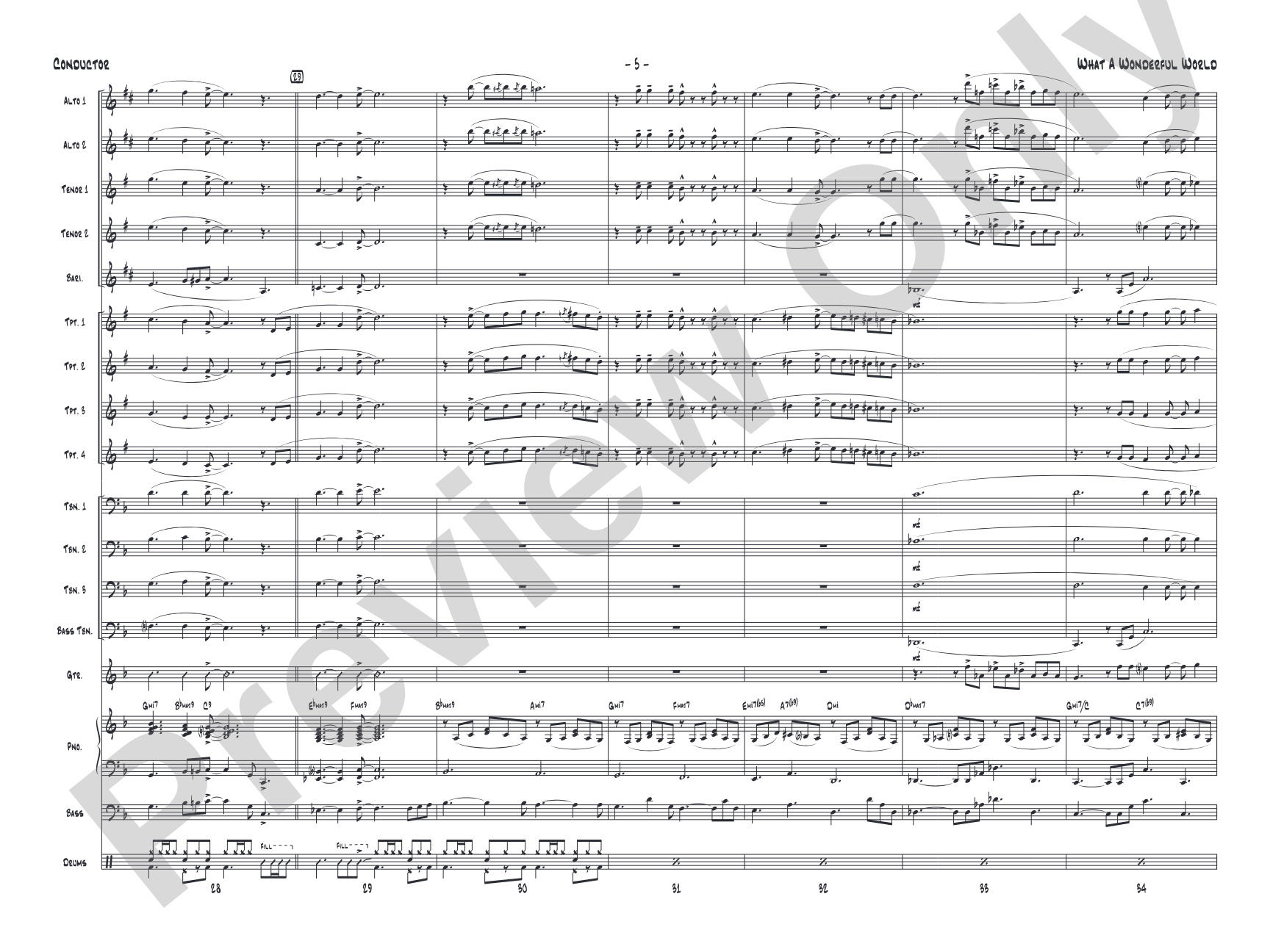
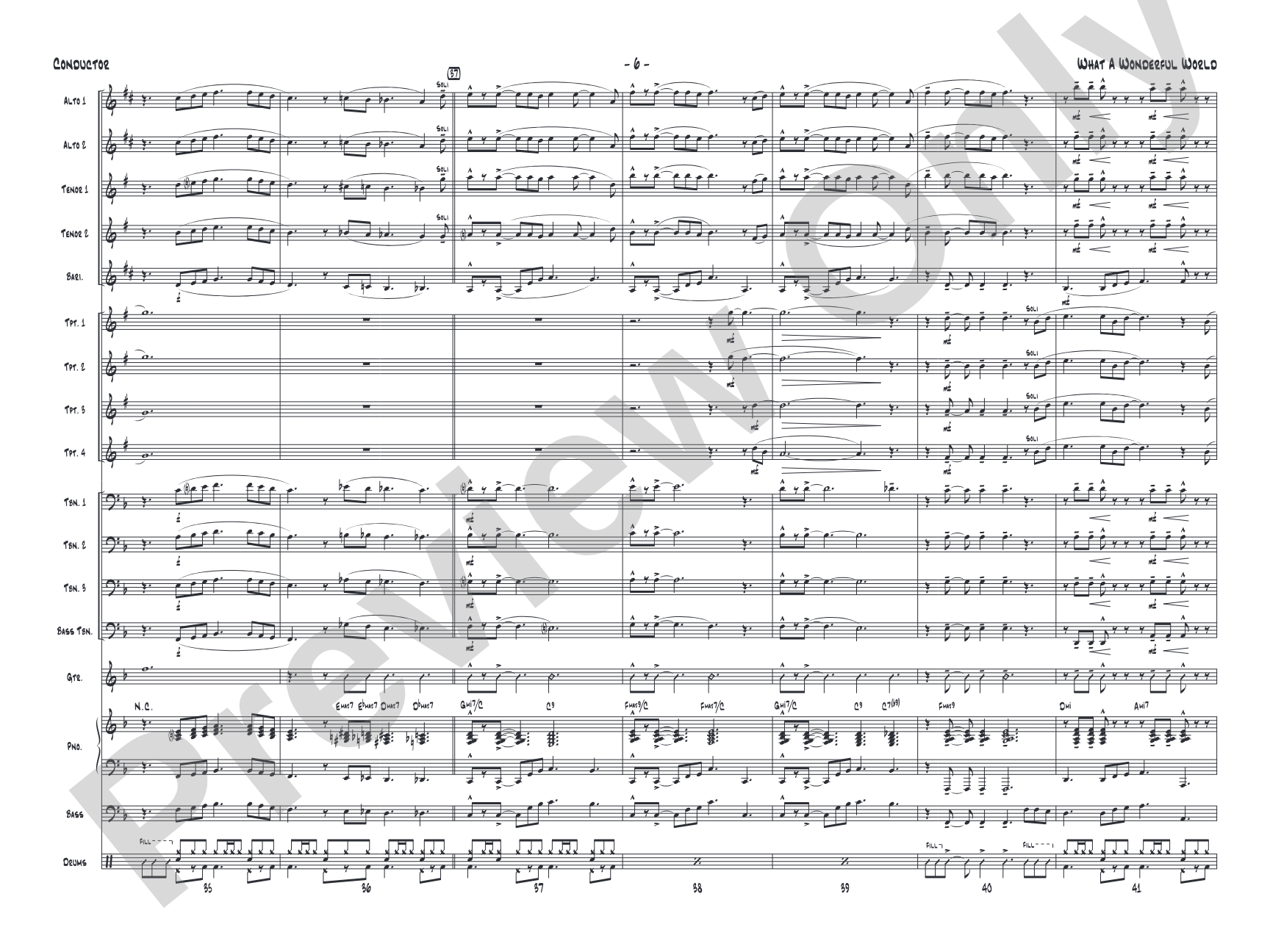

What a Wonderful World: Jazz Ensemble Conductor Score & Parts
Words and music by George David Weiss and Bob Thiele / arr. Alan Baylock
Grade: 3 (Medium)
Item: 00-PK-0007733

$54.00
Pickup currently not available
Buy Extra Parts (Digital PDF Download)
Parts Added to Cart!
Description
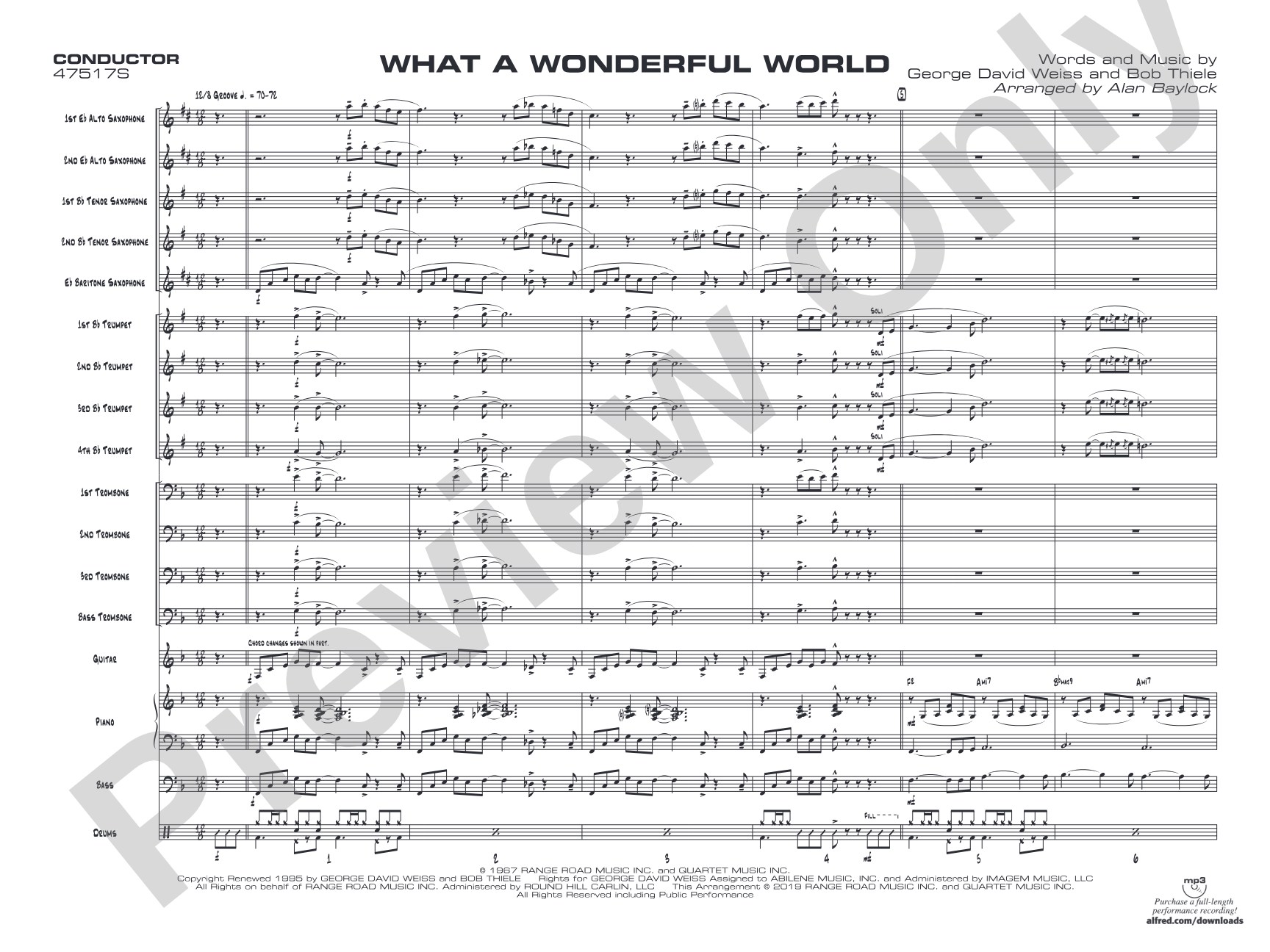
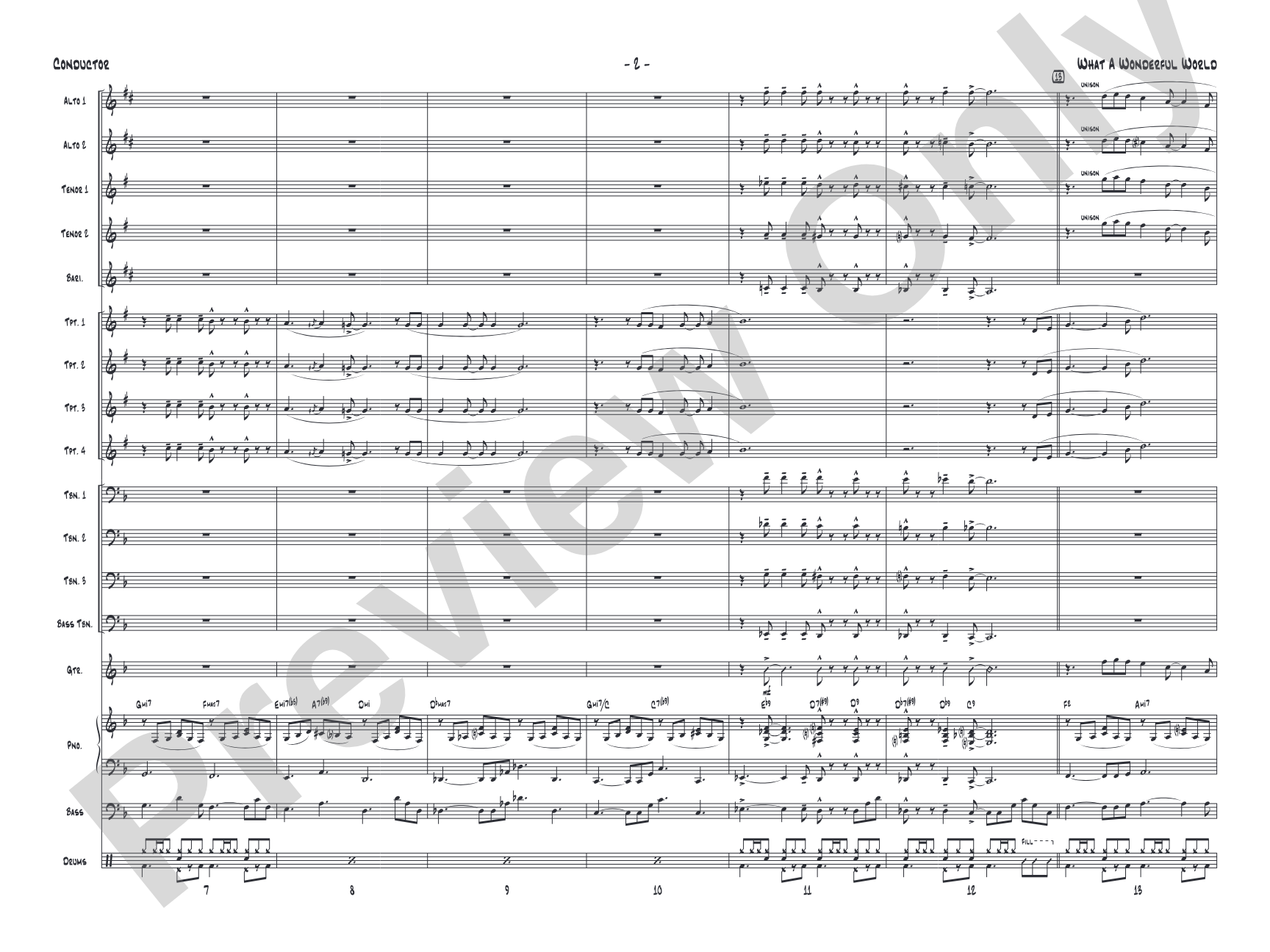
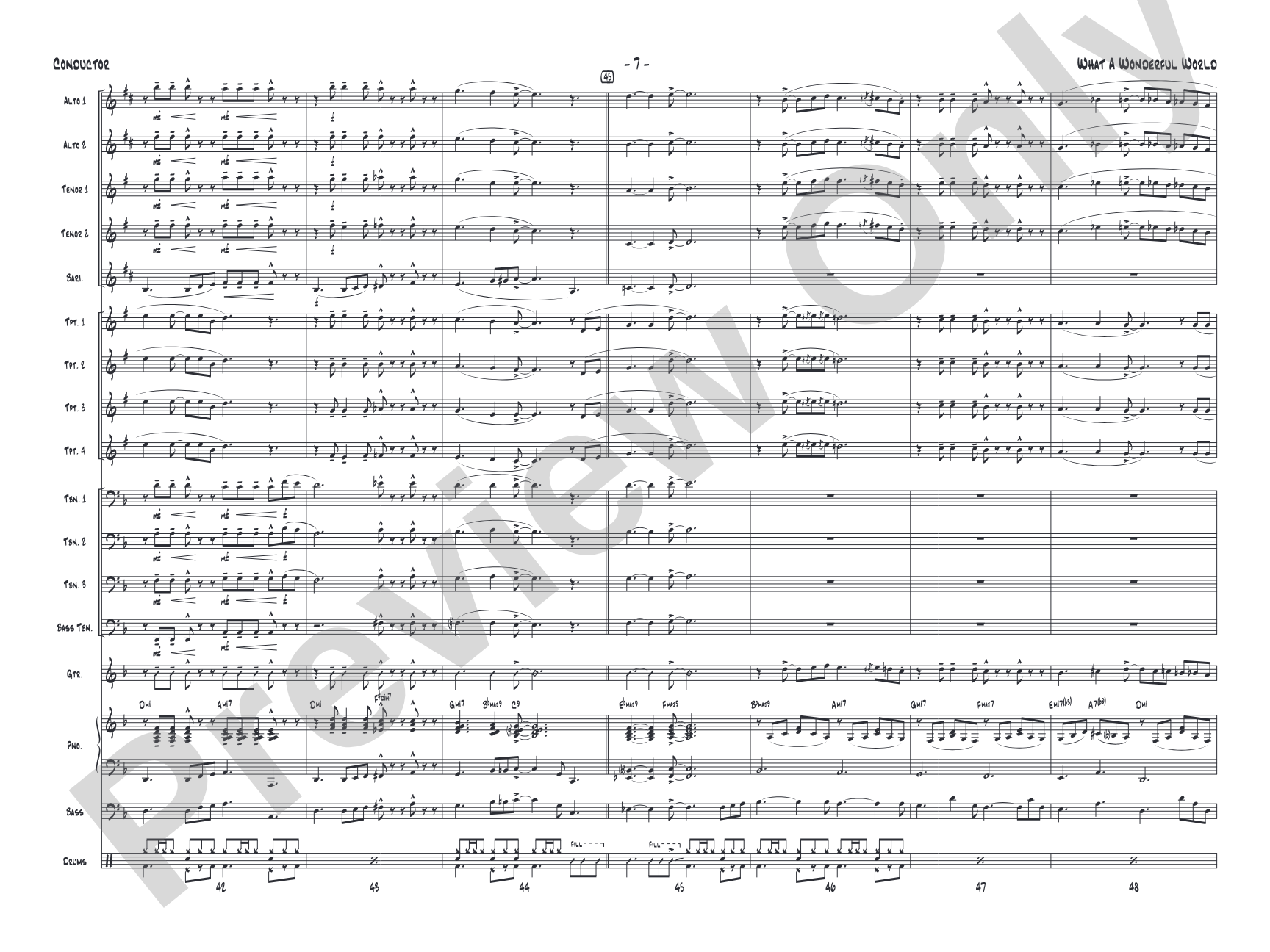
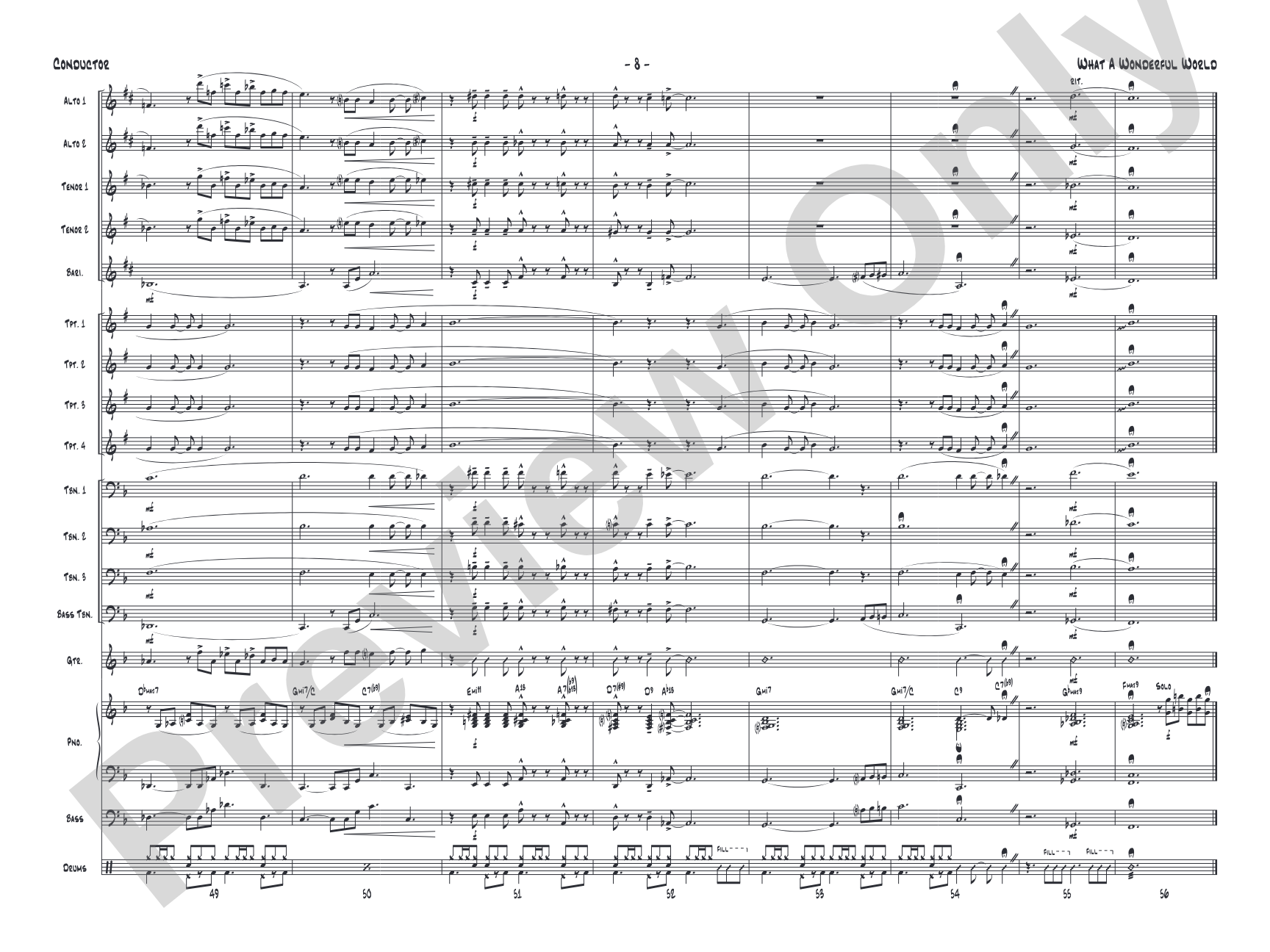
Everyone knows this song! A 12/8 groove played at 72 BPM makes this chart feel lazy and relaxed. Lead trumpet range is to A above the staff. No solos, just sweet ensemble all the way. (3:22)


Don't just read it, hear it, play along with it, and watch your students grow with it. In MakeMusic Cloud, What a Wonderful World: Jazz Ensemble Conductor Score & Parts comes alive with professional accompaniment, adjustable tempo, and built-in practice tools that turn solo practice into real progress.
Open in the Player
Jump straight in and assign it today.
Start Your Free Trial
Open this title and explore the full library in minutes.
Sample Audio
1
Audio File
--:--
0:00
0:00
Sample Video
Additional Details
Series:
Jazz Band Series
Publisher:
Alfred Music
Page Count:
98
SKU:
00-PK-0007733
More about this title
About the Composer: George David Weiss
George David Weiss (1921-2010) composed popular standards across multiple genres, from jazz to film scores. His output spanned decades and consistently prioritized melody and emotional directness, qualities that made his songs accessible to both professional musicians and amateur ensembles.
Weiss understood how to write for singers and instrumentalists alike. His collaborations with lyricist Bob Thiele produced some of the mid-20th century's most enduring melodies, many of which have become staples in jazz education because they balance harmonic sophistication with tuneful clarity.
Why we love this
Alan Baylock's arrangement strips away any unnecessary complexity and lets the melody breathe at a gentle 12/8 shuffle. The absence of solos means every player stays engaged with ensemble texture, making this ideal for building cohesion and blend while performing a universally recognized tune that audiences love hearing.
What to expect
Unhurried and optimistic, like settling into a comfortable groove. The 12/8 pulse and relaxed tempo create a conversational quality; the ensemble breathes together and phrases with clarity rather than urgency. It's a piece that rewards attentive listening without demanding technical pyrotechnics.
Who it's for
Jazz ensemble directors working with Grade 3 groups who want to program a standard that connects with audiences immediately. It works equally well for festival play or concert contexts where the ensemble is still developing secure intonation and rhythmic precision.
How to get the most out of it
- Anchor the ensemble groove by locking the rhythm section first. The 12/8 feel at 72 BPM should feel completely unhurried; resist the temptation to push the tempo.
- Keep the lead trumpet tone warm and singing, especially as it approaches the upper register. A strident or bright quality will fight against the laid-back character of the arrangement.
- Layer dynamics carefully across the ensemble sections. The chart's sweetness depends on balance; when brass enters, ensure saxophones and other voicings remain audible underneath.
- Use the space and silence intentionally. This tune invites listeners in through restraint, not volume.
How to use it
Place this early in a concert or festival set where it can reset the room and establish a warm, engaging tone. The approachable melody and moderate length (3:22) make it an effective bridge piece between a faster opener and a more demanding second number. It also pairs naturally with other jazz standards of similar vintage.
Skills your students will build
- Maintaining steady tempo and groove in 12/8 time
- Blending ensemble voicings across saxophone and brass sections
- Playing with rhythmic precision in swing and shuffle feels
- Reading and balancing jazz harmonies without prominent solo sections
- Shaping phrase lines for legato, lyrical delivery