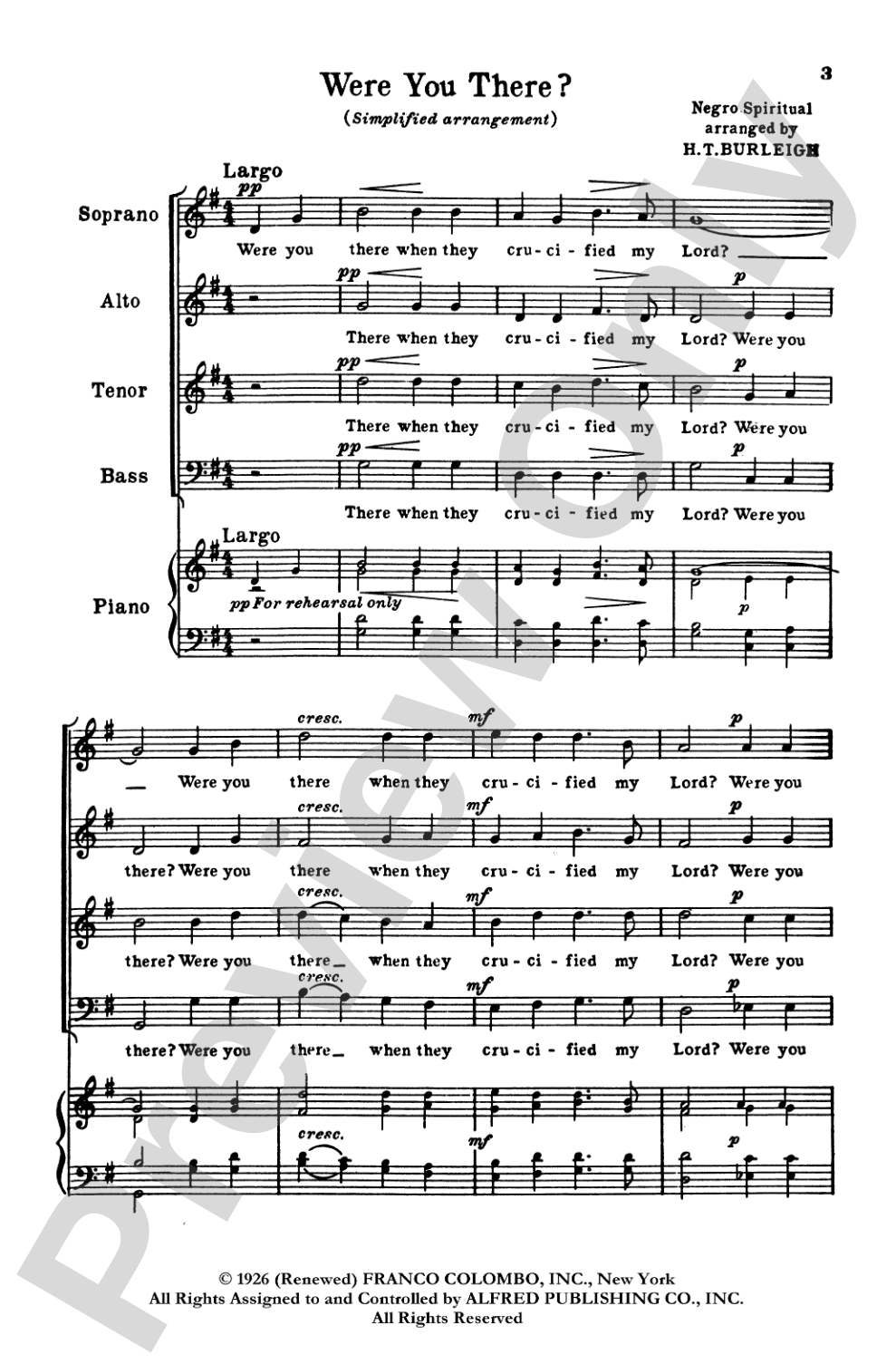
Were You There? Sheet Music Preview

Were You There?: SATB, a cappella Choral Octavo

Spiritual / arr. Harry T. Burleigh

Level: Moderate

Item: 00-PO-0002593

Digital Download
$2.25

Minimum order quantity: 20 copies

Description

Were You There?: SATB, a cappella Choral Octavo isn't in MakeMusic Cloud just yet...but it could be. Let us know you'd like to see it, and you'll help shape what comes next. In the meantime, start a free trial and dive into thousands of interactive titles your students can play along with today.

Sample Audio
No sample audio found.
Sample Video
Additional Details
Series: Alfred Archive Edition: Franco Colombo Catalog
Publisher: Alfred Music
Page Count: 8
SKU: 00-PO-0002593

More about this title

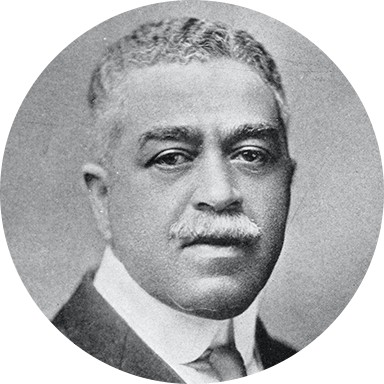
About the Arranger: Harry T. Burleigh

Harry T. Burleigh

Harry Thacker Burleigh (1866-1949) was an American singer and composer whose arrangements of African American spirituals shaped how concert choirs approach this essential repertoire. A student of Antonín Dvořák at the National Conservatory of Music in New York, Burleigh introduced the composer to the depth and sophistication of Black vocal traditions, an encounter that influenced Dvořák's own American compositions. For over fifty years, Burleigh performed as a professional vocalist in New York churches while simultaneously establishing himself as the foremost arranger of spirituals for trained voices.

Burleigh's legacy rests on his ability to honor the spiritual tradition while creating sophisticated arrangements suitable for concert performance. He composed more than 200 songs across multiple genres, but his arrangements of spirituals remain his most enduring contribution to American choral music. His careful voice leading and harmonic treatment opened concert halls and educational institutions to this repertoire during an era when African American music was often dismissed by classical institutions.

Why we love this

Burleigh's arrangement distills the emotional power of this spiritual into an accessible yet dignified setting that respects the tradition without oversimplifying it. The moderate difficulty level means your singers can focus on the profound theology of the text rather than wrestling with vocal gymnastics. This is the standard by which all other arrangements of this beloved spiritual are measured.

What to expect

A moment of profound questioning held in restraint. The piece carries the weight of witness and survival, with harmonies that shift beneath the familiar melody like ripples across still water. The a cappella texture creates an intimate, almost sacred chamber effect even with a full choir.

Who it's for

Choirs at the intermediate level seeking authentic spiritual arrangements that work for both concert and worship contexts. This octavo serves high school, college, and community choirs that want to include this cornerstone spiritual in their programming with confidence that the arrangement will honor the tradition.

How to get the most out of it

  • Shape the melody through gentle dynamic contours rather than aggressive volume changes; the spiritual's strength comes from sustained intensity and introspection, not dramatic shifts
  • Balance the harmony carefully so that no single voice part overwhelms the texture; Burleigh's counterpoint is subtle and requires attentive listening from each section
  • Allow silence and breath to shape the phrasing; resist the urge to rush through cadences, as they carry the spiritual's contemplative power
  • Attend to the text's weight by treating repeated phrases with slight variations in expression rather than identical repetitions

How to use it

Position this as the centerpiece of a spirituals set during Lent or Easter, or pair it alongside other Burleigh arrangements to create a program exploring African American sacred music. Its moderate difficulty makes it practical for spring concert programs where you balance repertoire challenges across your entire season.

Skills your students will build

  • Sustaining legit tone without instrumental support
  • Maintaining intonation in four-part harmony across extended phrases
  • Interpreting text-driven dynamics and phrasing in a cappella settings
  • Balancing ensemble blend while preserving individual voice part independence
  • Understanding the historical and cultural context of African American spirituals

You May Also Like