Wenceslas March: E-flat Baritone Saxophone Sheet Music Preview

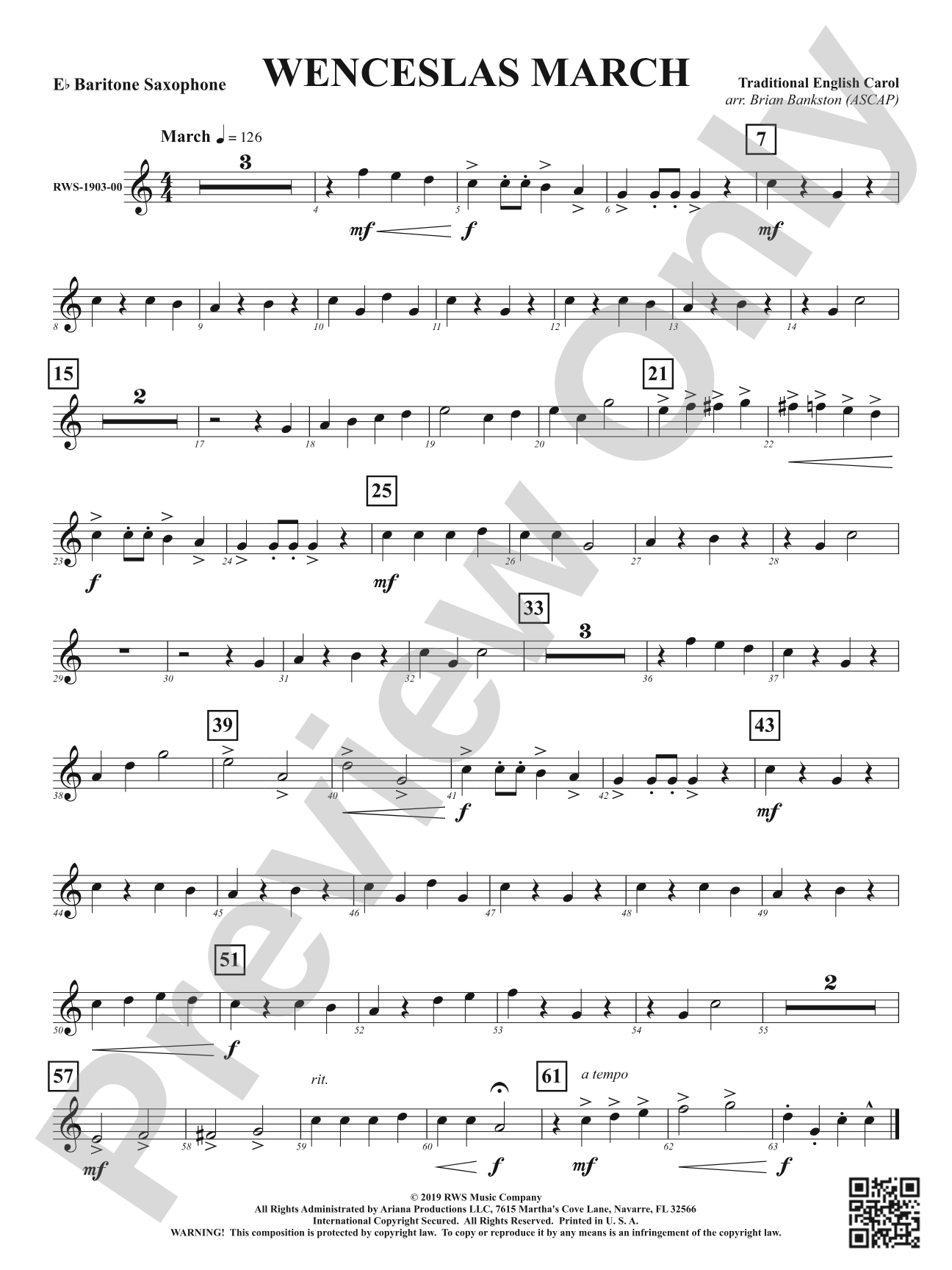
Wenceslas March: E-flat Baritone Saxophone

Arranged by Brian Bankston

Grade: 1.5

Item: 98-PC-RWS1903_BTX

Digital Download
$3.99
Description
Are you looking for a beginning band opener for your next holiday concert? Brian Bankston's new arrangement of the traditional English Christmas carol "Good King Wenceslas" is masterfully scored using limited ranges in all instruments. This is a perfect setting to introduce the march style to your young musicians.

Original Item#: RWS-1903-00

Wenceslas March: E-flat Baritone Saxophone isn't in MakeMusic Cloud just yet...but it could be. Let us know you'd like to see it, and you'll help shape what comes next. In the meantime, start a free trial and dive into thousands of interactive titles your students can play along with today.

Sample Audio
0:00
0:00
Sample Video
Additional Details
Series: RWS - Beginning Band
Publisher: RWS Music Company
SKU: 98-PC-RWS1903_BTX

More about this title

About the Arranger: Brian Bankston

Brian Bankston brings a pragmatic approach to beginning band arranging, understanding exactly what young musicians need to succeed. His work in the RWS series demonstrates a gift for choosing repertoire that resonates with students while respecting the technical realities of early ensembles.

Why we love this

Bankston's approach respects the melody that students know while giving them manageable ranges and uncomplicated parts. The march style framework teaches form and style conventions without overwhelming young players, making it genuinely instructional rather than just festive window dressing.

What to expect

Stately and warm, like a procession in candlelight. The march rhythm gives it forward momentum and dignity, transforming a carol into something ceremonial that feels both familiar and freshly arranged.

Who it's for

First-year and developing concert bands ready to explore beyond simple unison arrangements. This works for groups with players of mixed experience on their instruments, since the ranges keep everyone accessible to the music.

How to get the most out of it

  • Establish a steady quarter-note pulse in rehearsal before layering parts; young musicians often rush marches out of enthusiasm.
  • Balance the melody across sections rather than letting the highest voices dominate; the limited ranges mean no single part should overshadow the others.
  • Use the harmonic simplicity to focus on tone production and blend; this is an ideal piece for teaching how individual voices support a unified sound.

How to use it

Open a holiday concert with this to set a reflective tone before moving to livelier seasonal selections. It also serves well as the opener to a full band concert in early winter, grounding the program with something recognizable before introducing newer works.

Skills your students will build

  • March style conventions and phrasing
  • Reading and executing limited ranges across multiple parts
  • Ensemble balance with simple harmonic textures
  • Maintaining steady tempo through repeated phrases

You May Also Like