
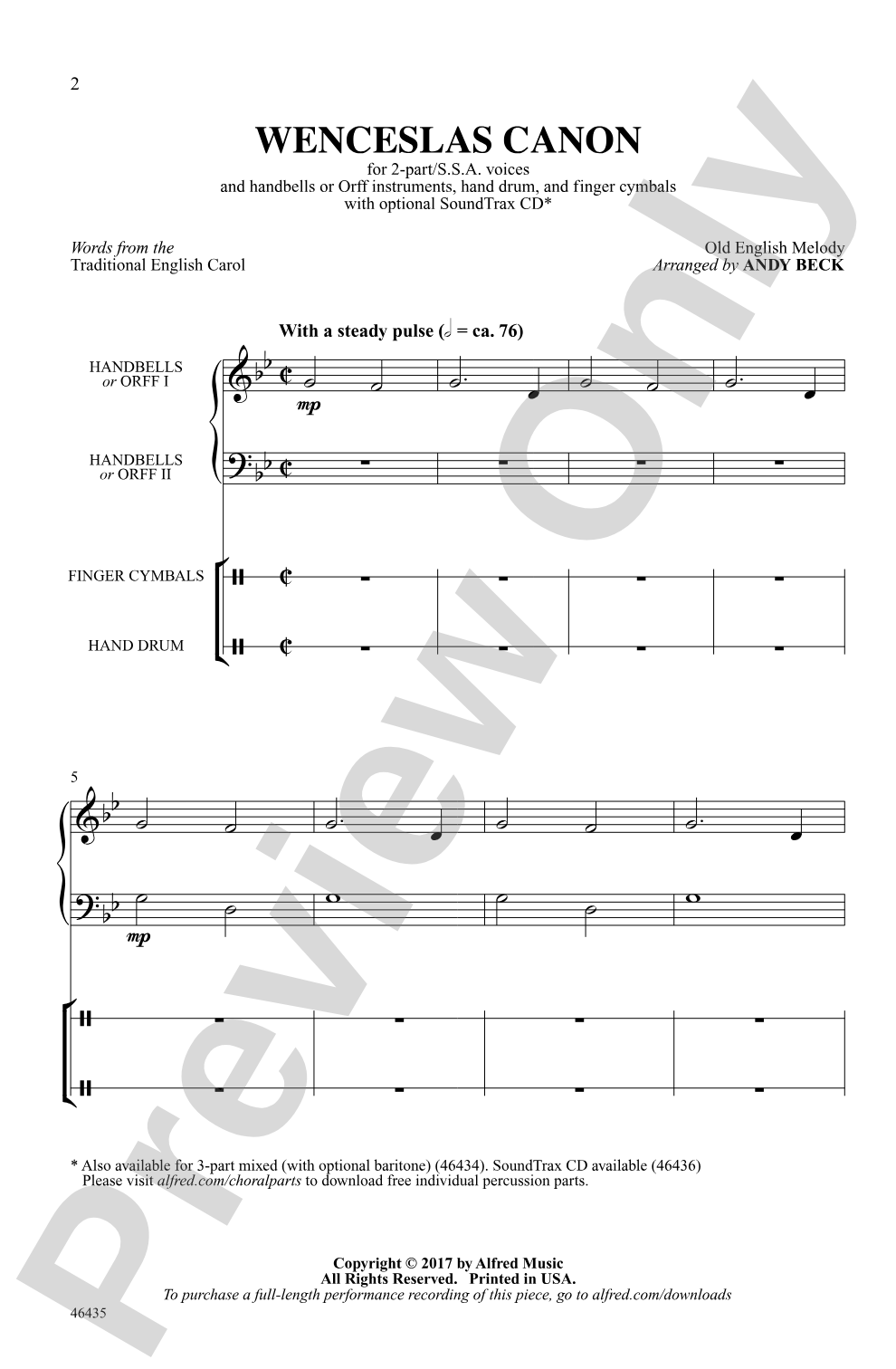

Wenceslas Canon: 2-Part/SSA Choral Octavo
Old English Melody, words from the Traditional English Carol / arr. Andy Beck
Item: 00-PO-0005664
$2.05
Minimum order quantity: 20 copies
Pickup currently not available
Description
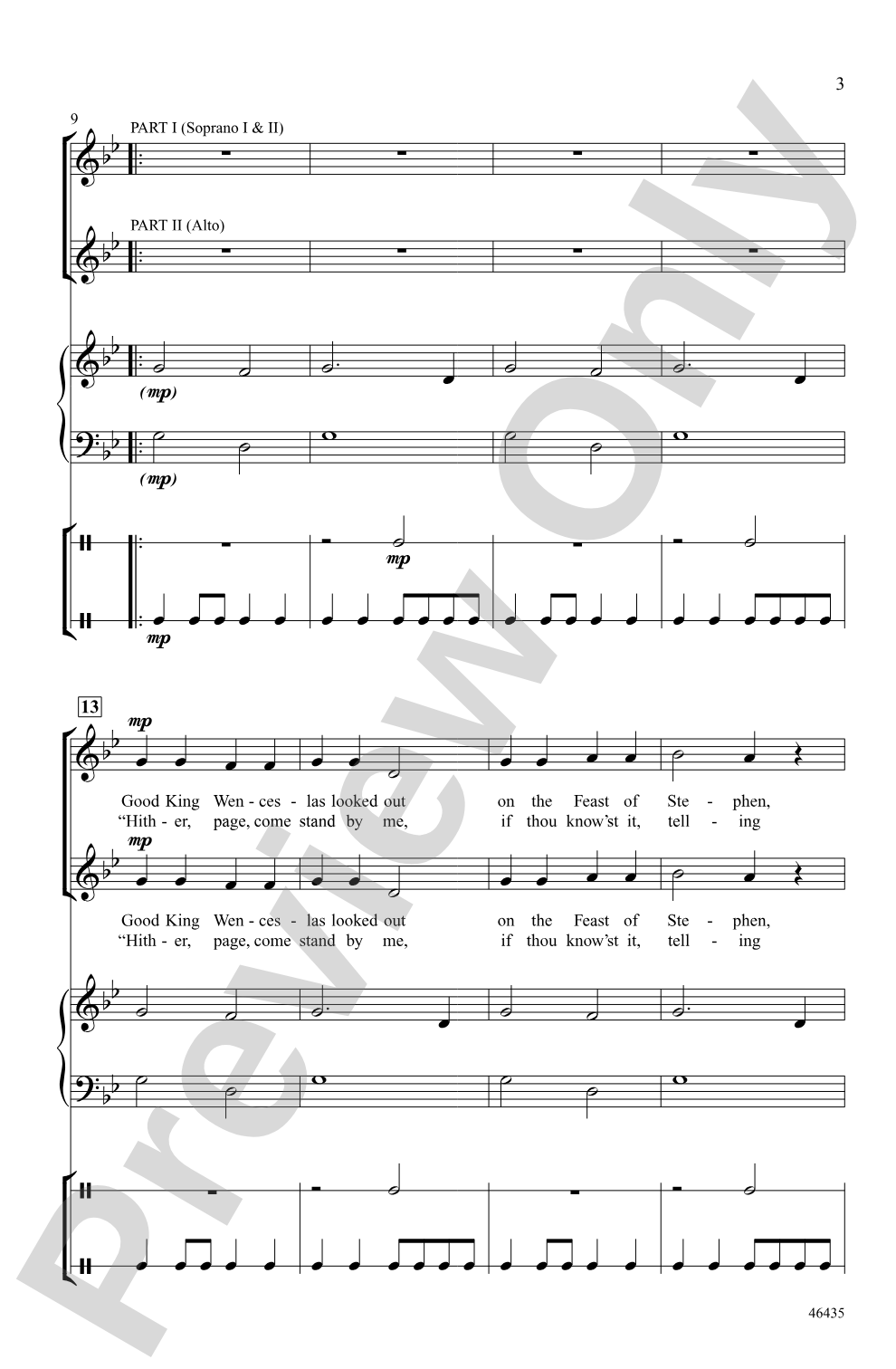
Words from the English carol, "Good King Wenceslas" are set to the melody of "Hey, Ho, Nobody Home." Canonic writing ensures success, and the stately walking tempo suggests a processional. A light percussion accompaniment (including handbells or Orff instruments) adds a Renaissance feel. Ideal for developing choirs!


Wenceslas Canon: 2-Part/SSA Choral Octavo isn't in MakeMusic Cloud just yet...but it could be. Let us know you'd like to see it, and you'll help shape what comes next. In the meantime, start a free trial and dive into thousands of interactive titles your students can play along with today.
Request This Title
Tell us you want it.
Start Your Free Trial
Explore everything that's ready to play right now.
Sample Audio
1
Audio File
--:--
0:00
0:00
Sample Video
No sample videos found.
Additional Details
Series:
Alfred Choral Designs
Publisher:
Alfred Music
Page Count:
12
SKU:
00-PO-0005664
More about this title
About the Arranger: Andy Beck

Andy Beck leads the choral publications division at Alfred Music, where he has cultivated a catalog of over 450 choral works, vocal resources, and children's musicals. His output spans secular and sacred repertoire, method books including Sing at First Sight and Vocalize! 45 Vocal Warm-Ups That Teach Technique, and arrangements that reach singers across all levels and age groups worldwide.
Beyond the page, Beck serves as a guest conductor, clinician, and adjudicator throughout the United States and internationally. He holds degrees in Music Education from both Ithaca College and Northwest Missouri State University, and he performs as a tenor with the North Carolina Master Chorale Chamber Choir. His work reflects a deep investment in choral literacy, artistry, and music education at every level.
Why we love this
The canonic structure guarantees musical success even with developing singers, while the pairing of familiar carol text with a well-known medieval melody creates immediate familiarity and engagement. The optional percussion parts and Renaissance aesthetic open the door to creative staging and cross-curricular connections without demanding advanced technical skills from singers.
What to expect
The arrangement carries a contemplative, ceremonial quality. The familiar carol text set to a traditional melody grounds singers in something they recognize, while the canonic weaving creates a gentle complexity that feels almost meditative rather than bustling.
Who it's for
Developing choirs working toward independence in part-singing will find this piece accessible and rewarding. The straightforward canonic structure supports singers who are building confidence in reading and maintaining their own lines without depending on a dominant melody.
How to get the most out of it
- Establish the walking tempo early in rehearsal. The stately pace should feel processional rather than sluggish; think of it as a measured, dignified stride.
- Spend rehearsal time on the canon entries. Mark where each voice begins its phrase and isolate those moments so singers feel confident launching their lines on cue.
- If using handbells or Orff instruments, let them double the choral rhythm first to build confidence. Once singers are secure, the percussion can explore gentle elaborations.
- Avoid over-balancing the voices. In canonic writing, both parts carry equal weight melodically. Encourage singers to hear and blend with the other line, not dominate it.
How to use it
This works beautifully as a holiday concert opener or closer, where its processional quality and accessible charm set a warm, welcoming tone. It pairs well with other traditional and secular Christmas fare, or as a bridge between more substantial choral works when you want something lighter that still showcases ensemble singing.
Skills your students will build
- Singing in canon with independence and security
- Maintaining a part while hearing another voice move through similar melodic material
- Responding to percussion cues and coordinating with non-vocal musicians
- Sustaining a steady, measured tempo without rushing or dragging