
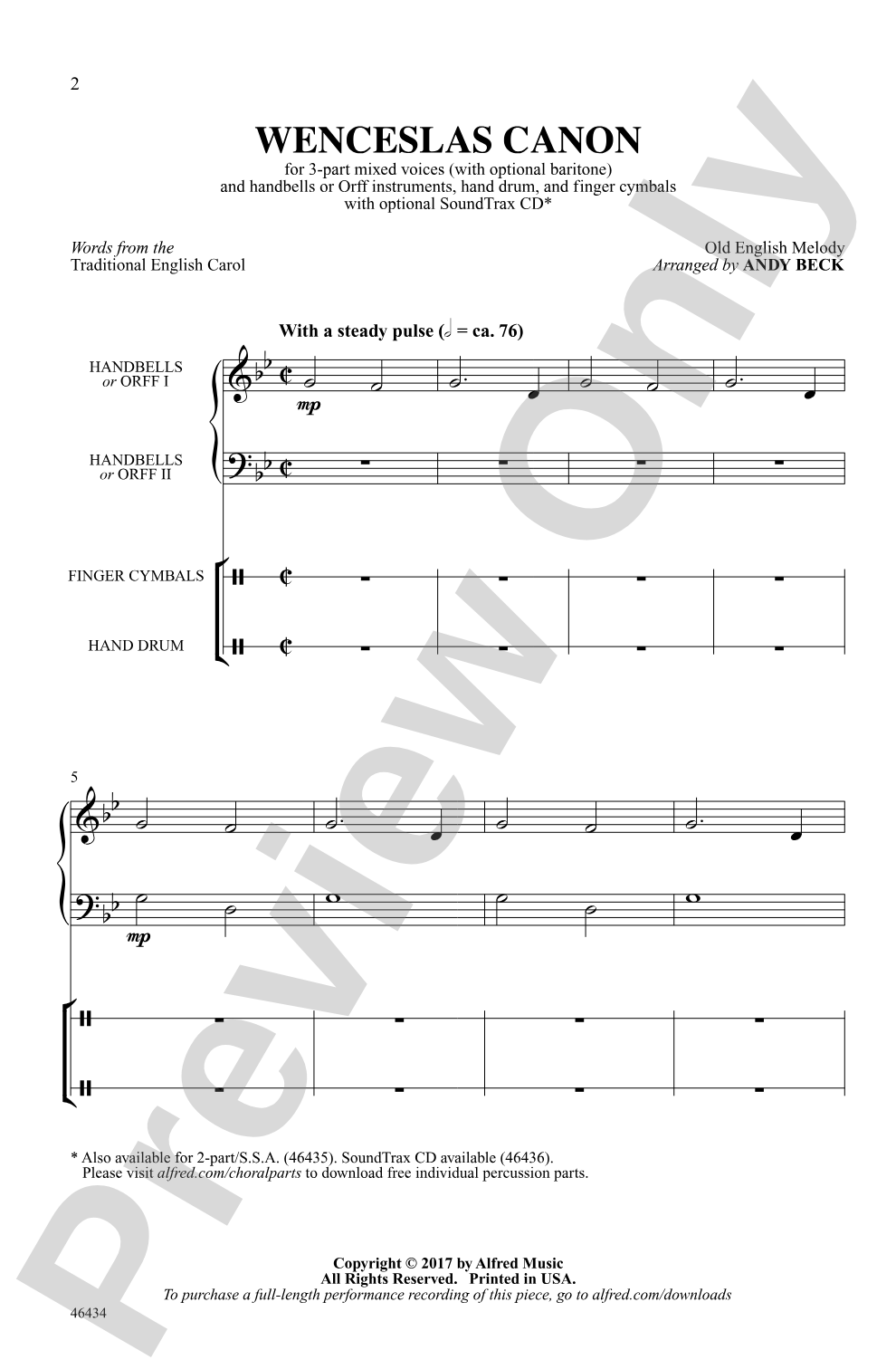
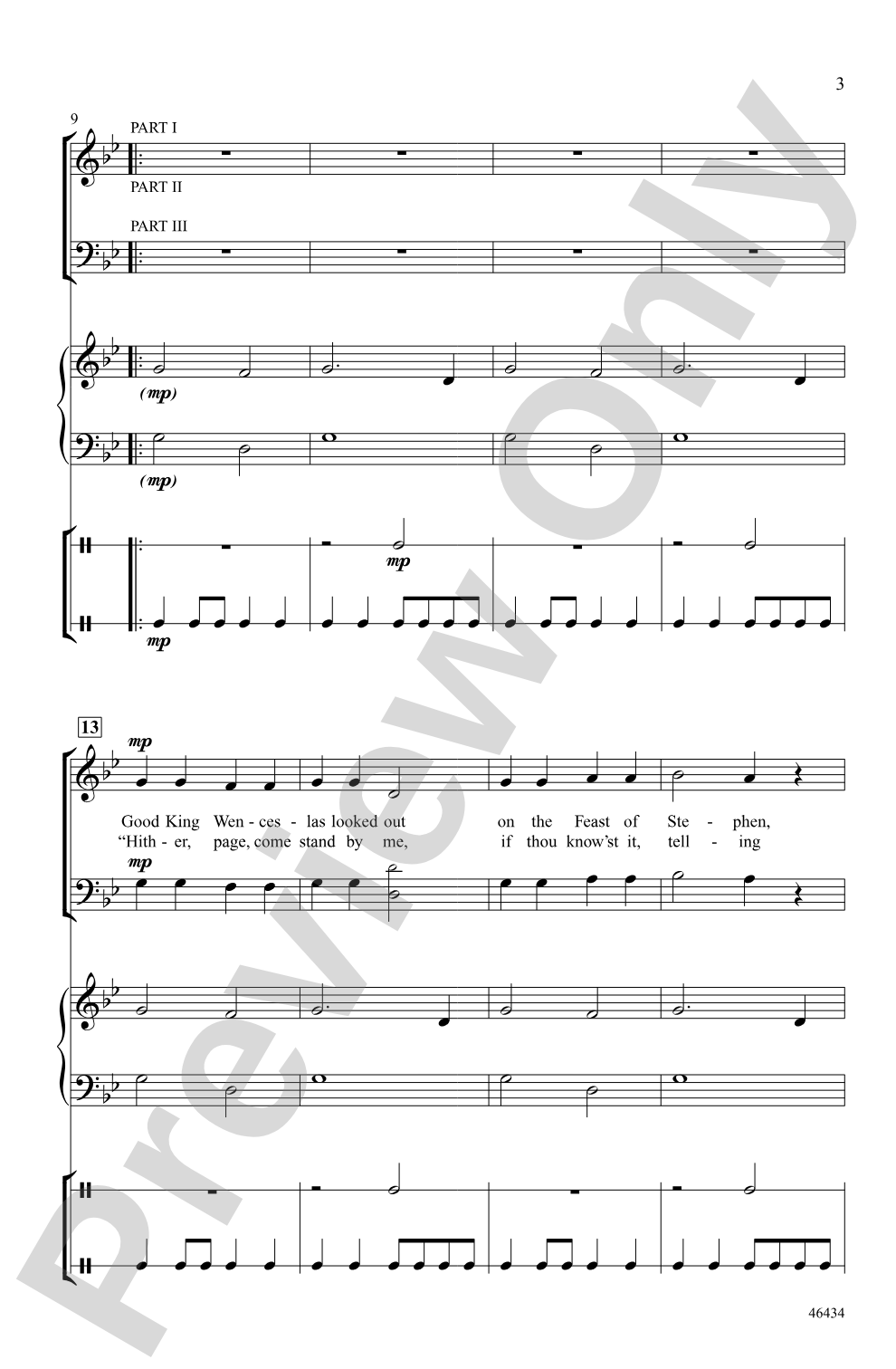

Wenceslas Canon: 3-Part Mixed Choral Octavo
Old English Melody, words from the Traditional English Carol / arr. Andy Beck
Item: 00-PO-0005663
$1.90
Minimum order quantity: 20 copies
Pickup currently not available
Description
Words from the English carol, "Good King Wenceslas" are set to the melody of "Hey, Ho, Nobody Home." Canonic writing ensures success, and the stately walking tempo suggests a processional. A light percussion accompaniment (including handbells or Orff instruments) adds a Renaissance feel. Ideal for developing choirs!


Wenceslas Canon: 3-Part Mixed Choral Octavo isn't in MakeMusic Cloud just yet...but it could be. Let us know you'd like to see it, and you'll help shape what comes next. In the meantime, start a free trial and dive into thousands of interactive titles your students can play along with today.
Request This Title
Tell us you want it.
Start Your Free Trial
Explore everything that's ready to play right now.
Sample Audio
1
Audio File
--:--
0:00
0:00
Sample Video
Additional Details
Series:
Alfred Choral Designs
Publisher:
Alfred Music
Page Count:
12
SKU:
00-PO-0005663
More about this title
About the Arranger: Andy Beck

Andy Beck leads the choral publications department at Alfred Music, where he has cultivated a catalog of over 450 choral works, vocal resources, and children's musicals. His arrangements and compositions are performed by singers across the globe, and his vocal pedagogy resources—including Sing at First Sight, Foundations in Choral Sight Singing, and Vocalize! 45 Vocal Warm-Ups That Teach Technique—have become staples in choir rooms and classrooms.
Beyond his work as a publisher and composer, Beck is an accomplished tenor and active conductor who regularly adjudicates honor choirs, leads all-state groups, and works as a guest clinician with music educators nationwide. He holds degrees in Music Education from Ithaca College and Northwest Missouri State University, and his commitment to choral artistry and music literacy shapes every publication he develops.
Why we love this
The canonic structure makes this arrangement genuinely achievable for developing choirs without sacrificing musical substance. The pairing of a familiar carol text with the "Hey, Ho, Nobody Home" melody creates a fresh take that singers and audiences both recognize, and the addition of Renaissance-inspired percussion transforms a simple piece into something that feels festive and intentional on a winter concert.
What to expect
Walking at a measured pace through a winter landscape, voices layering like echoes in a cathedral or village square. The Renaissance percussion accompaniment—whether bells or Orff—brings a timeless, slightly formal quality that honors the carol's heritage while keeping the arrangement fresh and contemporary.
Who it's for
Developing and intermediate mixed choirs looking for accessible yet musically rewarding Christmas repertoire. The three-part mixed voicing and canonic structure make it ideal for choirs building confidence in part independence without overwhelming singers with complex harmony.
How to get the most out of it
- Keep the walking tempo steady and unhurried; the processional character depends on a consistent heartbeat rather than pushing forward.
- Balance the three voice parts so the canonic imitation is audible; avoid letting any single line dominate.
- Rehearse the percussion independently first (handbells or Orff instruments) so it locks in before combining with voices.
- Shape phrases naturally across the barlines rather than stopping at each canon entry; the melody should breathe as one continuous line even as voices enter separately.
How to use it
This piece works beautifully as a centerpiece in a Christmas concert featuring mixed-era or eclectic holiday music. Its stately processional character makes it a natural opening number or transition piece, and the straightforward scoring means it won't demand months of rehearsal time from your developing singers.
Skills your students will build
- Singing independent voice parts in canonic imitation
- Maintaining ensemble blend while tracking a personal vocal line
- Coordinating with light percussion accompaniment
- Singing sustained tones with appropriate breath management for lyrical text
- Interpreting Renaissance musical style and stately tempo