
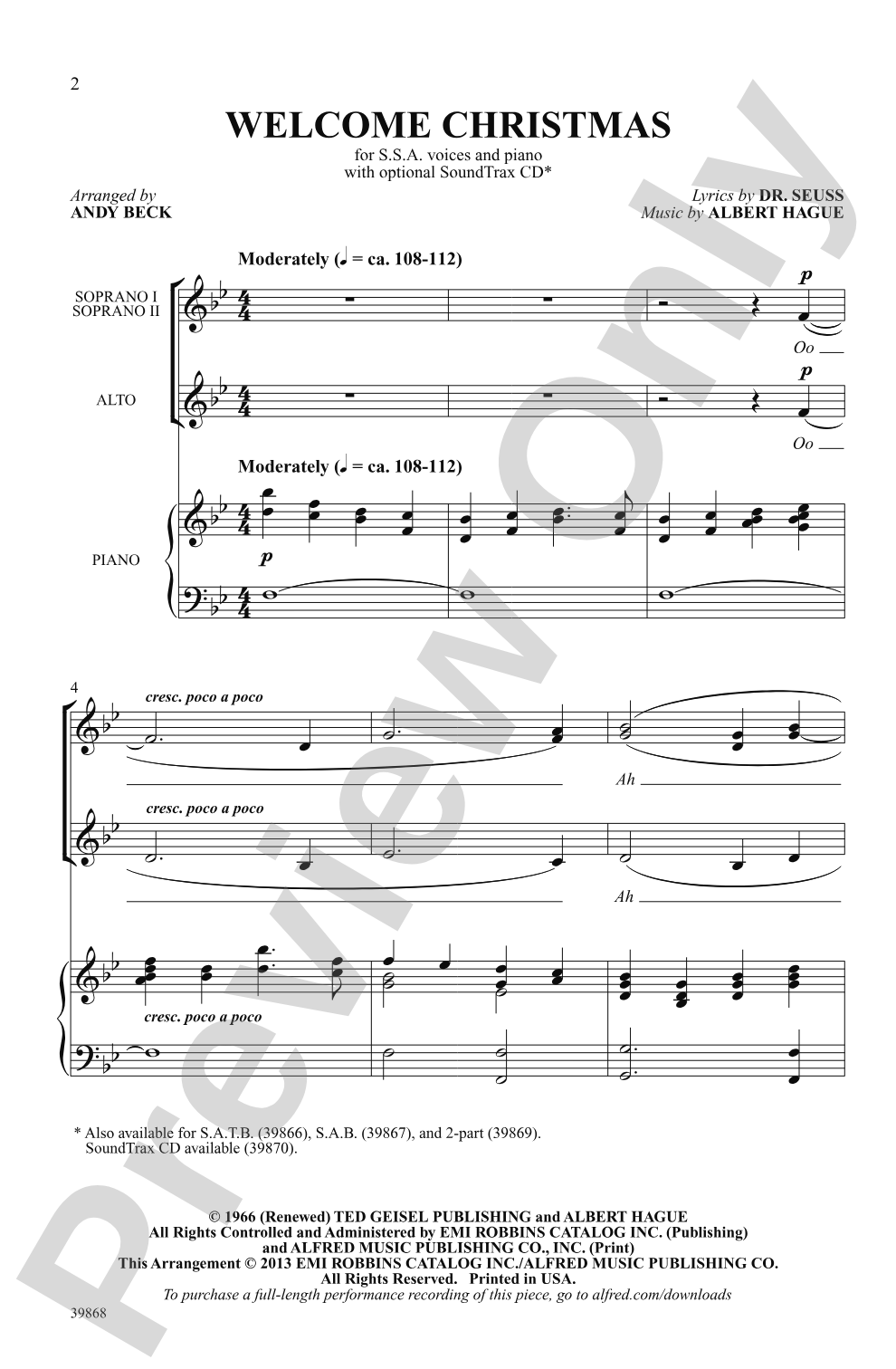
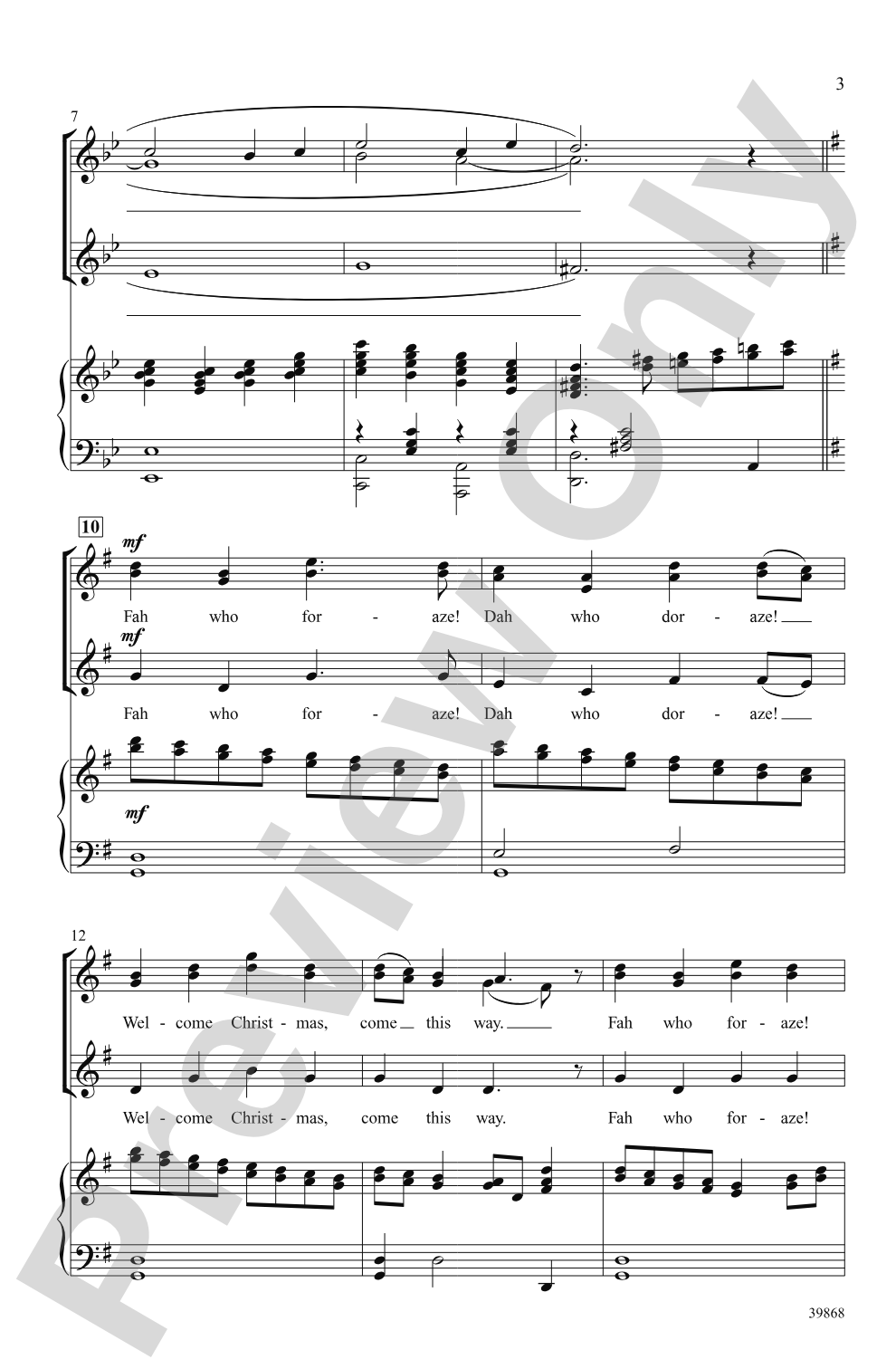

Welcome Christmas (from How the Grinch Stole Christmas): SSA Choral Octavo
From How the Grinch Stole Christmas
Lyrics by Dr. Seuss, music by Albert Hague / arr. Andy Beck
Item: 00-PO-0001668

$2.10
Minimum order quantity: 20 copies
One moment…
Related Items
Welcome Christmas: SoundTrax Digital Audio Download |
$27.99
|
View | |
Welcome Christmas (from How the Grinch Stole Christmas): SATB Choral Octavo |
$2.10
|
View | |
Welcome Christmas (from How the Grinch Stole Christmas): SAB Choral Octavo |
$2.10
|
View | |
Welcome Christmas (from How the Grinch Stole Christmas): 2-Part Choral Octavo |
$2.10
|
View | |
Welcome Christmas: SATB Choral Octavo |
$2.10
|
View | |
Welcome Christmas: SAB Choral Octavo |
$2.10
|
View | |
Welcome Christmas: SSA Choral Octavo |
$2.10
|
View | |
Welcome Christmas: 2-Part Choral Octavo |
$2.10
|
View | |
Welcome Christmas: Choral Octavo SoundTrax CD |
$27.99
|
View |
Description
Whether you fell in love with this song when all the Whos down in Whoville joined hands around the Christmas tree or when Glee's New Directions performed in the McKinley High faculty lounge, fans of Dr. Seuss' How the Grinch Stole Christmas and Gleeks alike will rejoice at this fully-harmonized arrangement of the beloved holiday classic!


Don't just read it, hear it, play along with it, and watch your students grow with it. In MakeMusic Cloud, Welcome Christmas (from How the Grinch Stole Christmas): SSA Choral Octavo comes alive with professional accompaniment, adjustable tempo, and built-in practice tools that turn solo practice into real progress.
Open in the Player
Jump straight in and assign it today.
Start Your Free Trial
Open this title and explore the full library in minutes.
Sample Audio
1
Audio File
--:--
0:00
0:00
Sample Video
No sample videos found.
Additional Details
Series:
Alfred Pop Choral Series
Publisher:
Alfred Music
Page Count:
8
SKU:
00-PO-0001668
More about this title
About the Composer: Albert Hague
Albert Hague composed the score for the 1966 television special "How the Grinch Stole Christmas," creating music that has become inseparable from Dr. Seuss' beloved story. His ability to capture whimsy, warmth, and emotional depth through melody made the special a cultural touchstone that continues to air every holiday season.
Hague's gift for writing singable, memorable melodies served him well across theater, film, and television. His work demonstrates how a composer can enhance a narrative without overwhelming it, letting character and story remain central while the music amplifies emotional truth.
Why we love this
This arrangement taps into genuine audience recognition and affection. The melody is so embedded in listeners' memory that your singers will feel an immediate connection to the music, which builds confidence and makes rehearsals energized rather than technical.
What to expect
Warmth, community, and gentle celebration define this arrangement. The piece captures the spirit of the special's most heartfelt moment, when the Whos choose connection over material loss. Your singers will feel the combination of simplicity and genuine emotion that makes the original so enduring.
Who it's for
This arrangement suits choirs ranging from middle school through community and church ensembles. The straightforward SSA voicing accommodates singers with varying levels of sight-reading ability while the iconic melody keeps everyone engaged and motivated.
How to get the most out of it
- Balance the three voices so that the top line remains audible without drowning out the harmonic foundation. SSA voicing relies on the soprano carrying the melody, but middle and lower voices sustain the harmony's integrity.
- Lean into the warmth of the text. This is a song about community and belonging, not sentiment. Shape phrases with genuine affection rather than saccharine delivery.
- Use the recorded accompaniment to lock the opening entrance and establish tempo confidence, then consider pulling it back or removing it during unison sections to let voices shine.
- Pay attention to the rhythmic lift in the arrangement. Small articulation choices will make the piece feel buoyant rather than plodding.
How to use it
Program this as a winter concert centerpiece for family and community audiences who will instantly recognize and love it. Pair it with a mix of traditional carols and contemporary holiday pieces to create a program that honors both beloved classics and fresh interpretations. It also works as a standalone seasonal gesture in November or early December.
Skills your students will build
- Three-part harmony and voice independence
- Maintaining melody integrity while supporting harmony
- Performing recognizable material with musical intention rather than nostalgia
- Ensemble balance across three distinct voice ranges