
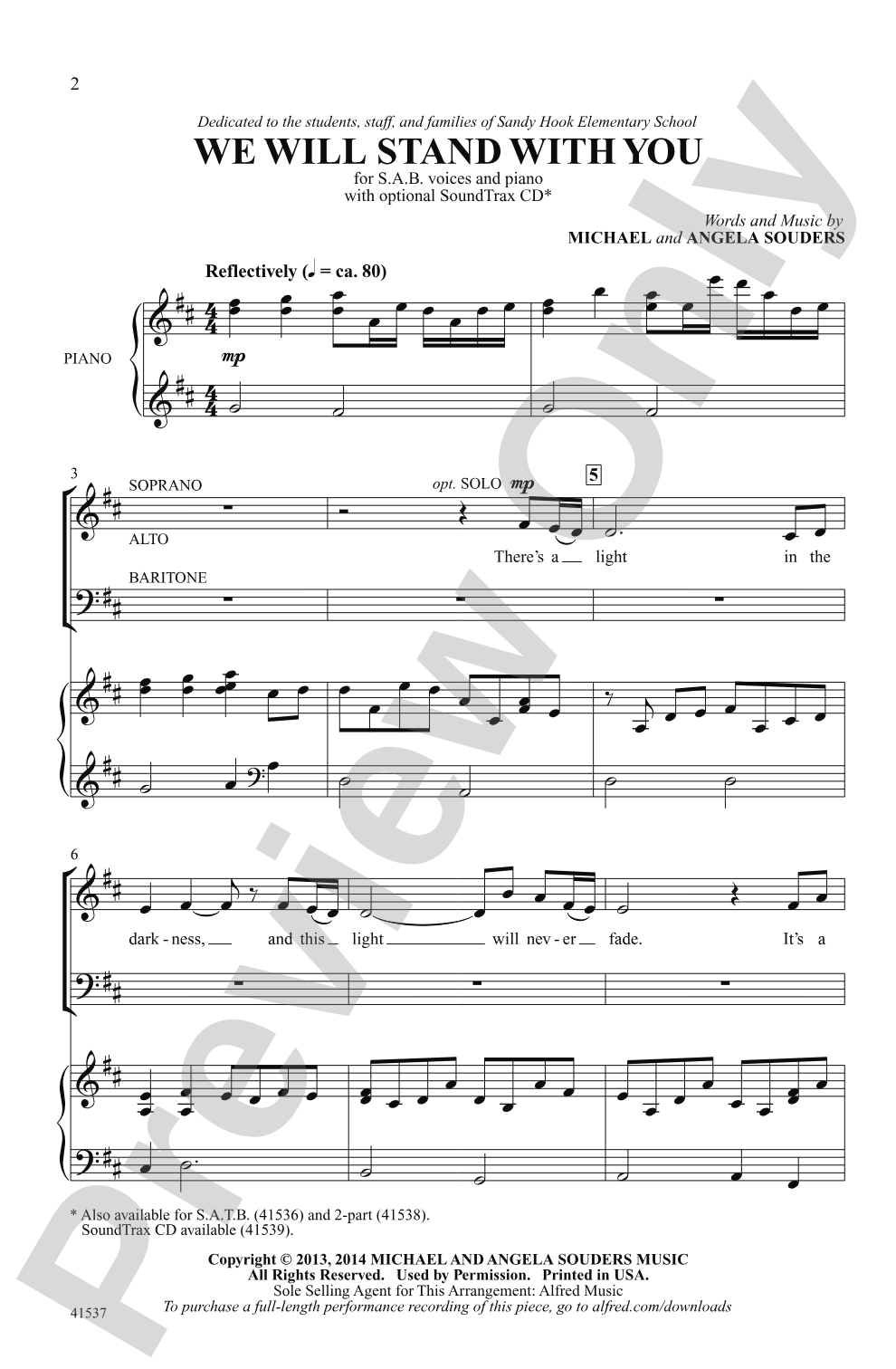
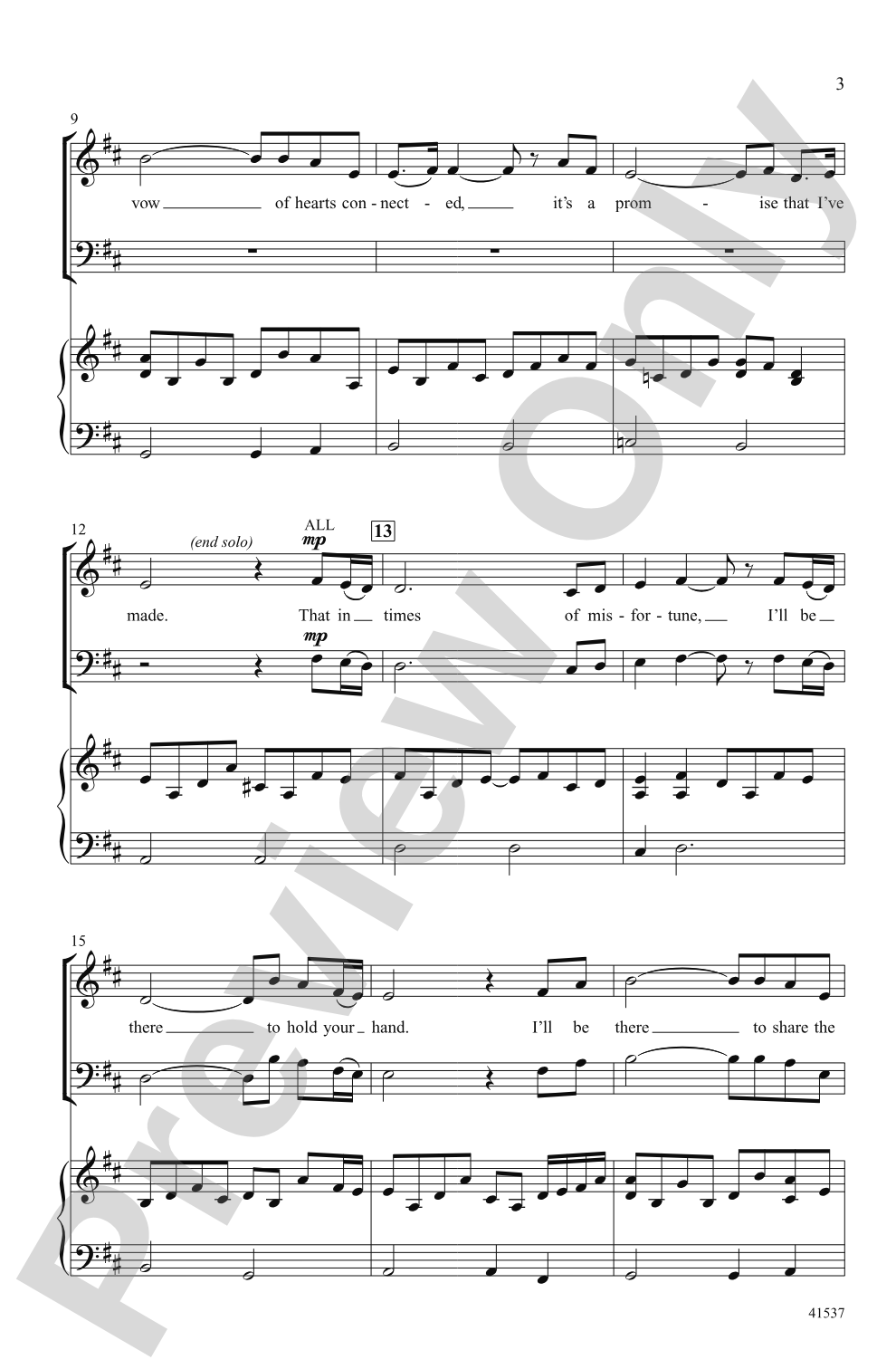

We Will Stand with You: SAB Choral Octavo
Words and music by Michael and Angela Souders
Item: 00-PO-0001787
$1.85
Minimum order quantity: 20 copies
Pickup currently not available
Related Items
We Will Stand with You: SoundTrax Digital Audio Download |
$27.99
|
View | |
We Will Stand with You: SATB Choral Octavo |
$1.85
|
View | |
We Will Stand with You: 2-Part Choral Octavo |
$1.85
|
View | |
We Will Stand with You: SATB Choral Octavo |
$1.85
|
View | |
We Will Stand with You: SAB Choral Octavo |
$1.85
|
View | |
We Will Stand with You: 2-Part Choral Octavo |
$1.85
|
View | |
We Will Stand with You: Choral Octavo SoundTrax CD |
$27.99
|
View |
Description
"In times of misfortune, I'll be there to hold your hand." This emotional power ballad assures us that we are never alone and reminds us to show compassion to those in need. A fervent anthem of support and solidarity.


We Will Stand with You: SAB Choral Octavo isn't in MakeMusic Cloud just yet...but it could be. Let us know you'd like to see it, and you'll help shape what comes next. In the meantime, start a free trial and dive into thousands of interactive titles your students can play along with today.
Request This Title
Tell us you want it.
Start Your Free Trial
Explore everything that's ready to play right now.
Sample Audio
1
Audio File
--:--
0:00
0:00
Sample Video
No sample videos found.
Additional Details
Series:
Alfred Choral Designs
Publisher:
Alfred Music
Page Count:
8
SKU:
00-PO-0001787
More about this title
About the Composer: Michael Souders

Michael Souders teaches elementary music at Colonial Heights Public Schools in Virginia while maintaining a prolific composing career with Alfred Music. His YouTube channel (msouders37) has accumulated over 4.5 million views and more than 3,600 subscribers, establishing him as a widely recognized voice in accessible choral writing. Originally from Chambersburg, Pennsylvania, he studied music and worship at James Madison University, where he performed as a trumpet soloist with the Marching Royal Dukes and served as pianist for the jazz ensemble.
Souders earned a Bachelor of Science degree from JMU and studied arranging and recording with composer Robert W. Smith. Since entering the classroom in 2005, he has consistently written music tailored to his students' needs and abilities, a practice that has shaped his pedagogical sensibility. Teachers trust his work because it speaks directly to their ensemble's developmental level and emotional capacity.
Why we love this
Souders writes from the classroom, which means this piece arrives fully formed for the way your choir actually sounds and learns. The text speaks to a real emotional need, especially at graduation, without requiring advanced vocal technique or risky high notes. SAB scoring removes the barrier of SATB parts while preserving harmonic richness.
What to expect
The piece settles into your singers with quiet assurance, the kind that comes from being truly seen and supported. There is no false brightness here, only honest affirmation and the strength that comes from standing alongside someone else.
Who it's for
Intermediate and advanced SAB choirs looking for repertoire that honors both a significant moment (graduation, benefit concert, service) and their singers' emotional intelligence. Directors of middle school, high school, and community choirs will find this piece accessible in range and technique while remaining substantial in intent.
How to get the most out of it
- Build the opening carefully by anchoring the sopranos' melody while altos and basses establish the harmonic foundation; the emotional weight depends on clarity over volume.
- Use the recorded accompaniment as a learning tool in early rehearsals, then gradually reduce reliance on it to strengthen ensemble independence and blend.
- Emphasize the text's compassion by shaping phrases toward moments of vulnerability rather than bombast; let the fervent quality emerge from genuine conviction, not forced intensity.
- Balance the age and maturity of your singers with the ballad's introspection; this piece rewards singers who can sustain emotion across longer lines.
How to use it
Position this as a centerpiece for graduation, commemorative service, or benefit concert where the message of solidarity needs to resonate with audience and performers alike. It pairs naturally with other Souders works or with patriotic and inspirational repertoire while providing a grounded, contemporary voice that connects with current singers.
Skills your students will build
- Sustaining emotional storytelling across longer vocal lines
- Blending three-part voicing with focus on harmonic support
- Balancing lyrical text expression with steady rhythmic placement
- Building ensemble maturity through music that demands genuine connection rather than technical display