
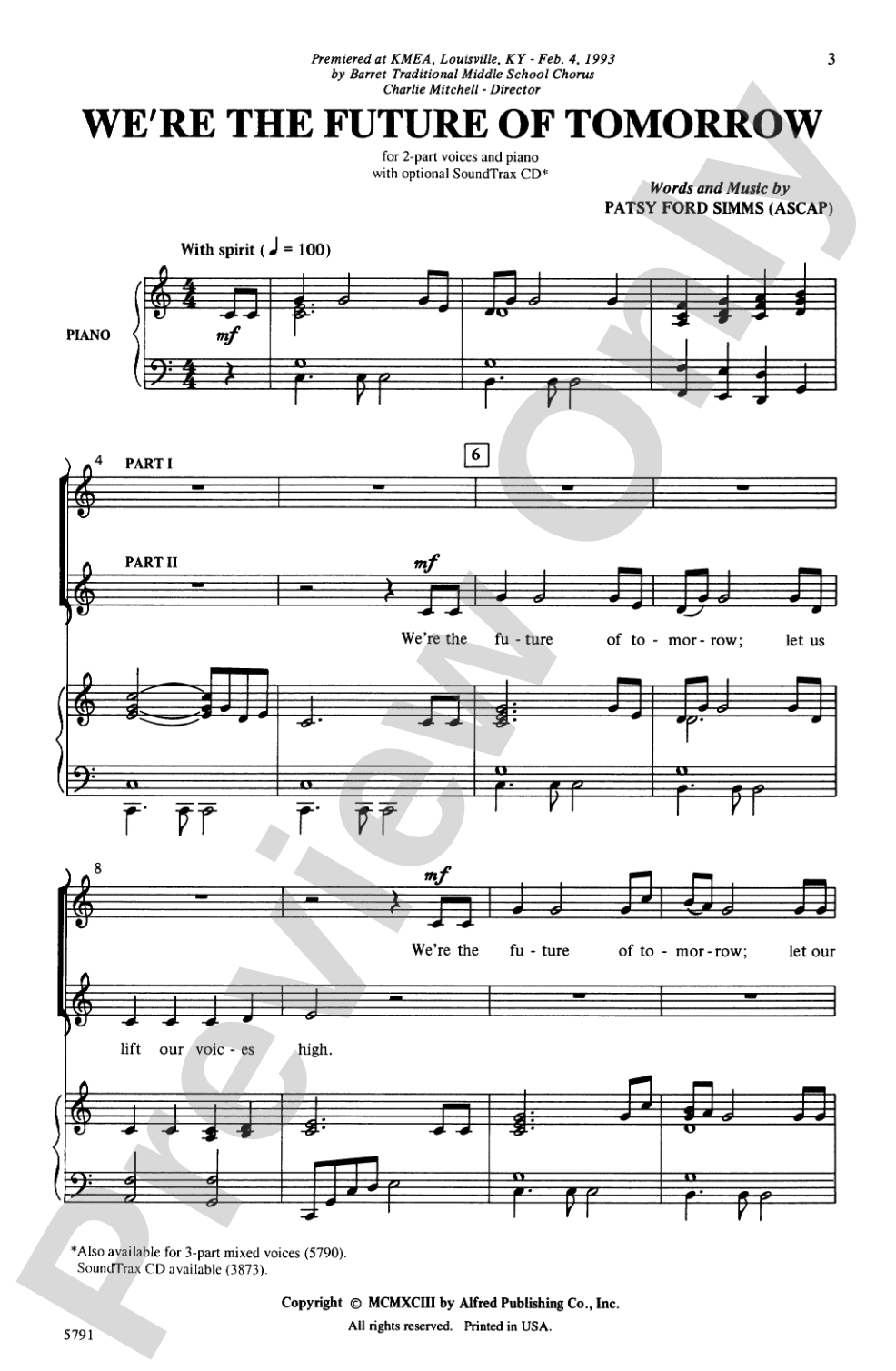

We're the Future of Tomorrow: 2-Part Choral Octavo
Music by Patsy Ford Simms
Item: 00-PO-0004481
$2.25
Minimum order quantity: 20 copies
Pickup currently not available
Related Items
We're the Future of Tomorrow: 2-Part Choral Octavo |
$2.25
|
View |
Description
What a wonderful musical image: "We're the future of tomorrow; let us lift our voices high." Features strong but easy counterlines, building to a majestic finish. A favorite by Patsy Ford Simms. Perfect for spring concerts or graduation ceremonies.


We're the Future of Tomorrow: 2-Part Choral Octavo isn't in MakeMusic Cloud just yet...but it could be. Let us know you'd like to see it, and you'll help shape what comes next. In the meantime, start a free trial and dive into thousands of interactive titles your students can play along with today.
Request This Title
Tell us you want it.
Start Your Free Trial
Explore everything that's ready to play right now.
Sample Audio
1
Audio File
--:--
0:00
0:00
Sample Video
No sample videos found.
Additional Details
Series:
Alfred Archive Edition: Alfred Choral Designs
Publisher:
Alfred Music
Page Count:
8
SKU:
00-PO-0004481
More about this title
About the Composer: Patsy Ford Simms
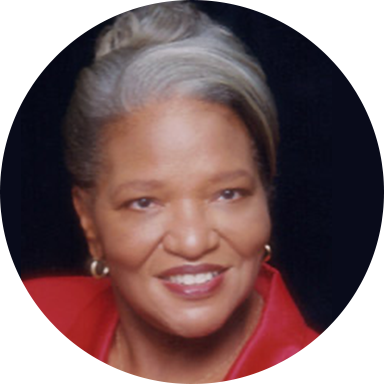
Patsy Ford Simms began composing and arranging in 1981, driven by a practical need she encountered during her teaching career: the shortage of accessible choral octavos for junior high and middle school singers. Over four decades, she has created more than 300 songs for educational and church settings, working with major publishers including Shawnee Press. Her academic credentials include a Bachelor of Science in Music Education from Knoxville College, a Master of Education from the University of Louisville, and a doctorate in Music Education from Columbia Pacific University.
Simms taught for 30 years across grades K-12 and at the Youth Performing Arts School before retiring from full-time classroom work. She has established herself as a clinician and presenter, sharing her work internationally in Italy and Africa. Her compositions have been recognized by MENC for inclusion in the World's Largest Concerts, and she has received multiple ASCAP Special Music Awards. Several of her commissioned works and short musicals exploring African American history reflect her commitment to inclusive, culturally rich music education.
Why we love this
Simms understands what middle school choirs need: a message that resonates with young singers, music that builds their confidence without overwhelming them, and counterlines that genuinely enhance rather than complicate the texture. The arc from accessible to majestic gives your ensemble a tangible sense of growth within a single piece, making it ideal for singers who are building their vocal leadership skills.
What to expect
There's an optimism woven through this piece that feels genuine rather than forced. Young singers connect immediately to the forward-looking text, and the musical journey from straightforward counterpoint to fuller harmony gives them a sense of building something together. The majestic conclusion arrives with the kind of lift that leaves both singers and audience energized.
Who it's for
Middle school and early high school choirs with developing singers who are ready for part-singing but benefit from strong melodic anchoring. This piece works particularly well for groups preparing for spring concerts or graduation ceremonies where the text's inspirational message adds emotional weight.
How to get the most out of it
- Balance the parts by having the second voice lean slightly into the text without overpower. The counterline works best when it supports the main melody rather than competing for attention.
- Build the dynamic shape gradually across the piece so the majestic finish feels earned, not sudden. Mark the subtle crescendo points in rehearsal and reinforce them consistently.
- Shape phrases as complete musical sentences. Avoid cutting off words or rushing through the easier sections; the strength of this piece comes from singers who commit fully to every measure.
How to use it
Program this as a strong closer or opening statement for a spring concert, particularly one celebrating transitions or achievements. The graduation text makes it especially fitting for ceremonies or recognition events, and its moderate length allows it to anchor a mixed program without overwhelming rehearsal schedules near the end of the year.
Skills your students will build
- Singing independent lines while maintaining ensemble cohesion
- Dynamic shaping and phrase building across a complete arc
- Reading and executing two-part harmony with text clarity
- Building vocal confidence through accessible but musically substantial material