

Waterfall: SATB Choral Octavo
Words and music by Carol Kelley
Item: 00-PO-0007915
$2.30
Minimum order quantity: 20 copies
Pickup currently not available
Related Items
Waterfall: SATB Choral Octavo |
$2.30
|
View | |
Waterfall: SSA Choral Octavo |
$2.30
|
View | |
Waterfall: SSA Choral Octavo |
$2.30
|
View | |
Waterfall: PianoTrax Digital Audio Download |
$9.99
|
View | |
Waterfall: PartTrax Digital Audio Download |
$49.99
|
View | |
Waterfall: PartTrax Digital Audio Download |
$49.99
|
View | |
Waterfall: SATB Choral Octavo |
$2.30
|
View | |
Waterfall: SSA Choral Octavo |
$2.30
|
View |
Description
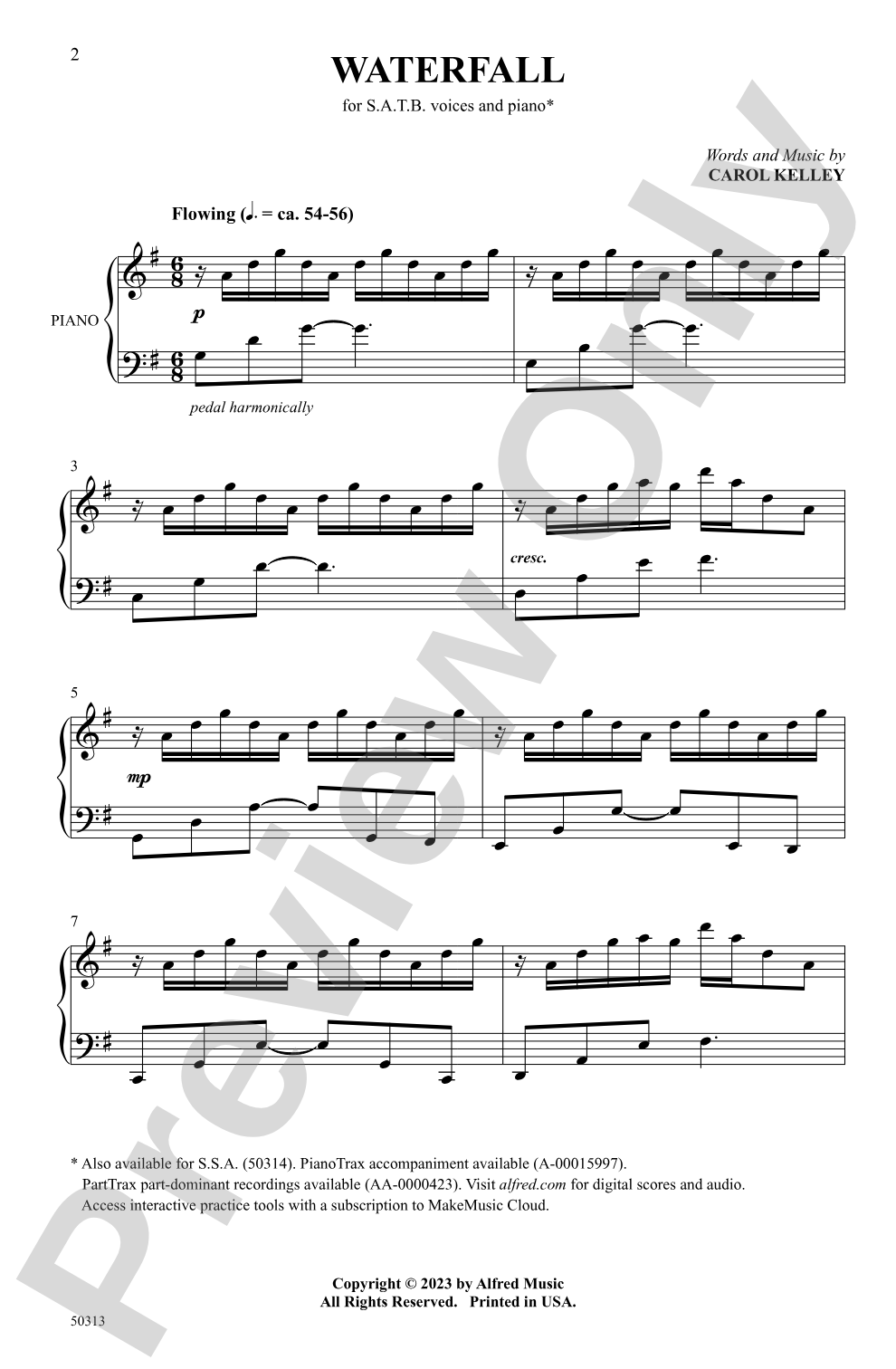
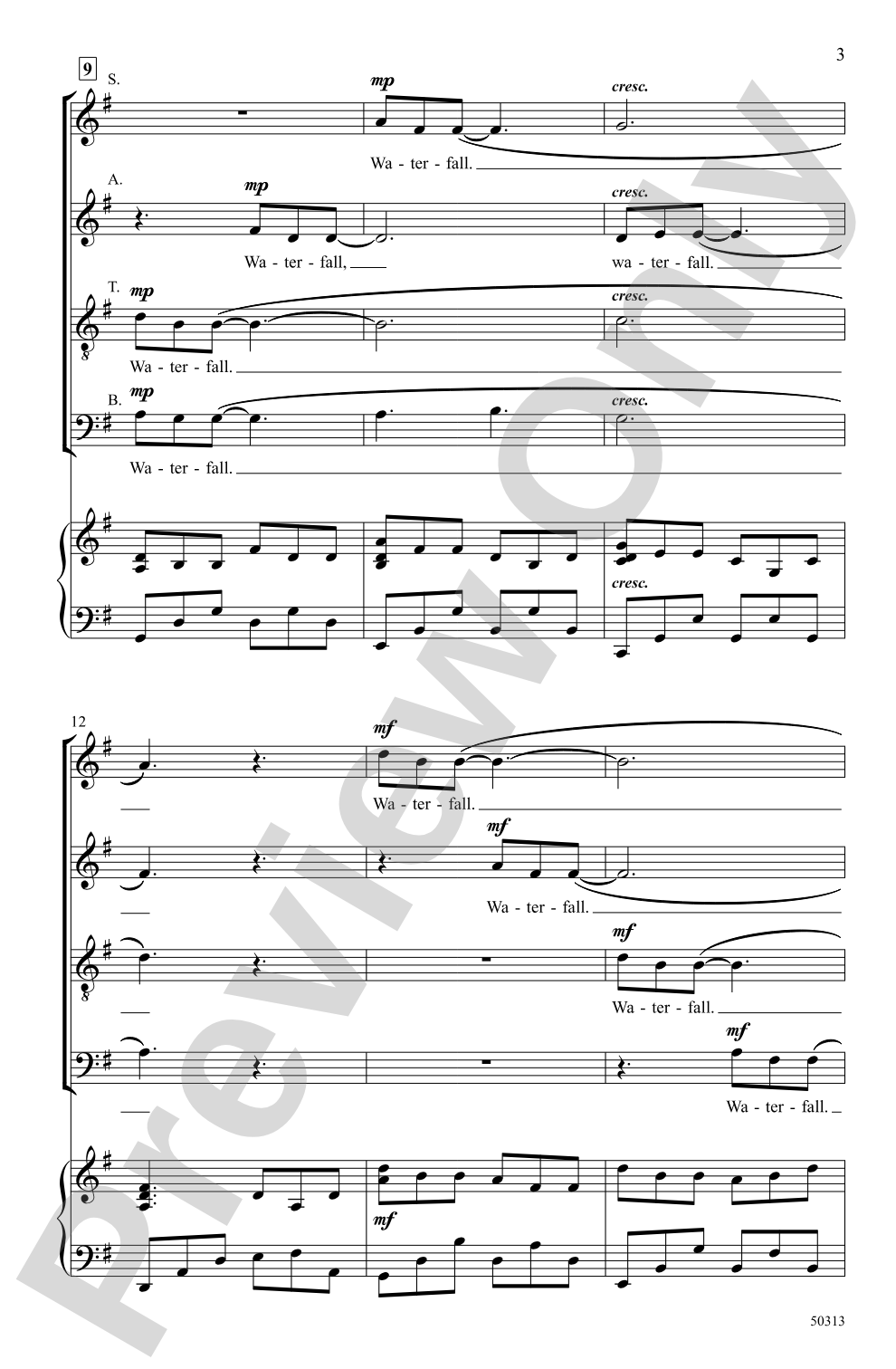
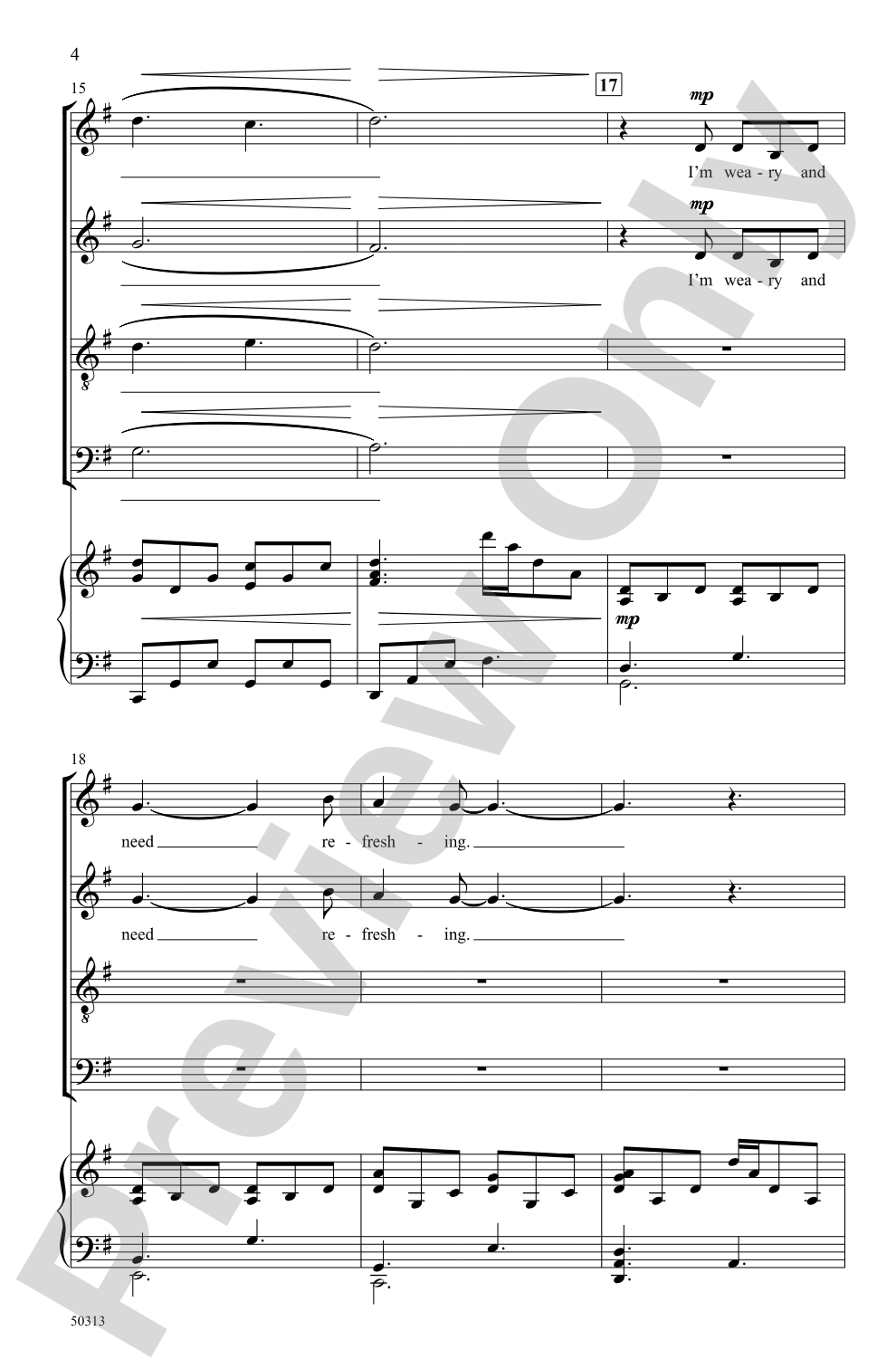
Explore text painting and expression with this flowing original work inspired by nature. Symbolic writing places cascading voices over a trickling piano backdrop to illustrate a cleansing waterfall that brings "peace and blessing." A brief descant in the SSA version creates the same four-part texture heard in the mixed voicing. A lovely feature for your accompanist as well as your singers.
The PerformancePlus+ series is an innovative addition to the ever-expanding MakeMusic Cloud interactive library. These engaging selections are presented with educational resources designed to enrich the rehearsal process and create outstanding performances. Including:


The PerformancePlus+ series is an innovative addition to the ever-expanding MakeMusic Cloud interactive library. These engaging selections are presented with educational resources designed to enrich the rehearsal process and create outstanding performances. Including:
- Assignment, recording, and assessment tools within MakeMusic Cloud
- Part-predominant and accompaniment tracks
- Printable sheet music (with a standard MakeMusic Cloud subscription)
- Correlated rehearsal guides and performance notes
- Rights to perform in a live or virtual setting
Waterfall: SATB Choral Octavo isn't in MakeMusic Cloud just yet...but it could be. Let us know you'd like to see it, and you'll help shape what comes next. In the meantime, start a free trial and dive into thousands of interactive titles your students can play along with today.
Request This Title
Tell us you want it.
Start Your Free Trial
Explore everything that's ready to play right now.
Sample Audio
1
Audio File
--:--
0:00
0:00
Sample Video
1 / 2
Additional Details
Series:
Alfred Choral Designs
Publisher:
Alfred Music
Page Count:
12
SKU:
00-PO-0007915
More about this title
About the Composer: Carol Kelley

Carol Kelley grew up in Oregon and has maintained a rich dual life as both composer and performer across multiple genres. She earned her BA in music education from George Fox University, where she specialized in vocal performance, piano, and composition; her published works appear under Alfred Music, Hal Leonard, and Broadman Press.
For over two decades, Kelley has been a fixture in Oregon's music education community, accompanying choirs and musicals at the middle and high school levels while also teaching general music and choir in K–12 settings. Beyond the classroom, she remains active as a pianist and vocalist in her church worship program and finds ongoing inspiration in the natural beauty of the Pacific Northwest, which she shares with her husband Dave and their three grandchildren.
Why we love this
Kelley's use of cascading voice entrances paired with a trickling piano texture creates a vivid sonic representation without relying on heavy-handed arrangement tricks. The text painting here feels organic to the singers' experience rather than imposed, and the addition of a brief descant in the SSA version means you can program this flexibly across mixed and treble ensembles without sacrificing the four-part sonority.
What to expect
Waterfall unfolds like watching light play across moving water, with voices entering in soft waves that gather and disperse. The harmonic language is warm and consonant, supported by the gentle patter of the piano, evoking a sense of calm renewal and natural beauty.
Who it's for
This octavo works well for intermediate to advanced high school choirs and strong middle school choirs seeking a nature-inspired piece with genuine compositional sophistication. It also suits adult community choirs and church ensembles looking for a reflective, accessible original work that doesn't demand specialized technique but rewards expressive musicianship.
How to get the most out of it
- Shape the cascading voice entries as a unified waterfall rather than isolated entrances. Stagger the dynamics slightly so each new voice layer blends seamlessly with what came before, creating a sense of flowing water rather than stacked chords.
- Work closely with your accompanist on the piano texture. The trickling backdrop needs to stay transparent enough for the choral lines to emerge clearly; too much pedal will muddy the piece and diminish the text painting.
- Explore how the descant (SSA version) or soprano line (SATB version) leads the listener's ear upward. Singers should understand where this melodic contour takes them so they can shape it with intent rather than just hitting notes.
How to use it
Program this as a reflective centerpiece in a concert exploring nature themes, or pair it with other seasonal or spiritual repertoire for a program centered on peace and restoration. Its moderate length and accessible difficulty make it an ideal showcase piece for a festival or contest where you want to highlight expressive singing without overwhelming singers with technical demands.
Skills your students will build
- Text painting through layered voice entries and dynamics
- Blending independent melodic lines while maintaining rhythmic cohesion
- Collaborative listening and balancing when voices enter at different times
- Expressive phrasing in a piece where musical shape mirrors poetic imagery